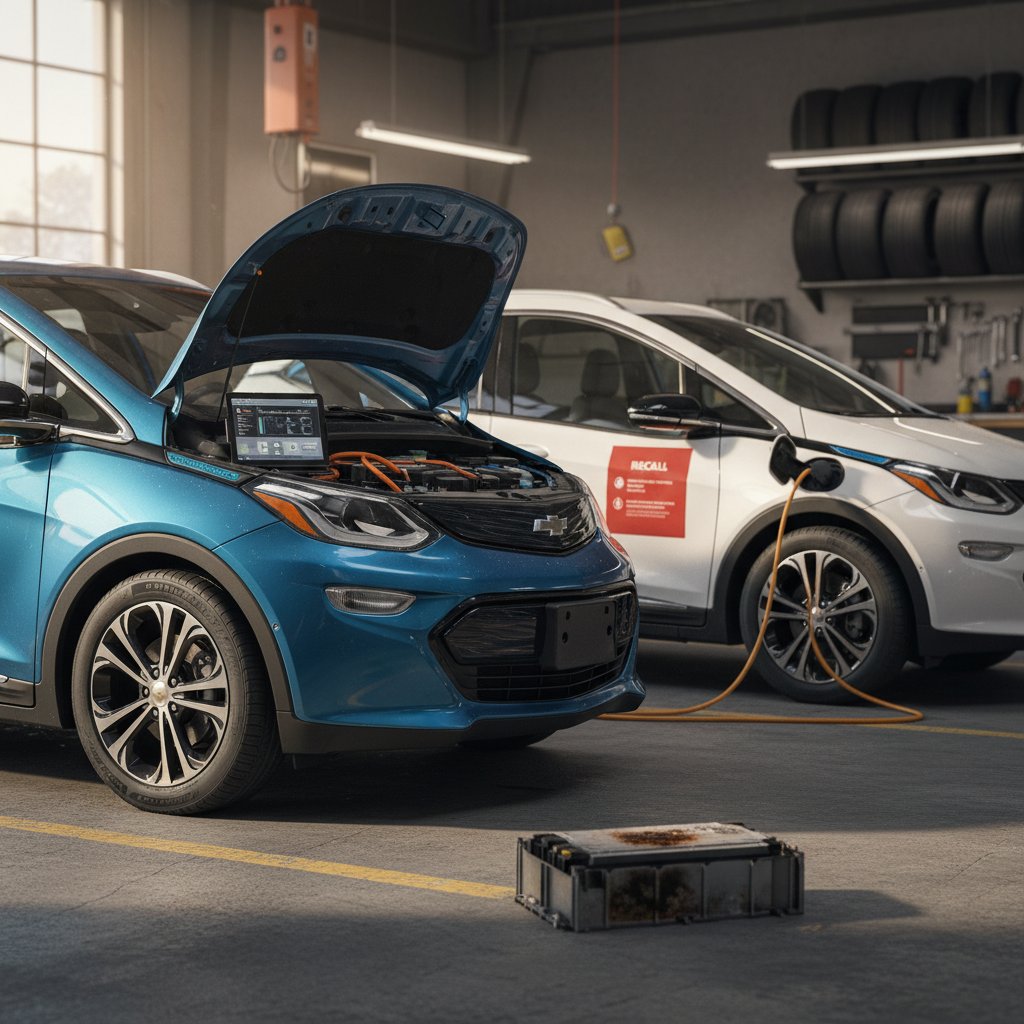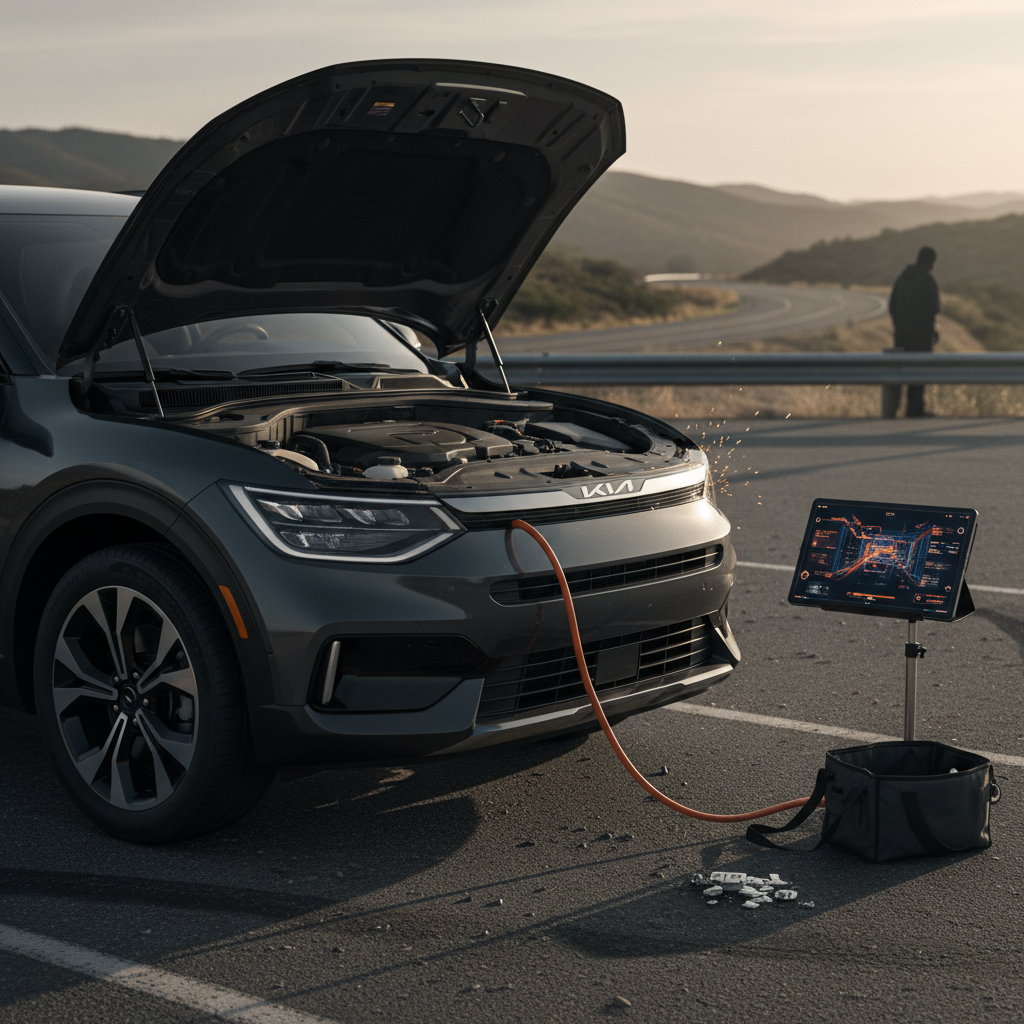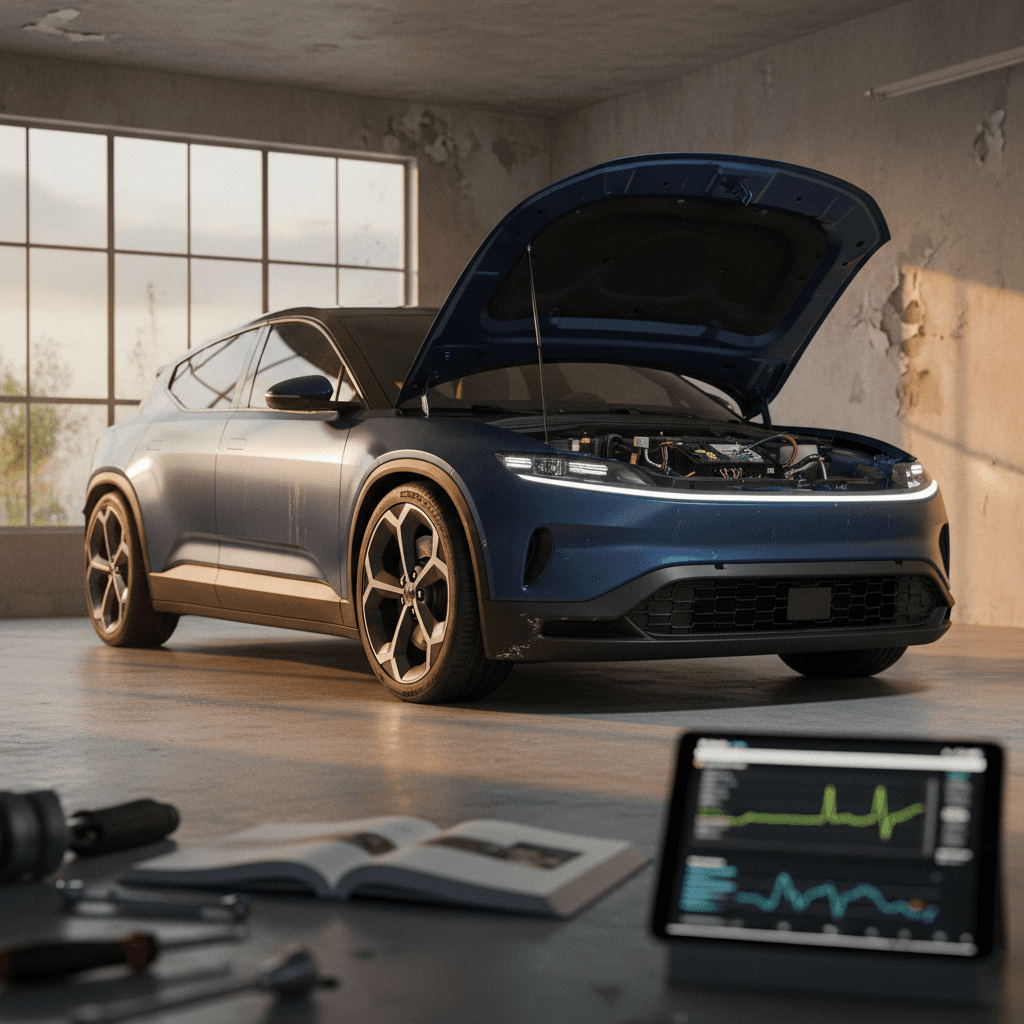
If you’re wondering about 2024 Fisker Ocean reliability, you’re not alone. The Ocean is one of the most controversial modern EVs: attractive specs and pricing on paper, but a manufacturer that went bankrupt in 2024 and an ownership experience defined by software bugs, safety concerns and now, orphaned support. This guide walks through what’s actually going wrong, what’s been recalled, and whether a used Ocean makes sense for you, or if you should walk away.
Quick take
Overview: 2024 Fisker Ocean reliability in one snapshot
Fisker Ocean at a glance
When you look at 2024 Fisker Ocean reliability as a whole, three themes stand out: serious software and electrical bugs, unresolved safety investigations and recalls, and a manufacturer that no longer exists in any practical sense for retail customers. Unlike a quirky but over‑engineered older EV, the Ocean’s problems are concentrated in exactly the systems you most rely on day to day, powertrain software, braking, and basic door locking and starting.
How we’re evaluating 2024 Fisker Ocean reliability
Automakers love to talk about “growing pains” when a new model ships with bugs. Normally, that’s not entirely unfair. Early Teslas, Mach‑Es and Hyundai Ioniqs all had teething problems. The difference with the Fisker Ocean is that the automaker ran out of time and money before it could do the usual “fix it in software” cycle. So when we talk about Ocean reliability, we’re looking at:
- Owner complaints and lawsuits describing repeated power loss, braking issues and lock‑in/lock‑out problems.
- Safety investigations and recalls related to braking performance and other critical systems.
- Long‑term media tests and reviews from outlets that bought Oceans with their own money and lived with them for months.
- The corporate context: Fisker’s 2024 bankruptcy, loss of factory support and the rise of volunteer owner groups trying to keep the cars alive.
- How other startup EVs with similar trajectories (think first‑gen Fisker Karma, Coda, or Saturn/ Saab at the end) have aged in the real world.
How to read this if you already own an Ocean
Most common 2024 Fisker Ocean problems reported so far
Across owner reports, lawsuits, media testing and safety complaints, a consistent pattern of Fisker Ocean problems has emerged. The list below isn’t theoretical, it’s built from issues multiple owners have actually experienced:
Key 2024 Fisker Ocean reliability pain points
Where owners and testers see the most trouble
Sudden power loss
Multiple Oceans have reportedly lost power mid‑drive, including at highway speeds. Sometimes the car can be restarted; other times it goes into a “safe state” and must be towed.
Brake behavior & feel
Owners and testers have described inconsistent braking, with regenerative braking dropping out or modulation that feels unpredictable and, in one prominent review, “nauseating.”
Key fob & door locks
Common complaints include the key fob not unlocking the car, the vehicle not recognizing the key to start, and in a few cases, occupants being locked inside or outside the vehicle.
Glitchy driver aids
Faults in driver‑assistance systems can trigger errors that disable features or even contribute to shutdowns. Lane‑keeping, adaptive cruise and other aids have been described as inconsistent at best.
Infotainment & screen crashes
The big rotating center screen, a headline feature, has been known to freeze, crash or lag, sometimes after changing orientation, leaving climate and navigation controls unreliable.
Build, trim and hardware faults
Reports include hood latches that let the hood fly open at speed, rattly interiors, cheap‑feeling trim and issues with seat sensors that prevent the car from going into drive.
Not just annoying quirks
Software & electronics: the heart of the problems
Every modern EV is a rolling software platform. The Fisker Ocean simply shipped before that software was ready, and then the company ran out of runway to mature it. That’s why such a high percentage of 2024 Fisker Ocean reliability issues trace back to code, not motors or battery cells.
1. Over‑ambitious, under‑tested software
The Ocean tried to leapfrog rivals with features like a rotating center screen, flashy UI and heavily software‑defined driving dynamics. In practice, owners saw:
- Frequent warning messages and error codes with no clear explanation.
- Infotainment crashes after routine actions like rotating the display.
- Driver‑assist and braking behavior that changed across software versions.
In a healthy ecosystem, those issues get ironed out over the first 1–2 years. In Fisker’s case, development largely stopped when the cash did.
2. When software controls safety‑critical systems
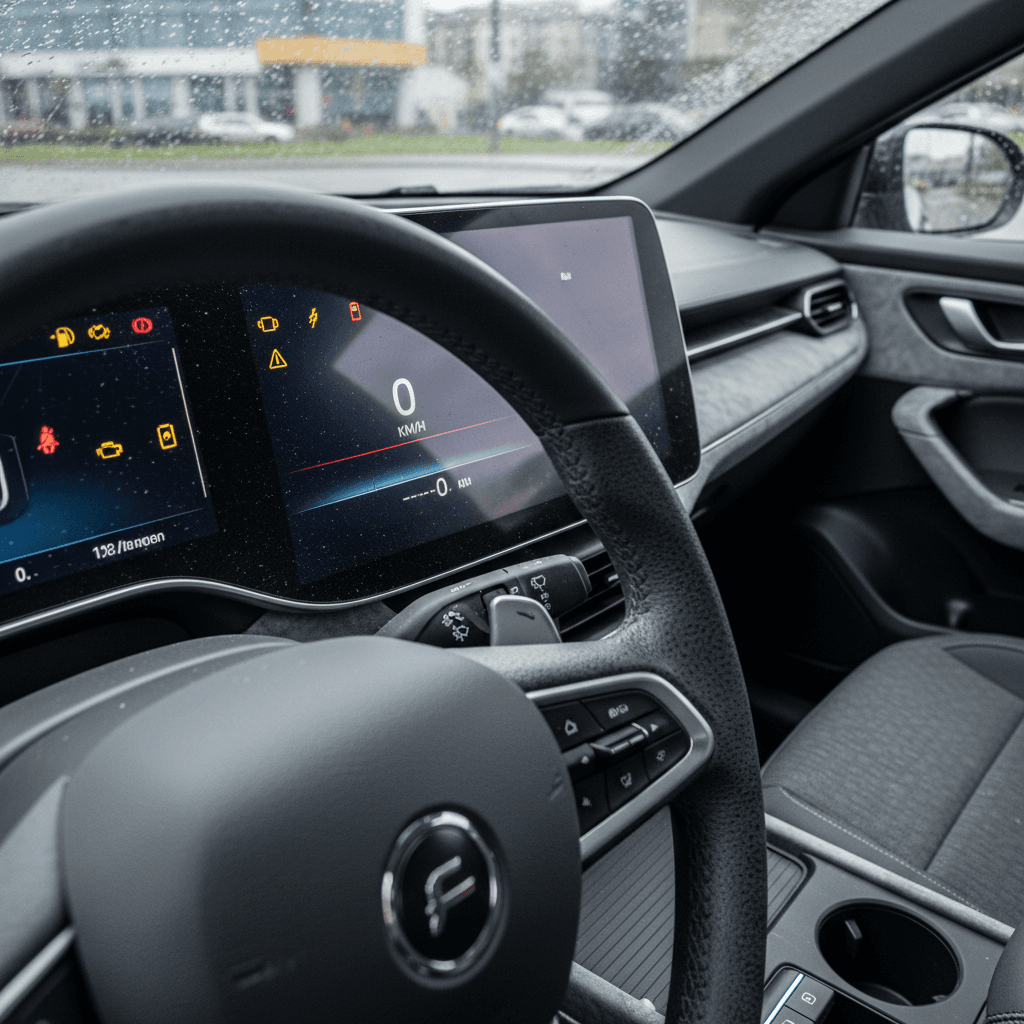
Software hiccups aren’t just about frozen maps. On the Ocean, software controls:
- High‑voltage battery management and power delivery.
- Brake blending between regen and friction brakes.
- Seat and door‑lock logic that determines whether you can shift into drive or exit the car.
So a “simple” software bug can manifest as a disabled car, a terrifying power loss, or a situation where you physically can’t open the doors the way you expect.
The real risk with orphaned software
Safety, recalls and braking issues
When you strip away the marketing, the practical question on any 2024 Fisker Ocean is this: Will it do anything unpredictable when I’m trying to slow down, steer or escape a hazard? That’s where the known braking and safety issues come into sharp focus.
Key safety‑related concerns on the Fisker Ocean
What’s been reported, and why it matters for day‑to‑day driving
| Issue | What owners & testers report | Why it’s serious |
|---|---|---|
| Sudden power loss | Vehicle shuts down or drops into a “safe state” while stopped or in motion, sometimes at highway speeds. | Loss of propulsion in traffic can lead to rear‑end collisions or dangerous roadside stops. |
| Braking behavior | Regenerative braking cutting out, long or inconsistent pedal travel, and harsh transitions between regen and friction braking. | Unpredictable brake feel makes it harder to modulate stopping distances and erodes driver confidence. |
| Door locks & egress | Cars failing to unlock, not recognizing keys, and several cases of occupants stuck inside until they found a workaround. | Anything that impedes quick exit in an emergency is a non‑starter from a safety perspective. |
| Hood latch / front hood opening | A small number of reports of the hood flying open at speed, in some cases damaging the windshield. | Loss of forward visibility at speed is extremely dangerous and can cause secondary crashes. |
Because official support is limited after Fisker’s collapse, owners should treat any new warning lights or unusual braking behavior as serious until proven otherwise.
About official recalls and investigations
What Fisker’s collapse means for long‑term reliability
If the 2024 Fisker Ocean were merely buggy but backed by a cash‑rich, patient automaker, the reliability outlook would be poor today but potentially manageable in the long run. Instead, you have a young product with big problems and a parent company that entered bankruptcy in 2024. That changes the reliability calculus in three important ways:
How a dead automaker amplifies reliability risk
1. Limited access to engineered fixes
Traditional recall campaigns and service bulletins rely on a living engineering organization. With Fisker gone, there’s no well‑funded team shipping validated fixes for edge‑case bugs discovered years after launch.
2. Parts scarcity and cannibalization
As parts stocks dwindle, repair attempts may involve scavenging components from other Oceans or waiting on slow, third‑party supply chains. A relatively small failure, say, a control module, can total a car if replacements are unobtainable at sane cost.
3. Cloud‑dependent features in limbo
Remote access, diagnostics, navigation and even some charging functions depend on cloud backends. After bankruptcy, those servers may be maintained by asset buyers, by volunteers, or not at all. That’s a very different risk profile than a legacy automaker’s connected‑services sunset.
4. No residual‑value support
Healthy automakers care about resale values because they affect lease pricing and brand perception. Orphaned brands don’t. That’s a big reason we’ve already seen Ocean values fall off a cliff in such a short time.
Reliability isn’t just “will it break?”
Living with a 2024 Fisker Ocean today: support, parts and repairs
Despite everything, there’s a core of Ocean owners who are determined to keep these vehicles on the road. Grassroots organizations and specialized shops are stepping into the vacuum, but that doesn’t magically make the reliability story rosy. It just means you have a path forward if you’re willing to work for it.
Where support is coming from now
- Owner associations and forums are documenting common fixes, workarounds and coding tweaks, sometimes even negotiating limited access to backend systems.
- Independent EV specialists are starting to learn the platform, treating it more like a complex import than a mainstream product.
- Some fleet buyers and asset firms that acquired Oceans in bulk have an incentive to keep them operable, indirectly benefiting private owners through shared know‑how.
Practical steps if you already own one
- Keep meticulous records of every fault, visit and communication. That helps with future resale or legal remedies.
- Identify independent EV shops in your region willing to learn the Ocean platform before you’re stranded.
- Have a backup transportation plan if the car becomes undriveable for weeks or months while you chase parts or software access.
Leaning on specialists
Should you buy a used Fisker Ocean now?
On paper, the used‑market Fisker Ocean is seductive: striking design, solid range, decent performance and prices that have collapsed in a way we almost never see on modern EVs. From a reliability and risk standpoint, though, you should treat it as a high‑stakes speculative purchase, not a smart daily‑driver deal.
Who, if anyone, should consider a used Fisker Ocean?
Match your risk tolerance to reality before you write a check
May make sense if…
- You’re an experienced EV owner comfortable with beta‑ish products.
- You have another reliable car and can treat the Ocean as a project or toy.
- There’s an active owner community and at least one shop in your area willing to work on it.
- The purchase price reflects the risk, think deeply discounted versus alternative used EVs.
Probably a bad idea if…
- You need one car to handle commuting, school runs and road trips without drama.
- You don’t want to spend time on forums or chasing parts.
- Unexpected multi‑thousand‑dollar repair bills or a sudden total loss would be financially painful.
- You’re comparing it to mainstream used EVs from Tesla, Hyundai, Kia, GM, Ford or VW that have normal dealer support.
The “cheap” Ocean trap
How Recharged thinks about high‑risk EVs like the Ocean
At Recharged, our whole premise is that used EV ownership should be transparent and predictable. That’s why every vehicle we sell includes a Recharged Score Report with verified battery health, fair‑market pricing and expert guidance from search to delivery. The Fisker Ocean presents a unique challenge in that framework.
1. Battery health isn’t the limiting factor
On most used EVs, the biggest long‑term question is: How healthy is the pack? That’s what our Recharged Score focuses on, using diagnostics to quantify usable capacity and expected degradation.
With the Ocean, the pack may be fine, but software, parts availability and orphaned support are bigger constraints than raw battery chemistry. A clean bill of health on the cells doesn’t solve a bricked control module or unsupported cloud feature.
2. Risk‑pricing has to be brutally honest
If a vehicle has a meaningful chance of becoming unrepairable before the end of its useful battery life, that has to be reflected in pricing and in how we talk about it with customers.
That’s why Recharged focuses our marketplace on EVs where we can back up the purchase with real diagnostics, parts access and realistic long‑term support, rather than crossing our fingers on a fragile ecosystem.
If you’re shopping used EVs
Ready to find your next EV?
Browse VehiclesFAQ: 2024 Fisker Ocean reliability and ownership
Common questions about 2024 Fisker Ocean reliability
Bottom line: who, if anyone, should consider an Ocean?
From a pure reliability standpoint, the 2024 Fisker Ocean is one of the riskiest modern EVs you can buy. The combination of immature software, serious safety‑adjacent issues and a bankrupt manufacturer means you’re not just betting on a car, you’re betting on a fragile aftermarket ecosystem and a very committed owner community.
If you already own an Ocean, the pragmatic move is to stay plugged into owner networks, document everything, line up an independent EV specialist and think carefully about your exit timing while resale values still exist. If you’re merely tempted by a “too good to be true” used price, it probably is. There are plenty of used EVs where you can enjoy cutting‑edge tech, strong reliability, and transparent battery health without wondering whether your next software glitch will turn the car into a very expensive driveway sculpture.
Whichever path you choose next, make sure it’s one you can live with for years. The EV market has matured enough that you don’t have to roll the dice on a troubled startup to get a great electric SUV. A platform like Recharged exists precisely so you can see the real state of a used EV’s battery, understand fair pricing, and lean on EV‑specialist guidance instead of navigating that complexity alone.