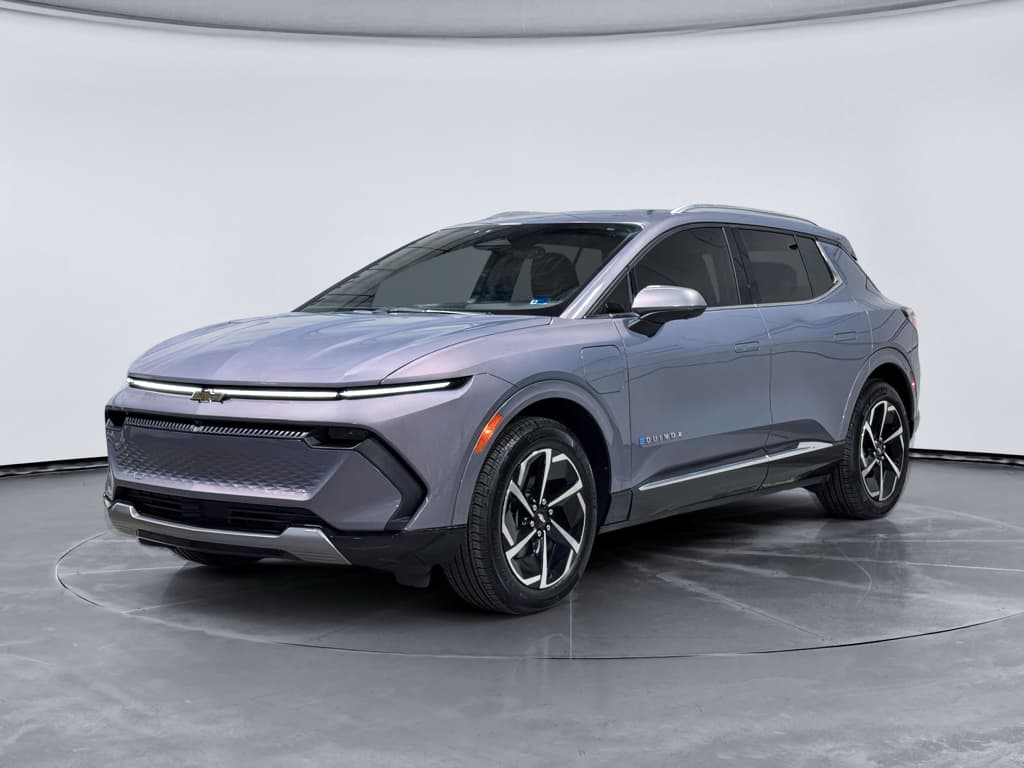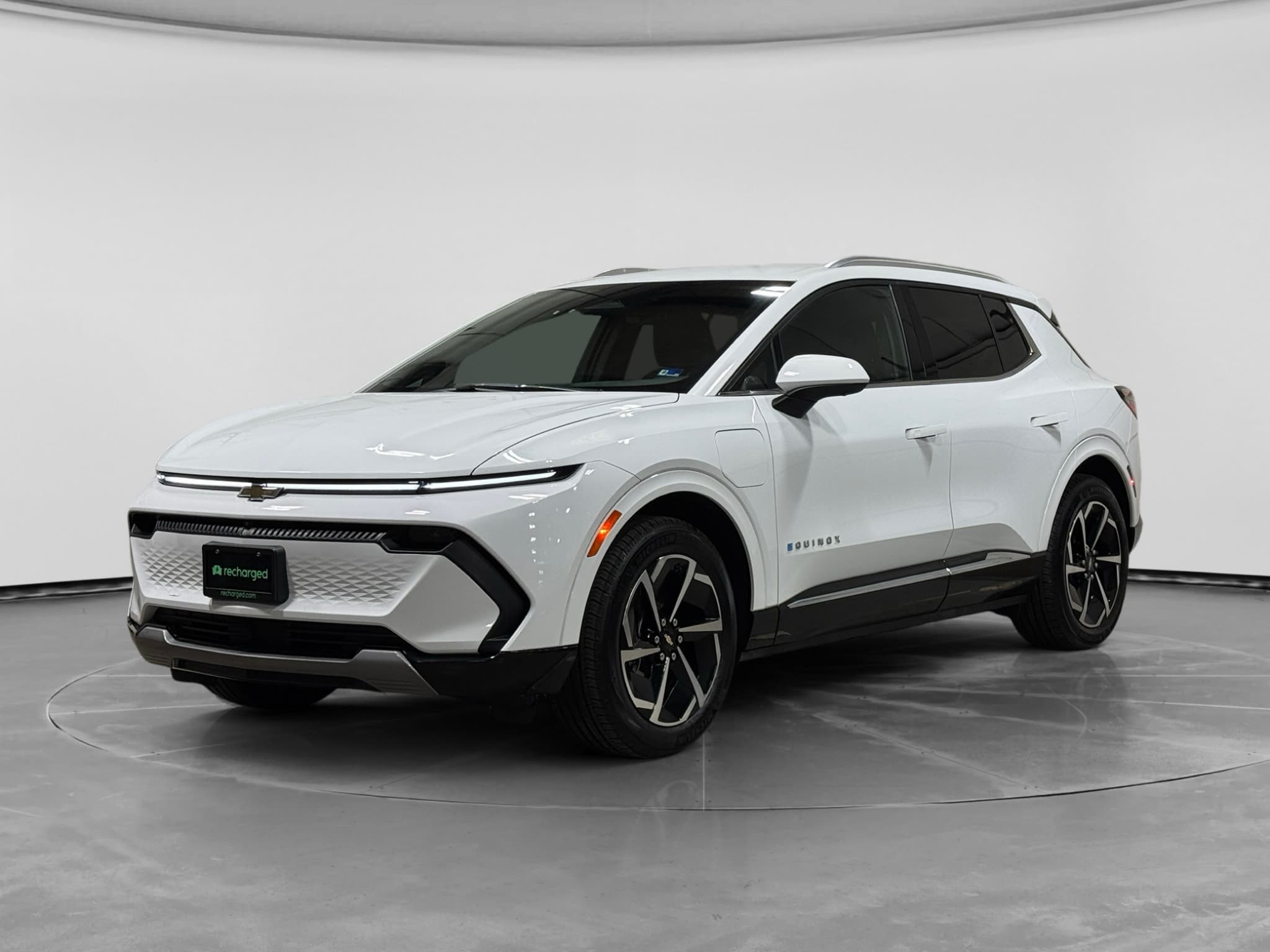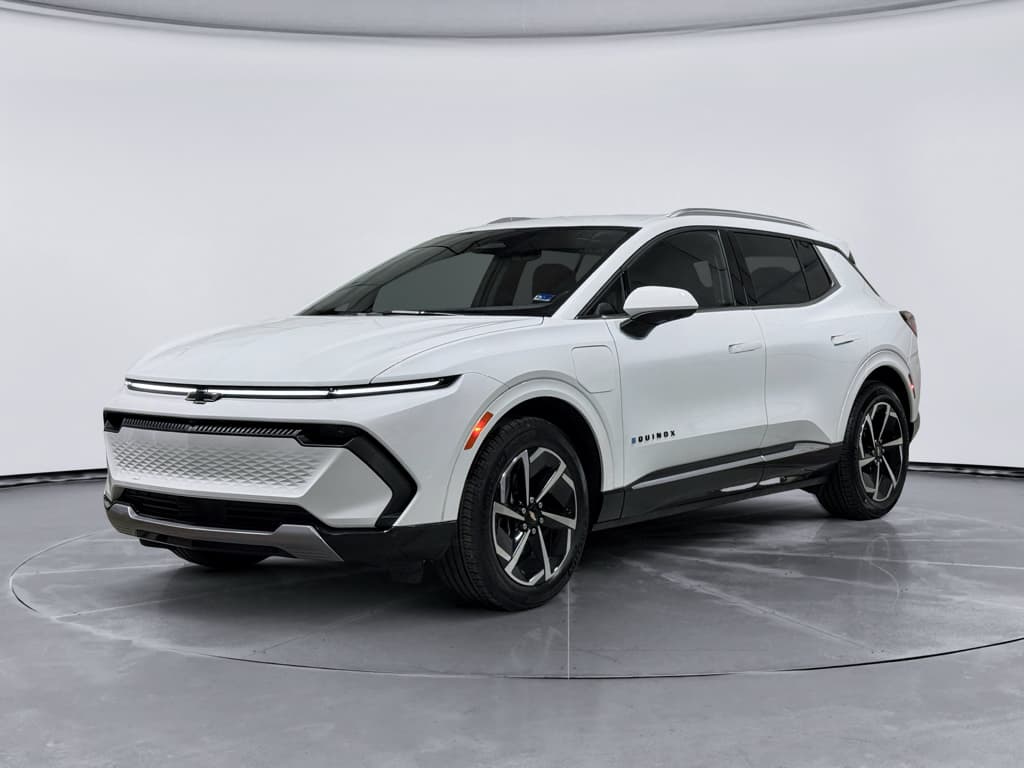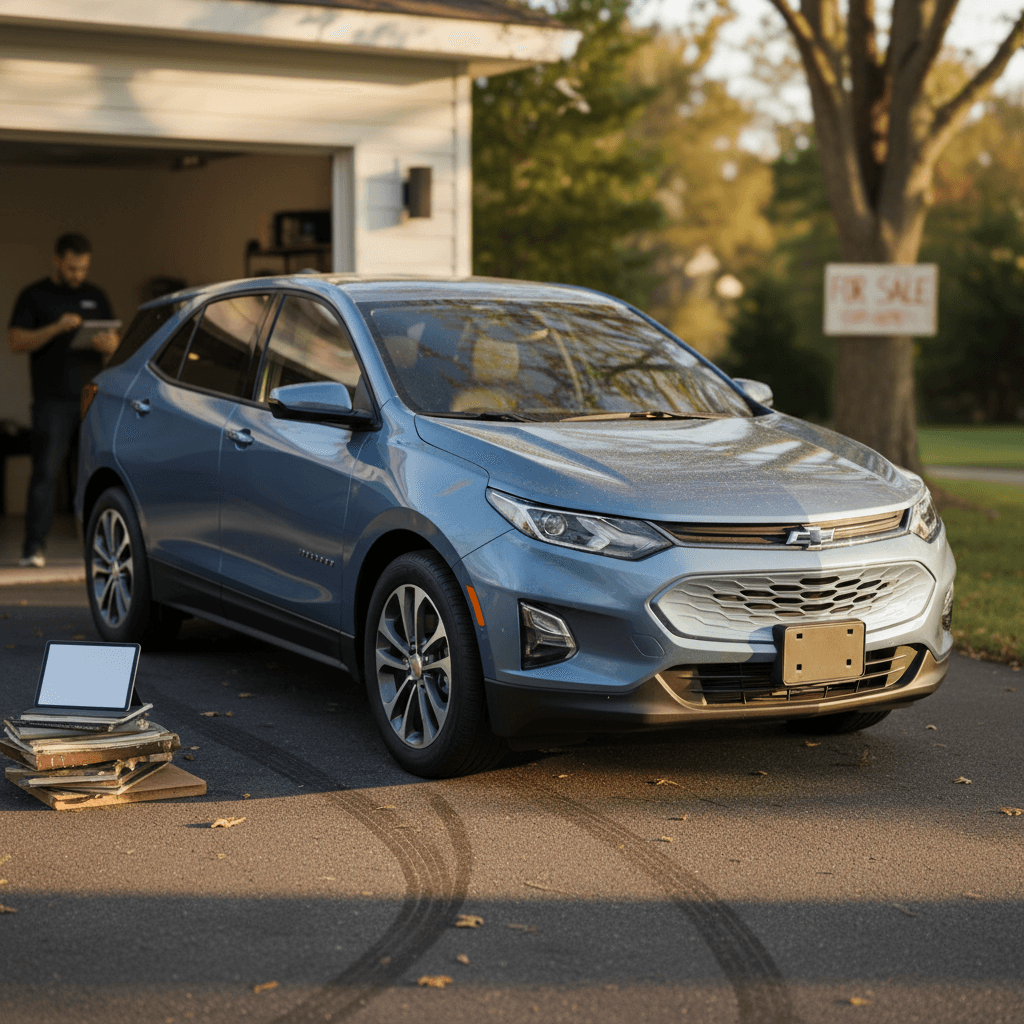
If you’re eyeing a used 2025 Chevrolet Equinox EV, you’re looking at one of the most important mass‑market electric SUVs in the U.S. GM pitched it as the “affordable 300‑mile EV,” and by 2025 it had become a volume seller. That means plenty of examples are now trickling onto the used market, along with real‑world data on value, reliability, and owner headaches.
Why this review is different
Overview: 2025 Equinox EV as a Used Buy
Positioning in the EV market
The 2025 Equinox EV rides on GM’s Ultium platform and targets mainstream buyers who might otherwise shop a Tesla Model Y, Hyundai Ioniq 5, or Kia EV6. Chevy simplified the lineup to LT and RS trims, with front‑wheel drive (FWD) or all‑wheel drive (AWD) and several equipment packages.
For used shoppers, that means lots of similar‑looking SUVs with very different specs, especially on range and features, so decoding the exact configuration matters.
High‑level pros and cons as a used EV
- Pros: Competitive range (up to ~319 miles FWD), spacious interior, solid active‑safety suite, and strong value on the used market thanks to fairly steep early depreciation.
- Cons: A few early recalls and software gremlins, some telematics/OnStar module failures, and charging performance that’s competent rather than class‑leading.
In short, the Equinox EV is more about quiet competence and value than flash or performance.
2025 Equinox EV Used-Market Snapshot (2026)
Name confusion warning
Key Specs: Range and Performance Used Buyers Care About
On paper, the 2025 Equinox EV’s specs are right in the heart of the compact EV‑SUV segment. But as a used shopper, what matters is how those numbers translate into real‑world usability after a year or two on the road.
2025 Chevrolet Equinox EV Key Specs
Approximate specs for major Equinox EV drivetrain variants that matter most to used buyers. Always verify exact configuration by VIN.
| Spec | FWD (most trims) | AWD (most trims) |
|---|---|---|
| Power | ~213 hp (single motor) | ~288 hp (dual motor) |
| 0–60 mph | Low‑mid 7s (est.) | Mid 6s (est.) |
| EPA range | Up to ~319 miles | Around low‑300s miles |
| Battery | Ultium lithium‑ion pack | Ultium lithium‑ion pack |
| DC fast charging | Up to ~150 kW region | Similar peak, varies by pack |
| On‑board AC charging | 11.5 kW (most trims) | 11.5 kW (most trims) |
Specs can vary slightly by trim and wheel/tire package; confirm against the window sticker or build sheet.
Quick range sanity‑check
Owners generally describe the Equinox EV’s acceleration as “quietly quick enough” rather than exciting. AWD models add confidence and punch off the line, while FWD trims prioritize range and cost. The ride is tuned for comfort, and road noise is generally well controlled for the price point, especially compared with early budget EVs.
Pricing and Depreciation: What Are Used 2025 Equinox EVs Worth?
By 2026, the first wave of 2025 Equinox EVs has already absorbed the brutal first‑year depreciation that hits most new EVs. For used buyers, that’s where the opportunity lies.
What You’ll Likely Pay for a Used 2025 Equinox EV
Ballpark numbers for U.S. buyers as of early 2026
Entry-Level LT FWD
Typical asking: roughly high‑$18Ks to low‑$20Ks for average‑mileage, clean‑title examples.
These are often ex‑lease or early retail units with basic options but solid range.
Better‑Equipped LT / RS
Typical asking: roughly low‑ to mid‑$20Ks depending on packages (panoramic roof, larger wheels, upgraded audio, etc.).
These usually strike the best balance between price and features.
AWD & Loaded Trims
Typical asking: roughly mid‑$20Ks up to high‑$20Ks for low‑mileage AWD RS models with tech/safety packages.
Demand is strongest in snow‑belt regions where AWD is a must‑have.
How hard does it depreciate?
Early EV depreciation can look scary on a chart, but from your perspective as a used buyer it means you’re paying closer to the vehicle’s long‑term residual value. If you buy a clean 2025 Equinox EV in the low‑$20Ks and keep it another 5–6 years, your total depreciation hit can be far milder than the original owner’s, especially if you avoid high‑MSRP, low‑range configurations.
Reliability, Recalls, and Known Issues
The Equinox EV doesn’t have the software meltdown reputation of GM’s early Ultium launches, but it isn’t squeaky‑clean either. As of 2026, you’re shopping in the messy middle: a car with solid fundamentals and a few recurring trouble spots you should understand before signing.
- Acoustic vehicle alerting system (AVAS) recall: GM has recalled certain 2025 Equinox EVs because the pedestrian warning sound at low speeds didn’t meet regulatory requirements. Fix is a software update; confirm it’s been done.
- Tire recall: A separate recall covers incorrectly manufactured Continental tires on tens of thousands of 2025–2026 Equinox EV and Cadillac Optiq models. You want documentation that the tires were inspected or replaced, not just a note that the recall exists.
- Telematics/OnStar module failures: Owner forums show a non‑trivial number of cases where the telematics control module dies, killing remote services and sometimes causing persistent warning messages. It’s not universal, but it’s common enough that you should test remote functions carefully.
- Water intrusion/body sealing issues: A subset of owners report passenger‑side water leaks tied to AC drains or body sealing. There has been at least one body‑seal related campaign; on a test drive, check carpets and underfloor storage for dampness or musty smells.
- Service High Voltage/charging errors: As on many modern EVs, a few owners see intermittent high‑voltage system warnings that block DC fast charging until the car is rebooted or serviced. These seem relatively rare but can be trip‑killers if not addressed.
Don’t ignore open recalls
“The Equinox EV avoids the worst of GM’s early Ultium missteps, but its recall record and telematics issues are reminders that we’re still in the shake‑out phase of mass‑market EVs.”
Daily Driving Experience When You Buy Used
Assuming you’ve found a healthy example with up‑to‑date software, the 2025 Equinox EV is a pleasantly normal daily driver, which is precisely what many used buyers want. It doesn’t try to reinvent the user interface like a Tesla; instead it feels like a modern Chevy crossover that happens to be electric.
What It’s Like to Live With a Used Equinox EV
Owner‑reported strengths and annoyances
Comfort & Practicality
- Spacious cabin with good rear legroom and a practical cargo area.
- Ride quality tuned for comfort over sharp handling, ideal for commuting and school‑run duty.
- Physical controls for key functions, which many drivers prefer to all‑screen interfaces.
Tech & Infotainment
- Google built‑in infotainment with native Maps, Assistant, and app support.
- OTA updates gradually improving bugs and adding minor features.
- Some owners report occasional system reboots or glitches, but less drama than early Blazer EV builds.
Charging Experience
- DC fast charging is solid but not class‑leading; plan on longer stops than with the quickest‑charging Korean rivals.
- Home Level 2 charging at ~11.5 kW means a near‑empty pack can refill overnight on a 240V circuit.
- Public charging reliability depends more on the network than the car, as with any CCS‑based EV of this era.
Real‑World Efficiency
- Owners often report efficiency in the 3.0–3.5 mi/kWh range in moderate conditions.
- Cold‑weather range drops like any EV; budget for 25–35% loss in harsh winters, more on short trips.
- Larger wheels and aggressive driving can knock meaningful miles off the range estimates.
Battery Health, Warranty, and Long-Term Durability
The big bet with any used EV is that the battery and power electronics will age gracefully. On that front, the 2025 Equinox EV benefits from both GM’s Ultium architecture and a fairly conservative power/weight ratio compared with performance‑oriented EVs.
- Chevrolet covers the propulsion battery and major electric drive components for 8 years/100,000 miles from the original in‑service date, transferable to subsequent owners.
- There’s not yet enough long‑term data to make definitive claims about Ultium durability in high‑mileage Equinox EVs, but early reports don’t indicate systemic battery failure beyond small‑sample anecdotes.
- Like most EVs, the Equinox EV tends to suffer more range loss in extreme climates (hot or cold) and under frequent DC fast‑charging than in mild, home‑charged commuter duty.
- On‑board state‑of‑health estimates are useful but imperfect; independent validation tools are still catching up across the industry, and different OEMs report health differently.
What “good” battery health looks like
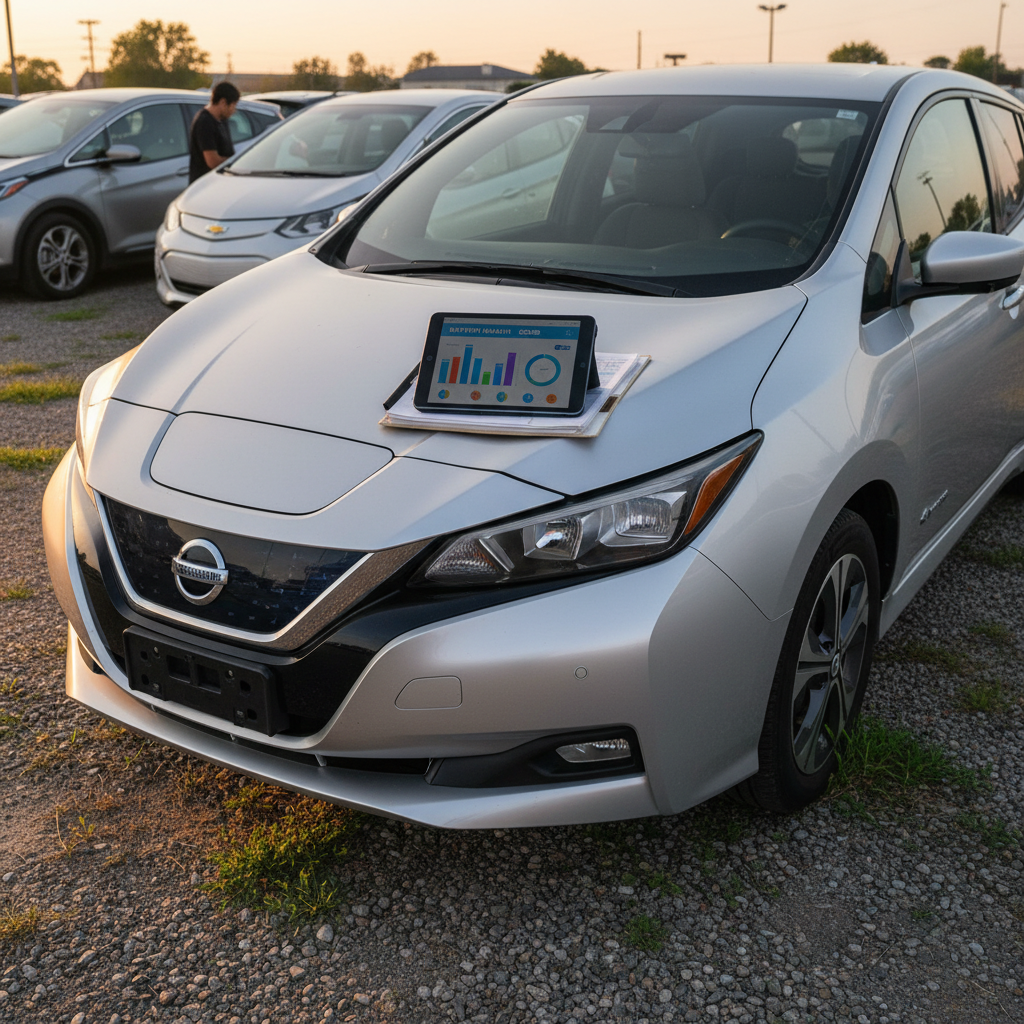
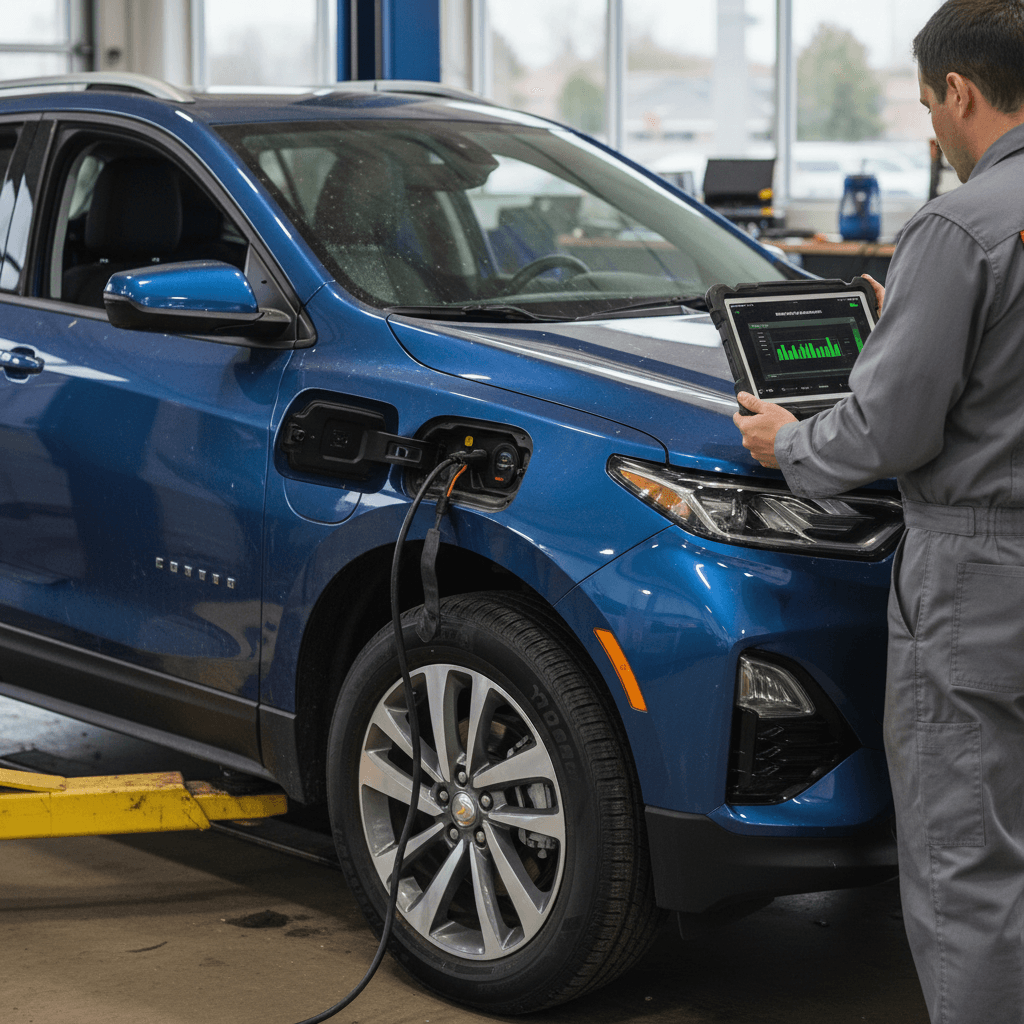
This is where Recharged leans hard on its Recharged Score battery health diagnostics. Rather than blindly trusting a dashboard estimate, we pair logged data, controlled test drives, and pack diagnostics to give you a clearer view of how the battery is actually aging, critical for comparing one used Equinox EV to another that looks similar on paper.
Used 2025 Equinox EV vs. Rival Used EV SUVs
In a vacuum, the Equinox EV looks like a solid mainstream EV SUV. To understand its used‑market appeal, you need to see how it stacks up against alternatives you’ll likely cross‑shop.
How a Used 2025 Equinox EV Compares to Key Rivals
High‑level comparison for typical used‑market shoppers. Specific numbers vary by trim and model year.
| Model (used) | Typical Strengths | Typical Weaknesses | Who It Fits Best |
|---|---|---|---|
| Chevy Equinox EV (2025) | Strong range for the price, familiar cabin, solid safety/tech, aggressive depreciation creates value. | Some recalls and telematics issues, only average DC fast‑charge speeds, GM dealer network EV learning curve. | Buyers who want a straightforward, spacious EV SUV with good range at a realistic used price. |
| Tesla Model Y (2023–2025) | Strong charging network, efficient drivetrain, over‑the‑air ecosystem, high brand recognition. | Harsher ride/noise, minimalist interior not for everyone, used prices can still be stiff, build‑quality lottery. | Road‑trippers and tech‑forward buyers who value Supercharger access and are willing to pay more. |
| Hyundai Ioniq 5 / Kia EV6 (2023–2025) | Class‑leading fast‑charge performance, distinctive design, good warranties, engaging to drive. | Shorter range on some trims, more expensive on the used market, some software/OTA growing pains. | Drivers who prioritize charging speed and design flair over maximum value per dollar. |
| VW ID.4 (2023–2025) | Comfortable ride, good space, often heavily discounted new and used. | Inconsistent software UX, charging performance varies by year, some reliability question marks. | Value hunters who prefer a softer ride and don’t mind learning VW’s software quirks. |
Shoppers often cross‑shop the Equinox EV against these mainstream electric crossovers when buying used.
Where the Equinox EV shines used
Inspection Checklist Before You Buy a Used 2025 Equinox EV
Pre‑Purchase Checklist for a Used 2025 Equinox EV
1. Confirm trim, drivetrain, and range rating
Use the VIN and original window sticker (if available) to confirm whether you’re looking at an LT or RS, FWD or AWD, and what the official range rating was when new. Two Equinox EVs that look identical on a lot can have very different ranges.
2. Run a full recall and campaign check
Use NHTSA’s VIN lookup and ask for dealer service records to confirm that AVAS, tire, and any body‑seal or software campaigns have been completed. Avoid cars with multiple open safety recalls.
3. Inspect for water intrusion and interior damage
Lift floor mats, check the passenger‑side footwell and underfloor storage, and sniff for musty odors. Water‑leak fixes can be messy if the source isn’t correctly addressed the first time.
4. Test DC fast charging and Level 2 charging
If possible, plug into a DC fast charger and a Level 2 station. Watch for “Service High Voltage” warnings, charge interruptions, or unusually slow ramp‑up that might indicate deeper issues.
5. Evaluate battery health and real‑world range
Review any available battery‑health reports, but also look at trip‑computer data and owner logs. On a fully charged car, a mixed‑driving range estimate well under 200 miles on a mild day is a red flag.
6. Verify telematics and app connectivity
Set up or test the myChevrolet/OnStar app to ensure remote lock/unlock, pre‑conditioning, and charge monitoring work. Persistent telematics failures can be expensive and time‑consuming to resolve.
Beware dealer EV inexperience
How Recharged Helps With Used Equinox EVs
Because the Equinox EV is quickly becoming a volume player in the used‑EV space, it’s exactly the kind of model that benefits from transparent, data‑driven evaluation rather than guesses about battery health or future value.
What You Get When You Buy a Used Equinox EV Through Recharged
Designed to reduce EV‑specific uncertainty
Recharged Score Report
Every Equinox EV we list comes with a Recharged Score that includes:
- Verified battery health diagnostics
- Charging behavior and range assessment
- Checks for open recalls and major fault codes
Fair Market Pricing & Trade‑In
We benchmark real transaction data and depreciation curves for 2024–2025 Equinox EVs so you see where a specific car sits, no mystery markup.
Have an EV to sell? You can get an instant offer or consignment help, often improving your net compared with a traditional trade‑in.
EV‑Native Buying Experience
Recharged offers a fully digital process with EV‑specialist support, available financing, and nationwide delivery.
If you’re near Richmond, VA, you can also visit our Experience Center to compare used EVs in person.
Ready to find your next EV?
Browse VehiclesIf you already own a 2025 Equinox EV and are curious what it’s worth, or whether it’s time to exit before the next depreciation step, Recharged can also help you value your current EV and explore trade‑in or consignment paths tailored to your situation.
Recharged data
Used Chevrolet Equinox-EV battery health
96%
avg remaining capacity
From Recharged battery inspections, not manufacturer estimates.
- Lowest
- 89%
- Median
- 96%
- Highest
- 100%
- Est. range
- 304 mi avg
- Cell balance pass
- 100%
Average cell imbalance: 3.2 mV
Based on vehicles Recharged tested as of Jul 23, 2026
Recharged data
Used Chevrolet Equinox-EV prices at Recharged
$27,678
median list price
Current list prices for matching inventory at Recharged.
- Lowest
- $24,997
- Average
- $28,045
- Highest
- $32,879
Average Recharged Score on these listings
4.7 / 5
Range
4.7 – 4.8
Based on available listings as of Jul 23, 2026
FAQ: Used 2025 Chevrolet Equinox EV
Frequently Asked Questions About the Used 2025 Equinox EV
Bottom Line: Should You Buy a Used 2025 Equinox EV?
If your idea of a great EV is a normal‑feeling compact SUV that happens to be electric, the used 2025 Chevrolet Equinox EV deserves a serious look. It won’t out‑drag an EV6 GT or out‑nerd a Model Y, but it quietly nails the fundamentals that matter for most households: real range, space, safety tech, and now, on the used market, genuinely accessible pricing.
The caveat is that you can’t treat it like a commodity crossover. You’ll want to be methodical about recalls, software history, water‑leak checks, and telematics function, and you should not skip a battery‑health‑aware inspection. That’s exactly the gap Recharged was built to fill, with transparent Recharged Score reports, expert EV guidance, and a buying experience tuned around electric vehicles rather than gas‑car assumptions.
Do that homework, and ideally leverage a platform that does it with you, and a used 2025 Equinox EV can be one of the stronger value plays in the compact EV‑SUV segment over the next several years.