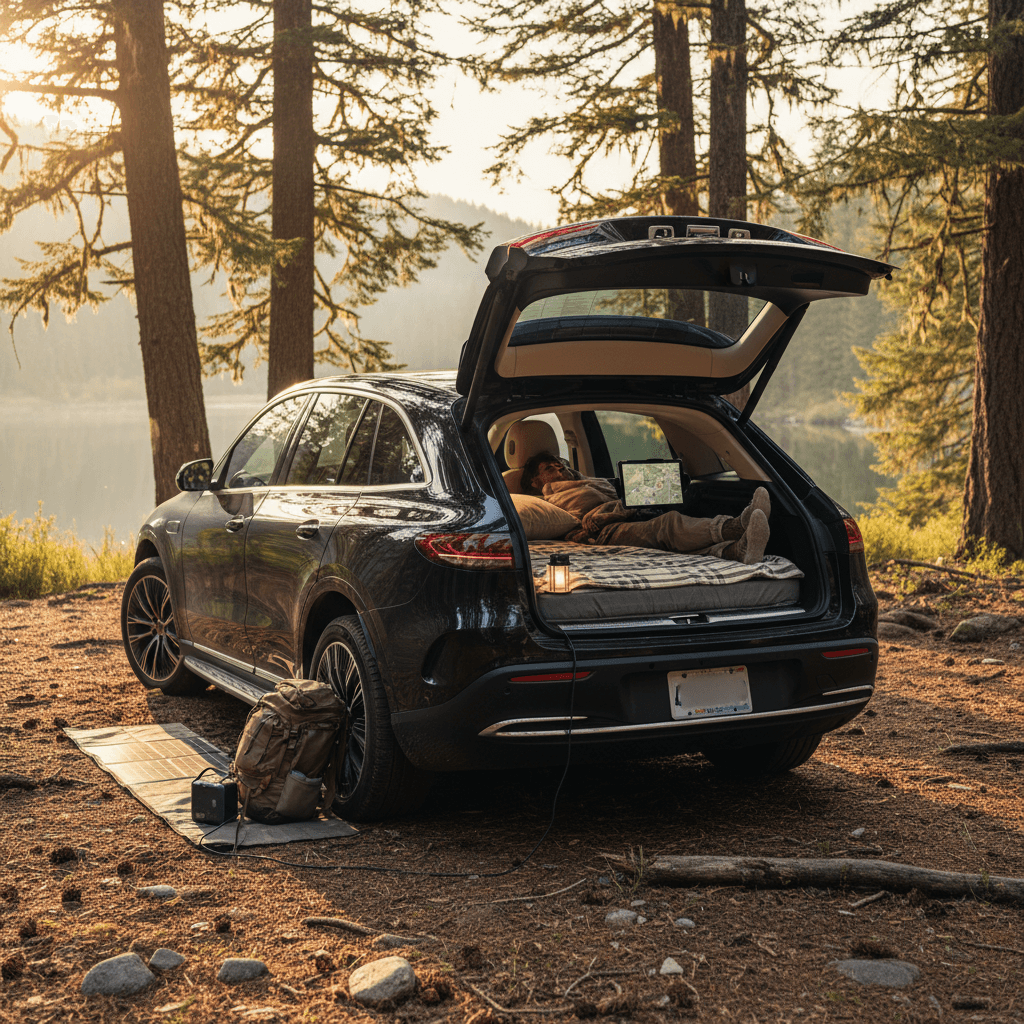
You *can* sleep in a Mercedes EQE, but how comfortable it is depends a lot on whether you have the **EQE sedan or EQE SUV**, how tall you are, and how much work you’re willing to put into a camping setup. Think of the EQE as a solid backup sleeping option for road trips, not a full‑time camper replacement.
Why this question keeps coming up
Quick answer: can you sleep in a Mercedes EQE?
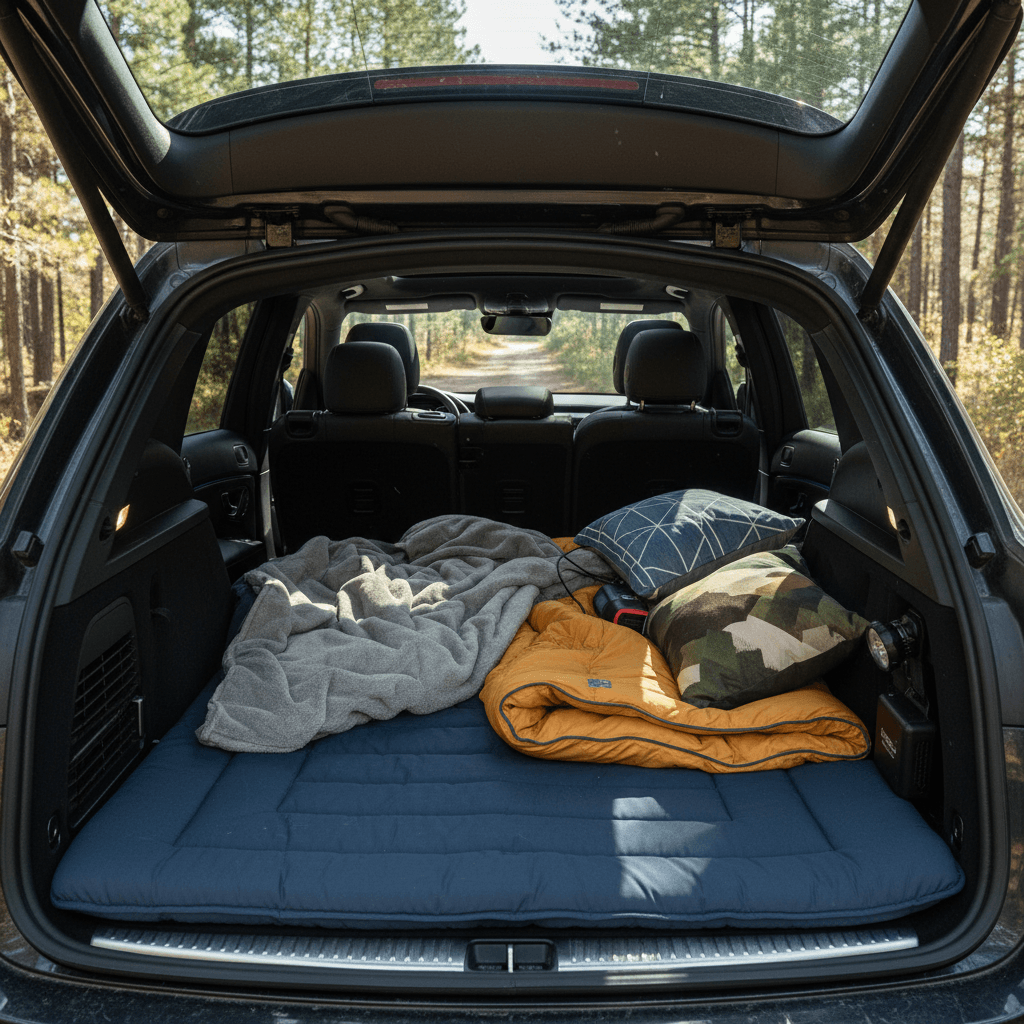
- **Yes, in the EQE SUV** you can create a reasonably flat, usable sleeping surface with the rear seats folded and a camping pad or inflatable mattress. It’s most comfortable for one adult sideways or two adults who don’t mind squeezing.
- **Yes, in the EQE sedan**, but it’s more of a workaround: you’ll be diagonal across the folded rear seats and trunk, and headroom is tighter because of the sloping roof.
- In **both versions**, you’ll likely want a dedicated sleeping pad, window shades, and a plan for climate control, Mercedes does not offer a Tesla‑style “Camp Mode” toggle today.
Safety first
EQE sedan vs EQE SUV: which is better for sleeping?
How the EQE sedan and EQE SUV compare for sleeping
Both can work in a pinch, but they’re not equal
EQE Sedan
- Cargo volume: around 15.2 cu ft with seats up and about 31.6 cu ft with the rear seats folded.
- Pros: Quiet, very comfortable front seats, long overall length (~197 in) so a tall adult can stretch out diagonally.
- Cons: Fixed roofline and smaller trunk opening make headroom and access trickier, especially for two people.
EQE SUV
- Cargo volume: roughly low‑60s cubic feet with all rear seats folded, depending on trim.
- Pros: Squarer cargo area, higher roof, and a tailgate make it easier to lie flat and sit up. Better for gear + one sleeper.
- Cons: Still not as boxy as a van or wagon; the floor has a slight slope and there’s no factory camping package.
If car‑camping is a priority, the **EQE SUV** is the better choice. The sedan can work for the occasional nap or overnight, especially for solo travelers, but you’ll fight the sloping rear roof and narrower trunk opening more often.
How flat do the EQE seats actually fold?
Mercedes doesn’t market the EQE as a camping vehicle, but it does give you split‑folding rear seats in both body styles. The important detail for sleeping isn’t just whether seats fold, it’s how flat and how long the resulting surface is.
EQE rear seat folding basics
What you can expect when you drop the rear seatbacks in different EQE variants.
| Model | Rear seatbacks | Fold quality | Real‑world takeaway |
|---|---|---|---|
| EQE sedan | 60/40 split folding | Nearly flat but with a slight upward angle toward the trunk | OK for laying down with a mattress; you’ll want a pad to level the transition from seat base to trunk floor. |
| EQE SUV (2‑row) | 40/20/40 split folding | Very close to flat, modest slope front‑to‑back | Much more wagon‑like; fine for most camping pads once you shim the floor under your hips. |
| EQE SUV (with sliding/reclining rear seats) | 40/20/40, adjustable backrest angle | Folds to a “cargo position” that’s nearly flat | Best overall EQE configuration if you care about flexibility for cargo *and* sleeping. |
Specs vary a bit by year and trim, but this captures the basic behavior.
Leveling the sleep surface
Sleeping configurations that work in an EQE
Once you know the seats will fold, the real question is: how do you actually arrange yourself and your gear so you can get real sleep, not just a cramped nap in a parking lot?
Practical EQE sleeping layouts
1. Solo sleeper in EQE SUV (best case)
Fold all rear seatbacks flat in the SUV, slide the front passenger seat forward, and lay a 72–75" camping pad from the tailgate up toward the front seat. Sleep diagonally if you’re tall; stash bags and shoes in the footwell on the opposite side.
2. Two adults in EQE SUV
Use the full width of the cargo area with both rear outboard seats folded and the center section down. A full‑ or wide twin‑size inflatable mattress can work if you’re okay with shoulders touching and limited headroom near the hatch.
3. Solo sleeper in EQE sedan
Fold the larger 60% rear seat section, scoot the front passenger seat forward, and sleep diagonally with your head toward the trunk. A narrower pad works better here; keep softer items like duffels under your hips to smooth out the step between seats and trunk.
4. Power‑reclined front seat nap
For quick rest stops, the EQE’s front seats recline far enough to make a decent nap setup. It’s not “full bed” comfortable, but with a neck pillow and pulled‑up hoodie or eye mask, it’s more than good enough for an hour or two.
5. Kid or pet space
Fold part of the rear bench and use a short pad or pet bed on the flatter trunk section. Use a cargo net or gate if you want to keep a dog out of the front seats while you sleep or relax up front.
Climate control and “camp mode” workarounds
Tesla popularized the idea of **Camp Mode**, a single button that keeps HVAC running, screens dimmed, and the car awake overnight. Mercedes doesn’t brand anything in the EQE that way today, but you *can* keep the cabin comfortable for a night with a few extra steps.
- Start with plenty of charge, ideally **60–70% or more** before you settle in for the night.
- Park legally, on level ground, and somewhere you feel comfortable opening a window slightly if needed.
- Set the EQE to **Park**, engage the parking brake if available, then turn on climate control to a moderate temperature (around 68–72°F).
- Use the **MBUX settings** to dim screens or turn off the center display if the light bothers you; Mercedes lets you darken most of the UI.
- If you’re napping in the front seat, leave your belt off and the seat in a relaxed but upright position until you’re done tweaking settings, then recline.
- Check after 15–20 minutes that the car hasn’t timed out your settings. Some owners report needing to occasionally tap a control or door handle to keep the car fully awake on longer stops.
Don’t defeat safety systems
Comfort, noise, and privacy tips
Make the EQE feel like a small bedroom
- Use proper bedding: A 2–3" foam topper or quality camping pad transforms the experience. Add a compact pillow instead of bunching up a jacket.
- Blackout the glass: DIY window shades or purpose‑built reflective panels improve privacy and temperature control, especially in the EQE’s glass‑heavy cabin.
- Manage condensation: Crack one window slightly or use window vents; EV cabins are tight and your breath will fog windows quickly.
- Control clutter: Keep shoes, chargers, and snacks in one designated bin so you’re not hunting around in the dark.
Use the EV’s strengths, and manage its quirks
- Enjoy the quiet: No engine idle means a very low noise floor. In many places, the loudest sound will be HVAC fans or passing cars.
- Block ambient light: Street lamps can turn an all‑glass roof into a giant light panel. Eye masks and window shades make a big difference.
- Secure valuables: If you’re sleeping in rest areas or urban lots, keep laptops and cameras out of sight, preferably locked in the frunk or underfloor storage if equipped.
- Know when to book a room: If you’re already exhausted, fighting with bedding in a tight space often isn’t worth the savings over a budget motel.
Battery use and range planning overnight
What an overnight in the EQE might cost you in range
Because the EQE is all‑electric, you’re not burning fuel or creating exhaust if you keep the HVAC on overnight. You are, however, **spending range**. The exact hit depends on temperature, wind, and how aggressively you heat or cool the cabin, but planning on **4–8% battery use for an 8‑hour stay** in mild conditions is reasonable. In real winter or heat‑wave conditions, it can be significantly higher.
Plan charging around your sleep, not the other way around
When an EQE isn’t the right sleeping solution
There’s a difference between *“I can get some sleep in this car”* and *“this car is my basecamp.”* The EQE lives in the first category. It’s a great road car that can double as an emergency bedroom, but there are times when you should look at other options.
- You’re **over 6'2" and traveling with another adult**, you’ll both fit, but not comfortably for multiple nights in a row.
- You want to **sit upright in the back to read or work**; even the SUV’s rear headroom is more “comfortable crossover” than “mini‑van lounge.”
- You’re planning a **multi‑week camping trip** where you’ll rarely stay in lodgings, dedicated camping gear or a bigger vehicle will be less frustrating.
- You need to haul **bikes, climbing gear, or bulky skis/boards** *and* sleep inside; by the time you load gear, space for a full‑length bed shrinks fast.
EQE + tent: often the sweet spot
How this compares to other EVs and SUVs
If you’re cross‑shopping the EQE with other EVs and you care about car‑camping, it helps to know where it stands. Mercedes prioritized refinement and aero efficiency over cargo‑van boxiness, and that shows up when you try to sleep in the back.
EQE vs other popular EVs for sleeping
Very rough, comfort‑focused comparison, not a full spec sheet
Tesla Model Y
- Pros: Official Camp Mode, flat load floor, big hatch, many owners camp in them.
- Cons: Firmer ride and more road noise than EQE; interior quality is more minimalist.
Rivian R1S
- Pros: Huge interior volume, dedicated camping features, very easy to sleep two adults.
- Cons: Larger, more expensive, and overkill if you only camp occasionally.
Mercedes EQE SUV
- Pros: Quieter, more luxurious, and more efficient than many big adventure SUVs.
- Cons: No one‑touch Camp Mode; less cubic space than true boxy SUVs or vans.
The EQE SUV slots into a middle ground: **more comfortable and refined than many adventure‑oriented EVs**, but not as space‑efficient for sleeping as a boxy crossover or van. The sedan is a notch below even that, simply because sedans are fundamentally harder to sleep in than hatchbacks and SUVs.
Shopping used EQE or other EVs with camping in mind
If you’re considering a **used EQE** specifically because you’d like something that can do double duty, luxury commuter during the week, occasional sleeper on road trips, there are a few extra things worth checking before you buy.
Used EQE checklist for occasional sleeping and road‑trips
1. Focus on the EQE SUV if camping is important
You’ll get a taller roof, hatchback access, and significantly more usable cargo space for mattresses and gear than in the sedan. If you already know you’ll be camping several times a year, the SUV is the safer bet.
2. Check rear‑seat folding and cargo floor
On a test drive, literally fold the rear seats and look for steps, slopes, and gaps. Imagine where your hips and shoulders will land. If you shop through a digital retailer like <strong>Recharged</strong>, look for interior and cargo photos, or ask a specialist to walk the car for you on video.
3. Look at battery health, not just mileage
Overnights with HVAC on use the same high‑voltage battery you drive with. A vehicle with a healthy pack will handle years of mixed commuting, travel, and the occasional camp night far better than one that’s already heavily degraded. Recharged’s <strong>Score Report</strong> gives you a verified snapshot of that battery health before you buy.
4. Verify charging options near your usual routes
If your road‑trips usually take you into rural areas, make sure there’s a usable DC fast‑charging network where you want to sleep. Losing 10–20 miles of range overnight is no big deal near a highway corridor, but it matters if the nearest charger is 60 miles away.
5. Consider alternatives if camping is your top use case
If your vision is months of vanlife, a compact electric SUV or van with a boxier shape may be a better long‑term fit. A retailer focused on EVs, like Recharged, can help you compare EQE, EQB, and other used EVs with more space.
FAQ: sleeping in a Mercedes EQE
Frequently asked questions about sleeping in an EQE
Bottom line: can the Mercedes EQE be your bed?
The **Mercedes EQE can absolutely double as a quiet, climate‑controlled bedroom in a pinch**, especially in SUV form. The seats fold, the cabin is hushed, and the big battery can run HVAC much more safely than an idling gas engine. What it can’t quite do is replace a dedicated camper or big adventure SUV for weeks of life on the road.
If your use case is **occasional overnights on road trips, naps at trailheads, or the odd night at a charging stop**, the EQE is up to the job, just bring a good sleeping pad, some window shades, and a realistic plan for battery management. If camping and sleeping in your vehicle is central to how you travel, it’s worth stepping back and comparing the EQE with more space‑efficient EVs before you buy.
Either way, if you’re exploring a used EQE or other EVs, working with a specialist like Recharged makes that process easier. You get **verified battery health, fair pricing, and EV‑savvy guidance** on how well each vehicle will fit your actual life, whether that’s commuting, road‑tripping, car‑camping, or all of the above.