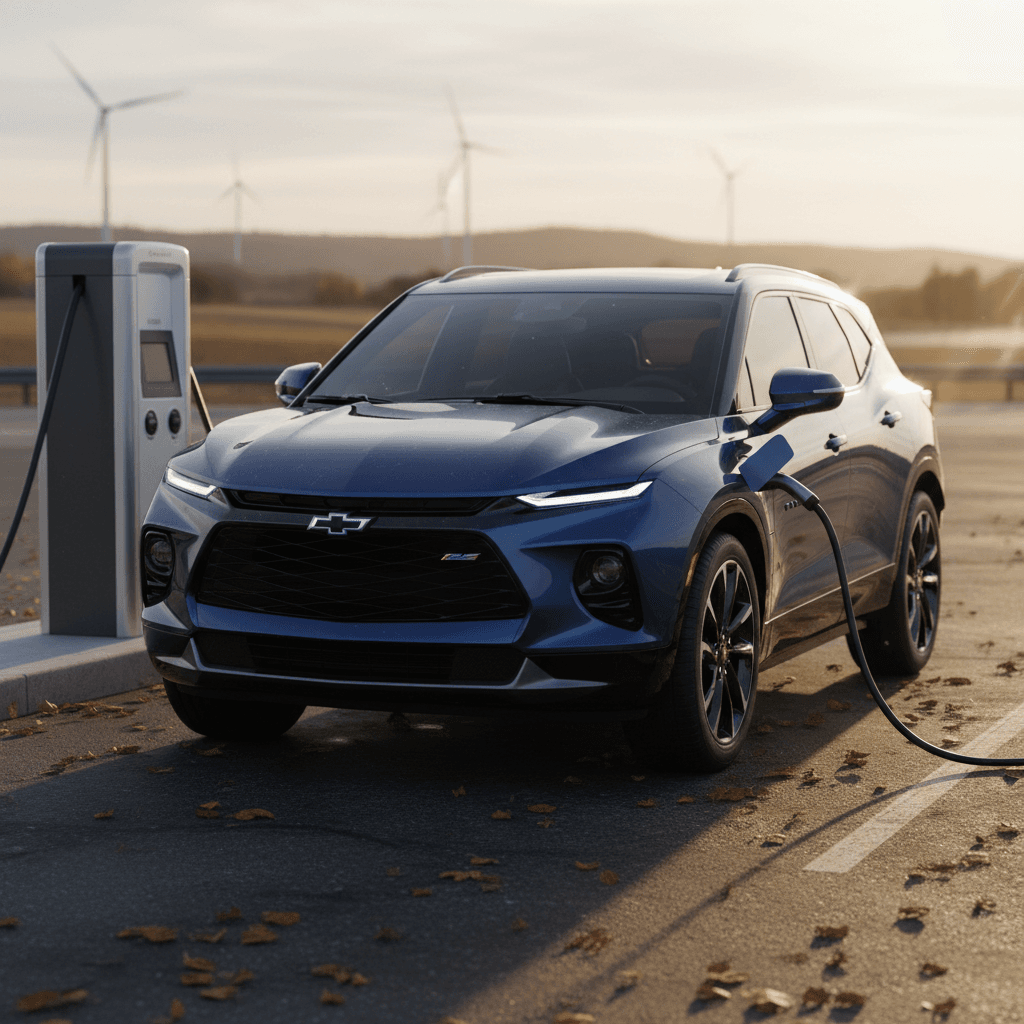
The 2024 Chevy Blazer EV is General Motors’ boldest electric SUV yet, part muscle car, part family hauler, wrapped around GM’s Ultium battery tech. On paper, it promises up to the mid‑300s in miles of range, quick DC fast charging, and even a 600‑plus‑horsepower SS trim. But how does it actually drive, charge, and live with day to day, and is it a smart buy, especially if you’re considering a used Blazer EV through a marketplace like Recharged?
Quick verdict
2024 Chevy Blazer EV: Key Numbers
2024 Chevy Blazer EV at a Glance
Chevrolet revived the Blazer name in the gas world as a sporty crossover. The 2024 Blazer EV goes further: it sits on GM’s dedicated BEV3 platform and Ultium battery system, with distinct styling that looks more concept car than crossover. You can spec it mild (LT), sporty (RS), or full‑on hot rod (SS).
Blazer EV Pros and Cons
Where this electric SUV shines, and where it stumbles
What you’ll like
- Sharp, aggressive styling that actually looks like a performance SUV.
- Strong range for most trims, especially RS RWD with the larger 102 kWh pack.
- Quick performance from dual‑motor versions, especially the SS.
- Spacious cabin with good rear‑seat room and usable cargo space.
- Advanced tech options like Super Cruise and a huge 17.7‑inch touchscreen.
Where it falls short
- Early software bugs and a temporary sales stop dented confidence.
- Charging speeds are competitive but not class‑leading in real use.
- No native Apple CarPlay or Android Auto in favor of GM’s Google‑built‑in ecosystem.
- Pricing overlaps luxury rivals and smaller, more efficient EVs.
- Rear visibility is compromised by the sporty roofline and small rear glass.
Powertrain, Range & Trims: LT, RS and SS Explained
Instead of a single powertrain, the 2024 Blazer EV is a mix‑and‑match menu of battery sizes, motor layouts, and trim levels. That’s great for tailoring the SUV to your needs, but confusing if you’re just trying to figure out which one fits your life.
2024 Chevy Blazer EV Trim & Range Overview
Key specs for the most common 2024 Blazer EV configurations. Exact figures can vary slightly by wheel size and options.
| Trim | Drivetrain | Battery (usable) | Estimated range | DC fast-charge peak |
|---|---|---|---|---|
| LT eAWD | Dual‑motor AWD | 85 kWh | ~279 mi EPA | Up to 150 kW |
| RS eAWD | Dual‑motor AWD | 85 kWh | ~279 mi EPA | Up to 150 kW |
| RS RWD | Single‑motor RWD | 102 kWh | ~320–324 mi est. | Up to 190 kW |
| SS pAWD | Performance AWD | 102 kWh | ~290–300 mi est. | Up to 190 kW |
Always confirm final specs for the exact VIN you’re considering, especially on the used market.
Trim choice tip
- LT (2LT in most markets): Dual‑motor all‑wheel drive, 85 kWh pack, mid‑to‑high‑200‑mile range. This is your more affordable, well‑equipped family spec.
- RS: Available in eAWD or RWD. The eAWD shares the 85 kWh battery with similar range; the RWD gets the 102 kWh pack and the longest range in the lineup.
- SS: Performance AWD with the big 102 kWh pack and 600‑plus horsepower, capable of sub‑4‑second 0–60 mph runs when you engage Wide Open Watts mode.
Real‑world range reality
Charging Experience: Ultium Speed vs Real-Life Stops
On paper, the Blazer EV’s charging specs are right where a modern midsize electric SUV should be: competitive fast‑charge rates and a solid onboard AC charger for home use. In practice, charge curves and software matter just as much as peak kilowatts.
Home charging
- 11.5 kW Level 2 onboard charger on most trims means a 0–100% charge at home typically takes about 8–10 hours on a 240V, 48‑amp circuit.
- Level 1 (120V) is strictly emergency‑only, think overnight top‑ups, not full charges.
- If you’re installing home charging, a dedicated 40–60 amp circuit and a quality Level 2 station are the way to go.
DC fast charging
- Smaller 85 kWh pack peaks around 150 kW.
- Larger 102 kWh pack can reach up to 190 kW in ideal conditions.
- GM quotes roughly 69–78 miles of range added in 10 minutes, depending on battery size and trim.
- Like most Ultium vehicles, charge speeds taper noticeably after ~50–60% state of charge.
Don’t chase 100% on road trips
Interior, Space & Tech: Sporty Cabin With a Few Head-Scratchers
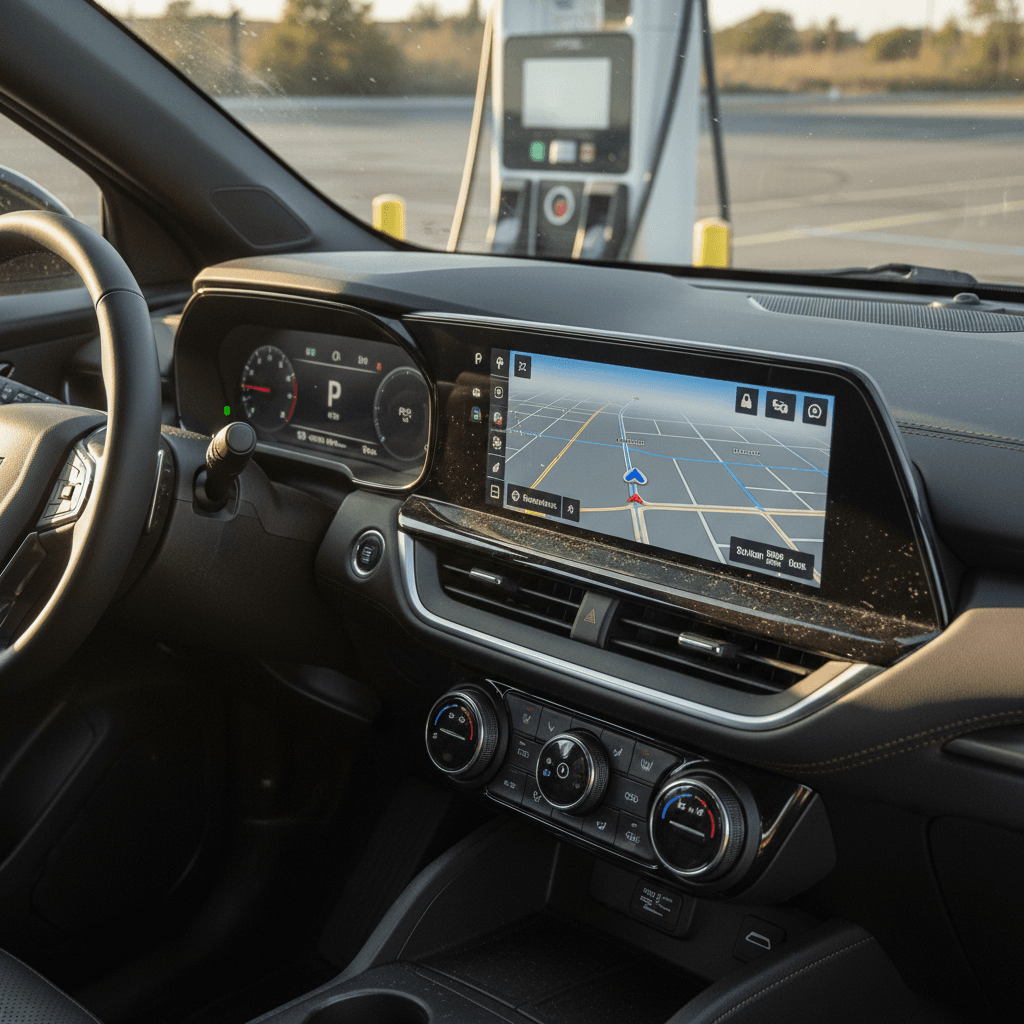
Slide into the Blazer EV and you can tell Chevy wanted this to feel more Camaro than crossover. The dashboard is low and wide, the vents are sculpted, and RS and SS models add sporty details like a flat‑bottom steering wheel and available contrasting trim. Rear space is generous enough for adults, and cargo room is competitive with other midsize SUVs, even if the tapered roof slightly compromises vertical space.
Tech Highlights Inside the Blazer EV
High‑end hardware with a controversial software strategy
Big, bold screens
A massive 17.7‑inch central touchscreen and an accompanying digital gauge cluster give the cabin a high‑tech feel. Graphics are sharp and the layout is mostly intuitive once you learn GM’s latest menu structure.
Super Cruise option
On the right trims and packages, you can get Super Cruise, GM’s hands‑free driver‑assist system for compatible highways. It’s one of the best semi‑autonomous systems available today.
Google built‑in, no CarPlay
Here’s the twist: Chevy deletes Apple CarPlay and Android Auto. Instead, you get Google built‑in with native Google Maps, Assistant, and app support. Some drivers will love the integration; others will miss the simplicity of just plugging in their phone.
CarPlay/Android Auto caveat
Ride, Handling & Performance: Not Just a Pretty Face
Every Blazer EV feels more buttoned‑down than the average family crossover. Even the LT and RS eAWD trims deliver strong passing power thanks to instant electric torque, and the low battery placement keeps the SUV planted in corners. Step up to the SS, and you get serious shove, this is the quickest SS‑badged Chevy the company has ever built.
On-the-road impressions
Confident, planted feel
The Ultium platform’s low center of gravity gives the Blazer EV a stable, almost sporty stance in corners, especially in RS and SS trims with wider rubber.
Straight‑line thrills in SS
Engage Wide Open Watts in the SS and you’re in sub‑4‑second 0–60 mph territory. It’s the kind of punch that makes freeway merges feel almost comically easy.
Steering and brakes
Steering is tuned more for stability than razor‑sharp feedback. Brembo front brakes on the SS add serious stopping power, but around town, the pedal feels natural and easy to modulate.
Noise & comfort
Road and wind noise are well controlled, though big wheel/tire combos on RS and SS trims can transmit more bumps. If you live on rough pavement, consider the smaller wheels for a more compliant ride.
Performance sweet spot
Software Woes & Reliability: What Shoppers Should Know
No modern EV review is complete without talking about software. The Blazer EV’s launch was marred by early infotainment glitches and charging communication issues that led GM to temporarily halt sales while engineers worked on fixes. Those problems have been addressed with updates, but they’re important context, especially if you’re shopping used.
- Early owners and reviewers reported frozen or blank screens, slow boots, and occasional glitches in the Google‑based infotainment system.
- Some vehicles saw DC fast‑charging hiccups, where the car and charger didn’t play nicely until software patches were applied.
- GM initiated a temporary stop‑sale and rolled out updated software that dealers could install; newer builds and updated vehicles should be less affected.
- As always with a first‑generation EV, expect ongoing over‑the‑air updates, great for improvements, but it means the experience can change over time.
Used buyer checklist
Price & Cost of Ownership: Where the Blazer EV Fits
The Blazer EV isn’t a budget play. Even the LT eAWD lands in what many buyers think of as entry‑luxury territory, while fully optioned RS and SS trims walk right up to, and sometimes past, rivals from premium brands. Where it redeems itself is in performance, tech options, and the long‑term savings of electric driving.
Blazer EV Pricing Snapshot (New)
Approximate MSRP ranges before incentives. Actual prices vary by options and region.
| Trim | Approx. MSRP (new) | Positioning |
|---|---|---|
| LT eAWD | Mid–high $50Ks | Well‑equipped family EV SUV |
| RS eAWD / RWD | Around $60K–low $60Ks | Sporty styling, more range and features |
| SS pAWD | Mid–$60Ks and up | High‑performance halo model |
Used market pricing will depend heavily on mileage, condition, and how the early software story continues to evolve.
Running costs
- Electricity is typically cheaper per mile than gasoline, especially if you can charge at home overnight on a favorable rate plan.
- Like most EVs, there’s no engine oil to change and fewer moving parts overall, which generally reduces routine maintenance costs.
- Big, sticky tires on RS/SS trims and heavy curb weight mean you’ll want to budget realistically for tire replacement.
Incentives & depreciation
- Eligibility for federal and state incentives will depend on where and how you buy (new vs used, income, assembly location, and more).
- First‑wave EVs often see steep early depreciation. For patient shoppers, that can make a lightly used Blazer EV an appealing value versus new.
- Through Recharged, you can compare used Blazer EV pricing against fair‑market values and see how its battery health stacks up against peers.
2024 Blazer EV vs Rival Electric SUVs
The Blazer EV lives in a busy neighborhood. It squares off against mainstream options like the Hyundai Ioniq 5 and Kia EV6, as well as more upscale entries like the Cadillac Optiq, Tesla Model Y, and Ford Mustang Mach‑E. Each takes a different angle.
How the Blazer EV Stacks Up
Notable strengths and tradeoffs versus key competitors
Against Kia EV6 / Hyundai Ioniq 5
The Korean pair generally win on charging speed and efficiency, particularly on 800‑volt hardware. The Blazer EV counters with more traditional SUV styling, available Super Cruise, and the high‑drama SS trim.
Against Tesla Model Y
Model Y still rules for charging network access and software polish. The Blazer EV fights back with a richer cabin feel in higher trims and a more distinctive exterior, but gives up some tech simplicity by skipping CarPlay/Android Auto.
Against Mustang Mach‑E & Cadillac Optiq
The Blazer EV lands between Mach‑E sportiness and Optiq’s more premium vibe. Its RS and SS trims feel bolder than most Mach‑E variants, but some rivals offer better efficiency and a gentler pricing ladder.
The positioning
Who the 2024 Blazer EV Is (and Isn’t) For
Is the Blazer EV Right for You?
Great fit if…
You want a <strong>sporty‑looking family SUV</strong> with real acceleration and confident handling.
You can charge at home, so occasional DC fast‑charge quirks aren’t a deal‑breaker.
You like the idea of <strong>Google‑built‑in</strong> and don’t mind skipping CarPlay/Android Auto.
You’re cross‑shopping Mach‑E, EV6, and Model Y but prefer GM’s design language and dealer network.
Probably not for you if…
You demand the <strong>fastest possible DC charging</strong> and top‑tier efficiency for long‑distance road‑tripping.
You’re allergic to new‑tech teething issues and want a platform that’s been on the road for many years.
Your budget points you toward compact EVs or plug‑in hybrids with lower purchase prices.
You can’t live without plugging your phone in for <strong>CarPlay or Android Auto</strong> every drive.
Buying a Used Chevy Blazer EV: Smart Play or Wait-and-See?
Because the Blazer EV launched with premium pricing and very new software, early depreciation could make used examples especially interesting in the coming years. That said, a used Blazer EV isn’t the sort of vehicle you buy sight‑unseen from a random listing, you want data, documentation, and support.
Used Blazer EV Buying Checklist
1. Verify software updates
Confirm that all software campaigns, recalls, and recommended updates have been completed. Ask for service records or have a dealer, or a marketplace like Recharged, pull the history.
2. Check battery health
Range depends heavily on pack condition. A <strong>Recharged Score Report</strong> includes a battery health diagnostic so you can see how the pack compares to its original capacity and to similar Ultium vehicles.
3. Inspect charging behavior
During a test drive, plug into both Level 2 and, if possible, a DC fast charger. Make sure the car connects reliably, ramps up to expected speeds, and doesn’t throw error messages.
4. Match trim to your needs
An SS might be tempting, but its big wheels and extra power may not be worth it if your driving is mostly commuting. An LT or RS RWD could give you more range and comfort for the money.
5. Compare total cost of ownership
Factor in insurance, potential tire costs, and at‑home charging installation. A transparent marketplace like <strong>Recharged</strong> can help you stack the Blazer EV against other used EVs on price, battery health, and expected costs.
2024 Chevy Blazer EV FAQ
Frequently Asked Questions
Bottom Line: Is the 2024 Chevy Blazer EV Worth It?
The 2024 Chevy Blazer EV is a statement piece in the EV SUV world: bold to look at, legitimately quick in upper trims, and backed by GM’s Ultium platform and Super Cruise tech. Its downsides, early software hiccups, middling efficiency versus the best rivals, the loss of CarPlay/Android Auto, and a price tag that brushes luxury territory, mean it’s not the universal answer for every shopper.
If you’re drawn to its styling, appreciate a sportier drive, and are comfortable living inside GM’s software ecosystem, the Blazer EV can be a deeply satisfying electric SUV, especially in RS RWD or SS form. And if you’re EV‑curious but price‑sensitive, keeping an eye on the used Blazer EV market could pay off. Through Recharged, you’ll be able to compare real battery health, pricing, and ownership costs across multiple EVs, so you can decide if Chevy’s electric blazer is the right fit for your garage, not just your Instagram feed.