If you’re eyeing a 2024 BMW i7, especially on the used market, you’re probably less interested in marketing numbers and more interested in how far it really goes between charges. The good news is that in independent range tests, the 2024 BMW i7 generally comes close to, and sometimes even beats, its EPA estimates when driven at sane highway speeds. The better news: once you know how wheels, weather, and driving style affect it, the i7’s range becomes very predictable.
Key takeaway up front
BMW i7 battery and EPA range by trim
Before we get into range tests, you need a baseline. All 2024 BMW i7 variants share the same big pack, about 105.7 kWh gross, 101.7 kWh usable, but range depends heavily on motor layout and wheel size. Here’s how the EPA numbers shake out for 2024.
2024 BMW i7 EPA range by trim and wheel size
Official EPA combined range ratings for the main 2024 i7 variants. Numbers may vary by a few miles depending on exact configuration, but this captures the real-world shopping picture.
| Trim (2024) | Drive | Wheel size | EPA range (mi, combined) | Est. efficiency (Wh/mi incl. losses) |
|---|---|---|---|---|
| i7 eDrive50 | RWD | 19-inch | ≈321 | ~380 |
| i7 eDrive50 | RWD | 20-inch | ≈301 | ~400 |
| i7 eDrive50 | RWD | 21-inch | ≈311 | ~383 |
| i7 xDrive60 | AWD | 19-inch | ≈317 | ~374 |
| i7 xDrive60 | AWD | 20-inch | ≈298 | ~401 |
| i7 xDrive60 | AWD | 21-inch | ≈307 | ~383 |
| i7 M70 xDrive | AWD performance | 21-inch | ≈285 (some configs as low as mid‑270s) | ~410–430 |
Wheel size has almost as much impact on range as the choice between eDrive50 and xDrive60.
Why your Monroney might not match this table
2024 BMW i7 battery and range at a glance
Real-world 2024 BMW i7 range tests
The question shoppers really ask is: "What does it do at 70 mph on the highway?" Independent testing and owner data paint a fairly consistent picture: the 2024 i7 is one of the rare big luxury EVs that can match or slightly exceed its EPA rating in steady‑state highway use, at least in favorable conditions.
- A major enthusiast outlet recorded about 310 miles from an i7 xDrive60 on 21‑inch wheels during a 70‑mph highway loop, slightly above that specific car’s EPA rating.
- Other long highway tests generally land the xDrive60 between ~255–275 miles at 70 mph, depending on temperature, elevation, and wheel/tire setup.
- The single‑motor eDrive50 typically does a little better, think mid‑260s to high‑270s at 70 mph, with 300+ miles achievable in more mixed city/highway driving.
- The M70’s extra power exacts a toll: in the real world you’re often looking at 240–260 miles at 70 mph.
Why highway results matter more than EPA city numbers
Highway vs city: how driving conditions shape range
City & mixed driving
In city and suburban use, the i7’s big pack and strong regen work in your favor. Conservative drivers routinely see 300–320 miles per charge in mixed driving, even in the heavier xDrive60. Frequent stops let regenerative braking recover energy and cabin speeds are lower, which cuts aero drag.
For a typical U.S. commute of 25–40 miles per day, that means you’re charging a couple of times a week at most, even if you never use DC fast charging.
Pure highway driving
On the interstate at 70–75 mph, the story flips. A tall, heavy sedan pushing a lot of air will always use more energy. Expect roughly 255–280 miles in mild weather for most trims with efficient wheels, and closer to 230–260 miles if you add big wheels, cold weather, or a heavy right foot.
That’s still more than enough for 3–4 hour stints between restroom and coffee stops, which is how most people break up long road trips anyway.
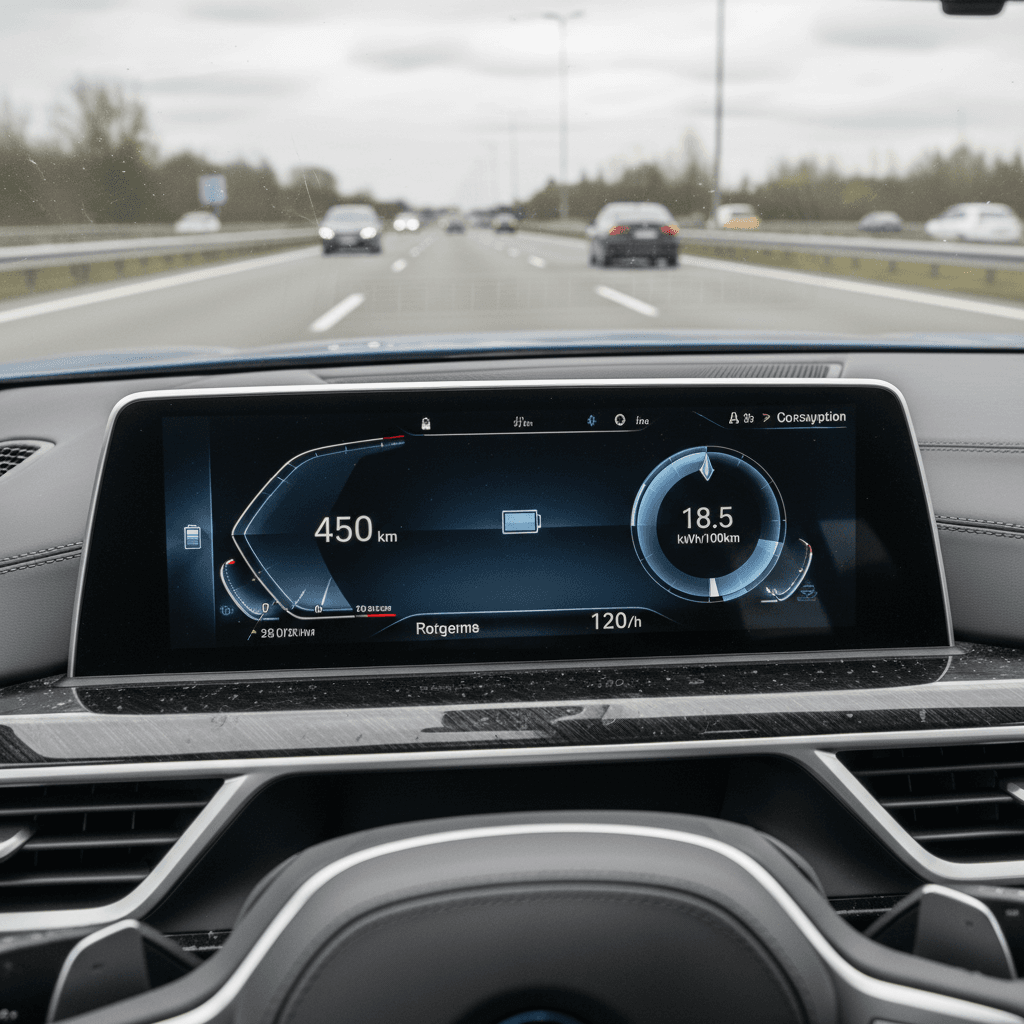
Use the built-in trip planner
Wheels, weather, and weight: three big range killers
With a car like the i7, the choice between trim levels often matters less than the choices you make after you tick the order sheet: wheels, climate, and how much stuff and people you haul. Those three factors can swing real‑world range by 15–25%.
How options and conditions change your i7’s range
Same battery, very different outcomes depending on how you spec and drive it.
1. Wheel size & tires
EPA data shows the 19-inch wheels as the efficiency champ for both eDrive50 and xDrive60. Stepping up to 20s can cost roughly 15–20 miles of rated range, while 21s typically land in between, often slightly better than 20s thanks to lower rolling resistance tires.
In the real world, a bigger wheel with a grippier performance tire can easily add 20–30 Wh/mi, or 20–25 miles of lost range on a full charge.
2. Weather & climate control
Cold weather can be brutal. Around freezing temperatures, expect 10–25% less range, especially if the car lives outside and you rely heavily on cabin heat. BMW’s pre‑conditioning helps a lot if you charge at home and warm the car while plugged in.
Hot weather is usually less punishing, but 90–100°F days with max A/C will still nibble away at your best‑case numbers.
3. Weight & speed
Fill all five seats, load the trunk, and cruise at 80 mph and you’re stacking the deck against efficiency. A fully loaded i7 running 80 in a crosswind can easily behave like a sub‑250‑mile car, even if the same setup could clear 280 miles at 65–70 mph.
The physics aren’t unique to BMW, any big luxury EV will show the same pattern.
Cold-weather reality check
Charging speeds and road-trip viability
Range is only half the road‑trip story. The other half is how quickly you can recover that range on DC fast chargers. Here the i7 is solid if not class‑leading: think of it as a car that prefers a consistent 150–190 kW rather than headline‑grabbing peaks.
- On a strong DC fast charger, the i7’s 101.7‑kWh pack can typically go from 10–80% in about 30–40 minutes in ideal conditions.
- Instrumented tests have shown a 10–90% session taking about 47 minutes, averaging just over 100 kW and peaking around 190–195 kW.
- In real travel, that’s usually enough to add 80–100 miles in roughly 10–12 minutes when starting from a low state of charge.
- BMW has partnered with Electrify America, and many new i7s include a bucket of complimentary DC energy (often quoted as up to 2,000 kWh or three years of 30‑minute sessions, depending on model year paperwork).
Quick checklist for a smooth DC fast-charge stop
Arrive with 10–25% battery
The i7 charges fastest when the pack is low. If navigation says you’ll arrive with 40–50%, it’s usually better to drive a bit farther before stopping.
Precondition the battery
Use BMW’s built‑in route planning and select the charger as your destination. The car will warm or cool the pack so you can hit closer to that 190 kW peak on arrival.
Plan for 25–35 minutes, not 5–10
Even if you only "need" 10 minutes, assume real‑world connector issues, payment hiccups, or sharing a station may stretch that stop. Build that into your mental range model.
Use 80% as your road-trip target
The last 20% of a DC charge is always slower. For time‑efficient travel, charge roughly 10–80%, drive, and repeat.
How the i7 compares to Tesla Model S, Mercedes EQS, Lucid Air
The 2024 i7 competes in what might be the most unforgiving segment in EVs: big, expensive luxury sedans where everyone chases maximum range. Here’s the honest picture.
2024 luxury EV sedan range comparison
High-level comparison of the 2024 BMW i7 versus key rivals on EPA range and approximate real‑world highway range.
| Model & trim (approx.) | Battery (usable kWh) | EPA range (mi) | Typical 70‑mph range (mi) | Notable tradeoffs |
|---|---|---|---|---|
| BMW i7 eDrive50 | ~101.7 | Up to ~321 | ~260–280 | Balanced efficiency, still a very heavy car. |
| BMW i7 xDrive60 | ~101.7 | Up to ~317 | ~255–275 | AWD traction and power; slight range hit. |
| BMW i7 M70 | ~101.7 | Mid‑270s to high‑280s | ~240–260 | Huge power, real‑world range penalty. |
| Mercedes EQS 450+ | ~108–115 | Up to ~350 | ~270–290 | More aero‑focused, big trunk hatch, softer drive. |
| Tesla Model S Long Range | ~95–100 | Up to ~405 | ~300+ | Class‑leading range, tighter rear seat, different luxury philosophy. |
| Lucid Air Pure/Touring | ~88–112 | Over 400 in some trims | ~310–340 | Efficiency leader, but less traditional luxury sedan feel. |
The i7 rarely wins on headline range numbers, but it’s competitive once you adjust for size, comfort, and equipment.
The i7 isn’t a range king, and that’s okay
Range and battery health when buying a used BMW i7
On the used market, range is really a proxy for battery health rather than brochure specs. A 2024 i7 that used to be rated at 298 miles when new but only shows 240 miles at 100% charge today is telling you something important about its history.
What "good" looks like after a few years
Modern BMW packs have generally aged well in normal use. With sane charging habits, it’s reasonable to expect an early‑life i7 (1–3 years old) to retain 90%+ of its original usable capacity. That means the in‑car guess‑o‑meter at 100% should still read reasonably close to its original EPA‑adjusted number in mild weather.
Minor deviations, say 5–10%, can come from software changes, tire choices, or ambient temperature rather than true degradation.
Red flags in a used i7 range test
- Huge drop in indicated range at 100% (20%+ lower than expected for that trim and wheel size).
- Rapid drop from 100% to 90% in just a few miles of gentle driving.
- A history of frequent DC fast charging to 100%, especially in hot climates.
- Warning messages related to high‑voltage battery or thermal management.
Individually these aren’t always deal‑breakers, but together they warrant a deeper battery health check.
How Recharged helps de‑risk used i7 range
Tips to maximize real-world BMW i7 range
Simple habits that add real miles to your BMW i7
1. Choose 19-inch wheels if range matters
If you’re spec‑ing or shopping, remember the EPA data: the 19‑inch wheel package consistently delivers the best efficiency. If you don’t really need 20s or 21s, don’t pay for looks with range.
2. Precondition in extreme temperatures
Use scheduled departure or the app to pre‑heat or pre‑cool the cabin while plugged in. That puts the energy burden on the grid rather than the battery and reduces the initial hit to range.
3. Use Eco Pro and efficient drive modes on the highway
The i7’s Eco‑oriented modes soften throttle response, dull the temptation to spike power, and adjust climate settings slightly, all of which add up on a 3–4 hour drive.
4. Keep speeds in the low 70s, not the 80s
Aerodynamic drag rises with the square of speed. Dropping from 80 to 70 mph can easily be worth another <strong>15–25 miles</strong> of range on a full charge.
5. Check tire pressures regularly
Under‑inflated tires are silent range killers, especially on heavy EVs. Follow the door‑jamb placard and check pressures at least once a month and before long trips.
6. Plan charges before you’re desperate
Use BMW navigation plus third‑party apps to avoid getting stuck at 2–3%. The lower you run the pack, the more your thermal management has to work, and the less margin you have for reroutes or busy stations.
FAQ: 2024 BMW i7 range and battery
Frequently asked questions about 2024 BMW i7 range
Bottom line: should range stop you from buying an i7?
If you strip away the marketing, the 2024 BMW i7 is a very honest car from a range perspective. It carries a huge battery, pushes a lot of air, and pampers its occupants, and still manages real‑world numbers that are competitive with other big luxury EV sedans. Spec it with the right wheels, treat winter realistically, and respect physics on the highway, and you’ll have more than enough range for daily life and serious road trips.
For new‑car shoppers, the choice is mostly about personality: if you want maximum miles at all costs, a Lucid Air or Tesla Model S still sits at the top of the efficiency heap. If you want a full‑size luxury sedan that happens to be electric, the i7 is built for you and your passengers first, and the range is a byproduct of that mission.
If you’re looking at a used BMW i7, range and battery health become even more important. That’s where a transparent marketplace like Recharged can help, every car comes with a Recharged Score battery health report, fair market pricing, and EV‑specialist support so you know exactly what kind of real‑world range you’re buying into before it ever shows up in your driveway.