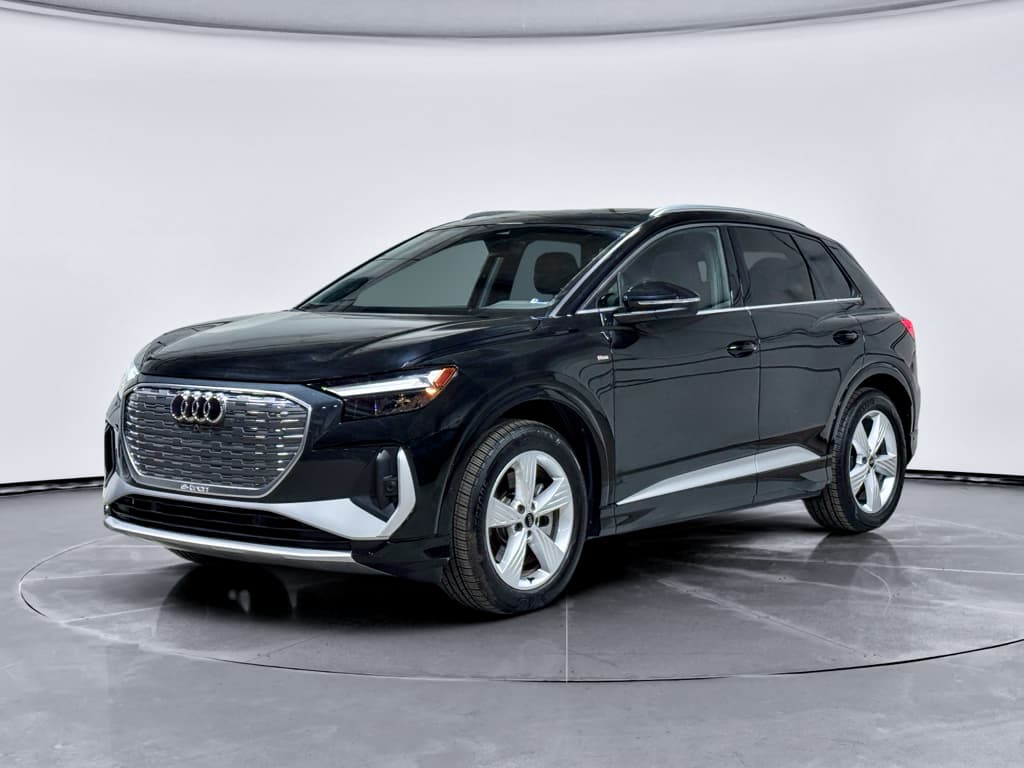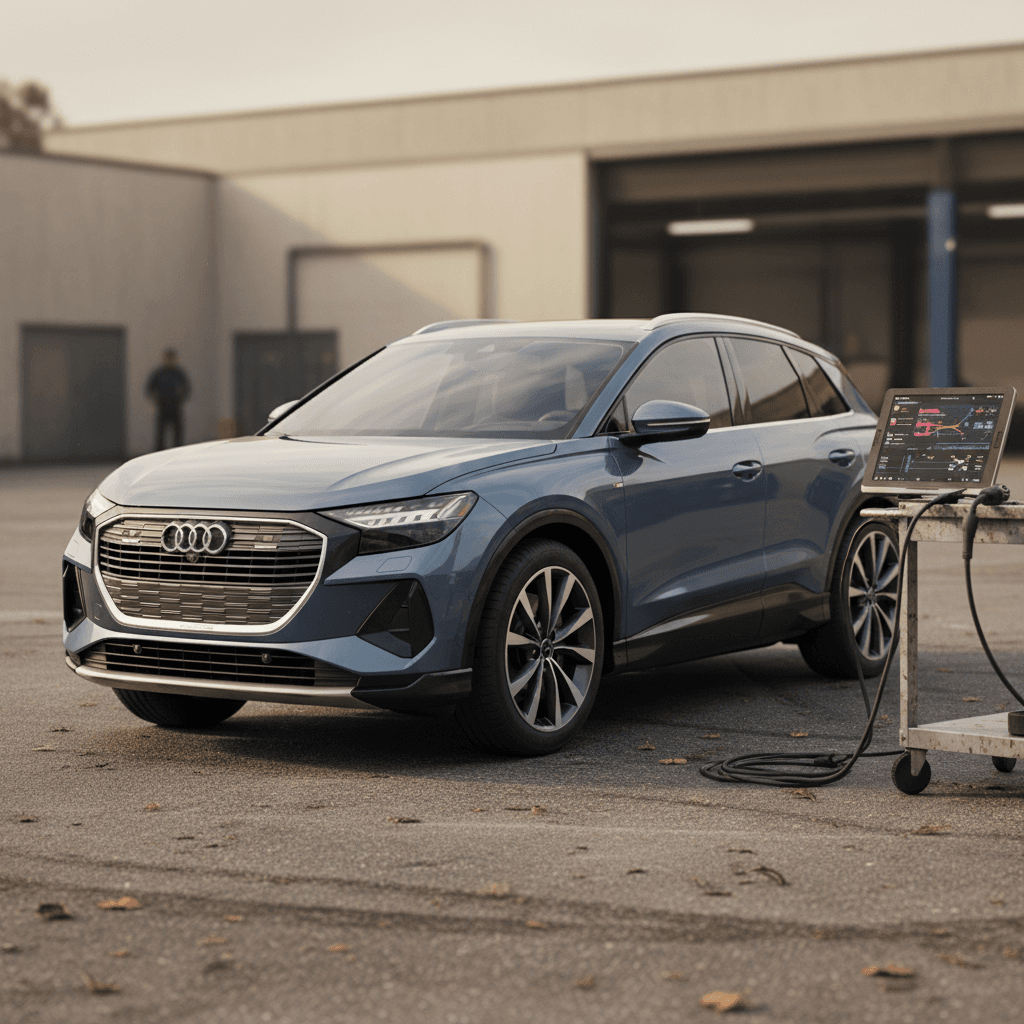
If you’re looking at a compact luxury EV SUV, the **2024 Audi Q4 e-tron reliability rating** is going to weigh heavily on your decision. On paper it blends Audi refinement with VW Group’s MEB EV platform, but owner reports and third‑party scores paint a more nuanced picture than “typical German solidity.” This guide breaks down the data, the real‑world issues, and what it all means if you’re considering a new or used Q4 e-tron.
Quick takeaway
Overview: 2024 Q4 e-tron reliability rating at a glance
Headline reliability scores for the 2024 Audi Q4 e-tron
Stepping back, those numbers put the 2024 Q4 e-tron in a **middle ground**: not a chronic problem child like some early EV experiments, but clearly **not a benchmark for bulletproof reliability** either. Where it struggles is exactly where many modern EVs struggle, complex software, infotainment, and some charging hardware, rather than with the basic electric drivetrain or high‑voltage battery pack.
Context matters
How major sources rate the 2024 Audi Q4 e-tron
J.D. Power: Fair predicted reliability
For the 2024 Audi Q4 e-tron, J.D. Power assigns an overall score around the low 70s out of 100, with a **Quality & Reliability sub‑score of roughly 67/100**, explicitly labeled “Fair” and below the threshold J.D. Power considers solidly reliable. The score is based primarily on data from prior model years of the same generation, adjusted for changes in the 2024 refresh.
- A **Quality & Reliability score in the 60s** signals more issues than the average new vehicle, especially around defects and design problems.
- Driving experience and resale sub‑scores land in the low 70s, roughly **mid‑pack for a luxury EV SUV**.
- Audi’s broader brand reputation helps on the resale side, but can’t fully compensate for early‑generation EV wrinkles.
Consumer Reports: Below‑average reliability
Consumer Reports rates the Q4 e-tron line as **less reliable than the average 2024 vehicle**, and notes that the model has been subject to multiple recalls. The problem areas they highlight echo what you see in owner forums: **in‑car electronics, climate system quirks, and some charging‑system glitches** rather than engine‑style mechanical failures.
How CR’s view compares to peers
Owner reviews: Mixed but improving
Owner feedback on sites like Edmunds and Kelley Blue Book is **split**. Plenty of drivers praise the Q4’s comfort, quiet ride, and usable range, but a meaningful minority report repeat dealer visits for **software bugs, warning lights, or air‑conditioning issues**. A pattern you see across threads is that the **2022–2023 builds were rougher**, and some of those issues carry through into early 2024 production even as Audi has rolled out software updates and component fixes.
Look at build date, not just model year
Common 2024 Audi Q4 e-tron problems owners report
Drill into owner stories and service bulletins, and a few **recurring themes** emerge. None of them are unique to the Q4, this is a shared story across many first‑ and second‑generation EVs, but you should understand where the pain points are likely to show up.
Most common problem areas on the 2024 Q4 e-tron
Based on owner reports, forums, and service campaigns
In‑car electronics & infotainment
Frequent complaints center on the MMI system:
- Frozen or black infotainment screen
- Bluetooth or CarPlay/Android Auto glitches
- Navigation or driver‑assist settings randomly resetting
These are usually fixable with software updates, but they can mean multiple dealer visits.
Climate control & A/C leaks
Some Q4 e-tron owners report:
- Weak or inconsistent A/C performance
- Refrigerant leaks leading to warm air only
- Moisture intrusion and foggy windows
A/C repairs on an EV are conventional in principle but labor‑intensive in practice.
Charging hardware & on‑board charger
There have been recalls and service actions linked to:
- Onboard charger failures causing charging errors
- Intermittent communication faults with some public DC fast chargers
- Occasional "charging fault" messages that clear with a restart
Serious failures are usually covered under warranty, but downtime is the hassle.
Body, trim and water leaks
A subset of owners report **water leaks into the cabin or cargo area**, sometimes traced to door or hatch seals, sometimes to A/C drain routing. Left unattended, that can lead to moldy smells and electronics corrosion, two things you really don’t want in any modern Audi.
Driver‑assist and sensor quirks
The Q4 e-tron’s camera and radar suite underpins adaptive cruise, lane‑keeping and parking features. Misaligned sensors or software issues can cause false collision warnings, sudden disengagement of lane‑keep assist, or parking‑sensor “ghost beeps.” Annoying more than dangerous, but they erode trust in the tech you paid for.
Why this matters on a used EV
2024 Q4 e-tron recalls and warranty coverage
Key recalls that touch the Q4 e-tron
By early 2026, the Q4 e-tron family has been subject to **multiple federally registered recalls** in the U.S. and similar campaigns abroad. Not every campaign targets the 2024 model year specifically, but the pattern is important when you’re judging overall reliability and brand response.
Recall themes affecting the Audi Q4 e-tron platform
High‑level overview of major safety and defect recalls relevant to 2022–2024 Q4 e-tron models in North America.
| Issue area | Typical model years | Risk | Fix |
|---|---|---|---|
| Onboard charger failures | 2022–2024 | Charging may fail or stop unexpectedly, stranding the vehicle after the battery is depleted. | Dealer replacement of onboard charger module; software update where applicable. |
| Neutral/rollaway indication | 2022–2023 | Vehicle may not clearly show when it’s in neutral, increasing rollaway risk if parked incorrectly. | Brake‑control unit software update via dealer. |
| Misc. software & warning‑light campaigns | 2022–2024 | Erroneous warning lights, reduced‑function drive systems in rare cases. | Control‑unit software updates and re‑coding at dealer. |
Exact applicability depends on VIN; always run a fresh recall check before you buy.
Recalls **aren’t automatically a reason to walk away**, in some sense, they’re a sign that the manufacturer and regulators are paying attention. The bigger question is whether the fixes are available, applied promptly, and actually solve the underlying problem rather than simply clearing a dash light.
Always run a VIN recall check
Warranty coverage for peace of mind
For the 2024 Q4 e-tron, Audi’s warranty is competitive for the luxury segment but not class‑leading:
- **4 years/50,000 miles** new‑vehicle limited warranty, covering most non‑wear components.
- **8 years/100,000 miles** high‑voltage battery warranty, typically against capacity loss below a specified threshold and outright defects.
- Separate corrosion and roadside‑assistance coverage, which are less important for day‑to‑day reliability but helpful if you’re stranded by a software or charging issue.
Good news on the battery and motors
How the Q4 e-tron compares to rival EV SUVs
It’s one thing to say the Q4 e-tron is “below average.” The more useful question is: **below what?** When you compare it against other compact luxury EV SUVs, you start to see a clearer picture.
Reliability snapshot: Q4 e-tron vs. key rivals
High‑level comparison using public reliability scores and survey data for 2023–2025 model‑year compact EV SUVs.
| Model | Segment | Reliability reputation | Typical pain points |
|---|---|---|---|
| Audi Q4 e-tron | Compact luxury EV SUV | Below‑average (fair J.D. Power score; below‑average Consumer Reports rating) | Software, infotainment, A/C, charging hardware. |
| Volkswagen ID.4 | Mainstream compact EV SUV | Similar or slightly worse than Q4 depending on year | Software, 12V electrical issues, charging hardware. |
| Tesla Model Y | Compact luxury EV SUV | Mixed: drivetrain strong, build quality variable | Paint/trim, rattles, some electronics; drivetrain generally solid. |
| Hyundai Ioniq 5 | Mainstream/borderline premium | Generally mid‑pack or slightly above for an EV | Electronics quirks, some suspension and alignment complaints. |
| Volvo XC40 Recharge / C40 | Compact premium EV SUV | Below‑average in many surveys | Infotainment, electrical gremlins, occasional drive‑system warnings. |
Scores are directional, not absolute, always check the latest numbers if you’re cross‑shopping.
Audi’s EV reliability in context
Running costs, battery health and long‑term durability
Reliability isn’t just about whether the car starts, it’s about **how much friction it adds to your life and budget**. For the 2024 Q4 e-tron, running‑cost risk is largely tied to **out‑of‑warranty electronics** rather than the high‑voltage bits everyone worries about.
Ownership factors that matter on the 2024 Q4 e-tron
Where the Q4 tends to be solid, and where it can sting your wallet
Battery health
Real‑world data so far suggests **normal degradation** for an EV of this size and chemistry. Most owners see minor range loss in the first few years, not catastrophic drops.
Abuse (frequent DC fast charging, high heat, repeated 0–100% cycles) can accelerate wear, as with any EV.
Routine maintenance
EV fundamentals help you here:
- No oil changes or spark plugs
- Regenerative braking helps pads and rotors last longer
- Fewer moving parts than a turbo gas Audi
The flip side: when something does fail, parts and labor are priced like a luxury Audi.
Out‑of‑warranty repairs
The big cost exposure isn’t the battery, it’s **modules, sensors and interior electronics**. A failed infotainment unit, charge‑port door module, or A/C compressor can run into four figures with dealer labor.
An extended warranty or certified pre‑owned coverage is worth considering if you plan to keep the car long‑term.
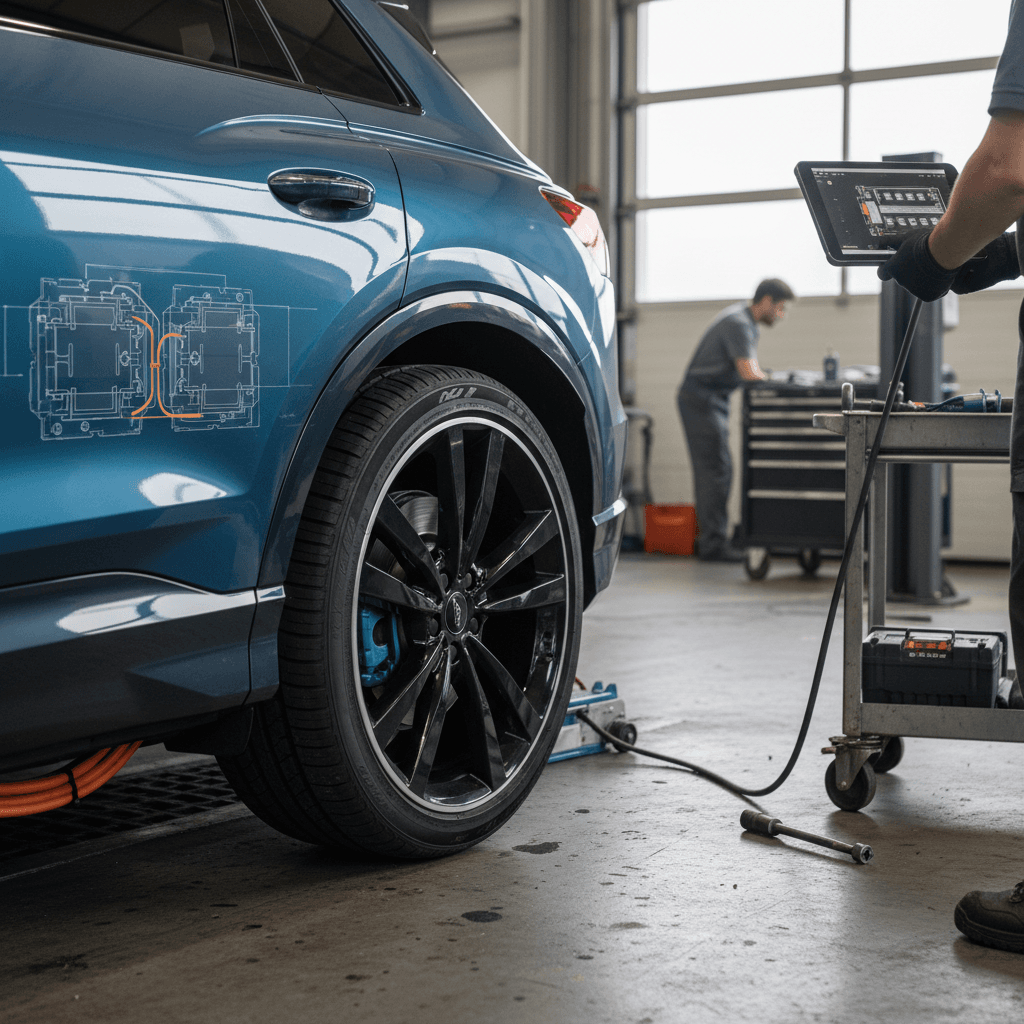
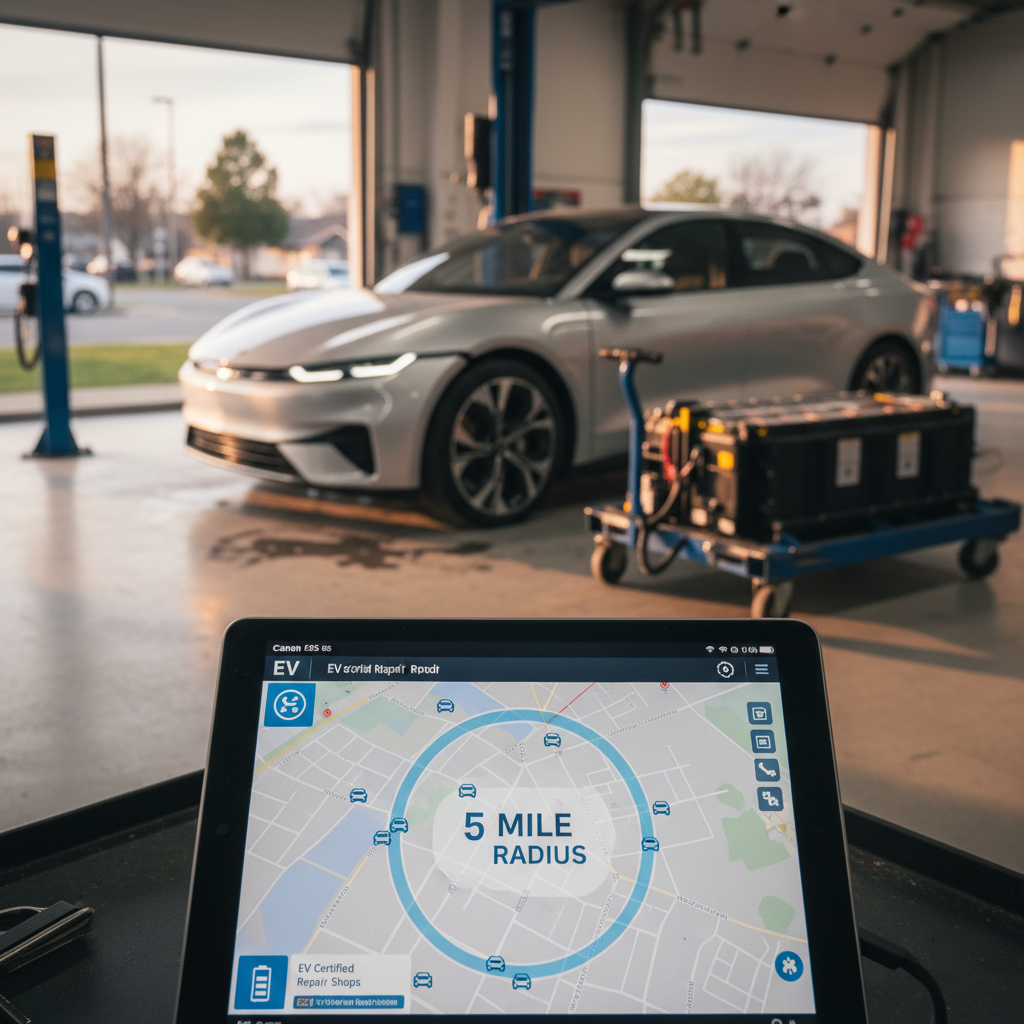
Why battery health data matters
Buying a used 2024 Audi Q4 e-tron: key checks
If you’re shopping used, where the Q4 e-tron starts to look compelling on price, you want a **structured way** to separate a solid car from someone else’s science experiment. Here’s what to focus on.
Pre‑purchase checklist for a used 2024 Q4 e-tron
1. Pull a full diagnostic scan
Ask the seller or inspection shop to run a **full OBD/diagnostic scan**. You’re looking for stored or intermittent fault codes in modules related to charging, the high‑voltage system, climate control and driver‑assistance systems.
2. Verify recall and campaign completion
Use the VIN to confirm all **safety recalls and software campaigns** are complete. Pay close attention to any items related to the onboard charger, brake control unit, or major software updates.
3. Inspect for water leaks and odors
Check under floor mats, in the cargo area and around the spare‑tire well (if equipped) for **dampness, staining or musty smells**. Water intrusion plus a dense electronics network is a recipe for unpredictable, expensive faults.
4. Test A/C and all climate modes
Run the A/C on max cold and max hot, then try different fan speeds and vents. You’re looking for steady temperature, no strange noises, and no fogging that might indicate **A/C drain or refrigerant issues**.
5. Exercise every charge option you can
If possible, test **Level 2 AC charging** and at least one **DC fast‑charge session** before you commit. Watch for error messages, slow ramp‑up or aborted sessions that could hint at onboard‑charger or communication problems.
6. Evaluate driver‑assist and infotainment
On the test drive, check adaptive cruise, lane‑keeping and parking sensors, then stress‑test the infotainment: run navigation, pair a phone, stream audio. Any freezes, random reboots or error chimes are negotiation leverage, or a reason to walk.
How Recharged can help
Ready to find your next EV?
Browse VehiclesFAQ: 2024 Audi Q4 e-tron reliability and ownership
Frequently asked questions about 2024 Q4 e-tron reliability
Bottom line: Should you worry about 2024 Q4 e-tron reliability?
If your mental model of Audi is “set‑and‑forget Teutonic reliability,” the **2024 Audi Q4 e-tron reliability rating** will be a reality check. This is an **early‑generation EV built on a shared VW platform**, and it behaves like one: software gremlins, occasional A/C and charging‑hardware hiccups, and more service visits than you’d expect from a mature gas Audi. At the same time, there’s no strong evidence that the **battery or motors are inherently fragile**, and many owners report largely trouble‑free experiences once the initial software bugs are ironed out.
For a new‑car buyer, that likely means **budgeting extra time** for software updates and being meticulous about dealer documentation if problems crop up. For a used‑car buyer, it means you should be picky: insist on **battery‑health data, a clean diagnostic scan, and full recall history** rather than buying the first cheap Q4 with a nice interior. With the right example, and the right transparency tools, this can be a comfortable, refined entry into EV ownership, even if it’s not the segment’s reliability champion.
If you want help narrowing down the safer bets, Recharged can pair **independent battery diagnostics and fair‑market pricing** with expert EV guidance, so you’re not left decoding reliability scores on your own.