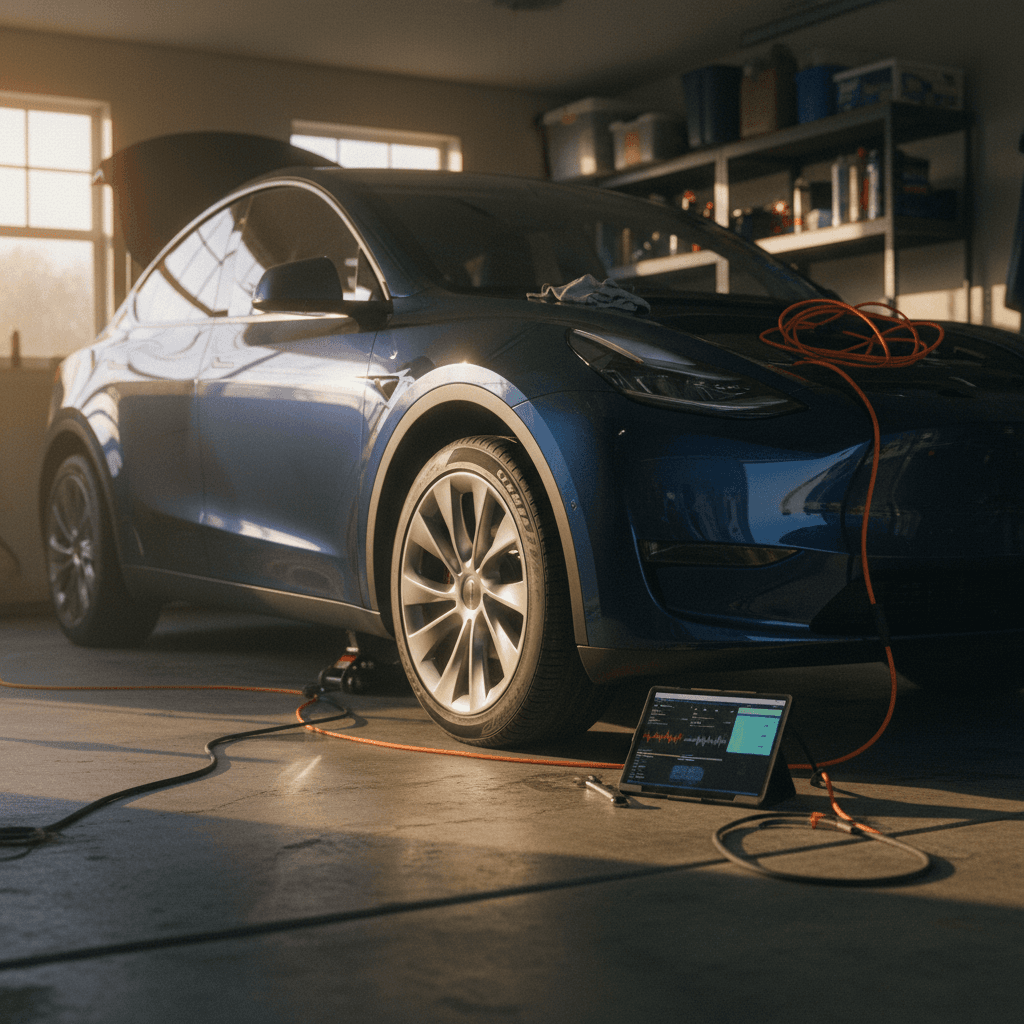
You don’t buy a 2023 Tesla Model Y because you love drama. You buy it for effortless speed, low running costs, and the Supercharger network. But every car has weak spots, and the 2023 Model Y is no exception. If you’re noticing strange noises, flaky climate control, or software quirks, or you’re shopping for a used 2023 Model Y, this guide walks through the most common problems and fixes so you know what’s **normal**, what’s **annoying**, and what’s **worth a service visit**.
Model Years Covered
2023 Model Y Reliability: The Big Picture
The 2023 Tesla Model Y is, on balance, a solid and efficient daily driver. Battery packs and drive units have proven robust, and many owners sail past 30,000–40,000 miles with nothing but tire rotations and cabin filters. Where trouble creeps in is **around the edges**: HVAC quirks in extreme cold, suspension and steering noises, software behavior that doesn’t match expectations, and the usual modern-car menagerie of rattles and trim complaints.
What Typically Goes Wrong on a 2023 Model Y
Quick Cheat Sheet: Common 2023 Model Y Problems
Most-Reported 2023 Model Y Problems and Typical Fixes
Use this as a quick map, then dive deeper in the sections below.
1. HVAC / Heat Pump
Symptoms: Weak or no heat in very cold temps, loud whooshing or grinding from front, intermittent error messages.
Typical Fix: Software updates, HVAC resets, and in some cases replacement of heat pump or related valves and lines under warranty.
2. Suspension & Steering Noises
Symptoms: Creaks over driveways, clicks at low speed turns, groans when backing and steering at full lock.
Typical Fix: Control arm or lateral link bushings, strut mounts, or lubrication. Often handled by Tesla, sometimes more than once.
3. Software & Autopilot Behavior
Symptoms: Random reboots, phantom braking, inconsistent lane keeping, alerts after major 2023 safety updates.
Typical Fix: Over-the-air updates, camera recalibration, adjusting driver-assistance settings to match your comfort level.
4. Interior Rattles & Seat Noises
Symptoms: Buzzes from door panels, center console creaks, seatback clicks or "tick" sounds over bumps.
Typical Fix: Panel adjustments, felt tape, or following Tesla service bulletins that address seat-back noise.
Warranty Window Matters
HVAC and Heat Pump Issues on the 2023 Model Y
Tesla’s heat pump is one reason the Model Y is so efficient, but it’s also one of the most finicky systems on the car, especially for 2023 owners in very cold climates. Earlier Model Y years saw formal recalls for heat pump behavior in freezing weather. By 2023, Tesla had improved the hardware and software, but owner reports still surface of **sudden loss of cabin heat**, loud compressor noise, or persistent HVAC warnings in sub‑zero conditions.
- Cabin blows cold air even with temperature set high, especially below freezing.
- HVAC makes a loud, droning or grinding noise from the front of the car when heat is on.
- Intermittent climate-control error messages that clear after a restart.
- Fogged or iced-up windshield that doesn’t clear as fast as it should.
Quick DIY Checks
- Soft reset the car: With the car in Park, hold both steering wheel scroll wheels until the screen reboots. Minor HVAC glitches often clear here.
- HVAC "power cycle": Turn climate off for a few minutes, then back on. Try toggling between Auto and Manual, and between Defrost and standard airflow.
- Check for obvious blockages: Make sure leaves, snow, or ice aren’t blocking the front intake area or cowl, and that interior vents aren’t covered.
- Try a different drive profile: Occasionally a corrupted profile setting will act strangely; switch to a fresh profile and test HVAC.
When It’s a Real Problem
- No heat in sub‑freezing temps: If you can’t get heat and the windshield won’t defog, treat it as a safety issue. Book Tesla service as soon as possible.
- Repeated HVAC error messages: Screenshot or photograph the warning, then submit it in your service request.
- Very loud or grinding pump noise: Normal heat pump operation can be audible, but harsh metallic or grinding sounds under the frunk deserve inspection.
- Car has open HVAC service bulletin: Tesla sometimes issues regional service bulletins for contaminated lines or valves; the fix may include flushing and replacing components.
Cold-Weather Safety
Outside of true failures, many owners simply notice that the heat pump is louder or more “busy” than a traditional HVAC. Whirring, whooshing, and occasional vibration can be within normal limits. The red flag is **loss of heat or recurring faults** rather than sound alone.
Suspension & Steering Noises: Creaks, Clicks, and Groans
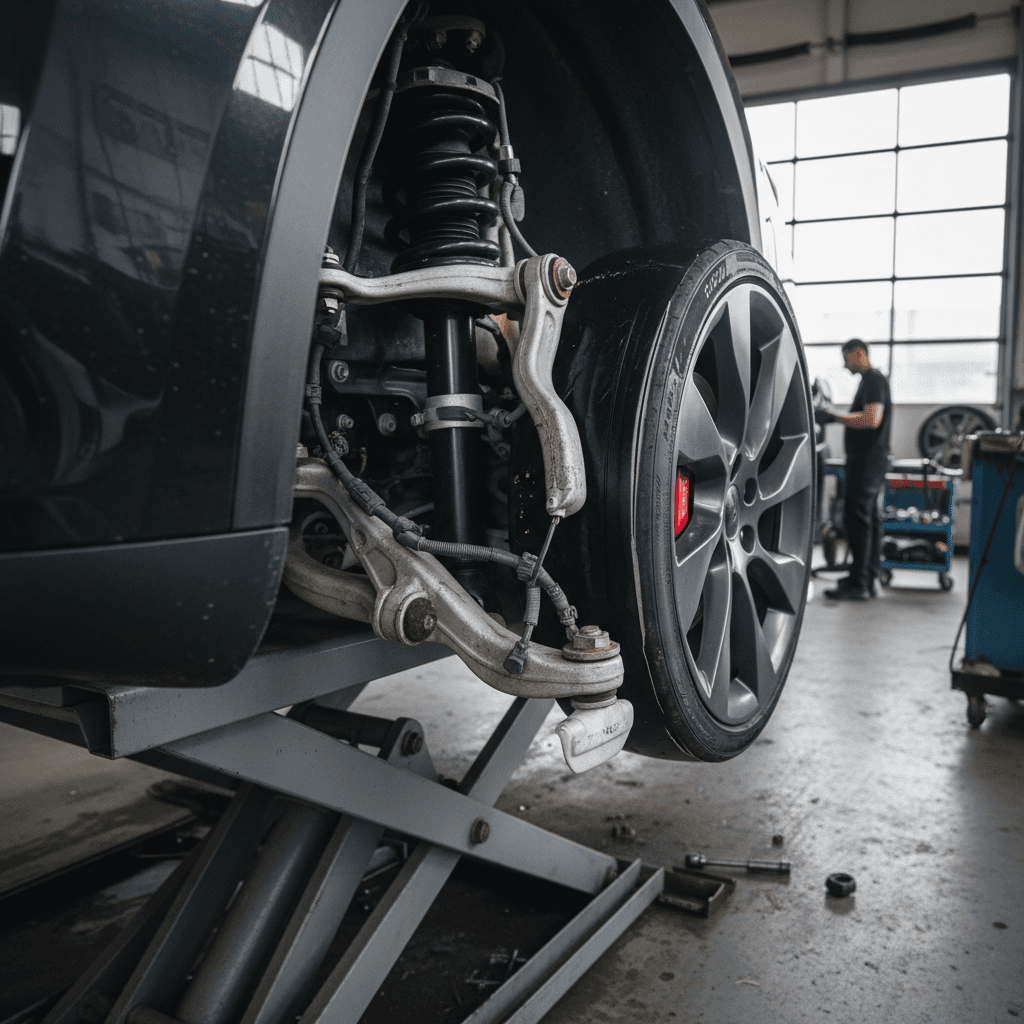
A quiet EV makes every noise more obvious. On 2023 Model Y vehicles, the most common complaints involve **front-end creaks, clicks, and groans**, especially at low speeds, in parking lots, or going up and down driveways. Some owners discover torn front lateral link bushings or upper control arm issues; others are told the noises are “normal operation” of the suspension geometry.
Typical 2023 Model Y Suspension & Steering Noises
Use this as a starting point, always have a professional confirm the diagnosis.
| Symptom | When It Happens | Likely Area | Owner Action |
|---|---|---|---|
| Single or repetitive click when turning at low speed | Parking maneuvers, backing out of driveway | Front control arms, lateral link bushings, or steering rack play | Schedule Tesla service; note whether the sound is louder on one side. |
| Creak/"rubber on rubber" sound over small bumps | Slow speed over speed bumps or driveway lips | Upper control arm bushings or mounts | Have suspension inspected; often resolved with updated parts under warranty. |
| Groaning noise at full steering lock when moving slowly | Tight U-turns or backing with wheel at full lock | Normal tire scrub on high‑grip surfaces vs. joint wear | Try on different pavement. If it’s loud and new, ask Tesla to inspect. |
| Rattle or clunk over broken pavement | Higher speeds on rough roads | Loose sway bar link, strut mount or trunk area items | Check trunk and frunk for loose cargo; if noise persists, book service. |
Symptoms can overlap; don’t guess on steering or suspension safety. When in doubt, get it inspected.
When Noise Becomes a Safety Issue
DIY Checks Before (or After) You See Tesla Service
1. Reproduce the Noise Consistently
Find an empty parking lot and note exactly when the noise happens: speed, steering angle, braking or no braking, forward vs. reverse. This helps techs duplicate it.
2. Check Tire Pressures and Wheels
Incorrect tire pressure or loose lug nuts can mimic suspension trouble. Verify pressures in the app and visually inspect wheels before assuming the worst.
3. Remove Cargo and Fold Seats Flat
Loose charging cables, strollers, or seat latch hardware can rattle. Drive the same route with the cabin emptied; if the noise disappears, you’ve found your culprit.
4. Record Audio or Video
A quick phone video of your steering wheel and sound during the noise event gives Tesla documentation, especially if the noise is intermittent.
5. Ask for Findings in Writing
If Tesla says the noise is normal, ask them to summarize their inspection in the service report. That way it’s on record if the issue evolves within warranty.
If your 2023 Model Y is out of basic warranty, a specialty EV shop or high-end alignment/suspension shop can often diagnose front-end noises for less than a dealer visit. At Recharged, our inspection process for used Teslas includes **hands-on steering and suspension checks** and a road test specifically tuned to pick up these subtle noises before a car is listed for sale.
Software, Autopilot & FSD: Glitches vs. Real Problems
Every 2023 Model Y shipped with a heavy dose of software, and Tesla continued to push major over-the-air updates through late 2023 and 2024. That’s a blessing, you get new features and safety updates for free, and a curse, because sometimes an update introduces **new behavior you didn’t ask for**.
- Center screen randomly reboots while driving, then returns to normal.
- Phantom braking on certain highways when using Autopilot or cruise control.
- Lane-keeping that hugs one side of the lane or feels “nervous” around large trucks.
- Autosteer or Full Self-Driving (FSD) that disengages unexpectedly with chimes and warnings.
- Driver-assistance recalls that require you to adjust how and where you use Autosteer.
First-Line Fixes You Can Try
- Check for updates: Under Software on the main screen, make sure you’re running the latest release. Many bugs are quietly squashed in subsequent patches.
- Reboot and power down: Perform a soft reboot with the scroll wheels, then try a full power-down from the Safety menu and let the car sit for a few minutes.
- Camera recalibration: If lane-keeping feels off after new tires or an alignment, you can trigger camera recalibration in the Service menu.
- Adjust Autopilot settings: Reduce following distance, disable automatic lane changes, or stay with basic cruise control on roads where phantom braking is common.
When to Escalate to Tesla
- Repeated crashes or frozen screen: If the display locks up or reboots several times per trip, request service and include approximate dates and times.
- Autopilot behaving unpredictably: If the car crosses lane lines or ignores traffic controls, stop using the feature and document the incident in a service request.
- Recall or mandatory update notice: Follow the prompts. Some 2023 Model Y safety updates around Autosteer behavior are not optional.
- Warning lights that persist after reboot: Any persistent drivetrain or safety warning deserves inspection, even if the car feels normal.
Driver-Assistance Is Still Driver-Assistance
Interior Creaks, Rattles & Seat Noises
Interior noise complaints are nearly universal on modern cars, and the Model Y is no exception. On 2023 Model Y vehicles, two patterns show up over and over: **door and console buzzes** on rough pavement, and **seat-back ticks or squeaks** over small bumps. Tesla has even issued internal service guidance for tracking down unintended front seat-back noises on Model 3/Y family vehicles.
Where That Rattle Is Probably Coming From
Think like a service tech: locate the noise, then work outward.
Doors & Windows
Rattles from the doors are often loose clips, wiring harnesses, or window channel trim. Lightly pressing on the door panel while driving can help isolate the source.
Center Console & Dash
Buzzing near the cupholders or under the screen may be caused by small gaps in plastic trim. Many owners quiet them with felt tape or foam applied carefully along seams.
Seats & Seatbacks
Clicks from behind you over bumps can come from seatback frames or latch hardware. Tesla service bulletins describe inspecting and adjusting the front seat backs for these noises.
Simple Interior Fixes You Can Handle at Home
1. Empty Every Storage Area
Remove everything from the glovebox, center console, door pockets, and hatch. Many mysterious rattles vanish with a fifteen-cent coin or key fob.
2. Test With a Passenger
Have a friend sit in different seats and press lightly on trim pieces while you drive. If the sound changes or stops, you’ve found the suspect panel.
3. Use Felt Tape Sparingly
Automotive felt or cloth tape between two hard plastic surfaces can work wonders. Apply sparingly and avoid blocking airbags or latches.
4. Document Before Service
If the noise drives you crazy and you’re under warranty, record short clips from the seat where it’s loudest and include them in your Tesla service request.
Used-Buyer Bonus
Charging, Door Handles & Other Minor Annoyances
Beyond the bigger-ticket items, 2023 Model Y owners report a handful of smaller issues that rarely strand you but can chip away at the experience. Think of these as the mosquitoes of EV ownership, too small for a recall, but big enough to mention.
Smaller 2023 Model Y Issues You Might Notice
Most of these are quick fixes or simple workarounds.
| Issue | Typical Symptom | Likely Cause / Area | What to Do |
|---|---|---|---|
| Charge port door misbehaving | Door doesn’t open with press, or sticks in ice | Frozen or slightly misaligned charge port door | Gently clear ice, avoid forcing it. If it recurs in mild weather, request service to inspect alignment. |
| Door handles slow or stuck | Handle doesn’t present or latch smoothly | Ice, contamination, or low 12V voltage | Try preconditioning in cold weather; if handles intermittently fail even when warm, log with Tesla. |
| Wind noise at highway speed | Louder rush of air near one window or mirror | Door glass alignment or weatherstrip | Use the window-up reset trick (hold window up for a few seconds). If noise persists, ask Tesla to align the glass. |
| Home charging quirks | Inconsistent charge start/stop on some Level 2 stations | Communication issue with EVSE or weak home wiring | Try a different outlet or station; if problems follow the car, have both Tesla and an electrician inspect. |
Any issue that affects opening doors or charging safely should be addressed promptly, even if the workaround is easy.
Never Ignore Charging Errors
Owner Checklist: What You Can Fix (and What Tesla Should Fix)
Living happily with a 2023 Tesla Model Y is partly about knowing where to draw the line between DIY, professional maintenance, and warranty work. Here’s a practical breakdown.
Fix-It Roadmap for 2023 Model Y Owners
DIY / Easy Fixes
Interior buzzes and rattles from loose items or trim you can safely access.
Mild wind noise that improves with window re‑indexing and seal cleaning.
Occasional software weirdness that resolves after a reboot or update.
Cleaning camera and sensor lenses for clearer driver-assistance performance.
Tesla Service (Warranty or Paid)
Persistent HVAC faults, loss of heat, or repeated climate warnings.
Suspension or steering noises that don’t go away or are getting worse.
Door handles, latches, or windows that intermittently fail to operate.
Software-related safety recalls, Autosteer behavior changes, or warning messages.
Independent EV Specialist
Out-of-warranty suspension clunks, alignment concerns, or accelerated tire wear.
Brake service, especially if you’re noticing unusual rotor rust or vibration.
Second opinion on front-end noises when you’re outside warranty and want options.
Pre-purchase inspection on a used 2023 Model Y before you commit.
How Recharged Fits In
Ready to find your next EV?
Browse VehiclesBuying a Used 2023 Model Y: What to Watch For
If you’re eyeing a used 2023 Tesla Model Y, you’re in a sweet spot: newer pack and hardware, much of the early-production debugging behind you, and often still under factory warranty. But you’ll want to screen for the common issues we’ve just walked through, especially if the car has lived in harsh winters or on rough roads.
Used 2023 Model Y Pre-Purchase Checklist
1. HVAC Deep Test
Test heat and A/C on the test drive. Run the system in Auto, Defrost, and Manual modes. If the car has lived in a cold region, ask the seller about any past loss-of-heat events or HVAC repairs.
2. Low-Speed Noise Safari
Find a quiet parking lot and do slow circles, tight U‑turns, and driveway-style transitions. Listen for clicks, creaks, or groans from the front end.
3. Highway Noise & Wind
Take it up to highway speed. Note any whistling or loud wind rush near a specific door or mirror that could indicate alignment issues.
4. Software & Feature Check
Confirm that basic Autopilot works as expected, the center screen doesn’t reboot randomly, and there are no unresolved alerts or warning lights.
5. Interior Quality Pass
Drive over rough pavement with the audio low. Note any persistent rattles or seat clicks. Is it acceptable to you, or will it drive you nuts in a week?
6. Service History & Recalls
Ask for Tesla service invoices or a summary from the app. Verify that major recalls and recommended service bulletins have been addressed where applicable.
If you’d rather not decode all that yourself, that’s exactly where a curated platform like Recharged can help. Our used Teslas come with **battery health diagnostics, pricing checked against the market, and expert EV support** so you know whether a creak is just character, or a future bill.
FAQ: 2023 Tesla Model Y Problems Answered
Frequently Asked Questions About 2023 Model Y Issues
Bottom Line: 2023 Model Y Problems and Whether It’s Still Worth It
If you’re living with, or shopping for, a 2023 Tesla Model Y, here’s the bottom line: the big stuff is mostly solid. You’re unlikely to face widespread battery failures or constant breakdowns. Instead, you’ll be managing **comfort and confidence issues**: making sure the heat pump keeps you warm in a blizzard, chasing down front-end clicks, and deciding how much you trust driver-assistance software on any given day.
Treat those quirks as part of the ownership experience, not as deal-breakers. Use your warranty while you have it, keep notes and recordings of anything odd, and don’t hesitate to ask for a second opinion if something doesn’t feel right. And if you’re shopping used, lean on objective tools, like a Recharged Score battery health report and a detailed condition review, so you’re buying the car you think you’re getting, not the one someone just detailed for photos.
Do that, and a 2023 Model Y can still be exactly what it was meant to be: a quick, efficient, family-size EV that shrinks your fuel bill and daily stress, without adding a whole new set of worries.