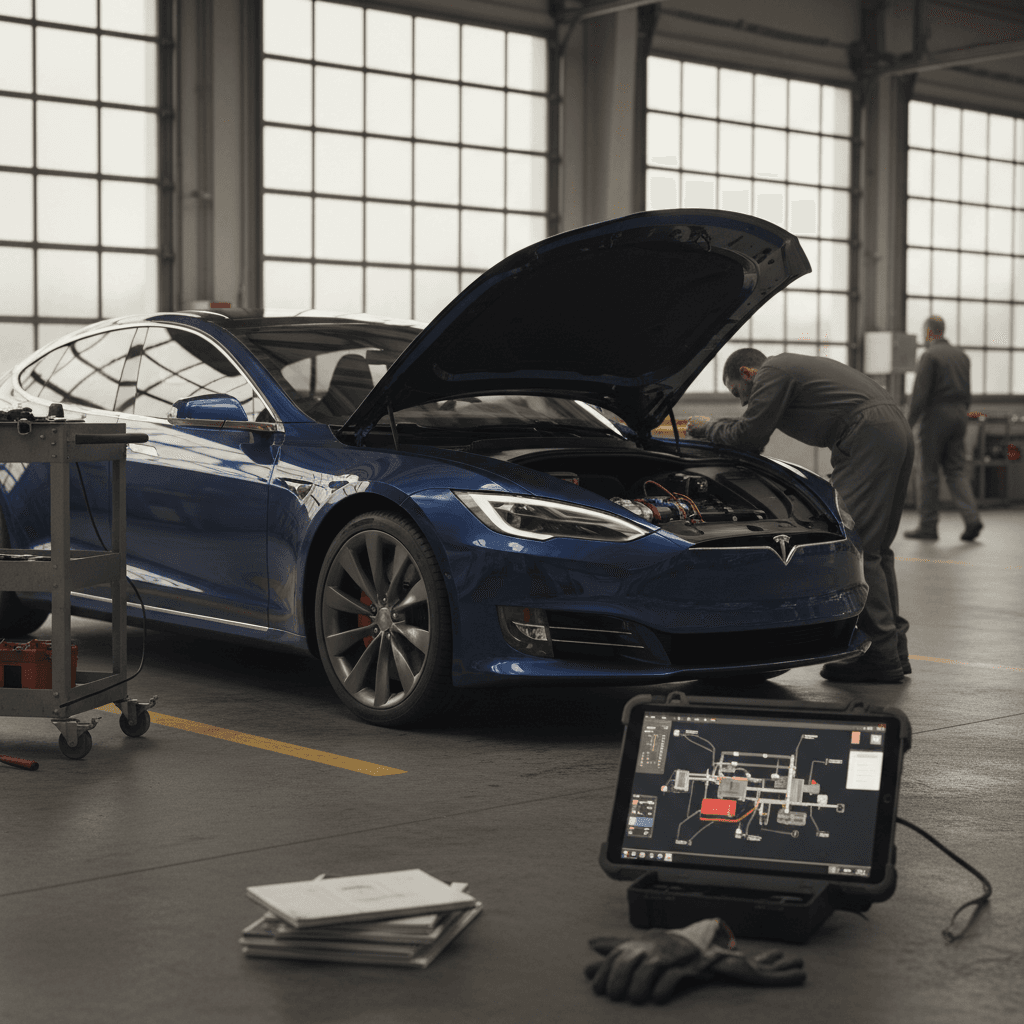
If you own or are shopping for a 2023 Tesla Model S, understanding the 2023 Tesla Model S recalls list isn’t just trivia, it’s central to safety, reliability, and resale value. Tesla handles most fixes with over‑the‑air (OTA) software updates, which can make recalls feel almost invisible. But every owner and used‑car buyer still needs to know what was recalled, why it mattered, and how to confirm repairs were actually completed.
Key point for 2023 Model S owners
Overview: Why 2023 Model S recalls matter
Recalls are not a sign that a car is “bad.” They’re how manufacturers correct issues that could affect safety or regulatory compliance. In Tesla’s case, the 2023 Model S sits in the middle of a major transition: aggressive software development, expanding driver‑assist features, and the broad rollout of the company’s Autopilot and Full Self‑Driving (FSD) systems.
- Several important recalls for the 2023 Model S are software-only and fixed via OTA updates.
- Some earlier hardware campaigns (like certain seat belt issues) include 2021–2023 Model S vehicles, so model year alone doesn’t tell the whole story.
- If you’re buying used, proof that all recalls have been completed is a smart part of your due diligence, alongside battery health and accident history.
Don’t ignore “it’s just software” recalls
Quick 2023 Tesla Model S recall summary
High‑level recall picture for 2023 Model S
Below is a simplified snapshot of the most important recall actions that may apply to a 2023 Model S. The exact coverage depends on build date, equipment, and software version, so you’ll still need to run a VIN check.
Snapshot: major recalls affecting many 2023 Model S vehicles
This table summarizes key recalls that commonly include 2023 Model S vehicles. Always confirm applicability using your VIN in the Tesla app or NHTSA database.
| Issue | Type of fix | Typical remedy | Involves OTA update? | Owner action |
|---|---|---|---|---|
| Autosteer / Autopilot safety recall (late 2023) | Software / driver‑assist | Update Autosteer behavior, add/adjust driver‑monitoring prompts and limits | Yes | Install latest software and verify recall cleared |
| Seat belt reminder warning logic (2024 campaign covering 2012–2024 Model S) | Software / compliance | Adjust seat belt reminder behavior to meet federal requirements | Yes | Accept OTA update when prompted |
| Front seat belt attachment / detachment risk (2021–2023 Model S) | Hardware / restraint | Inspect front seat belt anchor; repair or replace components if necessary | No – service visit required | Schedule service visit if your VIN is included |
| Other software‑driven campaigns (UI alerts, warning icons, etc.) | Software | Adjust icon size, language, or warnings to meet regulations | Yes | Keep vehicle on current software and review release notes |
Recall details (campaign numbers and precise production ranges) should always be verified against official sources before you rely on them for purchase decisions.
Best practice
2023 Model S recalls list by issue
Let’s walk through the most important recall campaigns and safety actions that typically show up on a 2023 Tesla Model S recalls list. Exact NHTSA campaign numbers vary, and Tesla may roll multiple concerns into a single software release, but these are the themes you’ll see.
1. Autosteer / Autopilot safety recall (December 2023)
In December 2023, Tesla issued a sweeping recall for vehicles equipped with Autosteer, including 2012–2023 Model S. The concern: in certain situations, vehicles using Autosteer or FSD Beta could behave in ways that didn’t adequately follow traffic laws or keep drivers sufficiently engaged. The remedy was a wide‑ranging OTA software update that changed how and when Autosteer can be used, and how aggressively the system checks that you’re paying attention.
- Applies to most 2023 Model S vehicles equipped with Autopilot/FSD.
- Implemented as a software update, no hardware swap in typical cases.
- Changes include stricter driver‑monitoring prompts, added warnings, and in some scenarios limited availability of Autosteer.
Serious safety stake
2. Seat belt reminder warning logic recall
In 2024, Tesla launched a recall affecting hundreds of thousands of vehicles, including 2012–2024 Model S, over the seat belt reminder system. On some cars, the visual and audible reminders might not trigger under all required conditions if the driver’s belt wasn’t fastened. Regulators treat this as a compliance and safety issue because reminders are a last line of defense against unbelted driving.
- For a 2023 Model S, the remedy is a software update that changes how the seat‑belt reminder logic works.
- Tesla’s update removes reliance on the driver‑seat occupancy sensor and instead primarily uses ignition and belt‑buckle status to decide when to warn.
- No visit to a Service Center is usually required, just install the recommended software version when your car prompts you.
Good news for owners
3. Front seat belt attachment inspection (2021–2023 Model S)
A separate seat belt‑related recall covers certain 2021–2023 Model S and Model X vehicles whose front seat belts could detach from their anchor points in a severe crash if components weren’t assembled correctly. While not every 2023 Model S is included, many fall within the production window, and this is a hardware‑level safety item, not just a software tweak.
- Remedy requires a physical inspection by Tesla at a Service Center or mobile service appointment.
- If an issue is found, Tesla will repair or replace the front seat belt components at no cost.
- Because this involves primary restraint integrity, you shouldn’t delay if your VIN shows this recall as open.
Used‑car tip
4. Instrument cluster and warning icon visibility campaigns
Tesla has also handled several campaigns related to warning icons and instrument‑panel visibility. Regulators want certain alerts, like brake warnings or seat belt icons, to meet exact size and visibility standards. While these actions often lump all Tesla models together, many 2023 Model S vehicles receive the fix as part of a software rollout.
- Concerns usually center on icon size, color, or placement on the display.
- Fixes are implemented via OTA software to adjust the instrument‑cluster UI.
- Impact on daily driving is minor, but it’s still an official safety recall when it involves regulated warning symbols.
5. Steering‑related recalls and investigations (context for 2023 owners)
Tesla’s well‑publicized steering recalls and investigations have focused primarily on 2023 Model 3 and Model Y, where some owners reported sudden loss of power steering assist. While the 2023 Model S has not been the core of that particular campaign, it’s part of a broader pattern: regulators pay close attention when drivers lose steering assistance, and software can be involved in how the system behaves.
What this means for 2023 Model S drivers

How Tesla over-the-air recalls work
Traditional recalls usually mean a letter in the mail and a trip to the dealership. Tesla leans heavily on over‑the‑air software updates, which can blur the line between a routine update, a feature upgrade, and a formal safety recall. For a 2023 Model S owner, it’s worth understanding how Tesla handles the process.
How a Tesla OTA recall typically works
- NHTSA and Tesla agree a safety defect or compliance issue exists.
- Tesla develops a software remedy and assigns it to a specific version (for example, 2023.44.x or later).
- Your car receives a notification on the touchscreen and in the app that a recall‑related update is available.
- You choose a time to install, usually 15–30 minutes while the car is parked.
- Once installed, the recall is marked as remedied for that VIN.
How this differs from a typical dealer recall
- No need to schedule service in most cases, just install the update via Wi‑Fi or cellular.
- Changes often include both safety fixes and new features in the same build.
- You may not receive a traditional paper letter if the OTA update fulfills the recall quickly.
- Because updates are so frequent, it’s easy to ignore them, but you shouldn’t when they address safety or legal compliance.
Pro move for Tesla owners
How to check if your 2023 Model S has open recalls
Because recall coverage can change with new investigations or software versions, you should treat any published 2023 Tesla Model S recalls list as a starting point, not the final word. The only definitive answer comes from checking your specific VIN.
Step‑by‑step: Verify open recalls on a 2023 Model S
1. Check the Tesla app
Open the Tesla app, tap your Model S, and look under <strong>Service</strong> for any recall notifications. If there’s a safety recall open, the app will normally flag it and may let you schedule service directly.
2. Review alerts on the touchscreen
On the car’s center display, tap the <strong>Service</strong> or <strong>Software</strong> tab. Look for a banner mentioning recalls or mandatory updates. If your software is several versions behind, install the latest update first.
3. Run a VIN search on NHTSA.gov
Visit the NHTSA recall lookup tool and enter the full 17‑digit VIN. This will show <strong>all federal safety recalls</strong> that apply to that vehicle and whether they’ve been completed.
4. Ask for service records (used buyers)
If you’re buying a used 2023 Model S, ask the seller for <strong>service invoices or app screenshots</strong> showing completed recall work, especially for seat belt inspections or any hardware repairs.
5. Confirm after every major software update
When your car installs a significant update tied to a recall, re‑check the Tesla app or NHTSA VIN lookup later that week to make sure the recall now shows as remedied.
Why VIN checks are essential
What these recalls mean if you’re buying a used 2023 Model S
For many shoppers, the 2023 Model S is attractive because it combines Tesla’s latest interior and tech with a substantial discount versus new. Recalls don’t automatically make it a risky buy, but they do affect how you shop and what you should ask for before you commit.
How recalls should shape your used‑Model S shopping strategy
Think of recalls as a checklist item, not a deal‑breaker.
Documented recall completion
- A screenshot from the Tesla app showing no open recalls.
- Service invoices for any seat belt or hardware‑related campaigns.
- Confirmation that Autopilot/FSD recalls were addressed via software.
Battery & charging health
Overall safety picture
- Crash or accident history that might affect structural integrity.
- Tire and brake condition, especially on Plaid models.
- Any recurring warning messages the seller mentions.
How Recharged can help
Ready to find your next EV?
Browse VehiclesSafety and maintenance tips beyond recalls
Recalls fix known, defined issues. Day‑to‑day safety in a 2023 Model S also depends on how you drive and maintain the car. A vehicle can be “recall‑free” and still be unsafe if tires are worn, software is outdated, or driver‑assist features are misunderstood.
- Keep software up to date, even when the update isn’t labeled as a recall, Tesla often refines braking feel, driver‑monitoring, and traction control quietly.
- Inspect seat belts periodically yourself: look for frayed webbing, damaged buckles, or anything that doesn’t latch and unlatch smoothly.
- Check tires and alignment, especially on Plaid models that see spirited driving. Uneven wear can compromise wet‑weather grip.
- Treat Autopilot and FSD as driver‑assist only. You’re still responsible for steering, braking, and monitoring traffic.
- If you ever see persistent warning lights (steering, braking, airbags), schedule service promptly instead of waiting for a formal recall.
Set a recurring safety “check‑in”
FAQ: 2023 Tesla Model S recalls
Frequently asked questions about 2023 Model S recalls
Bottom line: Are 2023 Model S recalls a deal-breaker?
For most shoppers, the answer is no. The 2023 Tesla Model S recalls list is real, and some of the issues, especially Autosteer behavior and seat belt reminders, are worth taking seriously. But Tesla’s heavy use of over‑the‑air updates means many fixes are already in place on well‑maintained cars, and hardware campaigns like front seat belt inspections are straightforward once you know they exist.
If you already own a 2023 Model S, your job is simple: stay current on software, respond to recall notices promptly, and check your VIN a couple of times a year. If you’re shopping used, focus on documentation: proof of completed recalls, clean accident history, and independent confirmation of battery health and value. A platform like Recharged can streamline that process, pairing inspection‑backed listings and Recharged Score battery diagnostics with expert EV guidance.
Handled the right way, recalls become part of a responsible ownership story, not a reason to avoid an otherwise compelling 2023 Tesla Model S.