If you’re eyeing a 2023 Rivian R1T on the used market, you’ve probably heard two very different stories: glowing owner reviews about performance and utility, and headlines calling it one of the least reliable vehicles on sale. This guide unpacks the **2023 Rivian R1T reliability rating**, the data behind those scores, and what it all means if you’re buying one today.
Quick take
Overview: How Reliable Is the 2023 Rivian R1T?
Snapshot: 2023 Rivian R1T Reliability & Satisfaction
Zooming out, the 2023 R1T sits in a strange place. On paper, it earns **poor predicted reliability** in major surveys, pulled down by problems with build quality, electronics, and in some cases service delays. At the same time, EV‑owner studies rank it among the **most satisfying vehicles to own**, and many drivers report relatively trouble‑free experiences. That split personality is why it’s so important to look beyond a single score before you decide whether a 2023 R1T is right for you.
What the Major Reliability Ratings Actually Say
Key Reliability Rating Sources for the 2023 R1T
How different organizations see Rivian’s electric pickup
Consumer survey outlets
Large‑scale consumer surveys that aggregate owner‑reported issues across model years tend to give the **Rivian brand and R1T very low predicted reliability scores**, roughly in the bottom tier of the market. These scores reflect the brand’s startup status and higher‑than‑average problem counts for things like trim, software, and electronics.
Owner review sites
On consumer review platforms, the **2023 R1T typically earns 4–4.5 stars out of 5**, with a solid majority of owners saying they would recommend the truck. Most praise performance and design while acknowledging a few service visits early in ownership.
NHTSA & complaint data
Formal NHTSA safety complaints for the 2023 R1T remain **relatively low in absolute numbers** because of limited production volumes. The issues that do appear tend to cluster around build quality, warning messages, and convenience features, not widespread catastrophic failures.
Why the scores look harsh
For the 2023 Rivian R1T, it’s fair to summarize the expert view this way: **less reliable than average today, likely to improve as the platform matures**. If you’re coming from a Toyota truck, this will feel like more drama; if you’re used to first‑generation tech, the trade‑offs may feel acceptable for what you get.
Real‑World Owner Experience: Patterns Behind the Scores
What happy owners report
- Few or no major mechanical failures across the first 10,000–30,000 miles.
- Most visits are for software updates, trim fixes, or minor hardware replacements done under warranty.
- Owners love the combination of instant torque, off‑road capability, and quiet ride, often calling it the best vehicle they’ve ever owned.
- Those close to a Rivian Service Center tend to rate their experience much higher.
What frustrated owners report
- Too many small issues that require service: warning lights, rattles, misaligned panels, or intermittent driver‑assist quirks.
- Occasional **long service lead times** or repeat visits to fully resolve a problem.
- Early‑build trucks sometimes feel like a "beta" product with ongoing software tweaks.
- Owners far from service centers feel the pain most acutely because every visit is a big logistical lift.
The reality check
Common 2023 Rivian R1T Problems & Trouble Spots
Because production volumes are still modest, the 2023 R1T doesn’t have the huge dataset of an F‑150. But when you pull together owner surveys, NHTSA complaints, and forum reports, several **repeating trouble spots** stand out.
Most Common Problem Areas on 2023 R1T
Patterns seen across owner reports and complaint data
| Area | Typical Symptoms | Reliability Impact |
|---|---|---|
| Body & trim | Panel gaps, squeaks/rattles, wind noise, tonneau cover glitches | Annoying but usually not safety‑critical |
| Electronics & infotainment | Freezes, laggy screen, Bluetooth/connectivity glitches, random warning messages | May require reboots or software updates; occasionally service visits |
| Driver‑assist systems | Lane‑keeping or adaptive cruise behaving inconsistently, occasional sensor faults | Can temporarily disable assist features until software or sensor is corrected |
| Charging hardware (vehicle side) | Rare reports of charge‑port door faults, intermittent charge errors on certain public stations | Inconvenient on road trips if recurring; usually fixable with updates or part replacement |
| Weather‑related issues | Frozen handles or seals, wiper quirks, noise from suspension air system in cold climates | Annoyances more than failures, but common topics in owner discussions |
Issues are typically covered under warranty on low‑mileage trucks, but they can still mean downtime and inconvenience.
Look for pattern, not perfection

Recalls and Service Campaigns Affecting the 2023 R1T
Like most brand‑new platforms, the R1T has seen its share of **recalls and service campaigns**, including some that apply to 2023 trucks. Many have been addressed by over‑the‑air software updates or proactive service visits, but you still want to verify that any specific truck is fully up to date.
- Early‑production hardware campaigns on steering and suspension fasteners (mainly 2022 trucks, but some 2023s inspected).
- Software‑based recalls to adjust charging behavior, warning‑light logic, or driver‑assist performance.
- Occasional hardware recalls on seat or occupant‑safety components in specific build ranges.
Always run a VIN recall check
Battery & Drivetrain Reliability on the 2023 R1T
The good news is that for all the chatter about build quality, the **core EV hardware on the 2023 R1T, battery, motors, and thermal system, has performed well so far**. Independent EV‑owner surveys rank the R1T extremely high for performance, comfort, and overall satisfaction, and there are few reports of outright battery pack failures in normal use.
How the R1T’s EV Hardware Is Holding Up
Where reliability looks strong, and where to stay alert
High battery satisfaction
EV‑owner surveys show the R1T near the top of the pack for **battery reliability and range consistency**. Owners report the truck holding its rated range reasonably well, especially when driven at moderate speeds.
Robust performance hardware
The quad‑ and dual‑motor setups deliver **huge power with few outright drivetrain failures** reported so far. Most service visits revolve around software, not burned‑out motors.
Range vs. weather
Like any large EV truck, the R1T sees **noticeable range loss in cold weather or at high highway speeds**. That’s a range‑planning issue more than a reliability defect, but it’s something to factor into your expectations.
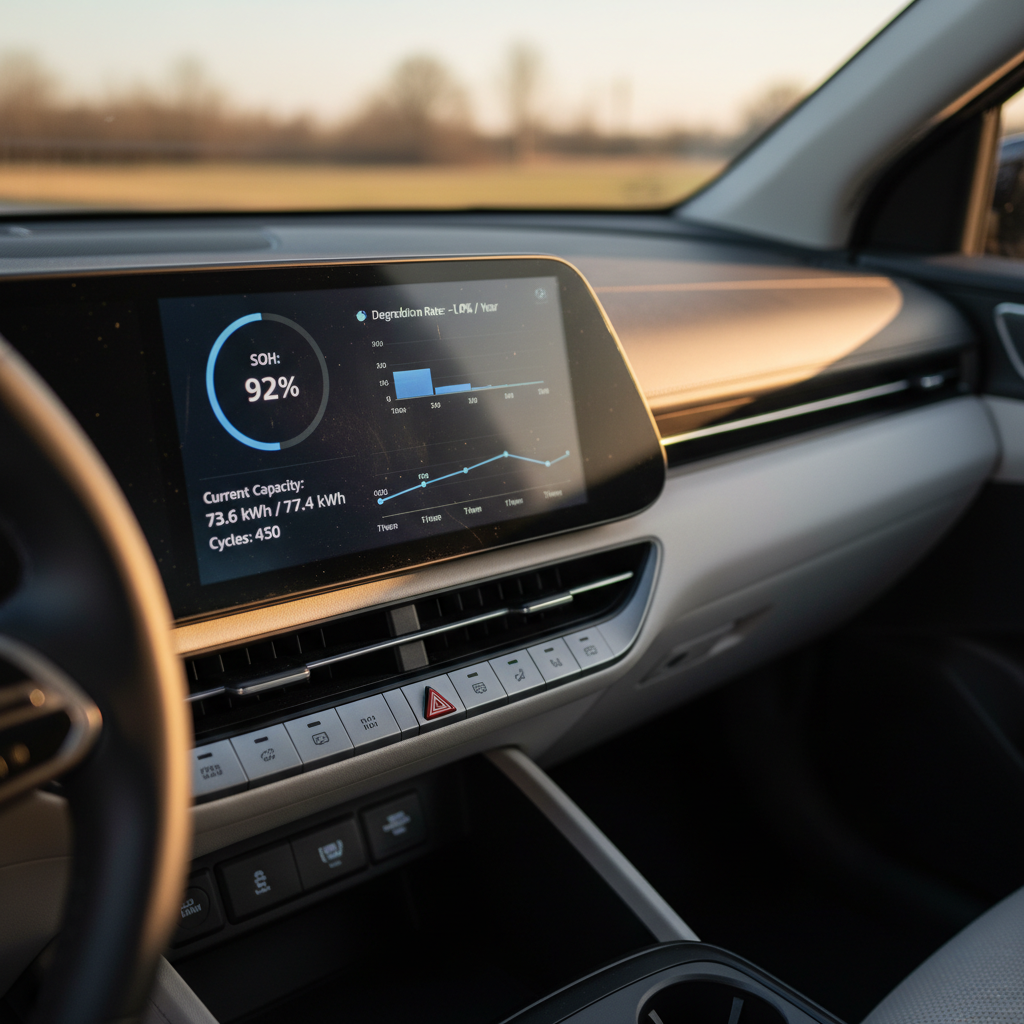
Battery health on a used R1T
Warranty Coverage and Out‑of‑Pocket Risk
Most 2023 Rivian R1Ts are still under factory coverage today. Understanding how that warranty works is key to evaluating your financial risk if reliability issues crop up.
Typical 2023 Rivian R1T Warranty Coverage
Approximate factory coverage for a 2023 R1T in the U.S. (always verify specifics by VIN).
| Component | Typical Coverage | What It Means for You |
|---|---|---|
| Basic vehicle (bumper‑to‑bumper) | ~5 years / 60,000 miles | Covers most non‑wear items like electronics, interior hardware, many sensors, and body hardware. |
| Battery & drivetrain | ~8 years / 175,000 miles (capacity and defects) | Protects you against premature battery or drive‑unit failure, subject to capacity thresholds and terms. |
| Corrosion | ~8 years / unlimited miles (perforation) | Covers rust‑through on body panels, though this is rarely a primary concern on young EVs. |
| Roadside assistance | Typically matches basic warranty | Helpful if a software or electronics issue leaves the truck undriveable. |
Exact terms can vary by in‑service date and region; use this as a directional guide and confirm on the actual truck.
The real cost risk
Used 2023 Rivian R1T Reliability Checklist
If you’re shopping a used 2023 R1T, you can’t change the truck’s DNA, but you can dramatically tilt the odds in your favor by vetting the individual vehicle carefully. Use this reliability‑focused checklist as you shop.
Pre‑Purchase Reliability Checklist for a 2023 R1T
1. Verify recall and campaign completion
Run the VIN through official recall tools and ask for documentation showing all **recalls and service campaigns** have been performed. At Recharged, this check is standard before any Rivian is listed.
2. Review the full service history
Look for a **pattern of issues**. A few early visits for software or trim fixes are common; a long list of repeated repairs to the same system is a red flag.
3. Test every door, hatch, and tonneau cover
Open and close all doors, the frunk, the gear tunnel, and the bed’s powered tonneau cover multiple times. Listen for binding, grinding, or error messages, these are common problem points on early trucks.
4. Drive with driver‑assist active
On the test drive, engage adaptive cruise and lane‑assist where safe. Watch for **phantom warnings, pull‑to‑the‑side behavior, or disabled‑feature alerts** that could signal sensor or calibration issues.
5. Check infotainment speed and stability
Spend real time in the UI. Switch between navigation, media, and settings. A brief lag is normal, but **frequent freezes or reboots** could be a sign of deeper software or hardware problems.
6. Evaluate charging behavior
If possible, plug into both a Level 2 charger and a DC fast charger. Confirm that the truck **wakes up, charges, and stops cleanly** with no recurring error codes or warnings.
What a "good" 2023 R1T looks like
How Recharged Evaluates 2023 R1T Reliability
Because Recharged focuses on used EVs, including trucks like the 2023 R1T, we lean heavily into **battery health data and service history** rather than just a quick visual once‑over. Every R1T we list gets a Recharged Score Report so you’re not guessing about how it’s been treated.
Inside a Recharged Reliability Evaluation
How we de‑risk buying a complex EV truck
Battery & charging diagnostics
We run targeted diagnostics to understand **battery health, fast‑charging behavior, and thermal performance**, the things that determine long‑term usability and value.
Service & recall audit
Our team reviews **service records, warranty work, and open recall status** so you can see what’s already been addressed and what patterns exist.
Road test & feature verification
From **driver‑assist systems** to powered doors and tonneau covers, we verify that key features operate as intended and flag anything that doesn’t.
Ready to find your next EV?
Browse VehiclesIf you’re trading into a 2023 R1T or buying one from Recharged, you also get EV‑specialist support to walk through any reliability questions and help you compare it to alternatives like the F‑150 Lightning or a traditional full‑size truck.
FAQ: 2023 Rivian R1T Reliability Questions Answered
Frequently Asked Questions About 2023 R1T Reliability
Bottom Line: Should You Buy a 2023 Rivian R1T?
The **2023 Rivian R1T reliability rating** is a warning label, not a verdict. Statistically, it’s less reliable than average, with more small annoyances and service trips than mainstream trucks. But it’s also one of the **most loved vehicles** in recent EV surveys, thanks to its performance, utility, and design. If you’re comfortable trading some reliability risk and service friction for a truly standout electric truck, a well‑vetted 2023 R1T can be worth it, especially while warranty coverage is strong.
The key is to judge the **individual truck**, not just the badge. Verify recalls, study the service history, test every feature, and lean on tools like the **Recharged Score Report** to understand battery health and real‑world condition. Do that homework, and you’ll know whether the particular 2023 R1T you’re looking at is a calculated risk, or one to walk away from.