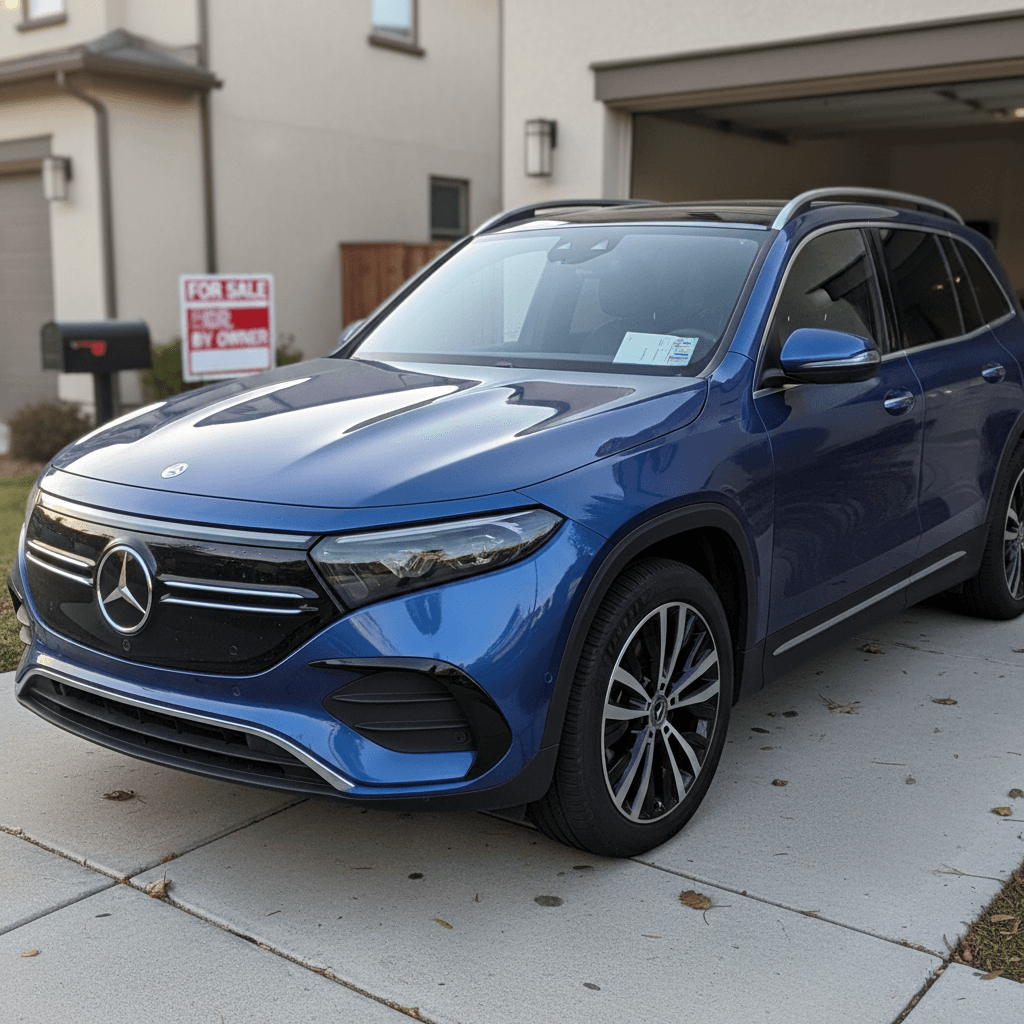
If you like the idea of a compact luxury SUV with a three-row option and Mercedes-level comfort, the 2025 Mercedes EQB probably sits high on your used-EV shortlist. As Mercedes winds down the EQB after the 2025 model year, more nearly new examples are hitting the used market at big discounts, raising a fair question: is a used 2025 EQB a smart buy or a risky bet?
Quick take
Overview: 2025 Mercedes EQB as a used buy
The EQB is the electric version of Mercedes’ GLB, built on a compact SUV platform and tweaked for battery power. For 2025 it carries over the refresh introduced for 2024, new grille, lighting and infotainment updates, along with a lineup of three main trims: EQB 250+, EQB 300 4MATIC and EQB 350 4MATIC. Mercedes has confirmed the EQB leaves the U.S. and Canadian lineups after the 2025 model year, which means today’s new EQB quickly becomes tomorrow’s nearly new used EV.
2025 EQB used: key pros and cons
Where this compact electric Mercedes shines, and where it doesn’t
Why it’s appealing used
- Boxy, practical body with optional third row, rare in compact EVs.
- Comfortable ride and quiet cabin tuned more for family use than sport.
- High‑end interior with ambient lighting and twin screens that still feel modern in 2026.
- Heavy new‑car discounts and sharp depreciation create attractive used pricing.
Where you compromise
- Average range and efficiency versus newer EV rivals.
- DC fast‑charging maxes around 100 kW, so road trips are slower.
- Mixed early‑generation EQ reliability stories, especially on 2023s (a caution sign for used buyers).
- End-of-life model with likely weaker long‑term software attention from Mercedes.
Trims, range and performance: 250+, 300 and 350
Understanding the differences between EQB trims matters more on the used market than it does new, because range, power and equipment affect both daily livability and resale value. All 2025 models share a roughly 70 kWh battery, but power output, drive layout and official range vary by trim.
2025 Mercedes EQB trim comparison (U.S.)
Key specs that matter most when you’re shopping used.
| Trim | Drive | Power | EPA range (approx.) | 0–60 mph (approx.) | Notable traits |
|---|---|---|---|---|---|
| EQB 250+ | FWD | ~188 hp | Up to ~250 miles | ~8.5 sec | Best range, least power, front‑wheel drive only |
| EQB 300 4MATIC | AWD | ~225 hp | ~205 miles | ~7.6 sec | All‑wheel drive, balanced power/range |
| EQB 350 4MATIC | AWD | ~288 hp | ~207 miles | ~5.8 sec | Quickest, well equipped, shortest range |
Numbers are approximate EPA ratings and manufacturer specs for the 2025 model year.
Trim choice tip for used buyers
At a glance: 2025 EQB key numbers
Real-world range and charging experience
On paper, the 2025 EQB’s range looks competitive in 250+ form and merely adequate in the dual‑motor models. On the road, owners typically see slightly less than the EPA rating at highway speeds, and sometimes significantly less in cold weather or with a full load. That’s the tradeoff for the EQB’s upright, boxy shape and conventional SUV stance, it’s great for space, not great for aerodynamics.
Real‑world range expectations
- EQB 250+: Many drivers report 210–230 miles on mixed driving, less at 75 mph or in winter.
- EQB 300/350: Expect more like 170–190 miles real‑world, depending on weather, wheel size and driving style.
- Climate impact: Strong HVAC use or heated seats can trim 10–15% off range on short trips.
For suburban commuting and school runs, that’s usually fine. For frequent interstate drives, you’ll plan more charging stops than in a Tesla Model Y or Hyundai Ioniq 5.
Charging experience
- Home charging: On a 240‑V Level 2 charger, the EQB’s 11 kW onboard charger can add roughly 30–35 miles of range per hour, enough for a full charge overnight.
- Public DC fast‑charging: Peak rates around 100 kW mean you’re not chasing cutting‑edge numbers, but a 10–80% session in ~35–40 minutes is realistic under good conditions.
- Network access: You’re primarily using CCS fast‑charging networks. Check whether your specific car has any included charging plans or credits carried over from the original sale.
Watch charging curves, not just peak kW
Interior, tech and comfort for daily use
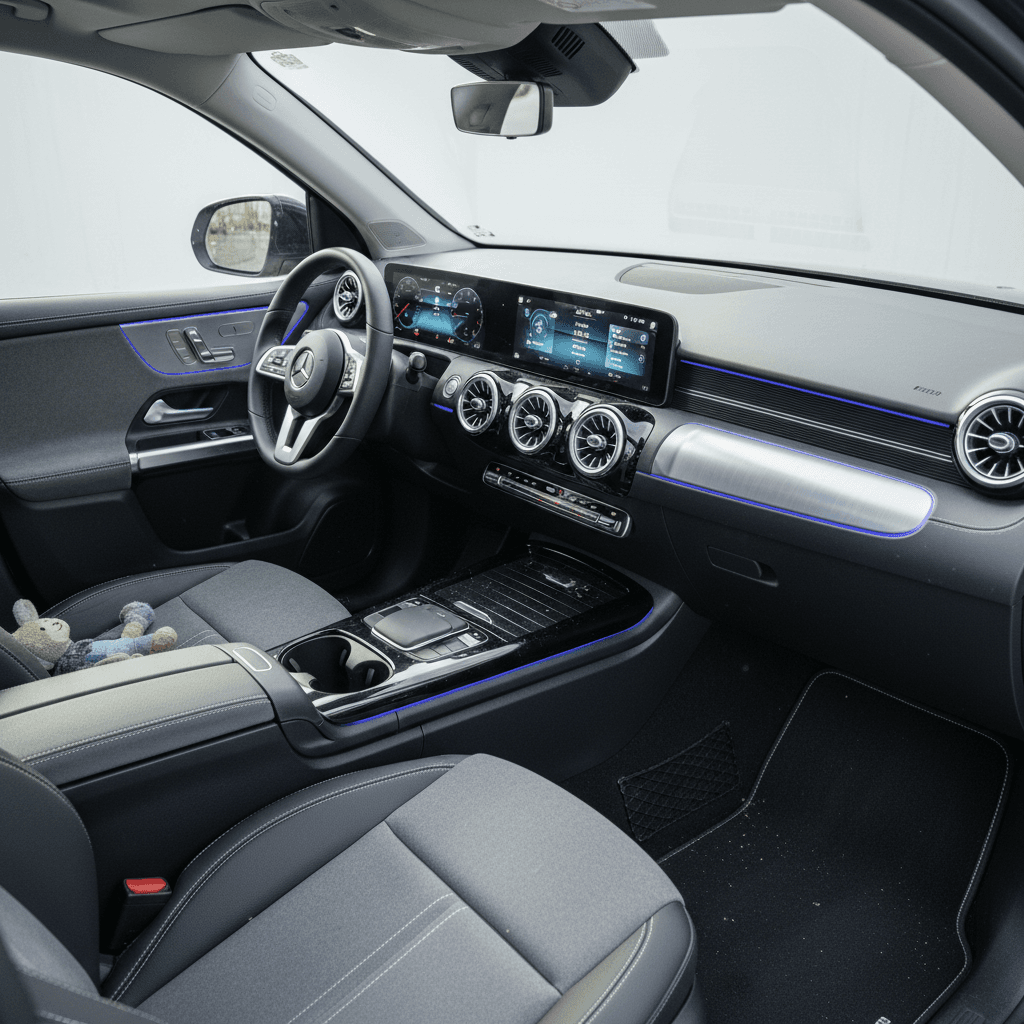
Inside, the 2025 EQB feels more like a traditional Mercedes SUV that happens to be electric than a radically futuristic EV. That’s exactly what many used shoppers want. Materials are generally solid, the driving position is upright and visibility is good. The boxy roofline gives tall passengers decent headroom in the first two rows, and the sliding second row helps you balance legroom with cargo space.
EQB interior and tech highlights
What stands out when you sit in a used 2025 EQB
Twin-screen cockpit
Ambient lighting
Practical seating
MBUX and over‑the‑air updates
Reliability signals and ownership experience
Formal long‑term reliability data for the 2025 EQB is still limited in early 2026, but you’re not shopping in the dark. The EQB’s electric hardware is closely related to earlier model years, and those owner stories, both good and bad, are already visible. Many drivers report trouble‑free daily use, while a minority have posted about repeated faults ranging from infotainment bugs to more serious drive‑system failures, particularly on early‑build 2023s.
- Battery and motor hardware: No widespread, model‑specific EV‑system failures have emerged yet, but long‑term field data is still developing.
- Electronics and software: Complaints tend to cluster around software glitches, sensor faults and warning lights that require dealer visits for resets or module replacements.
- Dealer experience: As with many German luxury brands, repairs can be expensive out of warranty, and EV‑specific troubleshooting quality varies widely by dealer.
Why warranty coverage matters so much
On a positive note, the 2025 model year benefits from a couple of years of running changes and software updates compared with the very first EQBs. For used buyers, that usually means fewer early‑build teething issues. Still, you should approach any used EQB with a structured inspection and a clear plan for how you’ll handle repairs after the warranty clock runs out.
Depreciation, used pricing and value
If there’s one reason the 2025 EQB deserves a hard look used, it’s depreciation. Mercedes has relied on heavy incentives to move EQ‑branded EVs, and the entire segment has seen downward pressure on prices. The result: by early 2026, nearly new EQBs are trading well below their original stickers.
2025 Mercedes EQB: new vs used pricing snapshot
Illustrative national‑average figures to frame expectations when you’re shopping used.
| Model / trim | 2025 MSRP (approx.) | Typical new‑car transaction (2025) | Early‑2026 used value range |
|---|---|---|---|
| EQB 250+ | ~$54,000 | Often mid‑$40Ks after incentives | High‑$30Ks to low‑$40Ks for low‑mile 2025s |
| EQB 300 4MATIC | ~$58,000 | Often low‑$50Ks | Low‑$40Ks to mid‑$40Ks |
| EQB 350 4MATIC | ~$62,000 | Mid‑$50Ks | Mid‑$40Ks to high‑$40Ks if well equipped |
Actual used pricing will vary by trim, mileage, condition, options and local market conditions.
Value upside for used shoppers
For context, Recharged’s broader EV value analysis shows Mercedes EVs often depreciate faster than Tesla and many Korean EVs in the first few years, largely because of higher new‑car pricing and slower demand growth. That’s bad news for first owners, but it’s an opportunity if you’re stepping into a used 2025 EQB with most of its warranty life still ahead.
How the 2025 EQB compares to rival used EVs
When you’re cross‑shopping a used 2025 EQB, the natural rivals are other compact luxury or near‑luxury electric SUVs: Tesla Model Y, Audi Q4 e‑tron, Volvo XC40 Recharge/C40, Genesis GV60 and even non‑luxury standouts like the Hyundai Ioniq 5 and Kia EV6. Each brings a different balance of range, charging performance, brand appeal and space.
Used 2025 EQB vs common alternatives
General comparisons at similar used‑price points
Tesla Model Y
- Pros: Longer range, much faster DC charging, excellent Supercharger access, strong efficiency.
- Cons: Simpler interior, firmer ride, less traditional luxury feel.
- EQB edge: More classic Mercedes cabin and quieter, more relaxed character.
Hyundai Ioniq 5 / Kia EV6
- Pros: 800‑V charging with very fast road‑trip stops, competitive range, strong warranties.
- Cons: Less upscale badge, fewer three‑row options.
- EQB edge: Available third row, more conventional SUV shape and Mercedes brand cachet.
Audi Q4 e‑tron / Volvo XC40 Recharge
- Pros: Comfortable, premium cabins, solid safety reputations.
- Cons: Range and charging speeds are often similar or only slightly better than EQB.
- EQB edge: More usable third row in some configurations and potentially lower used pricing because of steeper depreciation.
How to compare used EQB deals
Used 2025 EQB buying checklist
What to check before you buy a used 2025 EQB
1. Battery health and fast‑charge test
Ask for a recent battery health readout if available. At Recharged, this is captured in our <strong>Recharged Score battery health diagnostics</strong>. On a test drive, do a short DC fast‑charge session from ~20–60% and verify charging speeds look consistent with other EQBs of similar age.
2. Warranty status and coverage
Confirm the in‑service date so you know exactly how much basic and high‑voltage battery warranty remains. If you’re shopping outside Recharged, ask whether the car is Certified Pre‑Owned and what that really adds.
3. Software and infotainment behavior
Cycle through navigation, EV route planning, Bluetooth, CarPlay/Android Auto and driver‑assist features. Watch for laggy responses, random reboots or warning lights, these can hint at deeper electrical issues.
4. Charging hardware and cables
Inspect the charge port for damage or corrosion. Make sure the car includes the correct home charging cable or wall‑charger documentation, and test both Level 2 and DC fast‑charging if possible.
5. Suspension, tires and brakes
The EQB is heavy for its size, which can stress tires and suspension. Listen for clunks over bumps, check for uneven tire wear and verify that brake pads still have healthy life left.
6. Third‑row usability (if equipped)
If you’re buying the EQB partly for its three‑row capability, actually sit in the third row and test access, legroom and headroom. Make sure the second row slides and folds smoothly.
7. Accident, service and charging history
Pull a detailed history report and ask for service records. Look for repeated visits for the same electrical issue or any major collision repairs near the high‑voltage battery area.
Don’t skip a specialized EV inspection
Who a used 2025 EQB is (and isn’t) right for
Great fit if you are…
- A comfort‑first commuter or family driver who values quiet, refined manners over sharp handling.
- Moving up from a gas Mercedes and want an EV that still feels familiar inside.
- Range‑realistic: Your typical daily driving is well under 150 miles, and road trips are occasional.
- A value‑oriented luxury shopper looking to let someone else take the big first‑owner depreciation hit.
Maybe look elsewhere if you…
- Road‑trip constantly and want the absolute fastest DC charging and longest range in class.
- Plan to keep the car well past warranty and prioritize rock‑solid long‑term reliability above all else.
- Need a true adult‑friendly third row you’ll use regularly for long drives, larger three‑row EVs will serve you better.
- Prefer minimalist tech to complex luxury interfaces, something like a Model Y may feel simpler day‑to‑day.
Frequently asked questions about used 2025 EQB
2025 Mercedes EQB used-buy FAQ
Viewed through a used‑EV lens, the 2025 Mercedes EQB is a classic second‑owner opportunity: a high‑MSRP, comfort‑focused luxury SUV that takes a big value hit in the first couple of years, then settles into a more affordable price band. If you’re realistic about its range and charging, and you buy with battery health, warranty and service history front of mind, a used 2025 EQB can be a smart, family‑friendly gateway into electric Mercedes ownership. And if you want help pressure‑testing a specific vehicle, Recharged’s combination of verified battery diagnostics, transparent pricing and EV‑specialist support can take much of the uncertainty out of the process.