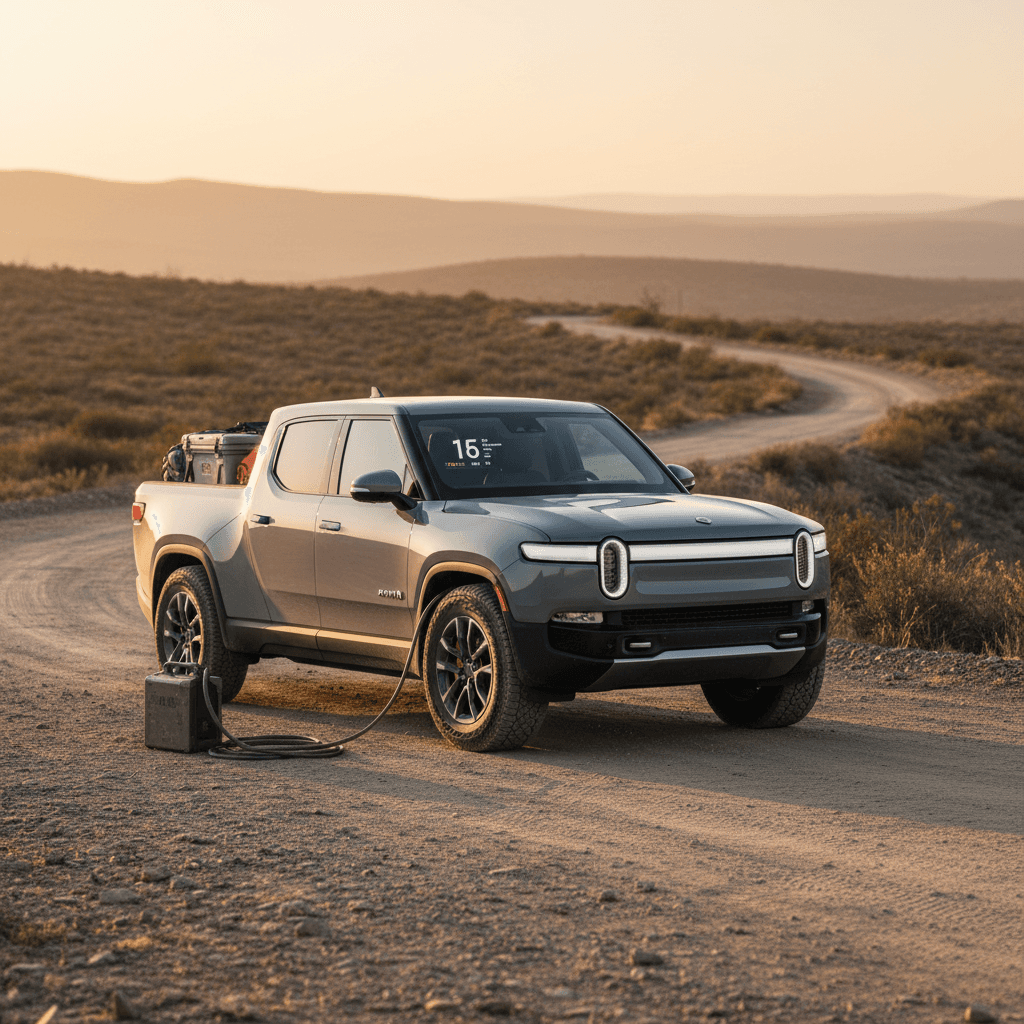
You don’t buy a 2023 Rivian R1T because you’re shy. It’s a 7,000‑pound electric Swiss‑Army knife that can sprint like a sports car and climb a trail like a mountain goat. But if you’re looking at a new or used R1T, you’re probably asking the same question everyone else does: what’s the **real** range, beyond the glossy EPA number? This guide pulls together the hard data and owner experiences to show how a 2023 Rivian R1T range test plays out in the real world.
Quick takeaway
2023 Rivian R1T batteries and official EPA range
For 2023, the Rivian R1T lineup centers on two main battery options in the U.S. market: the **Large Pack** (around 135 kWh gross) and the **Max Pack** (about 180 kWh). Pair those with different motors and wheels, and you get a spread of EPA‑rated ranges that look fantastic on paper, but don’t all behave the same way on the highway.
2023 Rivian R1T EPA range by configuration (approximate)
Key 2023 R1T battery, motor, and wheel combinations with their EPA or manufacturer-estimated ranges. Exact figures vary slightly by source, but this is the ballpark you should compare against real-world results.
| Battery / Motor / Wheels | EPA or Est. Range | What it means in the real world |
|---|---|---|
| Large Pack, Dual Motor, 21" wheels | ≈352 miles | Best balance of price, performance and range; many owners see 260–300 miles in mixed driving. |
| Large Pack, Dual Motor, 22" wheels | ≈341 miles | Bigger wheels and tires cost you efficiency; expect closer to 240–280 miles in real use. |
| Large Pack, Quad Motor, 21" wheels | ≈328 miles | More power, a bit less efficiency; real range often lands around 230–270 miles. |
| Max Pack, Dual Motor, 21" wheels | ≈400–410 miles | The headline grabber; think 300–340 miles at U.S. highway speeds in good conditions. |
| Max Pack, Dual Motor, 22" wheels | ≈360–380 miles | Still huge range, but the big wheels nibble off 20–40 miles in daily use. |
| Large/Max Pack, 20" All‑Terrain | ≈290–355 miles | Chunky off‑road rubber can trim range by 10–15% compared with 21" road tires. |
Use this as a reference point before you compare your own range test results.
Don’t compare across trucks blindly
Real-world R1T range: what drivers actually see
Typical 2023 R1T range results from owners and tests
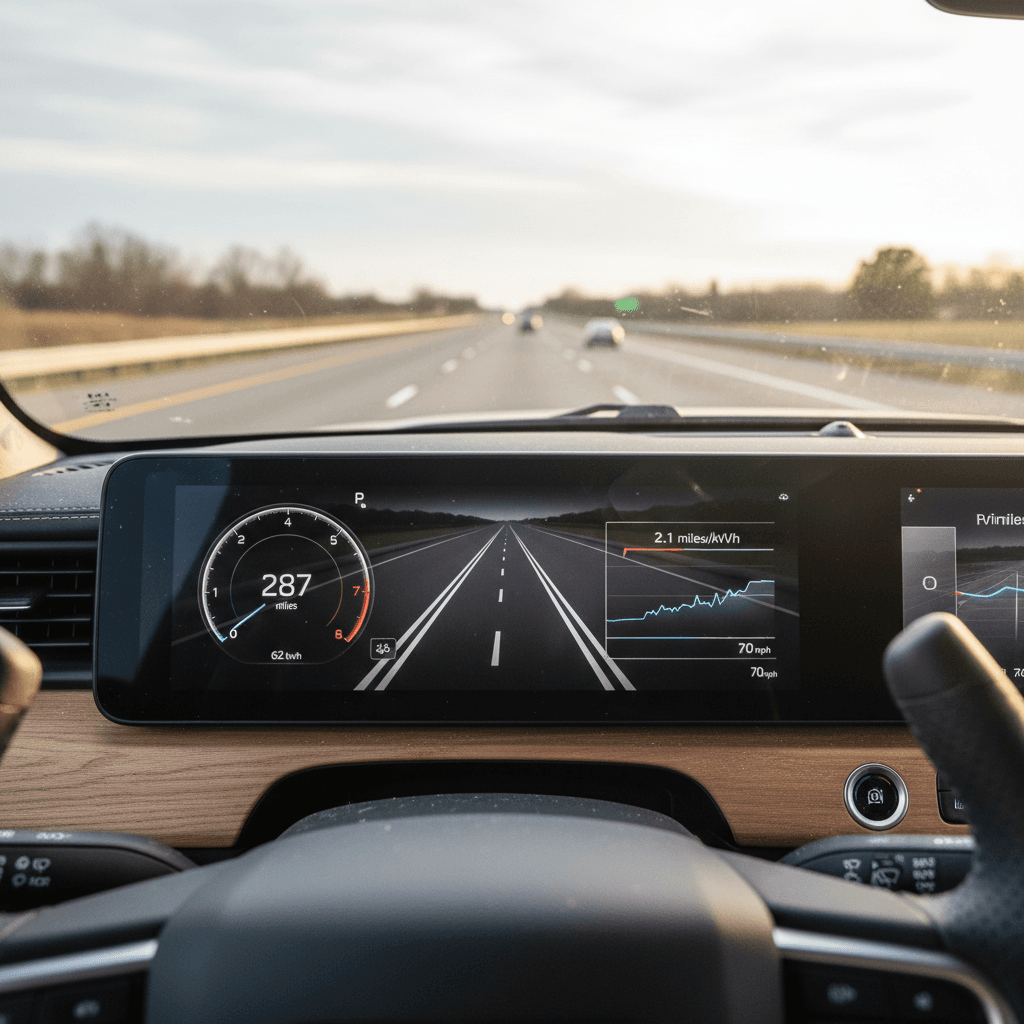
If you strip away the marketing and look at trip computers and long‑term logs, a pattern emerges. In temperate weather on 21‑inch road tires, a 2023 R1T running around town and on suburban highways typically delivers **2.1–2.5 miles per kWh**. That translates to roughly **260–300 miles** of usable range for a Large Pack, and **320–340 miles** for a Max Pack before you’re down to a low single‑digit state of charge.
Owners who live on interstates and like the left lane will see less. At 70–75 mph, especially with **22‑inch or All‑Terrain tires**, the same trucks often settle in closer to **1.8–2.1 mi/kWh**, which pulls a Large Pack truck down into the low‑ to mid‑200‑mile range on a comfortable 10–90% charge window.
Highway vs. city: how the R1T behaves in mixed driving
Typical suburban mix
Think school runs, errands, and a few stretches at 55–65 mph. In this world, the R1T’s regenerative braking and efficient motors really help. You might see:
- 2.3–2.6 mi/kWh Large Pack Dual Motor on 21" wheels
- 2.0–2.3 mi/kWh with Quad Motor or larger wheels
- Comfortable 260–310 miles between full charges for most drivers
Sustained highway driving
Set cruise at 70–75 mph, add some headwinds and rolling hills, and aero drag becomes your enemy. In independent tests and owner road trips you’ll commonly see:
- 1.8–2.1 mi/kWh on 21" road tires
- 1.5–1.9 mi/kWh on 20" All‑Terrain or 22" wheels
- Real‑world highway range of about 200–260 miles on a conservative 10–90% battery window
Set your expectations by speed
Towing and hauling: how much range you really lose
The R1T’s rated to tow up to **11,000 pounds**, and plenty of owners have put that to the test. The moment you hitch up a big camper or car trailer, though, you move into a different range universe. Aerodynamic drag from the trailer and extra weight can chop your EPA fantasy in half, or more, if you’re not careful.
Realistic towing scenarios for a 2023 R1T
Here’s how common setups affect range at typical U.S. highway speeds.
Moderate trailer (3,000–4,000 lb)
Small camper, single‑axle utility trailer, or a couple of dirt bikes.
- Range hit: ~25–35%
- Highway range: 160–210 miles on Large Pack
- Tip: Keep speed around 60–65 mph and use conservative drive modes.
Big box (6,000–8,000 lb)
Full‑height travel trailer or car hauler with a sports car aboard.
- Range hit: ~40–55%
- Highway range: 120–180 miles depending on terrain
- Tip: Plan on charging about every 90–120 minutes.
Heavy + hills
Mountain passes or strong headwinds with a tall trailer.
- Range hit: up to 60% vs. EPA
- Highway range: sometimes just 100–140 miles
- Tip: Downhill regen helps, but don’t count on it to save a tight plan.
Never plan towing days off the EPA number
Off-road, elevation and adventure driving
Off‑road is where the R1T feels most at home, and where range numbers go out the window. Deep sand, mud, rock‑crawling and steep climbs all chew through energy. The flip side is that **long descents can give back a surprising amount** of charge through regenerative braking.
- Expect **30–50% less range** on technical trails than you’d see on pavement at the same average speed.
- Soft surfaces like sand, mud and snow dramatically increase rolling resistance and can drop efficiency below **1.5 mi/kWh**.
- High ride‑height settings and aggressive off‑road tires increase aerodynamic drag even back on the highway.
- Big sustained climbs can slash range, but long, gentle descents may claw back a noticeable percentage through regen.
Plan loops, not one‑way hero runs
Cold-weather range in the 2023 R1T
Like every EV, the R1T hates the cold. Batteries are less efficient, the cabin needs more heat, and winter tires add rolling resistance. Many owners report their long‑term efficiency dropping from the low‑ to mid‑2s (mi/kWh) in mild weather down to the low 2s, or even the high 1s, once winter really digs in.
How winter eats into your R1T’s range
1. Cold-soaked battery
If your truck sits outside in freezing temps, the pack itself wastes energy just warming up to an efficient temperature. Preconditioning while plugged in helps a lot.
2. Cabin heat and defrost
Unlike a gas truck, there’s no free waste heat. Running the HVAC hard can trim **10–15%** off your range. Use heated seats and steering wheel first, then add gentle cabin heat.
3. Winter or all-terrain tires
Aggressive tread blocks and softer compounds roll more slowly. Expect a few percentage points of range loss just from tire choice, more if you also step up in diameter.
4. Wet, slushy roads
Pushing through standing water or slush adds drag, especially at highway speeds. That’s one reason a winter road trip almost always returns worse numbers than a chilly but dry day around town.
Watch your first cold‑weather road trip
How to run your own 2023 R1T range test
The best range test is the one you do yourself, on your roads, with your driving style. You don’t need lab gear, just a full charge, some time and a light touch on the right pedal.
Step-by-step: simple real-world range test
1. Start with a known setup
Log your tire size, drive mode, outside temperature and how many people or how much cargo you’re carrying. Those details explain most of the differences you’ll see later.
2. Charge to at least 90%
A true 0–100% test isn’t practical on public roads. Instead, start around **90–100%** and plan to end near **10–15%** state of charge. That’s your usable test window.
3. Pick a repeatable route
Choose a highway loop or out‑and‑back route you can easily repeat, ideally with a DC fast charger at or near the midpoint so you’re never stranded.
4. Hold a steady speed
Use cruise control at a specific speed, like 65 or 70 mph. Avoid big bursts of acceleration or long periods in heavy traffic if you’re trying to compare results.
5. Note distance and consumption
At the end, record miles driven and average mi/kWh from the trip computer. Multiply the two to check how much of the pack you really used, then extrapolate a comfortable total range.
6. Repeat in different conditions
Run the same route in winter vs summer, with and without bikes on the roof, and at different speeds. You’ll quickly build a mental playbook for planning trips in your truck.
Buying a used 2023 R1T: what range to expect
If you’re eyeing a **used 2023 Rivian R1T**, range isn’t just about the spec sheet, it’s about how that specific truck has been treated. The good news: modern EV packs like Rivian’s generally hold up well over the first few years, with modest degradation if they’ve been charged and stored sensibly.
Questions to ask the seller
- Which battery pack does it have, Large or Max?
- Is it Dual Motor or Quad Motor?
- What wheels and tires are fitted now, and were those original?
- How much of its life was spent on **road trips vs local driving**?
- Have they noticed any **major range loss** since new?
What to expect in real use
- After a few years, many R1Ts still deliver close to **70–85% of EPA** in mixed driving.
- Slight battery degradation, say a few percent, is normal and often hard to spot without data.
- A truck living on 22" or All‑Terrain tires can feel like it "lost range" even if the pack is healthy.
How Recharged helps on the range question
Ready to find your next EV?
Browse Vehicles2023 Rivian R1T range FAQ
Frequently asked questions about 2023 R1T range tests
Bottom line: what the 2023 R1T will really do
On paper, the 2023 Rivian R1T is a 300‑plus‑mile electric pickup, and in the right conditions it absolutely is. But real‑world range tests tell a more nuanced story: **mid‑200s on fast interstates, low‑300s in relaxed mixed driving, and sometimes only low‑hundreds when you pile on cold, hills and heavy trailers.** None of that diminishes what the truck can do; it just means you need to plan like a seasoned road‑tripper, not a brochure reader.
If you’re shopping new or used, focus less on the biggest number on the spec sheet and more on how you’ll actually use the truck. Pick the right battery and tire combo, learn how your R1T behaves at your favorite cruising speed, and you’ll quickly know exactly what it can deliver on any given day. And if you’d rather have experts help you decode range and battery health, a used R1T listed on Recharged comes with the diagnostics and support to make that first big EV truck purchase a confident one.