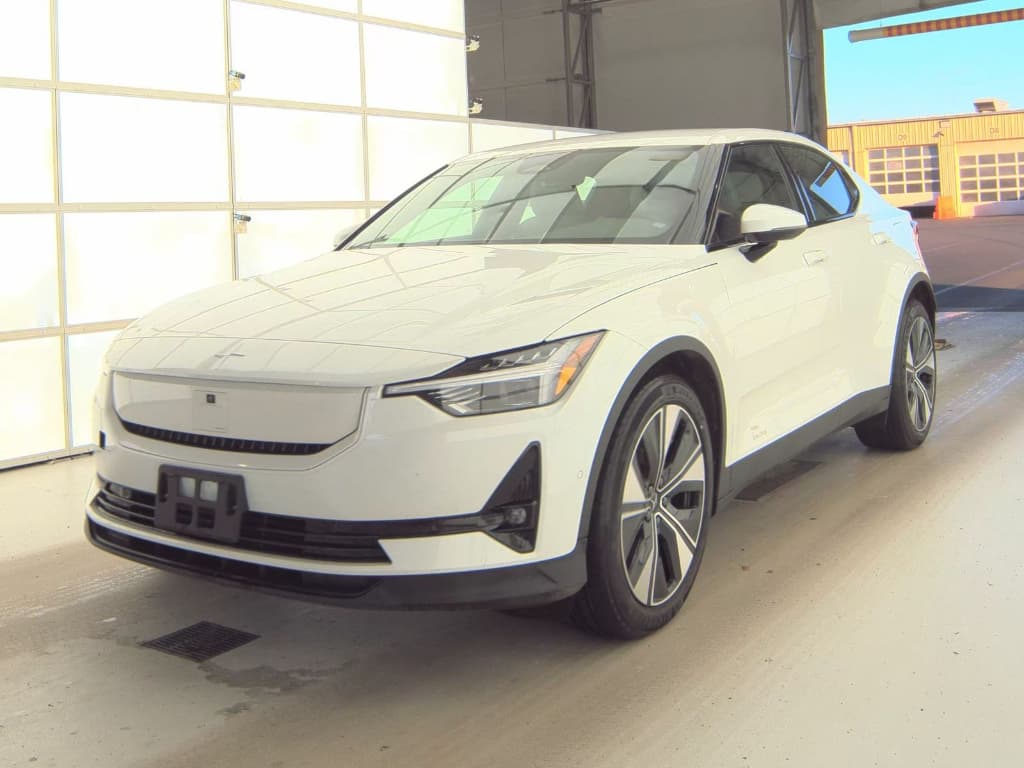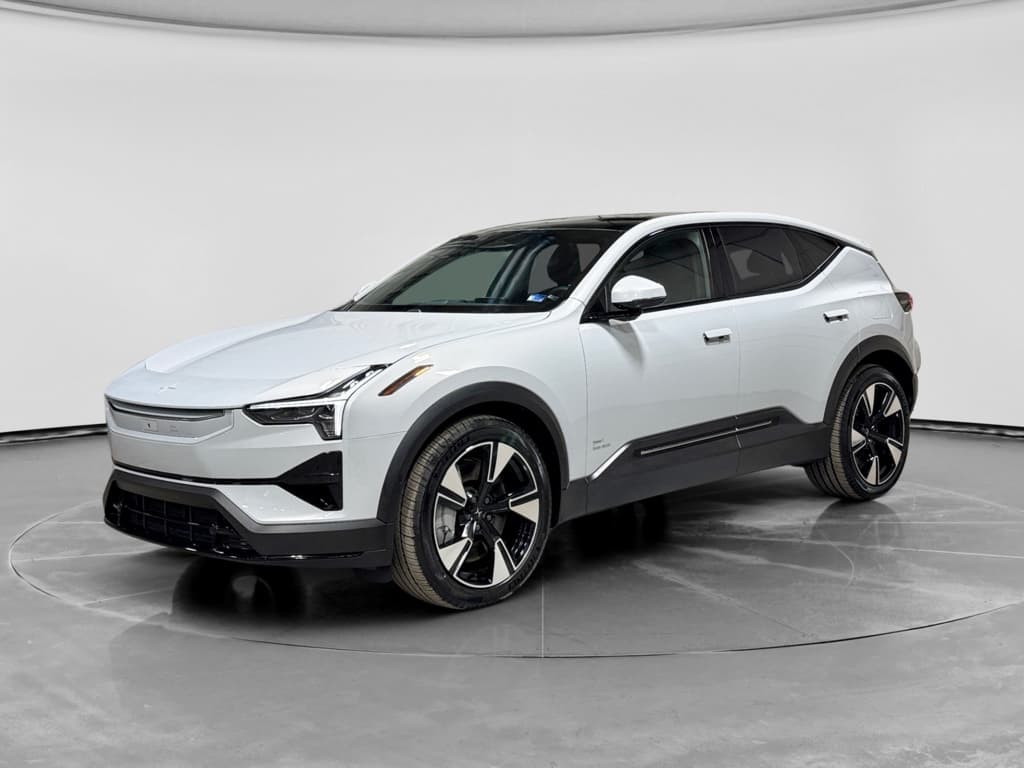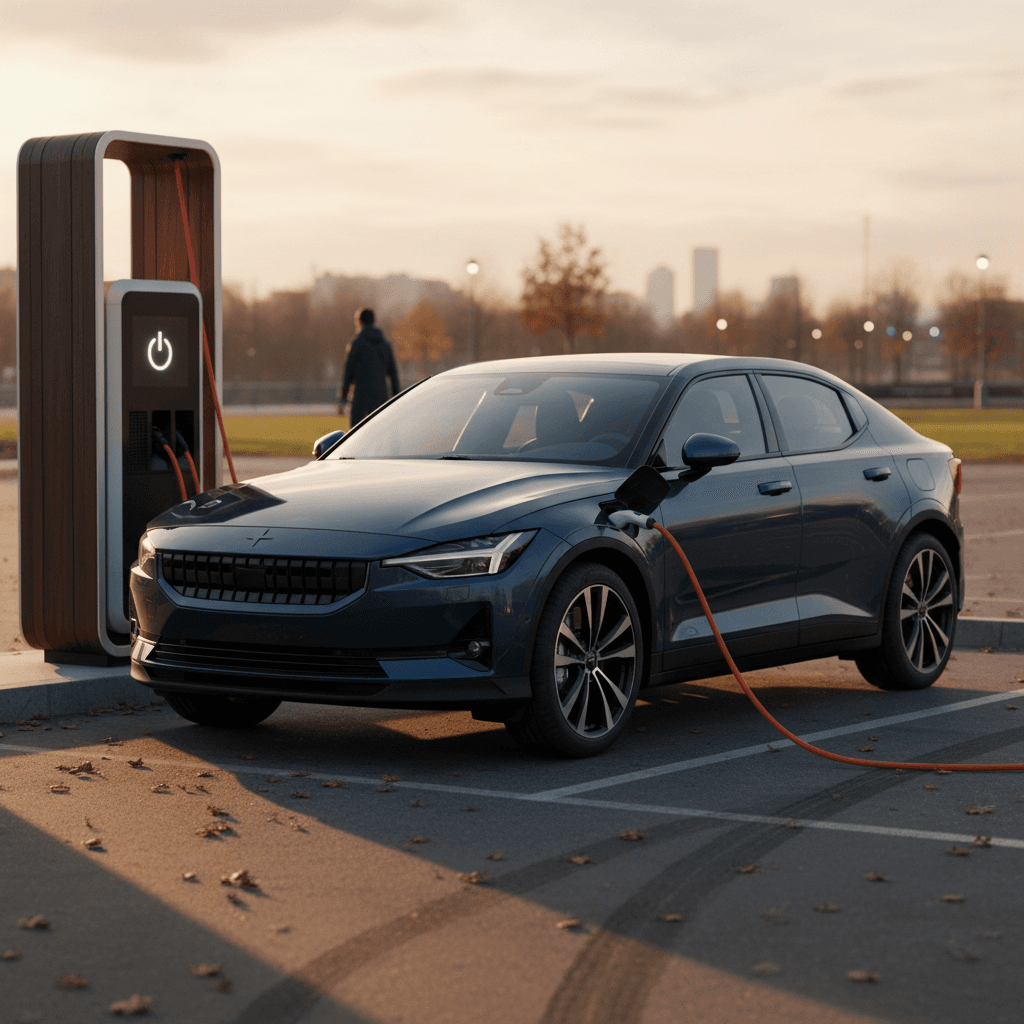
If you’re shopping for a premium used EV, a 2023 Polestar 2 will almost certainly show up alongside Tesla Model 3s and Hyundai Ioniq 5s. It’s a Scandinavian-styled liftback with serious performance, solid range, and one of the best native infotainment systems on the market. This 2023 Polestar 2 review focuses on what it’s like to live with today, and whether it makes sense as a used buy compared with newer 2024–2025 models.
Quick take
2023 Polestar 2 overview
2023 Polestar 2 key specs (U.S. models)
The Polestar 2 is a compact electric liftback built on Volvo’s CMA platform. Think of it as a taller, more practical alternative to a Model 3 with a more conventional driving position and Volvo-flavored safety ethos. In 2023, U.S. buyers could choose between a single-motor front‑wheel‑drive version and a dual‑motor all‑wheel‑drive version, both using a roughly 78 kWh battery pack. There was no short‑range pack in the U.S. that year.
2023 Polestar 2 powertrain lineup (U.S.)
All use a similar roughly 78 kWh battery but differ in power, driven wheels, and software tuning.
Long Range Single Motor FWD
- Approx. 231 hp (170 kW)
- Front‑wheel drive
- EPA range around 270 miles with 19" wheels
- Best efficiency and lowest cost to run
Long Range Dual Motor AWD
- Approx. 408 hp combined
- All‑wheel drive traction
- EPA range ~260 miles
- More performance, modest range hit
Dual Motor Performance Pack
- Up to ~455 hp (via software)
- Öhlins dampers, Brembo brakes
- EPA range in the mid‑240s miles
- Sharper, firmer ride and higher running costs
Trim choice tip
Powertrain and performance
On the road, the 2023 Polestar 2 feels more like a well‑sorted European sport sedan than a futuristic science project. Even the single‑motor car has the instant torque you expect from an EV, and the dual‑motor models offer genuinely quick acceleration that’s in the same conversation as most performance‑oriented compact luxury sedans.
2023 Polestar 2 performance snapshot
Approximate factory figures for U.S.-market 2023 models. Exact numbers vary slightly by wheel size and software updates.
| Variant | Driven wheels | Horsepower (approx.) | 0–60 mph (approx.) | EPA range (mi) |
|---|---|---|---|---|
| Long Range Single Motor | FWD | 231 hp | ~7.0 sec | Up to ~270 |
| Long Range Dual Motor | AWD | 408 hp | ~4.5 sec | ~260 |
| Dual Motor w/Performance Pack | AWD | Up to ~455 hp | ~4.2 sec | ~245 |
Performance improves significantly as you move up the range, but energy consumption rises too.
The dual‑motor cars are the ones that really underline the Polestar 2’s character. With a low center of gravity and firm but controlled suspension tuning, this car feels eager to change direction without the floatiness of some taller crossovers. Steering feel isn’t old‑school hydraulic‑sharp, but it’s more natural than many EV competitors.
Performance Pack trade‑offs
Battery, range, and real-world efficiency
For 2023, U.S. Polestar 2 models used a roughly 78 kWh lithium‑ion battery (about 75 kWh usable) regardless of motor configuration. EPA range ratings landed around 270 miles for the single‑motor and 260 miles for the dual‑motor on 19‑inch wheels, slipping into the 240s for Performance Pack cars on 20s.
- In mixed driving, many owners report efficiency in the 2.8–3.4 mi/kWh range depending on climate and speed.
- At 70–75 mph highway speeds, expect to land somewhat below EPA ratings, similar to most compact EVs.
- Cold weather has a noticeable impact if your car doesn’t have (or is not using) the optional heat pump.
About the 2023 heat pump
Best‑case range expectations
- Mild temperatures (60–75°F)
- City or mixed driving at moderate speeds
- 19" wheels and efficient tires
- Single‑motor cars: often close to EPA ratings
Worst‑case range expectations
- Highway cruising at 75–80 mph
- Temperatures below freezing or above 95°F
- 20" wheels and stickier tires
- Dual‑motor Performance: expect ~180–210 miles at fast highway speeds in winter
Battery health matters on a used Polestar 2
Charging experience: home and public
The 2023 Polestar 2 supports up to 11 kW AC charging and 155 kW DC fast charging. That wasn’t class‑leading even in 2023, but it’s still entirely adequate for U.S. infrastructure and typical road‑trip use.
2023 Polestar 2 charging times (factory claim, ideal conditions)
Approximate times assuming the battery and charger can accept peak power and conditions are optimal.
| Charging type | Power | 2023 estimate | What it means day‑to‑day |
|---|---|---|---|
| Level 2 home (AC) | Up to 11 kW (48A) | 0–100% in ~8 hours | Overnight recharge from near empty on a 240V home charger. |
| DC fast (10–80%) | Up to 155 kW | ~30–35 minutes | Typical highway stop: bathroom break + snack while you gain 150+ miles of range. |
| 120V outlet | 1–1.5 kW | ~2–3 days to full | Emergency use only; not a practical long‑term solution. |
Real‑world times can be a bit longer due to temperature, charger behavior, and shared power.
Home charging setup
- The Polestar 2 uses the CCS fast‑charging standard, which works with most non‑Tesla DC networks in the U.S.
- As the industry transitions to NACS, expect adapters and future‑proof solutions; check what’s included with any used car you’re considering.
- The car includes smart charging features like charge scheduling and battery pre‑conditioning when a DC fast charger is set as your destination.
Interior, technology, and Android Automotive
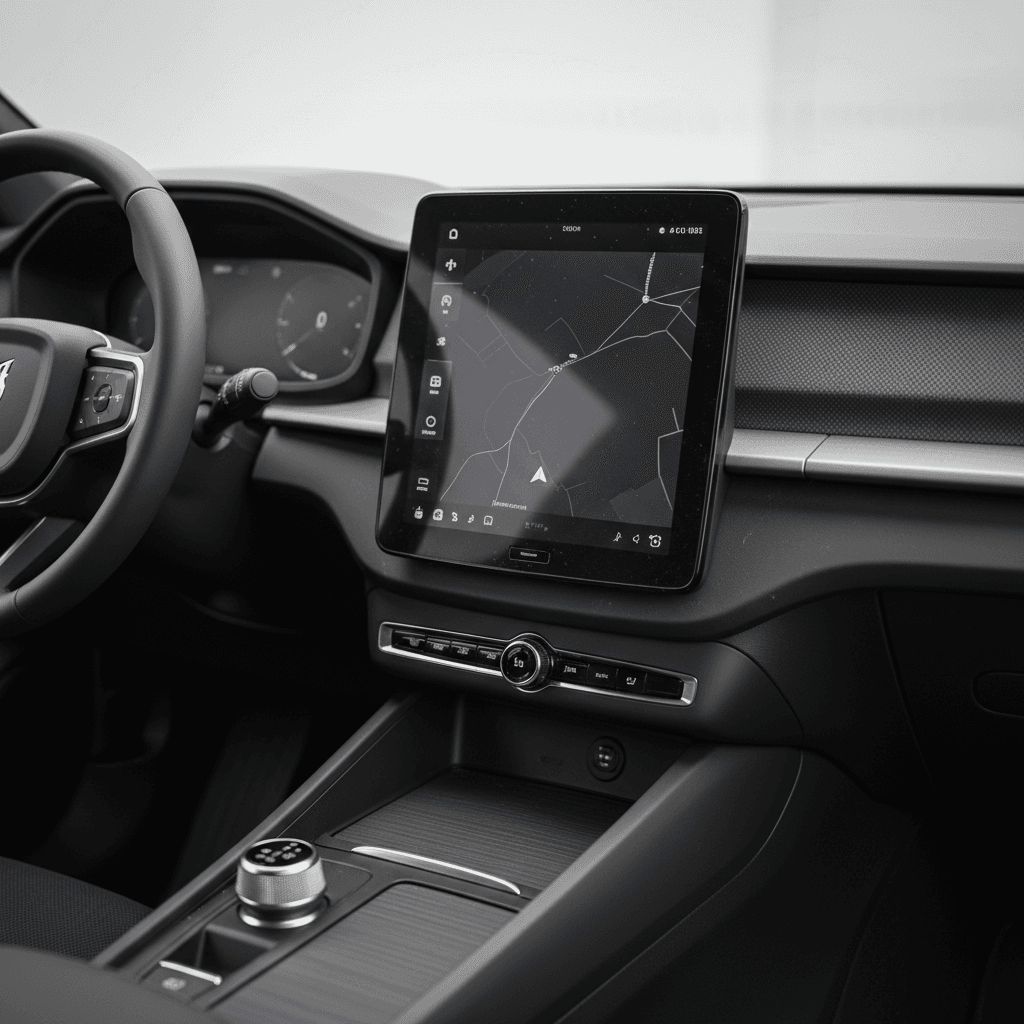
Inside, the 2023 Polestar 2 leans hard into Scandinavian minimalism. Clean lines, high‑quality materials, and a low cowl give good visibility. It feels more solid and conventional than a Model 3, while still clearly being an EV‑era product.
Standout interior and tech features
What makes the 2023 Polestar 2 feel modern without going full spaceship.
Android Automotive OS
Google Maps, Assistant, and Play Store apps are baked directly into the car. You don’t need your phone for navigation, streaming, or voice control.
Crisp displays
12.3" digital cluster plus 11.2" portrait center touchscreen. Graphics are clean, snappy, and well‑laid out.
Vegan & sustainable options
Available vegan upholstery and textiles, plus extensive use of recycled materials, align with the brand’s sustainability pitch.
Polestar’s Android Automotive implementation is one of the more intuitive in the market. Voice recognition via Google Assistant is excellent, and over‑the‑air (OTA) updates have steadily improved features and efficiency since launch. Traditionalists will appreciate that there are still physical controls for key climate functions and a proper PRND stalk rather than a fully touch‑only interface.
Software and data note
Comfort, practicality, and ride quality
The Polestar 2’s fastback shape hides a fairly practical hatch with 446–1,136 liters of cargo space (with seats up/down) and a small front trunk. It’s closer to a compact wagon or liftback than a crossover, so if you’re cross‑shopping taller SUVs, keep in mind the lower seating position and roofline.
Everyday comfort
- Front seats are supportive on long drives, with available power adjustment and memory.
- Rear space is adequate for adults but not generous; headroom can be tight for taller passengers.
- Road and wind noise are well‑controlled, though dual‑motor Performance cars on 20" wheels can transmit more harshness.
Ride and handling
- Standard suspension balances firmness with good body control.
- Performance Pack Öhlins dampers add precision but may feel too stiff in rough urban driving.
- Regenerative braking is well‑tuned, with one‑pedal driving available but not mandatory.
Polestar 2 strengths vs rivals
2023 vs 2024 Polestar 2: what changed?
When you’re evaluating a 2023 Polestar 2 as a used purchase, you have to understand what changed for 2024. In early 2023 Polestar announced a significant update for the 2024 model year: more power, more range, faster charging, and a switch from front‑ to rear‑wheel drive for single‑motor cars in many markets.
Major differences between 2023 and 2024 Polestar 2
1. Motor layout and power
2023 single‑motor cars are <strong>front‑wheel drive</strong> with around 231 hp. From 2024, single‑motor cars switch to <strong>rear‑wheel drive</strong> and jump close to 300 hp, improving both performance and steering response.
2. Battery and range improvements
The 2024 Long Range Single Motor gets a new ~82 kWh pack and WLTP/EPA range bumps (up to roughly 320 miles EPA), while the 2023 models top out around 270 miles in U.S. spec.
3. Faster DC charging
2024 long‑range cars can fast‑charge up to <strong>205 kW</strong>, versus the 2023 cap around <strong>155 kW</strong>. Shorter road‑trip stops are the big benefit.
4. Software and safety tweaks
The 2024 model adds some driver‑assist and convenience features as standard and continues to refine torque distribution on dual‑motor cars.
What this means for used‑buy math
Ownership costs and depreciation
A used 2023 Polestar 2 sits at the intersection of luxury‑car depreciation and fast‑moving EV technology. That’s a double‑edged sword: values have come down more than comparable gas Volvos, but that also opens the door to some compelling used deals.
Key cost factors for a 2023 Polestar 2
Where you’ll save and where you should budget a bit extra.
Where you save
- Depreciation: Early‑life drop means lower purchase price vs new.
- Fuel costs: Electricity typically beats gas on a cost‑per‑mile basis.
- Maintenance: No oil changes, fewer moving parts than an ICE car.
Where to budget carefully
- Tires: EV torque and weight can wear performance tires quickly.
- Insurance: Premium EVs can cost more to insure than mainstream sedans.
- Out‑of‑warranty fixes: Body and electronics work on low‑volume EVs isn’t cheap.
Stretch your EV budget smartly
2023 Polestar 2 as a used EV: buying tips
Because the 2023 model year sits right before a substantial 2024 update, your goal as a used buyer is to ensure you’re getting enough value to justify stepping back one model year. That comes down to condition, battery health, features, and price.
Checklist: what to look for on a used 2023 Polestar 2
1. Verify battery health and fast‑charging history
Ask for a recent <strong>battery state‑of‑health</strong> report and, if possible, charging‑history information. Heavy DC fast‑charging or frequent 100% charges aren’t an automatic dealbreaker, but they’re important context when you’re comparing cars.
2. Check for OTA update history
Because Polestar 2 has received significant over‑the‑air updates, confirm that the car has been kept current. A well‑updated 2023 can drive and charge closer to early 2024 behavior than you’d expect from the window sticker alone.
3. Inspect wheels, tires, and brakes
Dual‑motor and Performance Pack cars are hard on consumables. Check for uneven tire wear, curb rash on 20" wheels, and plenty of life left in the brake pads and rotors.
4. Confirm option packages
Features like the <strong>heat pump</strong>, <strong>Pilot</strong> and <strong>Plus</strong> packs (driver‑assistance, audio, seating, and lighting upgrades) materially change the experience and resale desirability. Don’t assume every Polestar 2 has them.
5. Test drive for noises and rattles
Low cabin noise in EVs makes any squeaks or rattles more obvious. On your test drive, find a rough road section and listen for trim noises, especially around the panoramic roof and hatch.
6. Evaluate charging accessories
Confirm which cables and adapters are included, especially as the CCS/NACS landscape evolves. Replacing missing OEM equipment can add hundreds of dollars post‑purchase.
In a used‑EV market that’s maturing fast, the 2023 Polestar 2 is one of the more compelling ways to get premium design and performance without paying new‑car money, if you’re clear‑eyed about its range and charging relative to the 2024 refresh.
Frequently asked questions
Frequently asked questions: 2023 Polestar 2
Verdict: should you buy a 2023 Polestar 2?
If you’re chasing absolute maximum range or the latest hardware, the 2024‑plus Polestar 2 or rival models will serve you better. But as a used buy, the 2023 Polestar 2 hits a sweet spot: distinctive design, engaging dynamics, solid range, and one of the best infotainment systems in any EV, now at a meaningful discount to new.
The key is to be disciplined. Confirm battery health, understand how the car was charged and driven, and weigh 2023 specs against the 2024 update and other used EVs in your price range. Working with a specialist used‑EV retailer like Recharged adds another layer of confidence: every car gets a Recharged Score battery‑health report, fair‑market pricing analysis, and EV‑savvy support from your first search to home delivery. If its range and feature set fit your life, a well‑bought 2023 Polestar 2 is one of the smarter ways to get into a premium electric experience without paying new‑car money.