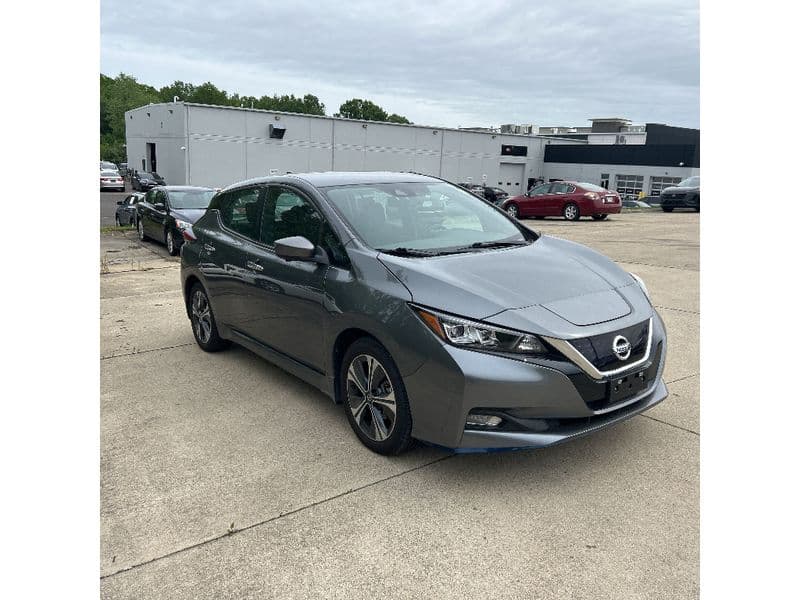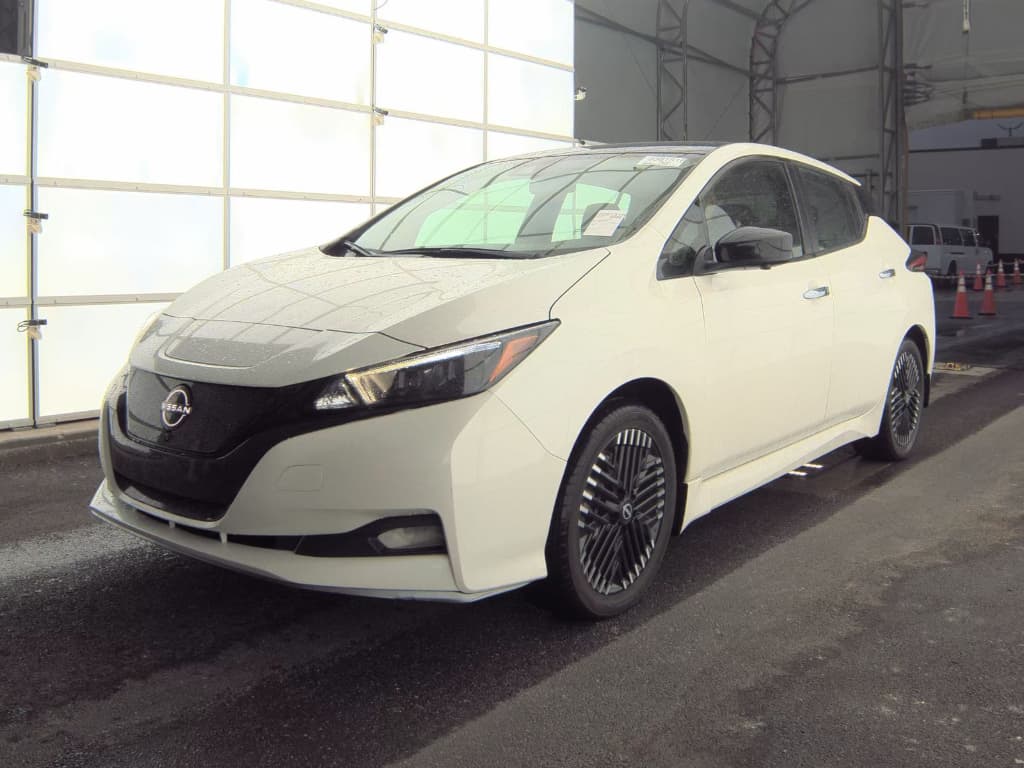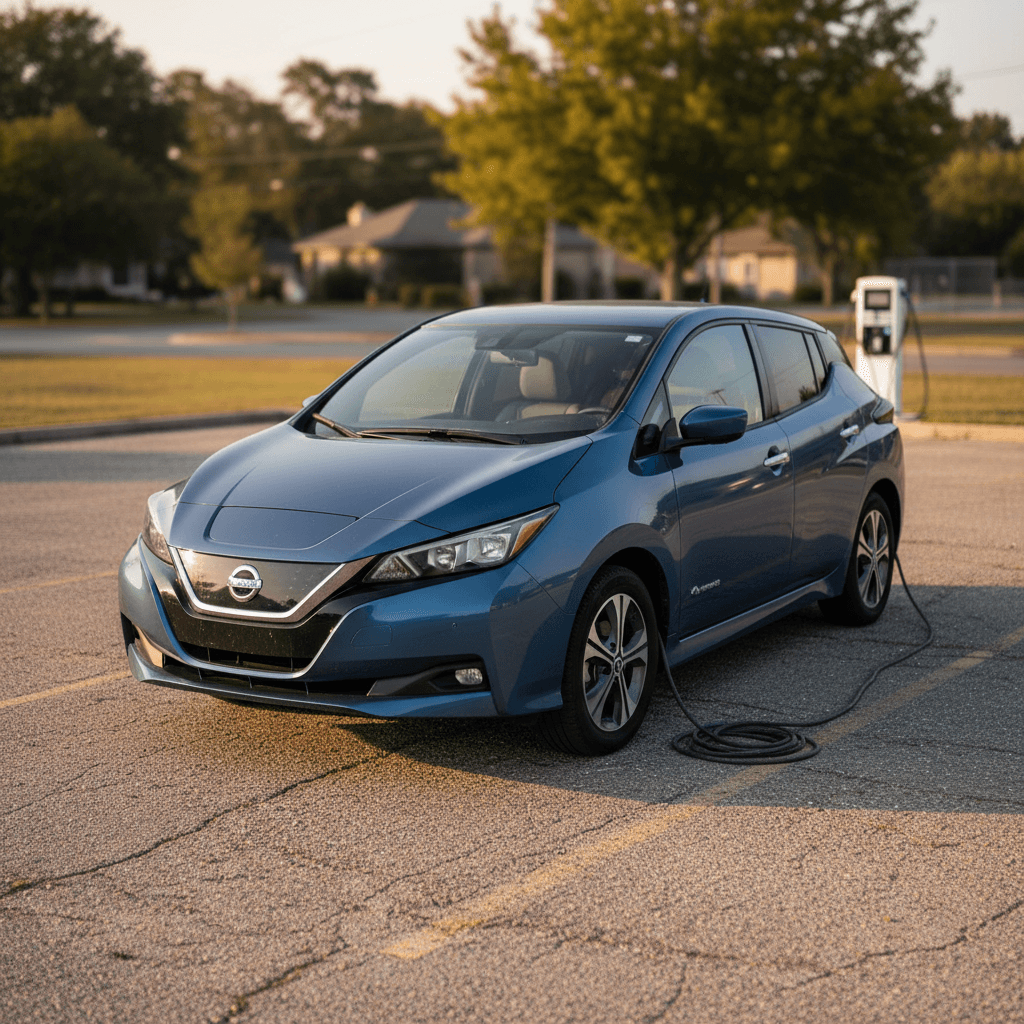
The 2023 Nissan Leaf is a paradox on wheels. As a new car it was already behind the curve on range and fast‑charging. As a used EV in 2026, it’s also one of the cheapest, simplest ways to go electric. If you’re searching for a 2023 Nissan Leaf review used and wondering whether it’s a smart buy or a future orphan, this guide breaks down the good, the bad, and the “only-if-it-fits-your-life.”
Quick verdict
2023 Nissan Leaf as a used EV: who it’s really for
Nissan simplified the Leaf lineup for 2023 into just two trims: S and SV Plus. That late‑career pruning tells you a lot about the car’s mission. The Leaf isn’t trying to be a do‑everything EV. It’s an honest, compact hatch built for short‑to‑medium daily drives, with friendly ergonomics and old‑school controls that won’t scare off anyone trading in a Corolla.
- Best for: commuters under ~70 miles a day round‑trip who can charge at home or work.
- Tolerable for: families as a second car, local errands, school runs, and city deliveries.
- Not ideal for: frequent highway trips, apartment dwellers with unreliable charging, or anyone who must depend on DC fast charging.
Think in use‑cases, not just range numbers
Trims, range & key specs for the 2023 Nissan Leaf
For 2023, Nissan cut the lineup to two straightforward choices. That’s good news on the used market: fewer option packages to decode, less confusion about which battery you’re getting.
2023 Nissan Leaf trims & headline specs
What you actually get with S vs SV Plus on the used market.
| Trim | Battery | EPA range (mi) | Motor output | Wheels | Typical role |
|---|---|---|---|---|---|
| S | 40 kWh lithium‑ion | 149 | 110 kW (~147 hp) FWD | 16" | Budget commuter, short‑hop city car |
| SV Plus | 60 kWh lithium‑ion | 212 | 160 kW (~214 hp) FWD | 17" | Quicker, longer‑legged daily driver |
Battery size and range are the big differences between the two trims.
Real‑world range expectations
2023 Nissan Leaf at a glance
Driving experience: what the 2023 Leaf feels like to live with
No one buys a Leaf for Nürburgring lap times, and that’s fine. What it offers instead is a calm, appliance‑like driving experience that suits the way most people actually use their cars. The 2023 keeps the familiar first‑gen Leaf vibe, lightly updated: upright seating, big glass area, and simple controls.
On‑road personality of a used 2023 Leaf
How it actually feels at 25, 55, and 75 mph.
City driving
In its element. Instant torque off the line makes the Leaf feel snappier than the spec sheet suggests, especially the SV Plus. It’s easy to place in traffic, rides comfortably over broken pavement, and the compact footprint makes parking painless.
Highway manners
The Leaf is quiet enough but not vault‑silent. At 70+ mph, wind and tire noise rise and the modest range drops quickly. The SV Plus has enough passing power; the base S starts to feel out of breath on long grades.
Refinement & comfort
Seats are supportive for daily use, though taller drivers may wish for more thigh support. Cabin materials are simple but durable. The Leaf feels more like a well‑equipped economy car than a minimalist tech pod, and some buyers prefer that.
What owners tend to like
- Effortless around‑town acceleration, especially in the SV Plus.
- Simple, physical controls instead of deep touchscreen menus.
- Excellent outward visibility and easy parking.
- Hatchback practicality with generous cargo space for the size.
What may annoy you
- Moderate highway road noise and a generally "economy car" feel.
- Infotainment that already looked dated in 2023.
- No all‑wheel drive option.
- Range that punishes fast driving or cold weather more than some newer EVs.
Battery life, reliability & common issues
If you’ve read anything about early Leafs, you’ve probably seen horror stories about batteries fading like Polaroids in the sun. The 2023 cars are a different chapter. Nissan moved to improved chemistry years ago, and late‑model Leafs generally age better, though they still lack active liquid cooling, which matters in hot climates.
How the 2023 Leaf is holding up
Battery health is the headline; the rest of the car is mostly drama‑free.
Battery degradation
Most 2023 Leafs in temperate climates are showing modest early degradation so far, often just a few percent loss after the first couple of years. Hot‑weather, high‑mileage cars can be worse. Lack of liquid cooling means sustained fast‑charging and desert summers are not its friends.
Overall reliability
Major trackers and owner reports place the 2023 Leaf in the average to better‑than‑average reliability band. The powertrain is simple; issues are more likely to be small electronics, 12‑volt battery woes, or build quality gripes than catastrophic failures.
Known trouble spots
- Premature 12‑volt battery wear causing odd warning lights.
- Occasional onboard charger or charge‑port issues.
- Interior squeaks/rattles on rough roads.
- Usual used‑car items: tires, brakes, and suspension wear.
Hot‑climate caution
How to sanity‑check 2023 Leaf battery health
1. Look at the capacity bars
The Leaf’s right‑side battery gauge shows 12 capacity bars when new. Anything less means some degradation. On a 2023, seeing 10 or fewer bars this early is a red flag worth investigating.
2. Use a scan tool or Recharged Score
Third‑party apps and tools can read the pack’s state‑of‑health in percent. On Recharged, every Leaf comes with a <strong>Recharged Score battery health report</strong>, so you can see how much usable capacity is actually left before you buy.
3. Ask about usage patterns
High mileage alone isn’t bad; high mileage plus lots of DC fast‑charging in hot weather is. Ask the seller where the car lived and how it was typically charged.
4. Test a near‑full to near‑empty run
On a long test drive, start well‑charged and watch how quickly miles disappear versus the trip odometer. A pack that drops from 100% to 50% after just 40–50 miles of gentle driving deserves a closer look.
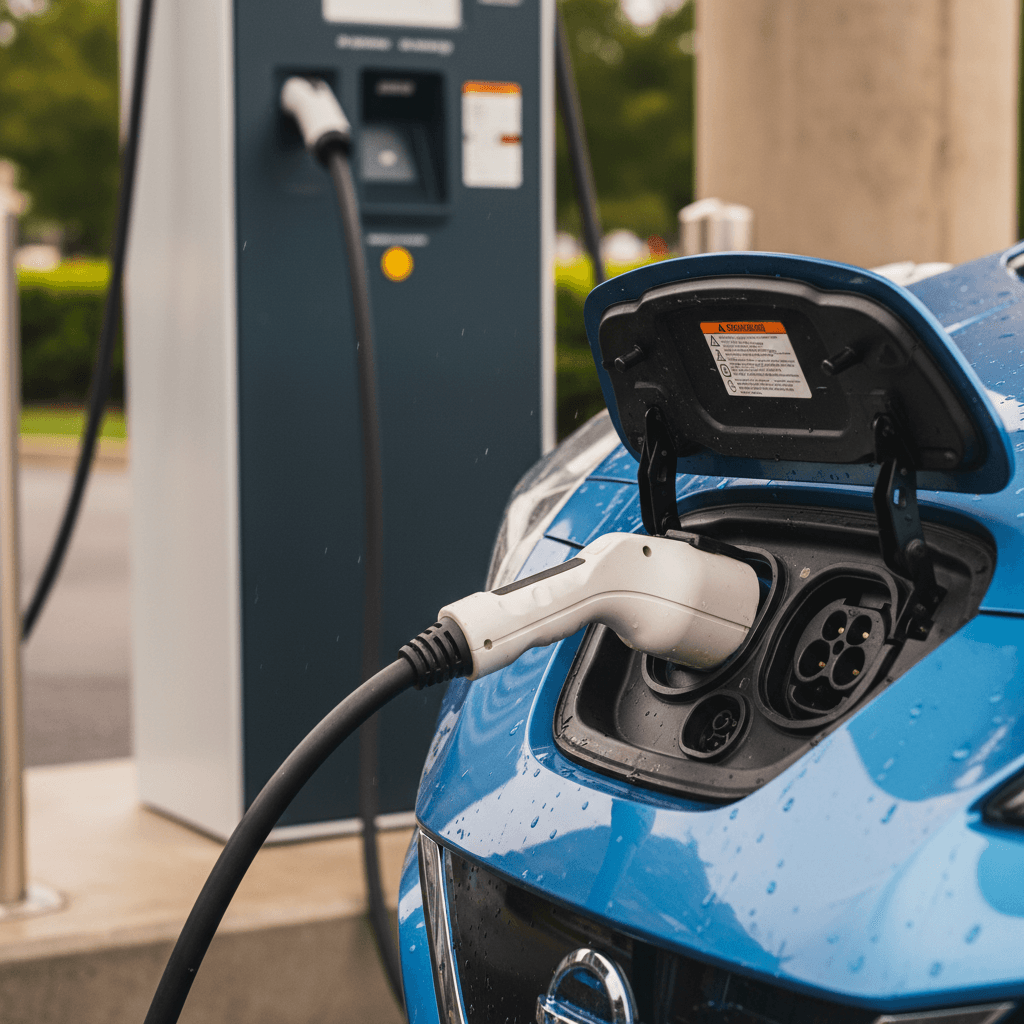
Charging a used 2023 Leaf: the CHAdeMO elephant in the room
Charging is where the 2023 Leaf shows its age most starkly. Around town on Level 2, it’s easy and perfectly adequate. On the highway, especially in North America where charging standards are shifting, the Leaf is increasingly an outsider.
Your three main ways to charge a 2023 Leaf
Home is easy. Public DC fast charging is where life gets complicated.
Level 1 (120V)
Included portable cord lets you trickle charge from a household outlet. You’ll add only a few miles of range per hour. Fine for emergencies or very low daily mileage; not a long‑term plan.
Level 2 (240V)
The sweet spot. With a 240V home or workplace charger, you can refill a 40 kWh pack overnight and a 60 kWh pack in roughly 7–8 hours. For most owners, this covers all daily driving seamlessly.
DC fast charging (CHAdeMO)
Every 2023 Leaf has a CHAdeMO DC fast‑charge port rated around 50 kW. That was fine when CHAdeMO was common; in 2026 it’s a shrinking island as most networks adopt CCS and NACS, with more limited site growth.
The CHAdeMO reality check
Where the 2023 Leaf shines
- Home charging is simple and affordable; you don’t need massive power to refill a relatively small battery overnight.
- Shorter range means shorter charge times on Level 2 versus larger‑pack EVs.
- Perfect fit for homeowners with a driveway, garage, or dedicated parking at work.
Where it struggles
- CHAdeMO fast‑charging network coverage is thinner and slowly shrinking.
- 50 kW peak rate is slow by 2026 standards, especially on the SV Plus pack.
- No easy path to Tesla Superchargers via NACS in most regions.
Used pricing & depreciation: bargain or money pit?
The Leaf has never been a resale champion. Across model years, it’s consistently among the hardest‑depreciating EVs, often losing around two‑thirds of its value after five years. The flip side: that’s fantastic news if you’re buying used and plan to hold onto the car.
Where 2023 Leaf values sit in 2026
Expect a pricing spread between the trims and conditions. Base S models with higher mileage and more visible degradation will often be at the bottom of the range. Well‑kept SV Plus cars with strong battery health and remaining warranty command a premium but still undercut many rivals.
Where Recharged fits in
Ready to find your next EV?
Browse VehiclesUsed 2023 Leaf vs rivals: Bolt, Kona & others
You’re probably not cross‑shopping the Leaf with a Lucid Air. The real competition in the used market is other budget‑minded compact EVs: Chevy Bolt EV/EUV, Hyundai Kona Electric, Kia Niro EV, and perhaps older Tesla Model 3s. Against that crowd, the 2023 Leaf is the sensible shoes in a world of performance sneakers.
2023 Leaf vs common used‑EV alternatives (big‑picture view)
How the Leaf stacks up as a used buy around the same price bracket.
| Model | Typical used price (similar age) | EPA range (mi) | Fast‑charge standard | Standout trait |
|---|---|---|---|---|
| 2023 Nissan Leaf S | Lower | 149 | CHAdeMO | Cheapest on‑ramp to EV commuting |
| 2023 Nissan Leaf SV Plus | Low‑mid | 212 | CHAdeMO | More power and range, but still CHAdeMO‑bound |
| 2022–2023 Chevy Bolt EV | Similar or slightly higher | 259 | CCS | Longer range, faster DC charging |
| 2022–2023 Hyundai Kona Electric | Higher | 258 | CCS | More range and efficiency, small‑SUV vibe |
| 2019–2021 Tesla Model 3 SR+ | Higher | 240–263 | NACS/CCS (adapter‑dependent) | Best highway car and charging ecosystem |
The Leaf trades range and fast‑charging speed for simplicity and price.
How to think about the trade
How to shop for a used 2023 Nissan Leaf
Buying a used EV is not quite the same as buying a used gas car. The engine has been replaced by a massive, expensive battery pack, so that’s where your attention should go first, along with how the car fits your charging reality.
Used 2023 Nissan Leaf buying checklist
1. Choose the right trim for your life
If your regular driving rarely exceeds 50–60 miles a day, the S may be enough and cheaper. If you want more flexibility for side trips, weather, and degradation over time, the SV Plus is the safer long‑term bet.
2. Verify battery health beyond the dash
Don’t rely solely on the gauge cluster’s capacity bars. Use a scan tool, dealer report, or a platform like Recharged that provides a <strong>detailed battery health score</strong>. A seemingly cheap Leaf with a tired pack is no bargain.
3. Audit its charging story
Ask where and how the car was charged. Lots of DC fast‑charging + hot climates is the worst combo. A mostly‑home‑charged Leaf from a mild‑weather region is the prize.
4. Map your real charging options
Before you fall in love, open a charging‑app map and filter for CHAdeMO near your regular routes. If there are only one or two sites within a huge radius, assume you’ll live almost entirely on Level 2 and buy only if that’s realistic.
5. Check remaining warranties
Nissan’s battery warranty on these cars is generous in years and mileage but has specific conditions. Confirm in writing what coverage remains on the exact VIN and what’s been claimed already.
6. Consider resale horizon
If you plan to keep the car 7–10 years, today’s low prices and ugly depreciation matter less. If you tend to swap cars every 3–4 years, the Leaf’s steep value drop could sting, look closely at total cost of ownership.
Buying through Recharged
Frequently asked questions: used 2023 Nissan Leaf
Bottom line: should you buy a used 2023 Nissan Leaf?
Think of the 2023 Nissan Leaf as the electric world’s Honda Fit: humble, honest, and better in daily grind than its spec sheet suggests, as long as you use it for the job it was built to do. As a used EV, it trades prestige, cutting‑edge tech, and long‑legged range for low purchase price, mechanical simplicity, and easygoing urban manners.
If your life is mostly school runs, commutes, and grocery trips under 70 miles a day with reliable home charging, a used 2023 Leaf, especially an SV Plus with good battery health, can be a smart, low‑drama way into EV ownership. If your idea of freedom is pointing the nose at another state and letting the miles unspool, you’ll be happier in something with CCS or NACS fast charging and a bigger battery.
Either way, the key with any used EV is information. On Recharged, that means pairing real‑world Recharged Score battery diagnostics with fair‑market pricing, trade‑in options, and EV‑savvy support so you’re not guessing about the one component that matters most. Do that, and the 2023 Leaf stops looking like a compromise and starts looking like what it really is: a purpose‑built electric appliance that can quietly handle the bulk of your driving for years to come.