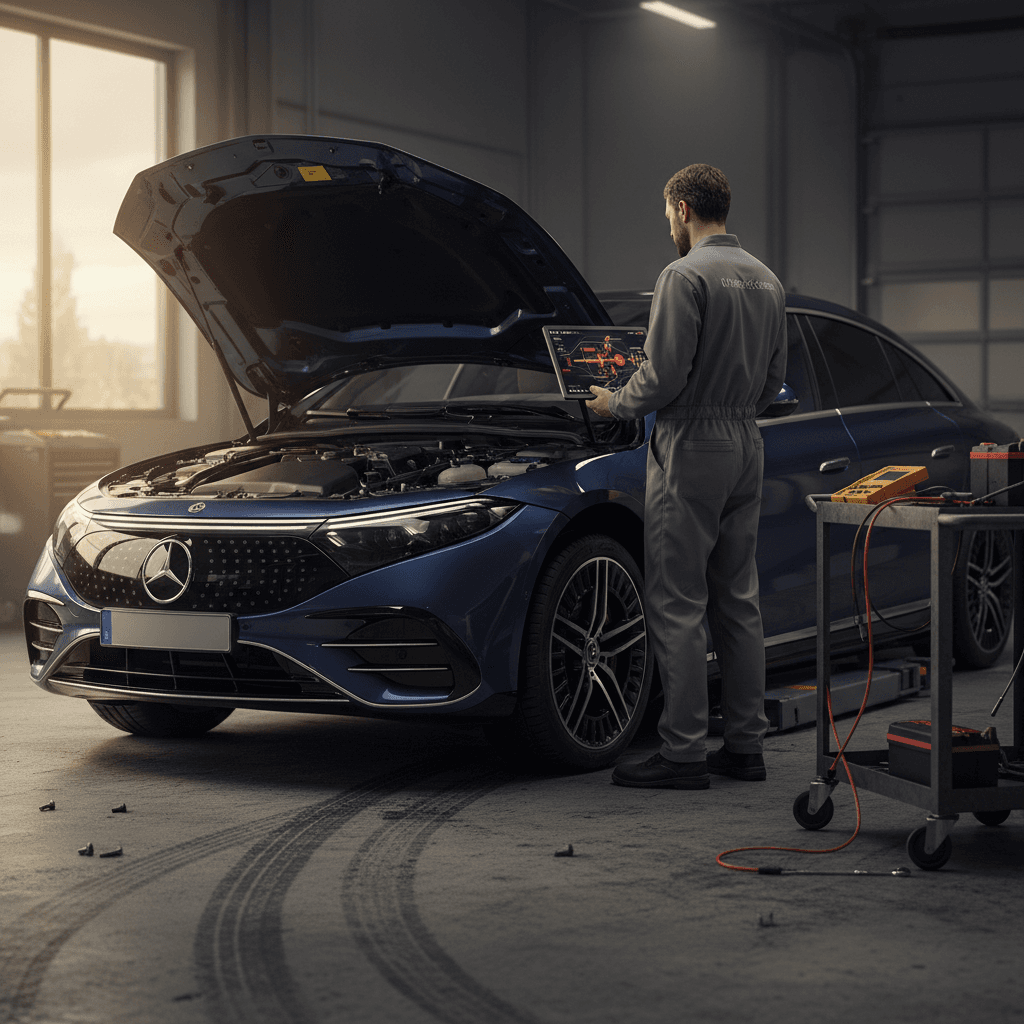
If you own, or are eyeing, a 2023 Mercedes EQS, you’re smart to look up the full 2023 Mercedes EQS recalls list before you sign anything. The EQS is a stunning luxury EV, but like many early high-tech models, it’s seen a handful of recalls tied to battery software, safety systems, and electrical components.
Model scope
Overview: Why 2023 EQS recalls matter
Every modern luxury EV is basically a rolling software lab, and the 2023 EQS is no exception. The good news is that most EQS recalls are software-related and can often be handled with a dealer update or over‑the‑air (OTA) flash. The less‑fun news is that some of these campaigns involve critical systems, battery monitoring, stability control, and overall electrical power, so ignoring them isn’t an option.
- Battery management system software that might not warn you about a high‑voltage fault
- Stability and braking software (ESP/ABS) that can glitch and knock out safety features
- Electrical fuses and power supply components that can cause loss of drive power or dark screens
Safety first
Quick 2023 Mercedes EQS recalls list
Here’s a simplified snapshot of the main U.S. recall campaigns that can include 2023 EQS models. Campaign numbers and details come from NHTSA and Mercedes-Benz service bulletins; eligibility still depends on your specific VIN and build date.
Key 2023 Mercedes EQS recalls at a glance
Major U.S. recall campaigns that may involve 2023 EQS sedans and SUVs. Always verify with a VIN search before assuming your vehicle is covered.
| Recall ID / MB code | Systems affected | Typical fix | Applies to 2023 EQS… |
|---|---|---|---|
| 23V309000 / 2023070013 | High‑voltage battery monitoring software | Battery management system software update | EQS 450, EQS 580, EQS 450+ (select sedans; some SUVs by VIN) |
| ESP software campaign (NHTSA ID varies by VIN) | ESP, ABS, speedometer, driver‑assist features | ESP control unit software update | Primarily 2022–2023 EQS sedans; some 2023s in mix |
| 24V-115 family / 2024–2025 MB campaigns | Electrical power, fuse, possible loss of drive power | Fuse replacement and/or electrical system rework | Select 2023 EQS and EQS SUV units involved in earlier repairs |
This table is meant as an owner-friendly overview, not an official legal record.
Use this with a VIN search
Recall 1: High-voltage battery management software (23V309000)
The headline recall for the EQS family is NHTSA campaign 23V309000, Mercedes internal number 2023070013. It covers certain 2023 EQE 350 and S 580e models, plus 2022–2023 EQS 450, EQS 580, EQS 450+, and AMG EQS 53. If your 2023 EQS sedan or SUV falls into that build window, this is the first recall to check.
- Problem: The high‑voltage battery monitoring system software may fail to display a warning if there’s a battery malfunction.
- Why it matters: Without a proper alert, a serious battery issue could go unnoticed, increasing the risk of thermal events or sudden loss of drive power.
- Fix: Dealers update the battery management system (BMS) software, typically in a standard service visit.
- Cost: Recall work is free; you may be offered an OTA update, but many EQS owners still end up at the dealer for confirmation.
Battery‑related recalls aren’t optional
Recall 2: ESP, ABS, and speedometer software glitch
Another early campaign for the EQS line involved the Electronic Stability Program (ESP) and instrument cluster. In certain driving situations, software errors could knock out or misreport critical safety information.
For affected EQS sedans (mostly 2022, but some 2023s built during the transition), owners reported issues such as:
- Speedometer stuck at 0 mph even while driving
- Warning lights for ESP, ABS, and related driver‑assist features
- Potential loss or reduction of stability and braking assistance
The recall remedy is an ESP control unit software update. On paper, that sounds minor. On the road, losing proper stability control or brake assist is a big deal, especially in a heavy, powerful EV like the EQS.
Don’t ignore weird instrument behavior
Recall 3: Fuse and electrical power loss (24V-115 family)
More recently, Mercedes has launched a large electrical-system recall family (often referenced by umbrella ID 24V-115 in owner communication) covering multiple 2023–2024 models. Many EQE and EQS variants are now under the microscope for faulty fuses and power‑supply components.
For 2023 EQS sedans and SUVs that fall into this group, the concern is that a defective or incorrectly repaired fuse could:
- Cut power to key control units while driving
- Blank out the central display or instrument cluster
- Disable safety systems or cause the vehicle to shut down unexpectedly
- Increase the risk of an electrical fire in extreme cases
The remedy typically involves replacing the affected fuse and, where earlier work was done, inspecting and correcting prior repairs. The campaign is evolving, which is why a fresh VIN check is essential before you buy or after any dealer visit.
Connected recalls and “incorrect repairs”
How serious are these 2023 EQS recalls?
2023 EQS recalls in real-world terms
None of these recalls are the trivial “label misprint” type. They go to the heart of what makes an EQS usable and safe: a healthy battery, predictable braking and stability, and a stable electrical backbone for all the tech you paid for.
Unfixed recalls
- Higher risk of breakdowns or warning‑light cascades.
- Potential for sudden loss of power or reduced braking assistance.
- More difficult warranty negotiations if damage occurs before recall work.
- Red flag for future buyers and appraisers.
Completed recalls
- Improved software logic and monitoring of the battery.
- Restored or improved function of ESP, ABS, and driver‑assist systems.
- Service history that shows you take safety seriously.
- Stronger position when you sell or trade, especially through EV‑focused platforms like Recharged.
Done right, recalls can be a positive
How to check your 2023 EQS for open recalls
Because campaign coverage shifts over time, your first move is always a VIN‑specific recall search. Here’s how to do it quickly from your couch.
4 quick ways to see if your EQS has open recalls
1. Use the NHTSA recall lookup tool
Go to the NHTSA recall website and enter your full 17‑digit VIN. It will show all open (unrepaired) safety recalls for your 2023 EQS that have been reported in the U.S.
2. Check Mercedes-Benz’s own recall portal
Mercedes maintains a brand‑specific recall checker. Input your VIN to see both active recalls and service campaigns that may not appear in generic databases yet.
3. Call or message a Mercedes dealer
Give the service department your VIN and ask for a printout or PDF of all open recalls and campaigns. This is especially useful if the car has been serviced at more than one dealer.
4. If you’re shopping used, insist on proof
Ask the seller for documentation that all open recalls are complete, repair orders, dealer invoices, or a fresh printout from a Mercedes service advisor.
Set a calendar reminder
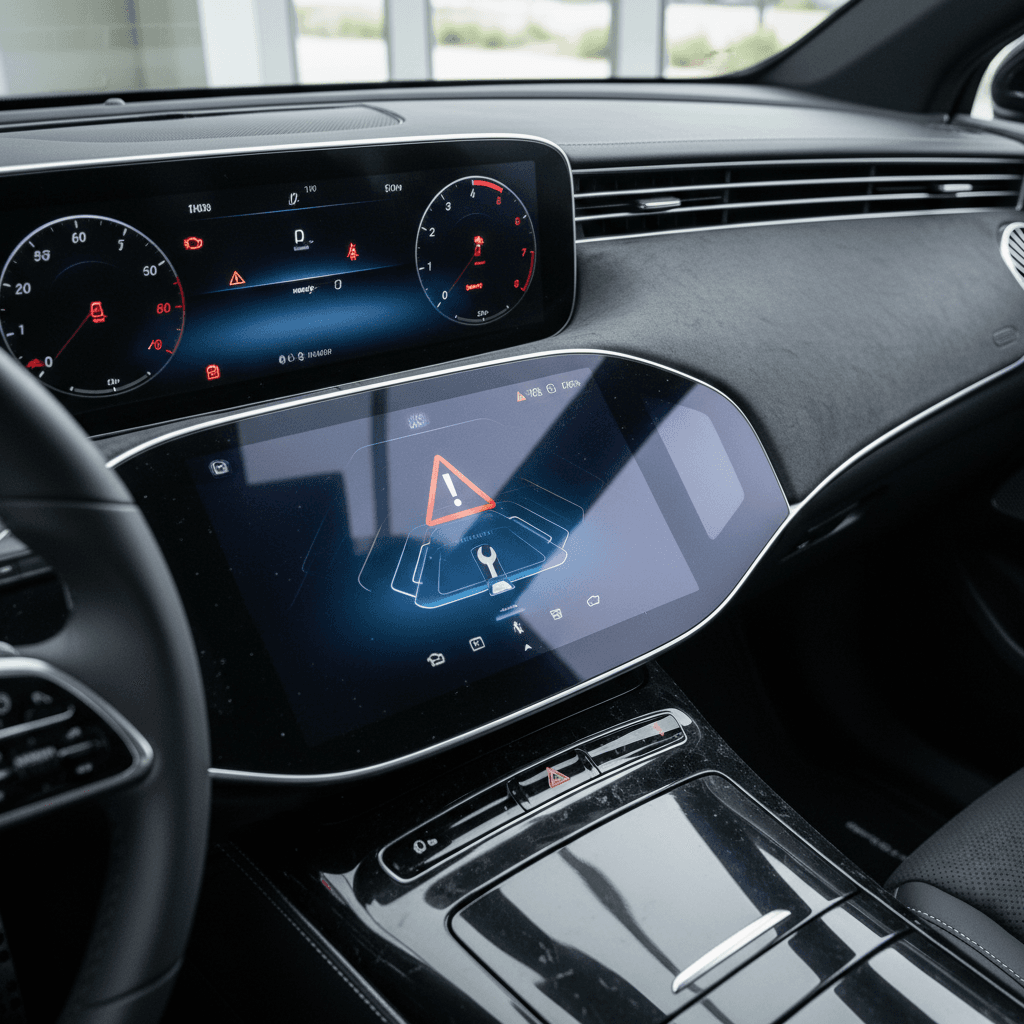
Shopping used: How recalls affect 2023 EQS buyers
If you’re deciding whether to buy a 2023 EQS, especially used, recalls are part of the bigger reliability story. The EQS combines a complex software stack with a large battery pack and cutting‑edge driver assistance. That means early years, including 2023, see more “teething” issues than mature models.
What recalls tell you about a used 2023 EQS
Look beyond the headline count and focus on how they were handled.
Service history & care
A long list of recalls isn’t automatically bad if every one is stamped “completed” with dates and mileage. It often shows a diligent owner and a responsive dealer network.
Unrepaired campaigns
Open safety recalls, especially battery- and ESP‑related, are bargaining chips at best and deal‑breakers at worst. If a seller won’t fix them before sale, budget time and hassle for yourself.
Battery health context
Battery‑management recalls don’t automatically mean a bad pack, but pair them with a current battery health report so you know how much usable capacity remains.
Resale and financing
Well‑documented recall repairs plus a clean battery report can help you get better trade‑in offers, easier financing, and more interest when it’s your turn to sell.
At Recharged, every EQS we list comes with a Recharged Score Report that includes verified battery health, recall and service checks, and fair market pricing. If you’re nervous about navigating EQS recalls alone, that kind of third‑party documentation can take a lot of the guesswork out.
Owner checklist: What to do about 2023 EQS recalls
Whether you already own a 2023 EQS or you’re about to, you can treat recalls as a maintenance item: something to stay on top of, not panic about. Here’s a practical game plan.
Practical action plan for 2023 EQS owners
1. Run a fresh VIN recall check today
Don’t rely on old printouts or what the previous owner said. Run your VIN through NHTSA and Mercedes’ recall portals to see what’s open right now.
2. Prioritize battery and ESP campaigns
If you see recall language about the high‑voltage battery, battery management system, ESP, ABS, or loss of power, move those to the top of your list.
3. Schedule with a Mercedes EV‑certified dealer
Not all dealers are equally fluent in EV diagnostics. When you book, confirm that your chosen location is EV‑certified and familiar with EQS recalls.
4. Ask for software version notes
When the work is done, ask the service advisor to note the updated software versions on your paperwork. This creates a clear trail for future buyers, or for you if issues pop up later.
5. Keep digital copies of repair orders
Scan or photograph every recall invoice or RO, even if the cost to you is $0. Buyers, appraisers, and warranty administrators all love paper trails.
6. Pair recalls with a battery health check
Use recall visits as a chance to ask for a high‑voltage battery health read‑out. If you’re buying or selling through Recharged, our Recharged Score covers this step for you.
Bundle work when possible
FAQ: 2023 Mercedes EQS recalls
Frequently asked questions about 2023 EQS recalls
Bottom line: 2023 EQS recalls and long-term ownership
The 2023 Mercedes EQS is a flagship EV with flagship complexity. Its recall history reflects that: a mix of battery‑monitoring software, stability‑control logic, and electrical hardware that all have to play nicely together. For owners, that doesn’t have to be scary, but it does mean you can’t ignore those campaign letters or dashboard warnings.
If you already have a 2023 EQS, treat recalls as part of your maintenance rhythm: run regular VIN checks, prioritize safety‑critical campaigns, and keep meticulous records. If you’re shopping used, look for cars with every campaign marked complete and pair that with independent battery‑health data, either from a dealer visit or a Recharged Score Report.
Handled proactively, the 2023 EQS can deliver exactly what drew you to it in the first place: quiet, effortless electric miles and a genuinely luxurious cabin. Recalls are just the fine print, make sure you read it, then drive the car you wanted all along.