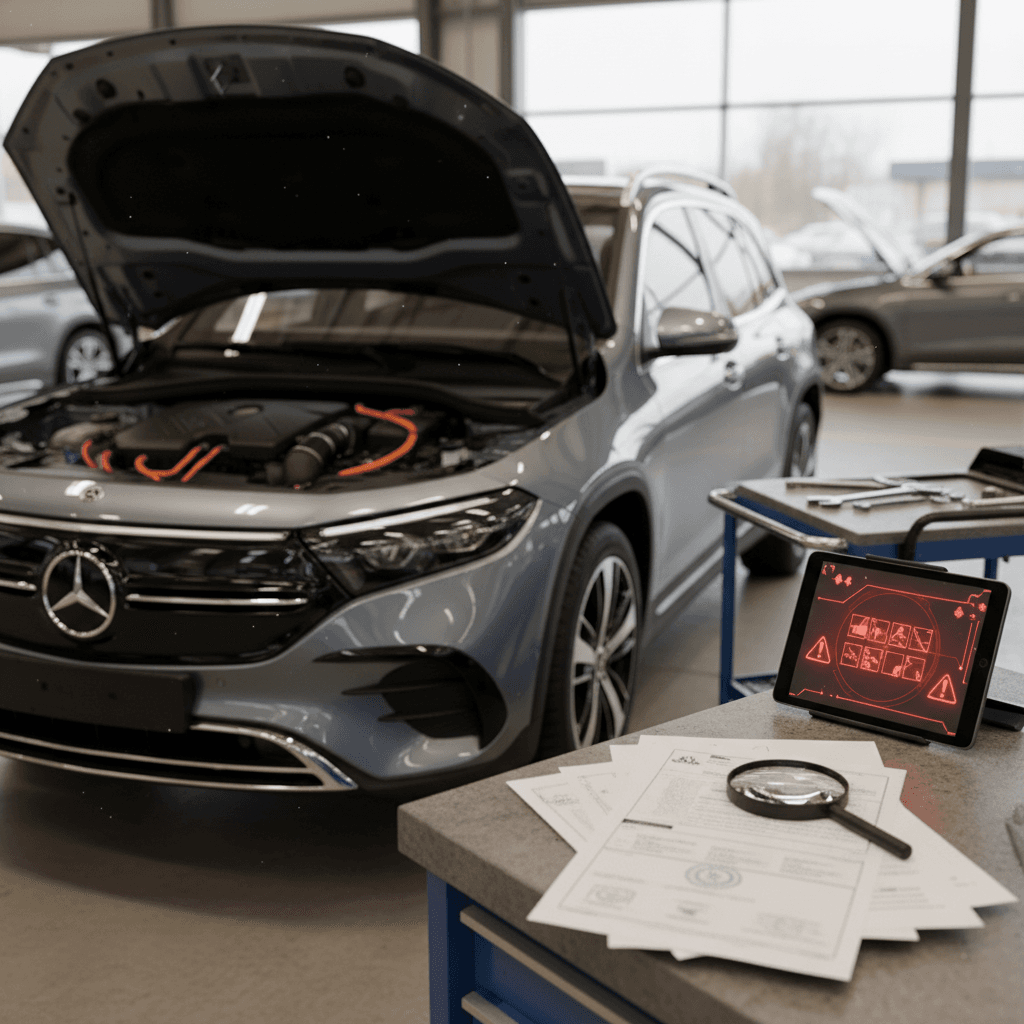
If you own, or are thinking about buying, a 2023 Mercedes-Benz EQB, you’ve probably heard about the recent safety campaigns. The 2023 Mercedes EQB recalls list now includes multiple high‑voltage battery issues, a serious fire‑risk warning, and a loss‑of‑power concern. This guide walks you through every recall affecting the 2023 EQB, what each one means in plain English, and how to protect yourself whether you already own one or are shopping used.
Key takeaway for 2023 EQB owners
Overview: 2023 Mercedes EQB recalls at a glance
2023 Mercedes EQB recall snapshot
To keep this 2023 Mercedes EQB recalls list useful, we’ll group the campaigns by **what they actually feel like to you as a driver**, rather than just by campaign number. Broadly, you’re looking at three buckets: 1. High‑voltage battery fire‑risk recalls that tell you to park outside and avoid full charges. 2. Internal battery failure and early fire‑risk recalls that led to software limits and, in some cases, battery replacements. 3. Loss‑of‑power recalls where the SUV can suddenly lose drive power while moving. Let’s go recall by recall so you can see exactly which ones might apply to your 2023 EQB 250+, EQB 300 4MATIC, or EQB 350 4MATIC.
Recall 1: High-voltage battery fire risk (26V073)
The newest and most serious entry on the 2023 Mercedes EQB recalls list is a **park‑outside fire‑risk advisory**. Under NHTSA campaign 26V073 (and closely related communications), Mercedes‑Benz warns that the high‑voltage battery in certain 2023 EQB models can **fail internally and potentially catch fire** while the vehicle is parked or driving.
- Applies to: many 2023 EQB 250+, EQB 300 4MATIC, and EQB 350 4MATIC vehicles (exact coverage varies by VIN).
- Component: high‑voltage traction battery and its internal cell/module integrity.
- Risk: internal battery failure that can overheat the pack and cause a vehicle fire, even when parked.
- Interim advice: park outside and away from structures, and limit charging to about 80% state of charge until the final fix is installed.
- Planned remedy: replacement of the affected battery pack and/or updated battery management software, performed free of charge.
Treat the park‑outside notice seriously
Owner letters have been rolling out in waves, and not every VIN will be affected in exactly the same way. Some 2023 EQB owners are being told to wait for replacement battery packs; others are seeing additional software updates layered on top of earlier recall fixes. The only way to know which camp your SUV falls into is to run your **17‑digit VIN through the NHTSA or Mercedes recall tools**, which we’ll cover below.
Recall 2: Internal battery failure & early fire risk (25V050 & 25V894)
Before the 26V073 park‑outside advisory, Mercedes launched earlier high‑voltage battery recalls that also hit the 2023 EQB lineup. These earlier campaigns, often referenced as **25V050** and **25V894**, focused on battery packs from an early production run that weren’t robust enough at high states of charge.
- Applies to: 2022–2024 EQB 250+, and many 2022–2023 EQB 300 4MATIC and EQB 350 4MATIC vehicles, including a large share of the 2023 model year.
- Issue: variations during early battery production could lead to internal damage when the pack is charged to higher states of charge, in some cases causing overheating or fire.
- Symptoms before repair: warnings in the instrument cluster, fault codes stored in the battery management system, rare reports of thermal events outside the U.S.
- Interim fix: software update that limited maximum state of charge, derated DC fast‑charge power, or otherwise reduced stress on the pack.
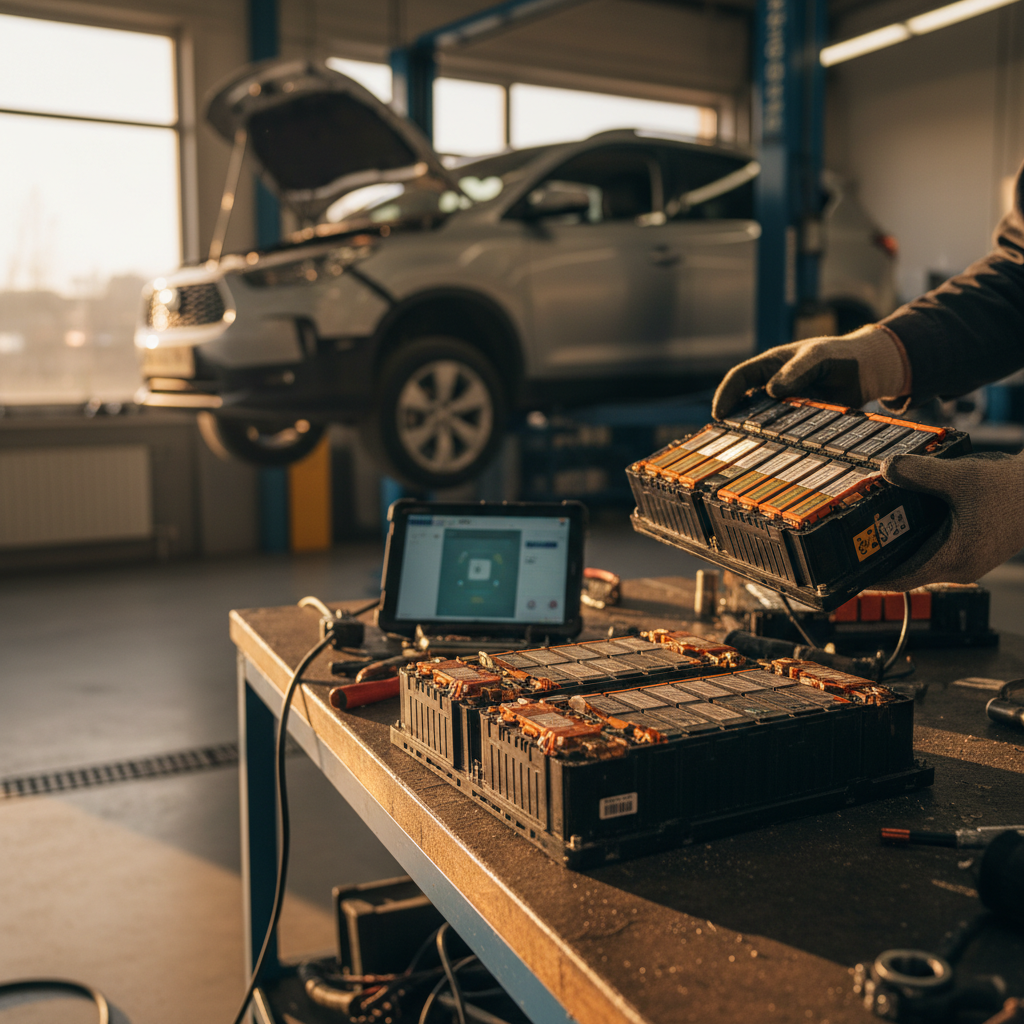
- Permanent fix: for many owners, replacement of the high‑voltage battery pack; for others, updated software validated by Mercedes and NHTSA.
Why owners still complain after the fix
Because these earlier recalls and the newer 26V073 park‑outside campaign overlap, you’ll sometimes see language in letters saying that vehicles repaired under **25V050 or 25V894 will need a new remedy**. That’s your cue that the earlier fix was an interim step, not the final word.
Recall 3: Sudden loss of power while driving
Separate from the fire‑risk campaigns, some 2023 EQB 4MATIC models have been recalled because they can **suddenly lose drive power while in motion**. The headlines focus on fire, but for daily driving, an abrupt shutdown on the freeway is its own kind of scary.
- Applies to: a subset of 2022–2023 EQB 300 4MATIC and EQB 350 4MATIC vehicles built during specific production windows.
- Issue: a defect in part of the high‑voltage battery assembly or its connections can interrupt the power supply to the drive motor.
- Real‑world symptom: the EQB can throw multiple warning messages, then roll to a stop with no propulsion, even though the 12‑volt systems and lights may still work.
- Remedy: inspection of the high‑voltage battery connection and related components; replacement of faulty parts and software updates where applicable, free of charge.
If your EQB dies on the road
This loss‑of‑power recall doesn’t affect every 2023 EQB, but if you drive a 300 4MATIC or 350 4MATIC, it’s worth double‑checking your VIN. Even if your vehicle hasn’t misbehaved yet, recall repairs are about preventing the bad day before it happens.
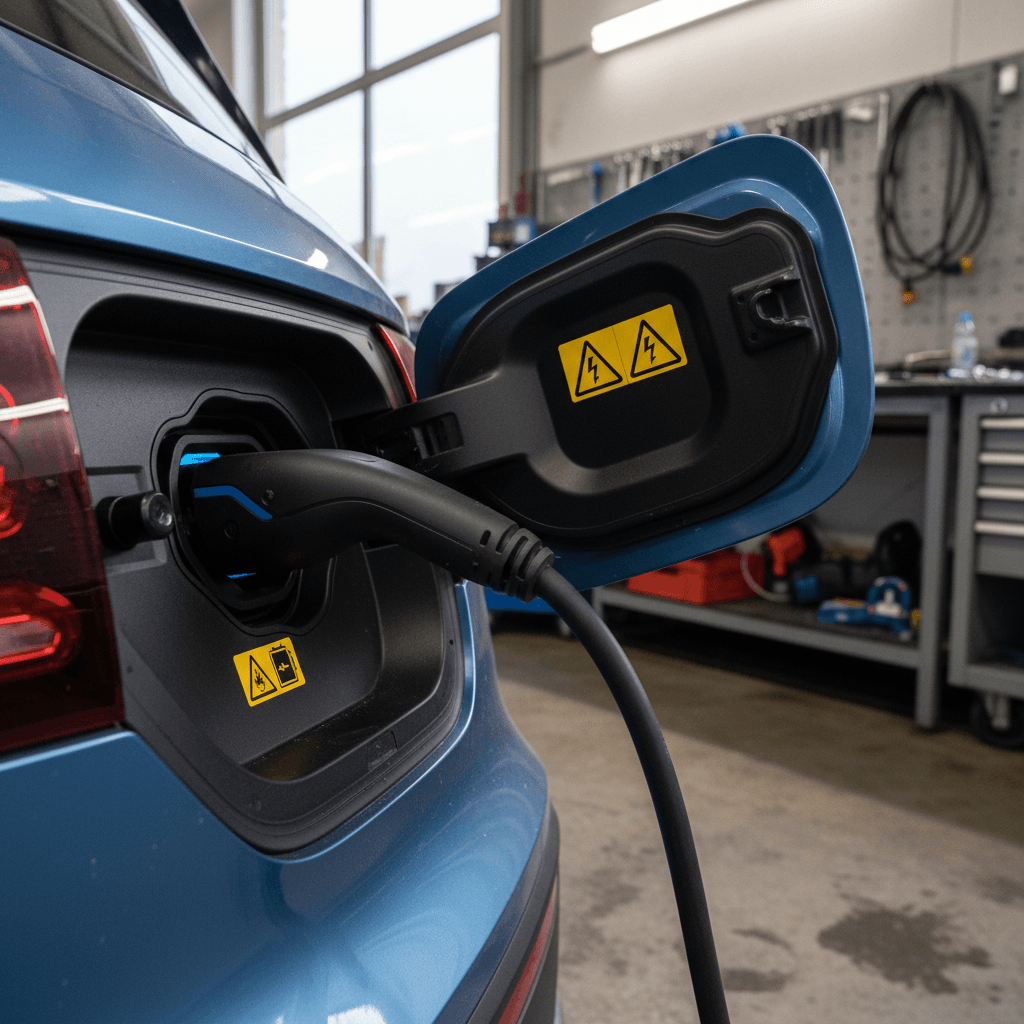
How to check your 2023 EQB for open recalls
Because the 2023 Mercedes EQB recalls list is changing as new remedies roll out, you should always treat online summaries, this one included, as a **starting point**, not the final word. Here’s how to see the exact status of your SUV today.
Step-by-step: See every recall on your 2023 EQB
1. Find your 17‑digit VIN
Your Vehicle Identification Number is on the driver’s side dashboard (visible through the windshield), on the door jamb label, and on your registration/insurance documents.
2. Run your VIN on NHTSA.gov
Go to the NHTSA recall lookup tool and enter your VIN. It will show all <strong>open safety recalls</strong>, including the latest fire‑risk and loss‑of‑power campaigns.
3. Cross‑check in the Mercedes me app
If you use Mercedes me, check the app for recall notices and over‑the‑air update prompts. Some interim battery‑management fixes are software‑only and may appear here.
4. Call a Mercedes-Benz service advisor
If anything looks unclear, call your local dealer’s service department with your VIN. Ask them to read back every open recall and service campaign on file.
5. Confirm parts and scheduling
For battery‑related recalls, ask whether the fix is a software update, battery inspection, or full pack replacement, and whether parts are available now or on backorder.
6. Keep your paperwork
After the work is done, keep the repair order showing which campaign numbers were performed. This helps if you sell the car later or have repeat issues.
Ask this exact question at the dealer
Living with the fire-risk recall: Practical day-to-day tips
A recall on paper is one thing. Living with it while you wait for parts or appointments is another. If your 2023 EQB is under a fire‑risk campaign and Mercedes has asked you to **park outside and cap charging at 80%**, here’s how to make that as painless, and as safe, as possible.
Everyday adjustments while you wait for repairs
Small changes that lower risk without giving up your EQB entirely
Re‑think where you park
If possible, park your EQB:
- Outside, away from garages and attached structures
- On a driveway or street instead of an enclosed space
- A few feet away from other vehicles
Use charge limits smartly
Set your charge limit around 80% in the car or app. For short commutes, consider 70–75% to further reduce stress on the pack.
Schedule charging carefully
Avoid ending a fast charge right before bedtime. If you use DC fast charging, try to finish a plug‑in session a few hours before the vehicle will sit for a long time.
What to watch and listen for
Impact on range, fast charging and resale value
Recalls don’t just live in service bulletins, they show up on your daily range readout and, eventually, on the used‑car market. Here’s how the 2023 Mercedes EQB recalls list is already reshaping what this SUV is like to own.
Range and charging performance
- Software‑limited state of charge: Some recall fixes cap usable capacity to reduce fire risk, which can cut displayed range by a noticeable margin.
- Slower DC fast charging: Owners report DC charging tapering earlier and holding lower peak speeds after battery‑safety updates.
- Battery replacement vs. restriction: Vehicles that receive new packs may regain more range than those fixed with software alone.
Resale value and buyer perception
- Documented repairs matter: A 2023 EQB with all recall work completed and paperwork on file will be easier to sell than one with open campaigns.
- Market anxiety: Headlines about fires and shutdowns can push used prices down, especially for vehicles without clear service histories.
- Future updates: Additional software updates may gradually refine charging performance, which used‑car buyers will want to see on the record.
A well‑documented EQB can still be a good buy
Shopping for a used 2023 EQB: What to watch for
If you’re hunting for a used 2023 EQB, the recalls are a red flag, but also a bargaining chip. The key is to separate **“fixed and verified”** from **“unknown and risky.”** Here’s how to do that before you sign anything.
Used 2023 EQB pre‑purchase checklist
1. Pull a fresh recall report by VIN
Don’t just trust the seller. Run the VIN yourself through NHTSA’s tool and ask for a printout from a Mercedes‑Benz dealer showing all recalls and service campaigns, open and closed.
2. Verify recall completion paperwork
Ask for service invoices that clearly list recall campaign numbers and describe the work (battery replacement, software update, connector repair, etc.). Snap photos for your records.
3. Ask directly about battery replacement
Has the high‑voltage battery ever been replaced under recall or warranty? If yes, when, at what mileage, and which part number was installed? A newer pack can be a plus.
4. Test real‑world range and charging
On a long test drive, watch energy use and predicted range. If possible, do a brief DC fast‑charge session and note peak kW and how quickly it tapers.
5. Watch for warning lights or odd behavior
Look for any check‑engine or EV‑system warnings, repeated error messages, or sudden power reductions. Walk away from a car with unexplained electrical gremlins.
6. Get independent EV‑savvy inspection
If you’re serious about a specific EQB, consider an inspection from an EV‑knowledgeable shop, or buy from a marketplace like <strong>Recharged</strong> that includes verified battery‑health data in a standardized report.
Avoid cars with “recall appointment pending” but no paperwork
Where Recharged fits in if you’re considering a used EQB
Sorting through overlapping recalls, battery risks, and software updates is a lot to ask of any buyer, especially if this is your first EV. That’s exactly the problem Recharged was built to solve.
How Recharged helps with recall‑heavy EVs like the 2023 EQB
More transparency, less guesswork when you shop or sell
Recharged Score battery health report
Every EV sold through Recharged comes with a Recharged Score Report that summarizes battery health, recent fast‑charging behavior, and real‑world range, far beyond what a typical listing shows.
Recall & service history verification
Our EV‑specialist team reviews available history to confirm whether major recalls have been addressed and what remedies were applied, so you’re not buying blind.
Financing, trade‑in & delivery
We offer financing, trade‑in options, consignment, and nationwide delivery, plus an Experience Center in Richmond, VA if you prefer to see vehicles in person.
Ready to find your next EV?
Browse VehiclesIf you’re selling a 2023 EQB into a nervous market, Recharged can also help you document its condition, complete any remaining recall work, and position the vehicle fairly. Transparent battery‑health data and proof of completed recalls can make the difference between a lowball offer and a fair price.
FAQ: 2023 Mercedes EQB recalls
Frequently asked questions about 2023 Mercedes EQB recalls
The 2023 Mercedes EQB hasn’t had an easy childhood. High‑voltage battery recalls, fire‑risk advisories, and loss‑of‑power campaigns are enough to make any owner, or used‑car shopper, nervous. But they’re also a reminder of why safety systems like NHTSA’s recall process exist in the first place. If you own a 2023 EQB, the most important steps are simple: check your VIN regularly, get every recall completed, keep your paperwork, and pay attention to how the car behaves. If you’re shopping used, insist on transparency around battery health and recall history, or lean on a specialist marketplace like Recharged that bakes that transparency into every sale.