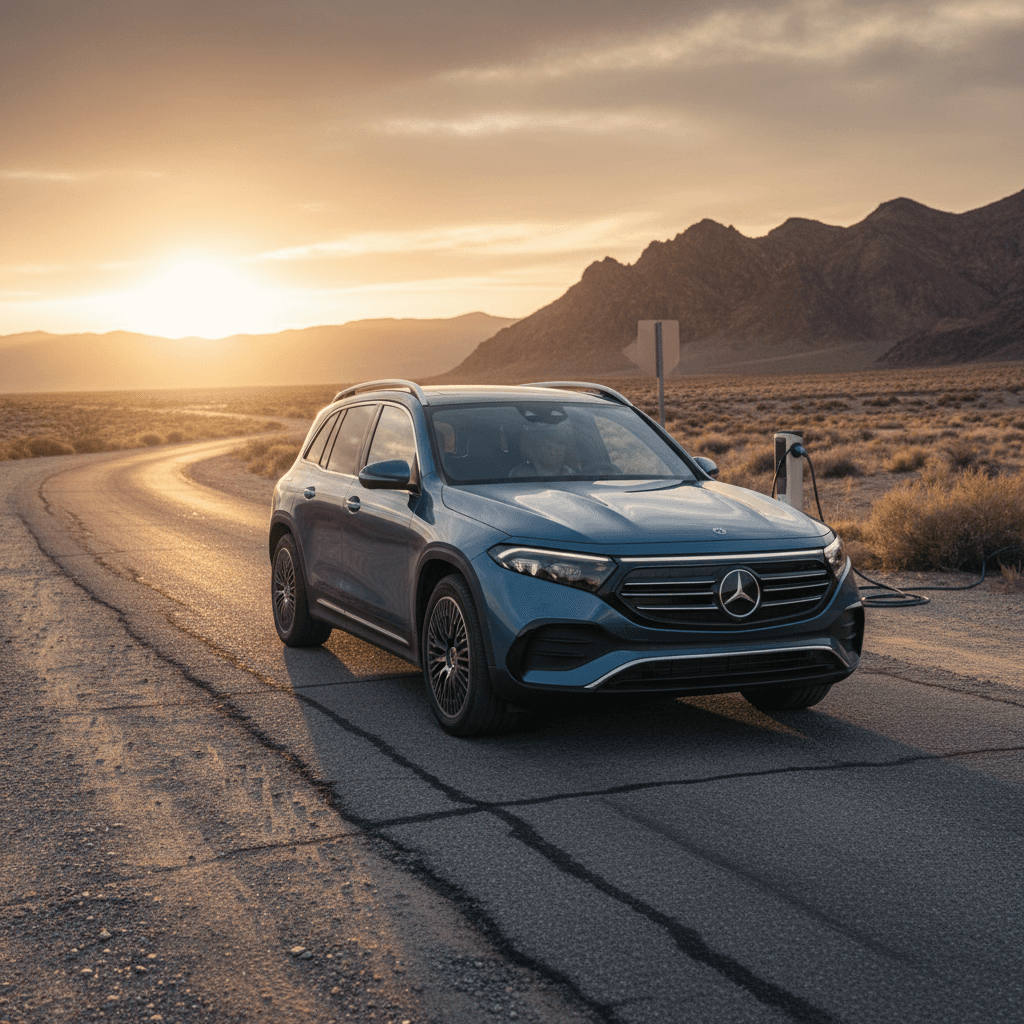
If you’re looking at a 2023 Mercedes EQB, you’ve probably seen the official range numbers and thought, “But how far will it really go?” This guide pulls together EPA data, independent tests, and owner experience to give you a realistic picture of 2023 Mercedes EQB range in the real world, including highway road trips, city commuting, winter driving, and what to expect if you’re shopping for a used EQB.
Quick take
2023 Mercedes EQB range at a glance
Official 2023 EQB EPA range by trim
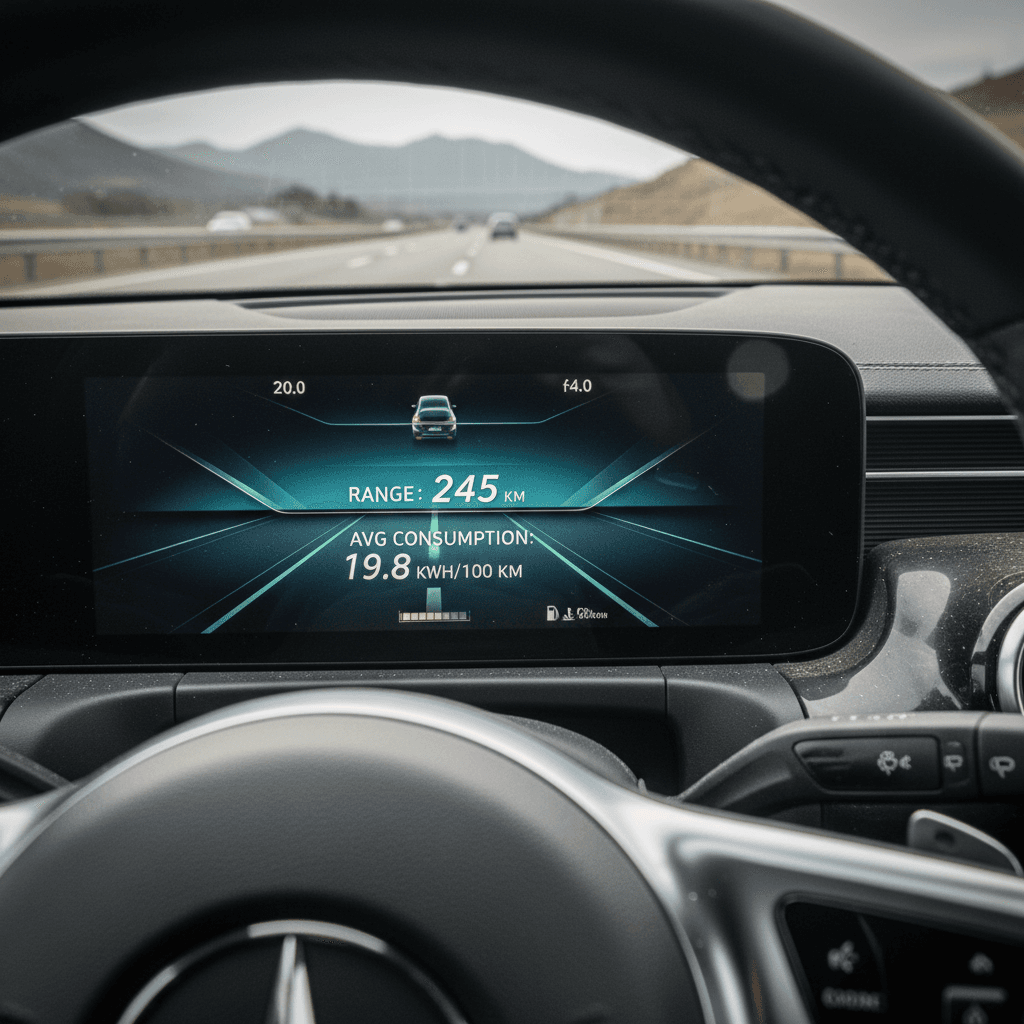
Those EPA numbers don’t tell the whole story. Independent testing has seen an EQB 350 travel about 242 miles in mixed driving, roughly 15 miles better than its 227‑mile estimate, while efficiency came in slightly better than advertised as well. Real‑world results depend heavily on how and where you drive, but it’s clear the EQB isn’t wildly optimistic about its range.
EPA ratings vs real‑world EQB range tests
What the lab says (EPA)
- EQB 250+ SUV: 245 miles EPA‑estimated range.
- EQB 300 4MATIC SUV: 232 miles EPA‑estimated range.
- EQB 350 4MATIC SUV: 221–227 miles EPA‑estimated, depending on wheels.
- Energy use roughly in the 32–35 kWh/100 mi band, which is mid‑pack for a compact luxury SUV.
What independent tests see
- Edmunds took a 2023 EQB 350 to about 242 miles in its standardized real‑world loop, 15 miles beyond the EPA rating, with average consumption of 32.2 kWh/100 mi.
- European WLTP tests hint at higher theoretical range, but U.S.‑style highway driving pulls those numbers back into the low‑200‑mile reality.
- Owner reports cluster around 180–230 miles per charge, depending on climate, speed, and load.
How to read these numbers
Trim‑by‑trim: EQB 250+, 300, and 350 range differences
All 2023 EQBs share the same battery pack, but their powertrains are tuned very differently. That means your choice of EQB 250+, 300, or 350 has a bigger impact on range than on many competing EVs. Here’s how they stack up for real‑world use.
2023 Mercedes EQB trims: power vs range
How each EQB variant balances power, traction, and driving range.
| Trim | Drive layout | Power | EPA range (mi) | Typical mixed driving range* | Best for |
|---|---|---|---|---|---|
| EQB 250+ | Single motor FWD | 188 hp / 284 lb‑ft | 245 | 210–240 | Maximizing range and price |
| EQB 300 4MATIC | Dual motor AWD | 225 hp / 288 lb‑ft | 232 | 195–225 | Snow‑belt drivers, all‑weather family duty |
| EQB 350 4MATIC | Dual motor AWD | 288 hp / 384 lb‑ft | 221–227 | 185–215 | Quickest acceleration, shorter daily drives |
For most drivers, the EQB 250+ offers the best mix of range and value, while the 350 trades efficiency for punchy performance.
Don’t overbuy power you won’t use
City vs highway: how the EQB really behaves
On paper, the EQB’s range doesn’t look impressive next to a Tesla Model Y or Volvo XC40 Recharge. On the road, it’s more nuanced. The EQB’s boxy shape and upright stance make it wonderfully practical for families, but that same brick‑ish profile works against it on the interstate. At 70–75 mph you’re pushing a lot of air, and the battery makes its feelings known.
What our range drives reveal
Same battery, very different outcomes once you hit the freeway.
In town & suburbs
- Stop‑and‑go and 35–50 mph cruising play to the EQB’s strengths.
- Regenerative braking claws back energy every time you lift or slow.
- It’s easy to match or slightly exceed the EPA rating in mild weather.
- Expect the 250+ to feel like a true 230–240‑mile EV around town.
On the highway
- Above 65 mph, aero drag dominates and efficiency drops.
- Fast‑lane driving (75–80 mph) can pull the 4MATIC models down into the 180‑mile zone per charge.
- Crosswinds and roof boxes hurt more here than in sleeker EVs.
- Plan conservative legs of 140–160 miles between fast charges on long trips.
Why wind matters so much
6 biggest factors that change your EQB range
Range checklist: what to watch
1. Speed above 65 mph
Every 5 mph over 65 can knock a surprising chunk off your remaining range. In our experience, holding 68–70 mph instead of 75–78 mph can be the difference between arriving with 15% state of charge or doing an unplanned fast‑charge stop.
2. Temperature and climate control
The EQB’s battery is happiest in the 60–80°F band. Below freezing, cabin heat and battery conditioning can cost you <strong>20–30%</strong> of your usual range. In hot summers, heavy A/C use takes a smaller but still noticeable bite.
3. All‑wheel drive vs FWD
The 4MATIC dual‑motor system adds weight and drivetrain losses. If you don’t truly need AWD, the 250+ not only goes farther, it’s more efficient in everyday use and cheaper to buy.
4. Cargo, passengers, and roof racks
A loaded 3‑row EQB working as a family shuttle has more mass to move, and roof boxes are range killers at highway speeds. If you’re chasing every mile, remove roof accessories when you’re not using them.
5. Wheel size and tires
Larger wheels and stickier tires look and feel good but usually increase consumption. If you’re comparing used EQBs, know that 18‑inch wheels will generally beat 19‑inch setups for range.
6. Driving mode and regen settings
Comfort and Eco modes dull throttle response and optimize climate settings, nudging you toward better efficiency. Stronger regen modes reduce use of the friction brakes and can extend range, especially in town.
Winter hits harder than you think
Planning a road trip in a 2023 EQB
Can you road‑trip in a 2023 EQB? Yes, with planning. This isn’t a 320‑mile Tesla; it’s a compact family SUV that’s happiest doing 150‑mile sprints between fast chargers. Think of it as a series of chapters instead of a single long haul.
Step‑by‑step: realistic EQB road‑trip planning
1. Use an EV‑savvy route planner
Start with tools that understand charging, PlugShare, A Better Routeplanner, or the built‑in navigation. Set your cruising speed and preferred minimum state of charge so the estimates match how you actually drive.
2. Base legs on 60–70% of EPA range
For a 2023 EQB 300 4MATIC, that means planning legs of about <strong>140–160 miles</strong> instead of 232. You’ll arrive with a comfortable buffer and flexibility if a station is busy or offline.
3. Target 10–70% state of charge
The EQB charges fastest in the middle of the pack. On DC fast charging, don’t waste time chasing 90–100%. Unplug around 70–80% and get back on the road; that’s where the curve slows dramatically.
4. Think in meals and breaks, not empty-to-full
Align fast‑charge stops with meals, coffee breaks, and leg‑stretch moments. Thirty minutes from 10–80% in the EQB pairs neatly with a quick lunch or a playground stop for kids.
5. Have a Plan B station
Particularly in winter or in areas with sparse infrastructure, always identify a backup charger within 20–30 miles of your primary stop. That small bit of planning keeps a minor delay from becoming a major headache.
Charging speeds, stops, and winter surprises
On paper, the EQB’s charging specs don’t turn heads: up to 9.6 kW on Level 2 at home and a peak of 100 kW on DC fast charging. In practice, that’s perfectly adequate for a 70.5‑kWh pack, if you work with the curve instead of fighting it.
What to expect when you plug in
Home charging is a non‑event; DC fast charging just needs realistic expectations.
Level 2 home charging
- Up to 9.6 kW on a 240V, 40‑amp circuit.
- Roughly 7.5–8 hours from 10–100%, easy overnight.
- Perfect if you plug in most nights and rarely see under 20% SOC.
- Most EQB owners do 90% of their charging at home, where speed matters less than convenience.
DC fast‑charging on the road
- Peak rate around 100 kW when the battery is warm and between 10–40%.
- Expect about 30–35 minutes from 10–80% under ideal conditions.
- In very cold weather, charging may start slow until the pack warms up.
- Pre‑conditioning via navigation helps, but the EQB is still slower than newer 150–250 kW rivals.
Cold‑weather charging reality check
Buying a used 2023 EQB: battery health and range
For many shoppers, the 2023 EQB will show up as a used‑market sweetheart: three rows in a compact footprint, a Mercedes badge, and prices that undercut new EVs. The question is whether the range and battery health still fit your life a few years in.
What to check on a used 2023 EQB
Range is only as good as the battery behind it.
Battery health & history
Ask how the car was charged:
- Frequent DC fast charging at 90–100% is harder on packs than Level 2 stops in the 20–80% band.
- Look for any software or recall work related to charging or high‑voltage components.
Real‑world test drive
Don’t just take the range estimate at face value:
- Start around 80% and drive a known loop at your usual speeds.
- Compare miles driven to % of battery used for a rough sense of usable range.
Independent battery report
This is where Recharged comes in.
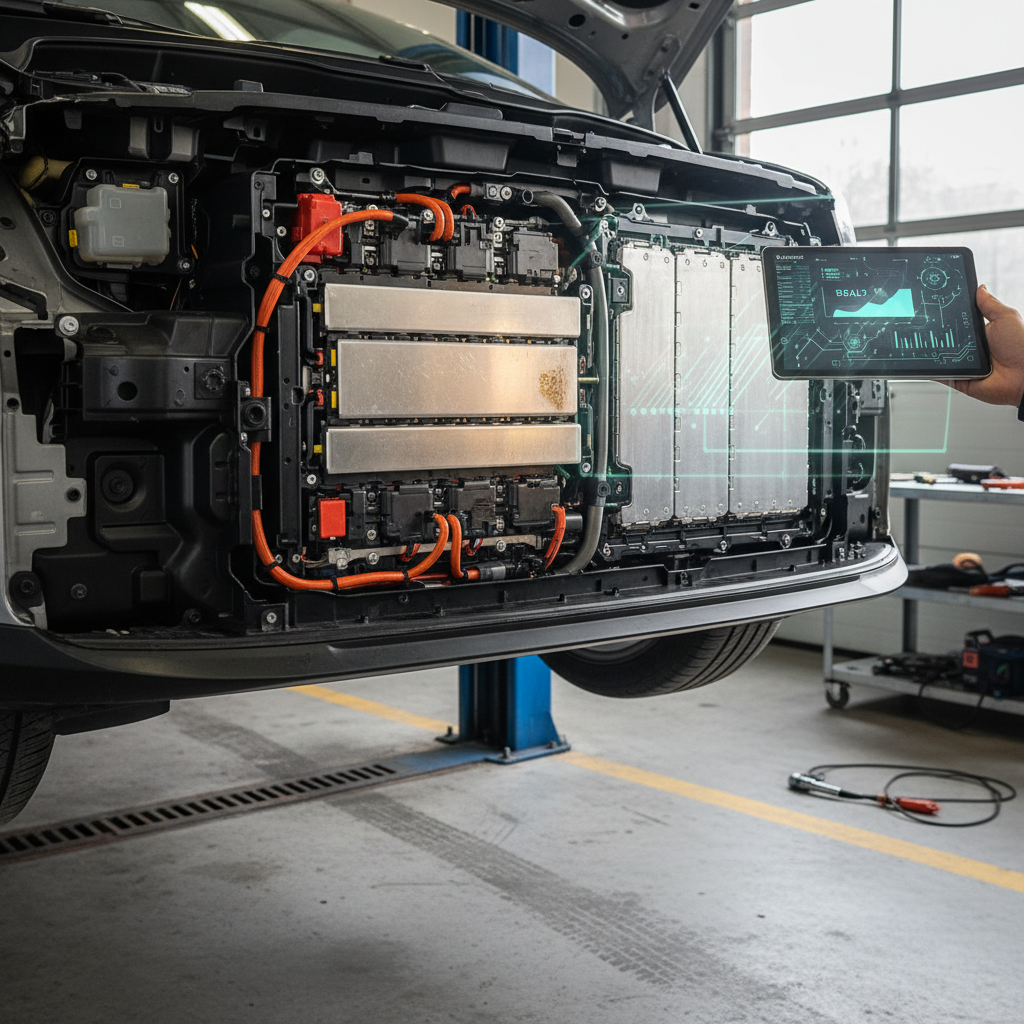
Every EV we sell includes a Recharged Score with verified battery health and fair‑market pricing. Instead of guessing at range based on a dash estimate, you see data from proper diagnostics, especially valuable on first‑generation EV SUVs like the EQB.
How Recharged can help
Ready to find your next EV?
Browse Vehicles2023 Mercedes EQB range test FAQ
Frequently asked questions about 2023 EQB range
Bottom line: is the 2023 EQB’s range enough?
The 2023 Mercedes EQB won’t win any spec‑sheet battles for maximum range or fastest charging. What it offers instead is a pleasantly honest package: if you treat it as a roughly 200‑mile SUV and plan trips with that in mind, it’s composed, comfortable, and perfectly at home in real‑world American driving.
If your daily life looks like school runs, commuting, and weekend errands with a Level 2 charger at home, the EQB’s range is more than enough, especially in the efficient 250+. If your calendar is packed with 300‑mile days at interstate speeds, you may want more headroom. And if you’re eyeing a used 2023 EQB, make sure you’re not just falling for the badge and the pretty cabin. Get hard data on battery health and real‑world range so the EQB you buy today still fits your life a few winters from now. That’s exactly what Recharged’s battery‑health‑verified vehicles and Recharged Score are built to deliver.