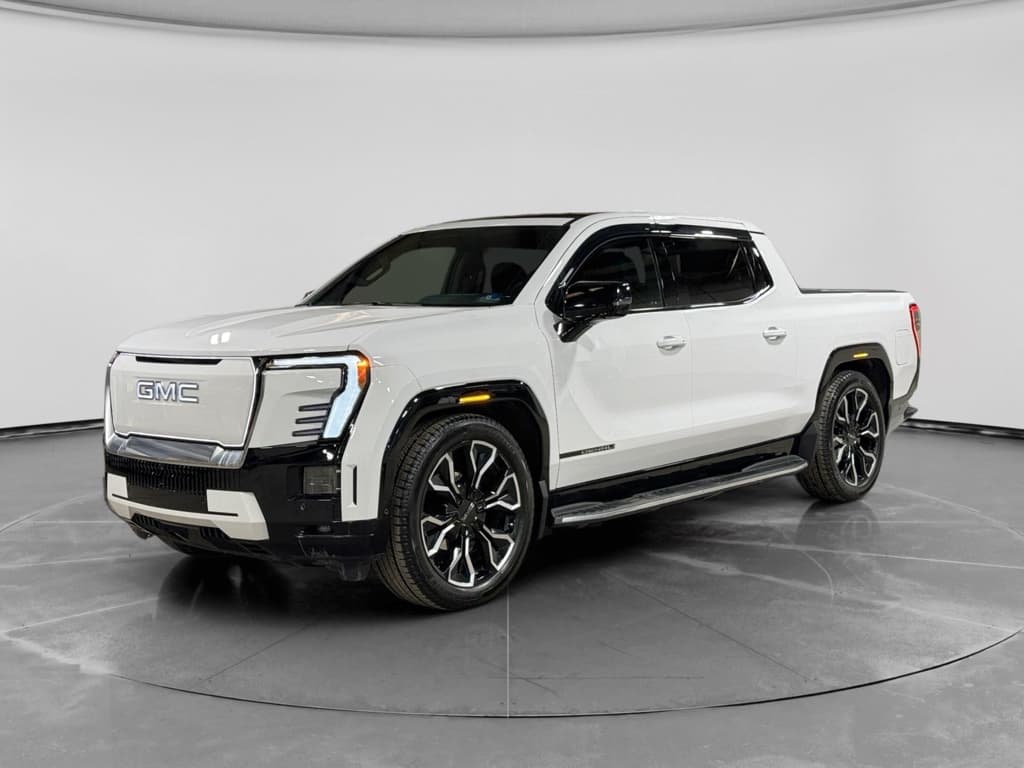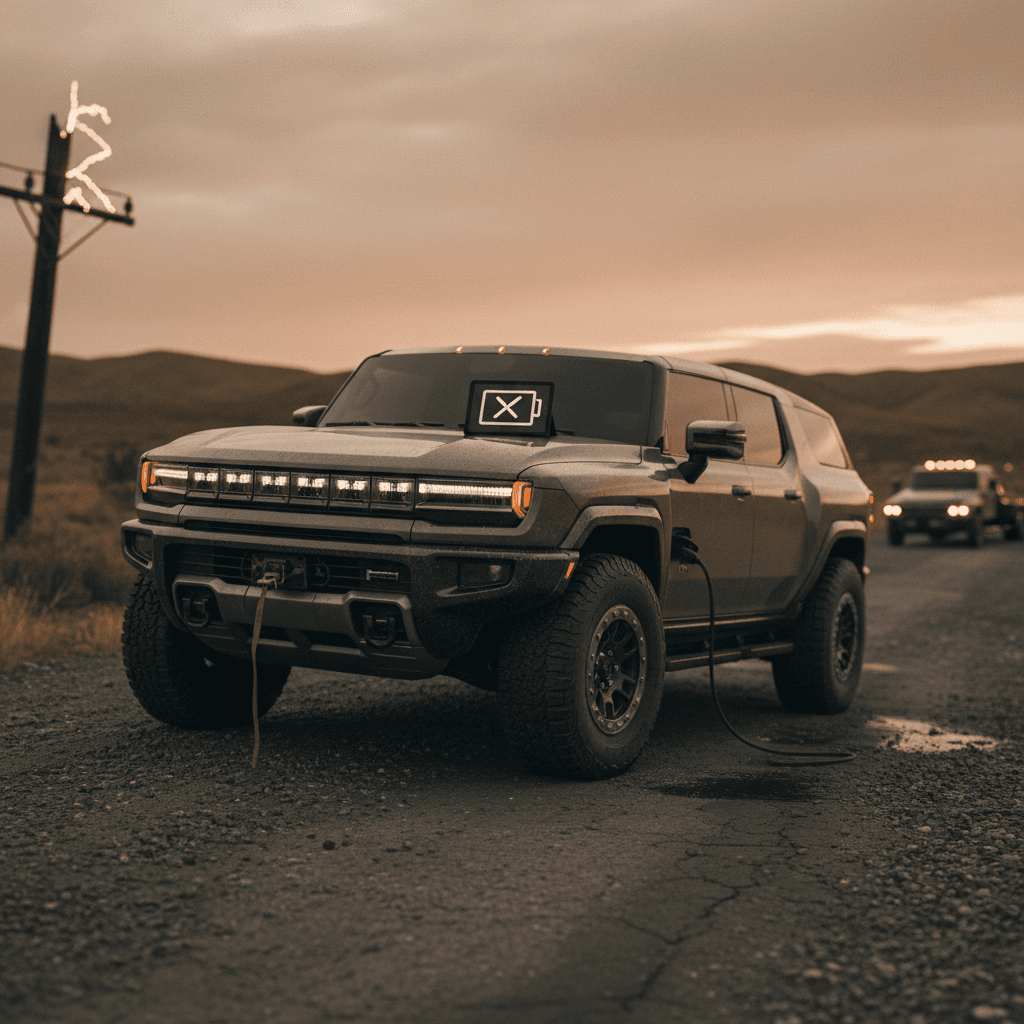
Search for “2023 GMC Hummer EV problems” and you’ll find everything from ecstatic owners to horror stories about trucks stuck at the dealer for weeks. The truth sits right in the middle: the Hummer EV is a wild, impressive machine built on new Ultium tech, but it also brings real-world quirks you’ll want to understand before you buy one, especially used.
Big picture on Hummer EV reliability
Should you worry about 2023 Hummer EV problems?
If you’re considering a 2023 Hummer EV, you’re not being paranoid by digging into problems. Early owners have reported electrical issues, water leaks, software glitches, and the kind of squeaks and rattles you’d rather not hear in a six‑figure rig. At the same time, plenty of drivers have racked up tens of thousands of miles with only minor annoyances.
Think of the Hummer EV as a high‑performance, tech‑heavy flagship. It can be stunning to drive, but it’s not going to feel like a bulletproof, set‑and‑forget half‑ton truck. The key is knowing which issues are serious red flags, which are nuisances, and how to protect yourself when you shop used, this is where a verified battery health report like the Recharged Score and an EV‑savvy inspection matter a lot.
2023 Hummer EV ownership: what we’re seeing so far
Top 2023 Hummer EV problems at a glance
Common 2023 Hummer EV problems
What owners and service bulletins keep circling back to
Battery & charging
- Water intrusion risk in high‑voltage battery enclosure
- Battery control module stuck in “commissioning” mode
- Occasional DC fast‑charging and home‑charging quirks
Water leaks & corrosion
- Water entering A‑pillar and battery connectors
- Door switch failures from moisture
- Potential long‑term corrosion if ignored
Software & electronics
- Infotainment freezes and camera glitches
- Driver‑assist warning messages
- App connectivity and remote‑feature bugs
Suspension & steering
- Air‑suspension calibration issues
- Rear‑steer faults requiring resets
- Occasional “Service Suspension” warnings
Body & hardware
- Power tonneau covers sticking or failing
- Power frunk/hood issues
- Rattles from dash, doors, and seat‑belt mounts
Build‑quality concerns
- Panel alignment and wind noise
- Weather‑sealing complaints
- Long parts wait times for fixes
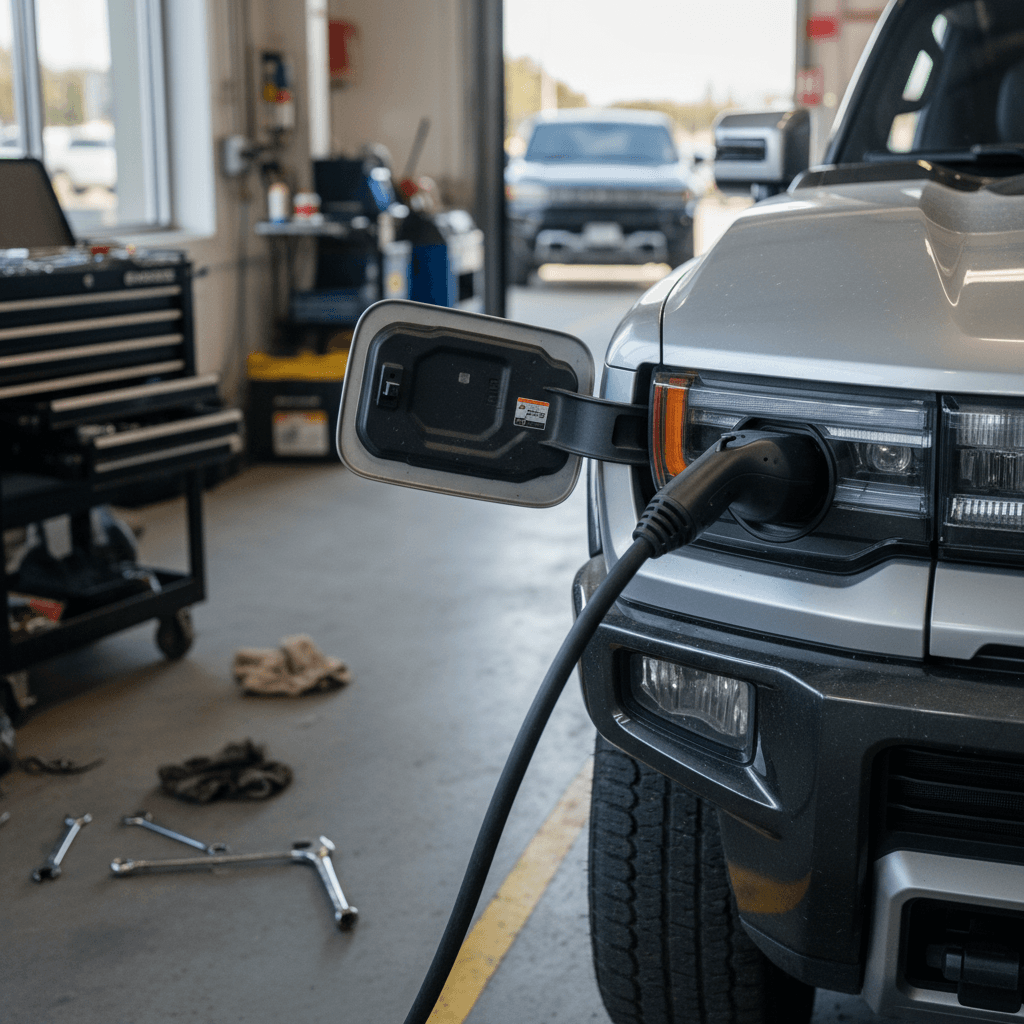
Battery and charging issues
The Ultium battery pack is the beating heart of the Hummer EV, and for the most part it delivers big range and wild performance. But a few specific 2022–2023 Hummer EV battery problems have surfaced that you should know about.
- High‑voltage battery enclosure sealing: Some early trucks were recalled because the battery pack enclosure wasn’t sealed properly, allowing water to get in. Water and high‑voltage components are a bad mix, this can trigger warning lights, limp‑home modes, or a loss of drive power until repaired.
- Battery Energy Control Module (BECM) software: GM has issued a service update for 2022–2024 Hummer EVs whose battery control module can get stuck in a “commissioning” or start‑up state. When that happens, the truck may refuse to go Ready or may show a persistent high‑voltage system warning until the module is reprogrammed.
- Fast‑charging quirks: Owners occasionally report DC fast‑charging sessions stopping early, reduced maximum charge rates, or stations that simply won’t initiate a session. Often this comes down to software updates, either for the truck or for the charger itself, but it can be maddening on a road trip.
- Home‑charging communication faults: A few owners describe charge sessions that won’t start, especially with smart wallboxes or after a software update. These are typically resolved by software reflashes or module resets at the dealer.
Battery problems can mean long downtime
When you’re shopping used, you want to see a clean record of battery‑related recall work and software updates. At Recharged, every Hummer EV we list includes a Recharged Score report that measures real‑world battery health and flags any pack behavior that doesn’t match what we’d expect for the truck’s age and mileage.
Water leaks, corrosion and body hardware
For a truck that looks like it could drive up a waterfall, the Hummer EV has an odd Achille’s heel: water intrusion. There have been two main flavors of this problem, both annoying, and one potentially expensive.
- A‑pillar leaks and door‑switch failures: Early Hummer EVs developed leaks at the driver‑side A‑pillar. Water could travel down into a connector that feeds the window, lock, and mirror switches, corroding terminals and leaving the switch pack dead. GM’s fix involves cleaning or replacing the connector and resealing the A‑pillar seams with sealant.
- Battery connector corrosion: The same theme has shown up under the truck, where poor sealing allowed moisture to reach high‑voltage connectors. This triggered a prior recall related to corroding battery connectors and, if ignored, can lead to expensive harness or component replacements.
- Power tonneau and frunk issues: Owners on Hummer forums report repeated failures of the power tonneau cover and intermittent power‑frunk operation. Sometimes the fix is a recalibration or replacement module; other times, hardware simply wears or binds and needs parts.
How to spot water issues on a test drive
Software glitches and driver-assistance quirks
Like many modern EVs, the Hummer EV runs more on code than on cables. Owners praise over‑the‑air (OTA) feature updates, but they also report a steady stream of software‑related problems that color daily use.
Typical Hummer EV software and electronics complaints
Most are fixable, but they’re not always quick
Infotainment & cameras
- Center screen freezing or rebooting mid‑drive
- Surround‑view and off‑road cameras glitching or going blank, often in cold weather
- Audio system or navigation lag when multiple apps are running
Driver‑assist & alerts
- Random “Service Driver Assist System” messages
- Inconsistent behavior from features like lane‑keeping or Super Cruise when maps or sensors misbehave
- Warning chimes that won’t clear until the truck is restarted
App & connectivity
- MyGMC app not updating charge status or location reliably
- Remote commands lagging or failing
- Improvement after logging out/in or following a dealer‑recommended reset
Off‑road modes & features
- CrabWalk or Terrain Mode failing to engage under certain conditions
- Occasional mode lockouts until modules are reset
- Most resolved with software updates, but frustrating on the trail
OTA updates are a double‑edged sword
Suspension, steering and ride complaints
A 9,000‑pound electric brick on off‑road tires will never ride like a luxury sedan, but some Hummer EV issues go beyond “truckish.” GM has issued software updates to tame air‑suspension behavior, yet owners and service bulletins still mention suspension and rear‑steer problems.
- Air‑suspension calibration: Some owners report trucks that sit unevenly, throw “Service Suspension” warnings, or change height more slowly than they should. Dealers may reprogram ride‑height modules, replace height sensors, or, in rare cases, replace air struts.
- Rear‑steer faults: The party‑trick rear‑steering system can occasionally fault out, leaving the truck in a fixed steering mode and lighting the dash with warnings. GM’s own service docs reference recovering the rear‑steer module with a 12‑volt battery disconnect or reprogramming event.
- Noises and harshness: Between the weight, the tires, and the complexity of the suspension, clunks over sharp impacts or low‑speed creaks aren’t unusual. The trick is deciding what’s “normal for a Hummer EV” and what points to a bushing, link, or damper that’s wearing out early.
Don’t ignore steering or suspension warnings
Interior build quality, rattles and trim problems
Slip into a Hummer EV and it looks like a concept truck that made it to production, big screens, chunky switchgear, open‑air roof panels. Live with one every day, though, and you start to notice where GM’s execution doesn’t quite match the price tag.
- Persistent rattles: Owners describe a “ton of rattles” from under the steering column, seat‑belt height adjusters, door panels, and hidden spots that are hard to track down. Some are cured with trim clips and felt tape; others stubbornly return.
- Seat and lumbar issues: Faults with power lumbar controls and seat adjustments show up periodically in owner reports, usually resolved with replacement switches or seat‑control modules.
- Weather‑seals and wind noise: Given the removable roof panels and big doors, it’s not shocking to hear complaints about wind noise or small leaks, especially at highway speeds or in automatic car washes.
- Power accessories: Between the power tonneau, power frunk, and powered running gear, there are simply more motors and modules to fail than in a simple work truck. Many failures are covered under warranty, but parts delays can stretch repairs into weeks.
Official recalls for the 2023 Hummer EV
As of early 2026, the 2023 GMC Hummer EV has been subject to at least two key NHTSA recalls that any buyer should verify have been completed:
Major 2023 Hummer EV recalls to check
Use the VIN to confirm these recalls are closed before you buy.
| Recall topic | Model years affected | What can happen | Typical fix |
|---|---|---|---|
| High‑voltage battery enclosure sealing | 2022–2023 Hummer EV pickup | Water may enter the battery pack, potentially leading to loss of drive power or, in worst cases, thermal events. | Inspect and reseal battery enclosure; replace affected components as needed; software updates to monitor moisture. |
| Front seat‑belt buckle fasteners | 2023–2024 Hummer EV pickup and 2024 SUV | Left or right front seat‑belt buckle attachment bolts may not be torqued properly, reducing crash protection. | Inspect and properly torque or replace bolts on both front seat‑belt buckles. |
Recall campaigns evolve over time, always run the VIN through the NHTSA or GM recall lookup for the latest status.
How to check recall status
What these problems mean if you’re buying used
All of this may sound grim, but context matters. The Hummer EV is a low‑production, halo truck loaded with experimental tech. That almost guarantees teething issues. The upside: by 2023, GM had already started addressing many early‑build problems with updated parts and software.
Why a used 2023 Hummer EV can still make sense
- Massive performance and capability for the money, especially compared with new pricing.
- 8‑year/100,000‑mile battery and electric‑drive warranty from GM provides a safety net for big‑ticket components.
- Many early recalls and service bulletins have already been addressed on trucks that were actually driven.
- Depreciation takes some of the sting out of the original sticker price.
Where you need to be extra‑careful
- Complex systems (battery, suspension, steering) can mean long repair times and limited independent service options.
- History of water intrusion or repeated electrical problems can be a deal‑breaker.
- Hard off‑roading or heavy towing can accelerate wear on tires, suspension, and body hardware.
- Not every dealer has deep Ultium experience yet, support quality varies by region.
How Recharged helps de‑risk a used Hummer EV
Ready to find your next EV?
Browse VehiclesInspection checklist for shopping a used Hummer EV
2023 Hummer EV inspection checklist
1. Scan for open recalls and service bulletins
Run the VIN through recall tools and, if possible, ask for a dealer printout of completed campaigns and software updates, especially anything related to the battery, suspension, steering, and driver‑assist.
2. Review charging and battery history
Ask how the truck was charged (mostly DC fast‑charge, or home Level 2), whether it spent time sitting at 100% charge, and whether there have been any “Service High Voltage” or battery‑system warnings. A Recharged Score report can validate this objectively.
3. Look hard for water leaks and corrosion
Inspect the A‑pillars, door seals, and headliner for water marks. Underneath, look for rust or corrosion around high‑voltage connectors, the battery enclosure, and suspension mounting points.
4. Test every power feature
Cycle the power tonneau, power frunk, windows, mirrors, seats, lumbar, cameras, and roof‑panel latches. Listen for grinding, binding, or repeated error messages that hint at imminent failure.
5. Drive it like you’ll actually use it
On the test drive, include highway runs, tight parking‑lot turns, rough pavement, and, if off‑roading matters to you, a short trail. Watch for suspension and rear‑steer warnings, clunks, and unusual steering behavior.
6. Evaluate software behavior
Before and after the drive, note how quickly the infotainment boots, whether cameras and driver‑assist behave predictably, and if the MyGMC app reflects charge status accurately. Glitches aren’t rare, but they shouldn’t make the truck undriveable.
7. Check tires, brakes and underbody armor
These trucks are heavy. Uneven tire wear, grooved rotors, or bent skid plates can tell you more about how the Hummer was used than any sales pitch.
Is the 2023 Hummer EV right for you?
If you want silent, sensible efficiency, a 2023 GMC Hummer EV is not your truck. It’s over the top on purpose: outrageous power, massive presence, and an off‑road tool kit that borders on science fiction. With that comes more complexity, more software, and more chances for things to go sideways than in a conventional pickup, or in simpler EVs like a Chevy Bolt EUV or Hyundai Ioniq 5.
The good news is that most known 2023 Hummer EV problems are understood, documented, and either already addressed or addressable, if you buy the right truck and go in with eyes open. Look for a well‑documented service history, clean recall record, and strong battery‑health data. Use checklists like the one above, and don’t be shy about walking away from a questionable example.
If you decide the Hummer EV fits your life, working with an EV‑focused retailer like Recharged can tilt the odds in your favor. We pair detailed battery and condition reports with expert guidance, financing, trade‑in options, and nationwide delivery, so you can enjoy the outrageous parts of Hummer EV ownership, and spend a lot less time worrying about the rest.