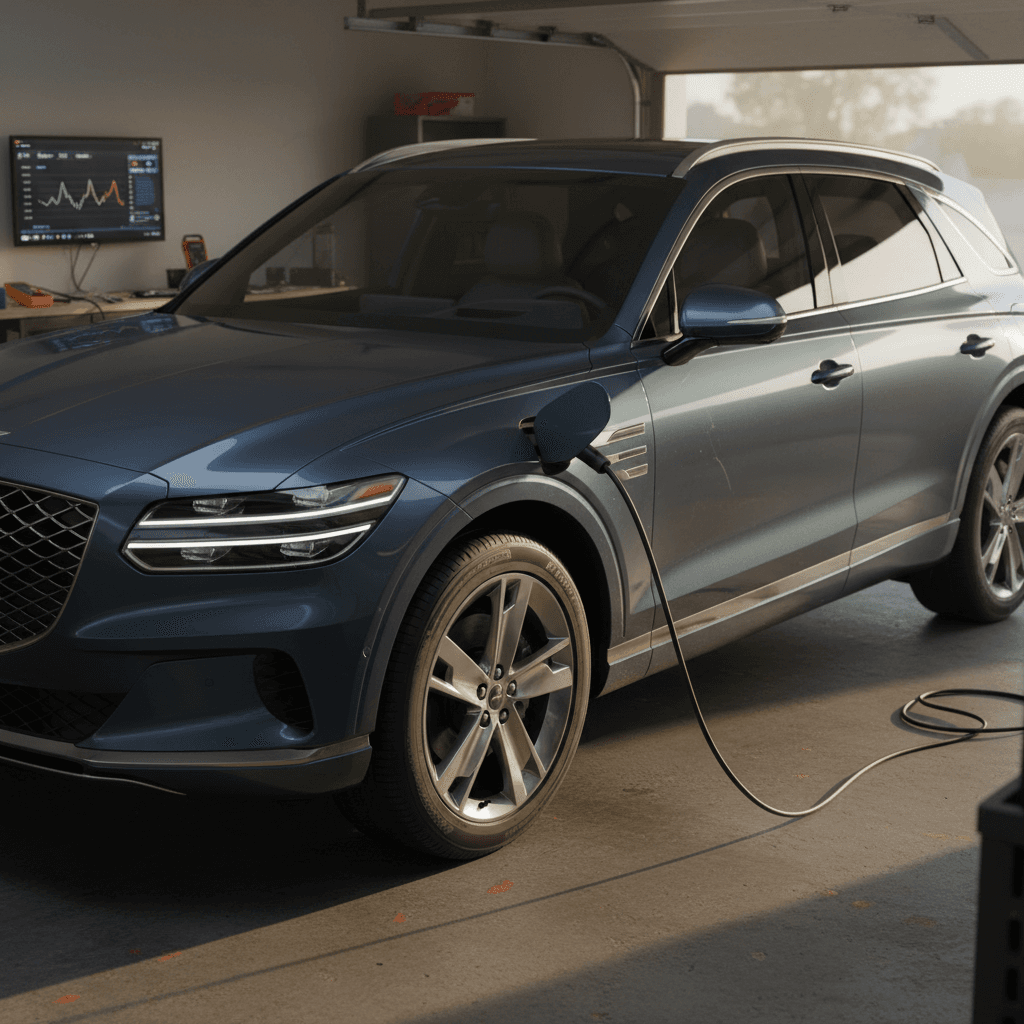
You don’t buy a 2023 Genesis Electrified G80 because you’re a spreadsheet person. You buy it because it looks like old-money Seoul by way of St. Andrews, quiet, tasteful, confidently beautiful, and then, almost as an afterthought, it happens to be an EV. But if you’re considering one used, the question hanging in the air is simple: how reliable is the 2023 Electrified G80 really?
Quick take
Overview: How reliable is the 2023 Electrified G80?
Genesis launched the Electrified G80 in the U.S. for the 2023 model year as a low-volume flagship: dual motors, 87.2‑kWh battery, EPA range around 282 miles, and pricing near $80,000. Under the skin it borrows heavily from Hyundai–Kia’s very competent EV hardware, but wrapped in a more traditional luxury-sedan shell.
From a reliability standpoint, three big headlines emerge so far: 1. Powertrain and battery look strong. There are no widespread reports of catastrophic battery or motor failures, and the platform’s chemistry has behaved well in other Hyundai–Kia EVs. 2. Electronics and software are the soft spots. Owners most often complain about infotainment quirks, missing features, and occasional glitches in digital displays. 3. Support is a mixed bag. Genesis offers an outstanding warranty on paper, but the service network is thinner than German rivals, and getting software issues resolved can demand patience.
2023 Electrified G80 reliability at a glance
Reliability scorecard: Strengths and weak spots
Where the Electrified G80 shines, and where it doesn’t
A balanced view of 2023 Genesis Electrified G80 reliability
Major strengths
- Proven EV hardware: Battery and dual-motor system are derivatives of Hyundai–Kia’s successful EV tech.
- Outstanding warranty coverage: 5-year/60,000-mile basic and 10-year/100,000-mile powertrain and EV component coverage.
- Low running stress: Smooth power delivery and strong efficiency mean little mechanical strain day to day.
- Complimentary maintenance: 3 years/36,000 miles of scheduled service helps ensure proper care early on.
Known pain points
- Infotainment frustrations: Owners report missing or half-baked features and a slow cadence of software updates.
- Electronics gremlins: Occasional reports of error messages or intermittent glitches, usually fixable via software.
- Limited dealer footprint: Fewer Genesis retailers can mean longer waits for EV-savvy technicians.
- Model discontinued: The Electrified G80 has been axed in the U.S., which may impact future software investment and parts focus, but not your legal warranty.
Low volume cuts both ways
Battery life, range and EV drivetrain durability
For most EV shoppers, battery health is reliability item #1. The Electrified G80 uses an 87.2‑kWh lithium‑ion pack and dual permanent‑magnet motors making 365 hp. Independent testing has seen real‑world range in the high‑200s when new, broadly in line with EPA numbers.
- Genesis covers the traction battery for 10 years or 100,000 miles for the original owner, which is among the stronger warranties in the segment.
- Hyundai–Kia EV batteries have generally shown modest degradation, on the order of a few percent over several years when charged reasonably and not abused.
- The Electrified G80’s thermal management and DC fast‑charging performance are well tuned; tests show around 19 minutes from 10–80% on a powerful fast charger in ideal conditions.
Battery-health tip for used buyers
Battery pack reliability
- Chemistry & design: In line with other Hyundai–Kia EVs that have not developed a reputation for mass battery failures.
- Use case: Large luxury sedans invite relaxed driving, which is easier on cells than frequent high‑power launches.
- What to check: Charge history, DC fast‑charging frequency, and any battery‑related warning messages in the past.
Motor & drivetrain durability
- Dual‑motor AWD: Simple single‑speed reduction gearboxes, no multi‑gear transmissions to fail.
- Low mechanical complexity: No exhaust, no fuel system, no oil changes, fewer traditional failure points.
- What to listen for: Unusual whine or vibration under steady load, and any hesitation or jerky response when accelerating.
The big reliability upside of an EV Genesis
Software, screens and electronics: The real wild card
Where owners get grouchy isn’t the drivetrain, it’s the software and digital experience. Some Electrified G80 drivers praise the cabin as serene and well built, then immediately pivot to grumbling about the infotainment.
Common owner complaints include things like clunky or incomplete SiriusXM integration, odd choices about which seats can be adjusted through the screen, and the sense that Genesis doesn’t update the software as quickly as the competition. There are also scattered reports of error messages or intermittent glitches that clear with a software update or, less glamorously, a restart and a prayer.
Electronics vs. hardware
- If your test‑drive car shows screen reboots, frozen cameras, or missing icons, assume that’s your ownership experience unless there’s documented proof of a successful update.
- Genesis has issued software updates to address various quirks; some are dealer‑installed, some are over‑the‑air. Ask for a software version print‑out or service documentation.
- Electronics issues tend to be annoying rather than catastrophic, but in a tech‑forward luxury sedan, annoyance is part of reliability. It’s the reliability of your patience.
Recalls and known issues for the 2023 Electrified G80
Two different narratives are easy to confuse here: formal safety recalls and everyday owner problems.
What we know about Electrified G80 issues
This table distinguishes between official safety actions and real‑world owner complaints for the 2023 Genesis Electrified G80.
| Issue type | What it affects | How serious is it? | What to do when buying used |
|---|---|---|---|
| Safety recalls | Seat belt pretensioners on certain 2023 Genesis models, including the G80 Electric in some campaigns; more recent screen‑glitch recalls center mainly on 2025–2026 vehicles, but always verify coverage by VIN. | Safety‑critical when present, but typically addressed with a free dealer fix (like capping pretensioners or updating instrument‑cluster software). | Use the NHTSA or Genesis VIN lookup to confirm all recalls are closed. Ask for paperwork showing the remedy was performed. |
| Screen and infotainment glitches | Instrument cluster or center screen reboots, blackouts, or laggy behavior reported on some Genesis vehicles; for 2023 Electrified G80s, this tends to be a software issue rather than failed hardware. | Annoying and potentially distracting, but generally fixable through updates; rarely a reason on its own to walk away if the car is otherwise solid. | During a long test drive, change driver modes, use navigation, camera, and audio. Watch for reboots or frozen screens. Ask the seller about past fixes. |
| Feature limitations | Missing or underdeveloped functions in the infotainment stack compared with German rivals, favorite station handling, seat controls, and other quality‑of‑life features. | Not a safety or reliability defect, but an expectations mismatch in a near‑$80k sedan. | If tech is a top priority, sit in the car for 20–30 minutes and live with it. Make your peace or move on. |
| General electrical gremlins | Isolated reports of warning messages or fault codes that appear and vanish, often correlated with software updates. | Low but non‑zero risk of chasing intermittent issues, especially if the car has a chaotic update history. | Scan for codes, review service history, and favor cars with clean, documented dealer support rather than repeated unsolved visits. |
Always run a VIN check for open recalls on any 2023 Electrified G80 you’re considering.
Don’t skip the recall and TSB check
Ownership costs, warranty and dealer experience
On paper, the 2023 Electrified G80 is cushioned by one of the best warranty and maintenance packages in the luxury space. Where reality diverges is in how easy it is to take advantage of that coverage.
2023 Electrified G80 warranty coverage
Genesis hangs its hat on strong warranty terms, especially for EV components.
| Coverage | Term (years / miles) | Why it matters for reliability |
|---|---|---|
| Basic (bumper‑to‑bumper) | 5 / 60,000 | Covers most non‑wear items; valuable for early electronics and trim issues. |
| Powertrain | 10 / 100,000 | Includes the electric drive system and related components; protects against high‑ticket failures. |
| EV battery & components | 10 / 100,000 | Backs the health of the traction battery and key EV hardware, crucial for long‑term confidence. |
| Corrosion | 7 / unlimited | Less about day‑to‑day reliability, more about structural peace of mind. |
| Roadside assistance | 5 / unlimited | Useful if a rare fault leaves you stranded or you misjudge range. |
| Complimentary maintenance | 3 / 36,000 | Encourages proper early care and updates; fewer excuses for skipped service. |
Exact terms can vary slightly by market; always confirm on the Monroney label or with a Genesis retailer.
Service network reality check
The flip side: once you’re in the system, Genesis often delivers a very cushy service experience, loaner cars, pick‑up and drop‑off at some locations, and a generally white‑glove feel that tracks with the brand’s aspirational positioning. For reliability, that doesn’t fix a glitchy screen, but it does change how much that glitch disrupts your week.
Buying a used 2023 Electrified G80: Reliability checklist
With the Electrified G80 discontinued in the U.S. after its short run, every 2023 example you see on the used market is, by definition, a bit of an orphan. That can be a bargain for the right buyer, or a headache for the unprepared one.
Reliability checklist for a used 2023 Electrified G80
1. Pull the full service and software history
Ask for dealership records showing completed maintenance, recalls, and software updates. You’re looking for a clear arc: problems identified, fixes applied, and then quiet. A car that’s been in repeatedly for the same complaint is a red flag.
2. Verify remaining warranty coverage
Confirm in writing how much basic and EV‑component warranty time and mileage remain, especially if the car is close to the 5‑year or 60,000‑mile thresholds. This matters if you’re buying from a non‑Genesis retailer who may be fuzzy on the details.
3. Stress‑test the electronics
On the test drive, live in the infotainment system. Use navigation, Bluetooth, CarPlay/Android Auto (where available), cameras, audio sources, and driver‑assist features. You want boring, no reboots, no freezes, no mystery warnings.
4. Evaluate charging behavior
If possible, plug into Level 2 AC and, ideally, a DC fast charger. Look for normal charge speeds, no errors, and consistent behavior. Sudden charge‑rate drops or repeated failures to initiate a session deserve investigation.
5. Inspect tires, brakes, and suspension
Heavy EV sedans can be hard on consumables. Uneven tire wear or shudder under braking can suggest alignment issues or aggressive driving, even if the rest of the car looks pampered.
6. Consider a professional EV inspection
A third‑party pre‑purchase inspection with EV experience, or a platform like <strong>Recharged</strong> that includes a verified battery‑health report, adds a layer of objective data beyond what a quick dealer walk‑around provides.
How Recharged can help
Reliability vs rivals: Tesla, BMW, Mercedes & others
Reliability doesn’t exist in a vacuum; it’s a comparative sport. The 2023 Electrified G80 swims in waters patrolled by the Tesla Model S, Mercedes‑Benz EQE, BMW i5, and higher‑spec versions of the BMW i4 and Tesla Model 3. So how does it stack up?
vs Tesla Model S / Model 3
- Hardware: Tesla’s powertrains have proven durable, but build quality and trim issues remain common talking points.
- Software: Tesla is still the benchmark for update cadence and UI fluidity; Genesis trails here.
- Net reliability feel: Electrified G80 feels more solid in materials, less adventurous in software. Tesla flips that equation.
vs Mercedes EQE
- Hardware: Both use sophisticated EV architectures; neither shows systemic drivetrain failures.
- Electronics: Mercedes’ MBUX is more feature‑rich but can also be glitchy; both brands rely heavily on software fixes.
- Net reliability feel: Genesis offers a better warranty cocoon; Mercedes offers a larger service network.
vs BMW i5 / i4
- Hardware: BMW’s fifth‑gen eDrive is well‑regarded; Hyundai–Kia EV hardware is right there with it.
- Electronics: BMW’s iDrive 8 has its critics, but update support is robust. Genesis lags in that update culture.
- Net reliability feel: BMW offers more dealers and a long history of sorting gremlins; Genesis counters with longer warranties and simpler spec choices.
The Electrified G80’s reliability personality
Is the 2023 Electrified G80 a good used buy?
Here’s the paradox: Genesis has already pulled the Electrified G80 from the U.S. lineup after slow sales, even as the car itself is fundamentally well executed. That discontinuation can suppress demand, and therefore prices, on the used market, which is exactly when savvy buyers should start paying attention.
- If you value quiet, comfort, and design over having the absolute latest software toys, the Electrified G80 is a compelling alternative to more obvious EV choices.
- The warranty safety net, especially for the battery and EV components, meaningfully reduces the financial risk of early‑gen luxury EV ownership for the first 10 years or 100,000 miles.
- Long‑term parts and software support should remain available, but you should walk into ownership clear‑eyed that this is a niche, low‑volume luxury EV, not a mass‑market appliance.
If your happiness in a car is bound up with rock‑solid infotainment and bleeding‑edge apps, you might be better served by a Tesla or a newer German EV. But if your heart leans toward a beautifully finished, whisper‑quiet sedan that happens to be electric, and you’re willing to do your due diligence on software history and warranty, then a well‑vetted 2023 Genesis Electrified G80 can be a deeply satisfying, and surprisingly sensible, used buy. This is where working with a specialist platform like Recharged, with battery‑health diagnostics and EV‑savvy advisors, turns what looks like a risk into a very calculated one.