If you’re considering a 2023 Ford Mustang Mach-E, you’ve probably heard about early-model teething issues, battery contactors, software bugs, and attention‑grabbing recalls. The good news is that by 2023, many of the worst early problems were addressed, but the 2023 Mustang Mach-E still has a few **patterns of issues** you should understand before you buy used.
Quick take
Overview: How Worried Should You Be About 2023 Mach-E Problems?
Ford’s first dedicated EV, the Mustang Mach-E, launched in 2020 and, like many first‑wave EVs, saw above‑average early problems. Consumer Reports even pulled its recommendation in 2022 after owners reported **infotainment freezes, charging issues, and electrical glitches** in earlier model years. By the time the **2023 Mach-E** arrived, Ford had rolled out multiple software updates and hardware fixes, so overall reliability trends upward, but it’s not trouble‑free.
2023 Mustang Mach-E problem snapshot
How to use this guide
Major Recalls Affecting the 2023 Mustang Mach-E
Recalls are where you should start, because they point to **systemic issues** Ford has already acknowledged. A 2023 Mach-E you’re considering might be perfectly fine, or it might be waiting for a free but critical fix.
Key recalls that can touch 2023 Mustang Mach-E models
This table focuses on campaigns that either explicitly list the 2023 Mach-E or are Ford‑wide issues that include it.
| Issue | Affected model years | What happens | How it’s fixed | What to confirm on a 2023 |
|---|---|---|---|---|
| Rear visibility / camera behavior | 2021–2024 (including 2023) | Rearview camera image can freeze, delay, or fail to display when reversing, hurting rear visibility. | Software update, either over the air or at a dealer. | Confirm the camera comes on instantly in Reverse and doesn’t freeze during a test drive. |
| Door latch / rear passenger entrapment | 2021–2025 (includes many 2023s) | With low battery voltage, rear doors may stay locked from the outside after the driver exits, potentially trapping back‑seat passengers. | Powertrain control module software update and logic changes; handled by dealers. | Ask for documentation that the door‑latch recall has been completed and test rear doors with low SOC warnings if visible. |
| Battery system contactor overheating | Primarily 2021–2022 | High‑voltage battery contactors can overheat after repeated DC fast charging and full‑throttle runs, potentially causing loss of power. | Software updates and, on some vehicles, battery junction box replacement. | Most 2023s aren’t part of this, but verify by VIN; it’s good context for how hard earlier Mach-Es may have been driven. |
Always run the VIN through Ford’s recall checker and the NHTSA site to confirm status.
Don’t assume OTA means “all done”
Common 2023 Mach-E Issues Reported by Owners
Beyond official recalls, real‑world owner feedback highlights a handful of patterns. Not every 2023 Mach-E will have these problems, but they’re frequent enough that you should actively check for them in a pre‑purchase inspection or test drive.
Most frequently reported 2023 Mach-E trouble spots
These are the patterns that show up again and again in owner reports and service records.
12V battery & charging quirks
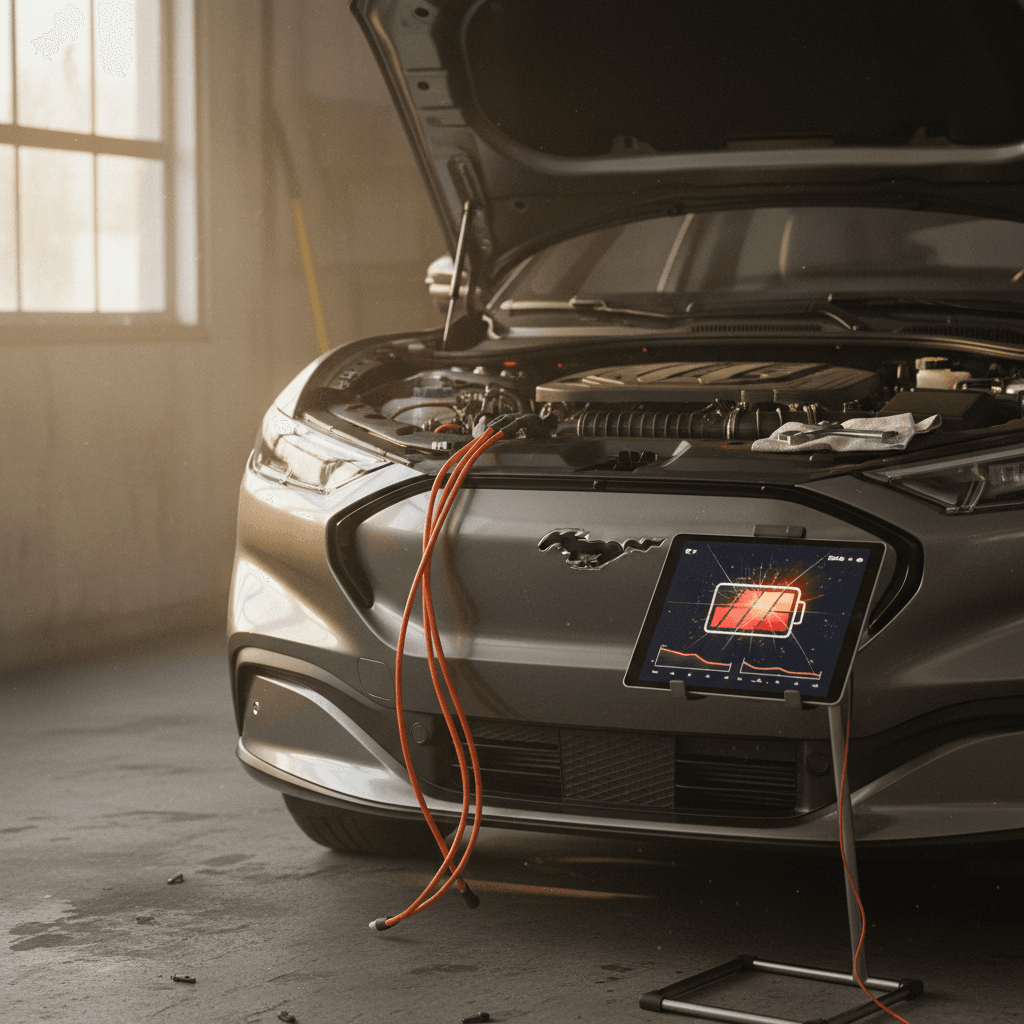
Some owners report premature 12V battery failures, charging sessions stopping unexpectedly, or dash warnings about charging faults.
Often tied to early software or control‑module glitches rather than catastrophic high‑voltage pack problems.
Screen & infotainment freezes
Central screen going black, Apple CarPlay audio cutting out, or the camera view freezing are common complaints.
Updates typically improve things, but heavily optioned trims that rely on the big screen feel the pain more when it misbehaves.
Random warnings & limp‑home behavior
Occasional reports of wrench lights, “Stop Safely Now,” or reduced‑power modes that clear after a restart or software update.
These can be nuisance alerts, but they can also hint at deeper electrical or contactor issues if frequent.
Battery & Charging Concerns on the 2023 Mach-E
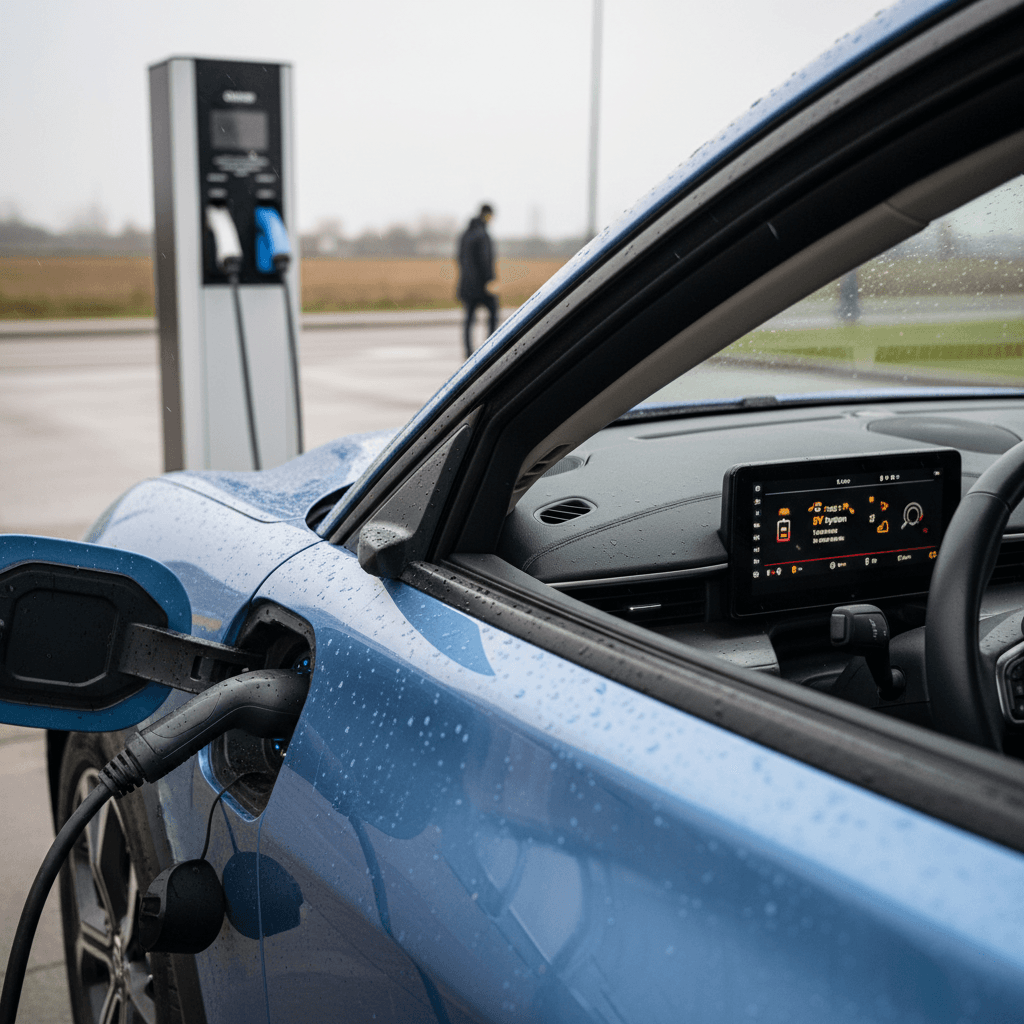
The high‑voltage battery is the most expensive component in any EV, so buyers understandably worry about **Mach-E battery problems**. The bulk of Ford’s headline‑grabbing battery recalls focused on 2021–2022 cars, but 2023 owners still report a few recurring themes around energy storage and charging.
- Premature 12V battery failures that leave the car unable to wake up or unlock normally.
- Charging sessions that start fine but stop after a few minutes, especially on some public DC fast chargers.
- Occasional DC fast‑charge stalls or slowdowns, sometimes traced to the charger, sometimes to the car’s software.
- Battery or charging‑system fault messages that disappear after a restart or update.
High‑voltage pack vs. everything around it
Battery & charging checks for a used 2023 Mach-E
1. Review DC fast‑charge history
Ask the seller how often they DC fast charge and whether they’ve noticed slow‑downs or failed sessions. Heavy, repeated fast charging isn’t a deal‑breaker, but it makes a high‑quality battery health report even more important.
2. Test both Level 2 and DC fast charging
If possible, plug into a home or public Level 2 station and a DC fast charger during your test period. Watch for the car unexpectedly stopping the session or throwing warnings.
3. Look for warning lights and messages
On the test drive, scroll through vehicle alerts and watch for battery or charging‑system messages. A single warning that coincided with a known software update is less concerning than recurring unexplained alerts.
4. Check for obvious degradation
Use the in‑car estimate and recent real‑world range at typical highway speeds to sanity‑check the pack. A healthy 2023 Mach-E should still deliver **very close to its original EPA range** in mild conditions at moderate speeds.
How Recharged derisks Mach-E batteries
Software & Infotainment Glitches
If there’s a single category that defines modern EV headaches, it’s software, and the 2023 Mach-E is no exception. Ford leaned hard into over‑the‑air updates and a Tesla‑like digital UX; that’s powerful, but it also means a bad build can affect everything from your backup camera to your audio system.
Typical software problems on 2023 Mach-E
- Central screen freezing or going black mid‑drive.
- Rearview camera image lagging, freezing, or not appearing.
- Wireless Apple CarPlay / Android Auto audio cutting in and out.
- Inconsistent behavior from driver‑assist features after updates.
Why they matter more on an EV
In a modern EV, software doesn’t just handle entertainment, it also manages **thermal systems, charging logic, and safety aids**. So a “simple” bug can have knock‑on effects, like reducing fast‑charge speeds or throwing false fault codes that spook owners.
The upside: many of these issues are fixable with a high‑quality update or, in rare cases, a replacement control module.
Easy first‑line fixes
Safety & Hardware Issues: Door Latches, Visibility & More
Compared with early Mach-E model years, the 2023 doesn’t have as many high‑profile hardware flaws, but a few issues are worth knowing about, especially if you routinely carry passengers.
Notable hardware/safety problem areas
Most affected vehicles can be fully corrected with recall work.
Electronic door latch logic
For 2021–2025 Mach-Es, Ford identified a scenario where, at low battery voltages, the rear doors might remain locked from the outside even after the driver exits. That creates a risk of back‑seat passengers, particularly children, being unable to get out.
The fix is a **software update to the powertrain control module**; it doesn’t require new handles or latches, but you should test rear‑door behavior and confirm recall completion.
Rear visibility / camera freezes
Separately, Ford recalled over a million vehicles, including the Mach-E, for a bug that can cause the rearview camera image to freeze or not appear.
For an EV with thick rear pillars and small glass, a reliable camera is part of your real‑world safety net. A good test drive includes many shifts into Reverse in different lighting conditions.
Why this matters for used buyers
2023 vs. 2021–2022 Mach-E: Is the 2023 More Reliable?
If you’ve been reading about Mach-E problems for a while, you’ve probably noticed that **2021–2022** cars dominate the horror stories: overheated battery contactors, sudden loss of power, long lists of recalls. That context matters when you evaluate a 2023.
How 2023 stacks up against early Mach-E model years
Later years benefit from both running hardware changes and more mature software, but they inherit some Ford‑wide campaigns.
| Model year | Headline issues | Recall intensity | What it means for a used buyer |
|---|---|---|---|
| 2021 | Launch‑year bugs, numerous electrical and structural recalls, early battery contactor problems. | Very high (10 recalls in some tallies). | Only buy with meticulous history, full recall proof, and strong battery diagnostics, early cars can be fine, but risk is higher. |
| 2022 | Carryover from 2021 with incremental fixes; still affected by several electrical and battery campaigns. | High (multiple EV‑specific recalls). | Careful case‑by‑case evaluation needed. Strong price discount should compensate for higher uncertainty. |
| 2023 | Fewer model‑specific flaws; still touched by Ford‑wide software and visibility recalls. | Moderate (not zero, but fewer EV‑unique failures). | Sweet spot for many shoppers: modern tech, growing real‑world data, and generally better reliability than launch years. |
All else equal, a 2023 Mach-E is a safer bet than a 2021–2022, assuming equal maintenance and recall completion.
Bottom line on model years
What to Check When Buying a Used 2023 Mustang Mach-E
A good pre‑purchase process can turn a risky Mach-E into a smart buy. Use the car’s own data, Ford’s tools, and some simple real‑world tests to separate a well‑cared‑for 2023 from one that’s been an unwilling beta‑tester.
Must‑do checks for a used 2023 Mach-E
1. Run the VIN through recall tools
Use Ford’s recall checker and the NHTSA database to see if the car has any **open campaigns**. Ask the seller for service records or screenshots from FordPass showing that camera and door‑latch recalls were completed.
2. Inspect software and update history
On the test drive, check the current software version and ask when updates were last applied. A car that’s months behind on OTA updates or has a history of failed installs deserves extra scrutiny.
3. Stress‑test the screens and cameras
Shift between Drive and Reverse repeatedly in a parking lot, watching for **lag, black screens, or frozen images**. Try navigation, Bluetooth, and CarPlay/Android Auto to see if everything behaves consistently.
4. Do a mixed city/highway drive
Drive at urban speeds and then at 65–70 mph, looking for warning lights, shuddering, reduced‑power messages, or unexpected noises. Note real‑world efficiency: it should roughly align with owner reports and EPA estimates for a healthy car.
5. Evaluate charging behavior
If you can, plug into a Level 2 station for 15–20 minutes. Watch for errors in the app or on the dash and confirm charging continues steadily. If range or charge power seems low, plan on a deeper battery health evaluation.
6. Look past the screen
Walk around the car and check panel alignment, door closing feel, and weather seals. Early Mach-Es could have fit‑and‑finish quirks; a clean 2023 with tight seals and consistent paint is a positive sign of how it’s been treated.
Always ask for service documentation
How Recharged Evaluates Used Mustang Mach-E Models
Because the Mach-E’s biggest risks are tied to software, electrical systems, and battery health, a standard used‑car checklist isn’t enough. That’s why Recharged bakes EV‑specific diagnostics into every car we list.
What the Recharged Score looks at on a Mach-E
Beyond cosmetics and a quick road test.
Verified recall & software status
We pull factory recall data by VIN and confirm that critical campaigns, like rear camera and door‑latch updates, have been completed. We also check software levels so you aren’t inheriting someone else’s overdue updates.
Battery health & charging profile
The Recharged Score Report includes a **battery health snapshot**, looking at usable capacity, charging patterns, and any stored fault codes. That helps price the car fairly and avoid surprises down the road.
EV‑specialist inspection
Our EV‑focused technicians road‑test each Mach-E, checking for warning messages, regen behavior, and abnormal noises that might hint at deeper electrical or drivetrain issues.
Ready to find your next EV?
Browse VehiclesNationwide, but with real humans
FAQ: 2023 Ford Mustang Mach-E Problems
Common questions about 2023 Mach-E reliability
Is a Used 2023 Mustang Mach-E a Good Buy?
For many shoppers, a **used 2023 Ford Mustang Mach-E** hits a sweet spot: newer hardware and more refined software than the launch years, without the new‑car price tag. The trade‑off is that you’re buying into an EV platform that has evolved quickly, with recalls and over‑the‑air updates as part of the ownership story.
If you go in with clear eyes, checking recall status, testing the software experience, and insisting on a real battery health assessment, the 2023 Mach-E can be a compelling, fun‑to‑drive electric SUV. And if you’d rather have experts do that homework for you, shopping a Mach-E that already has a **Recharged Score Report**, fair‑market pricing, and EV‑specialist support from start to finish is one of the easiest ways to enjoy the benefits of this Ford without inheriting its worst early‑EV growing pains.