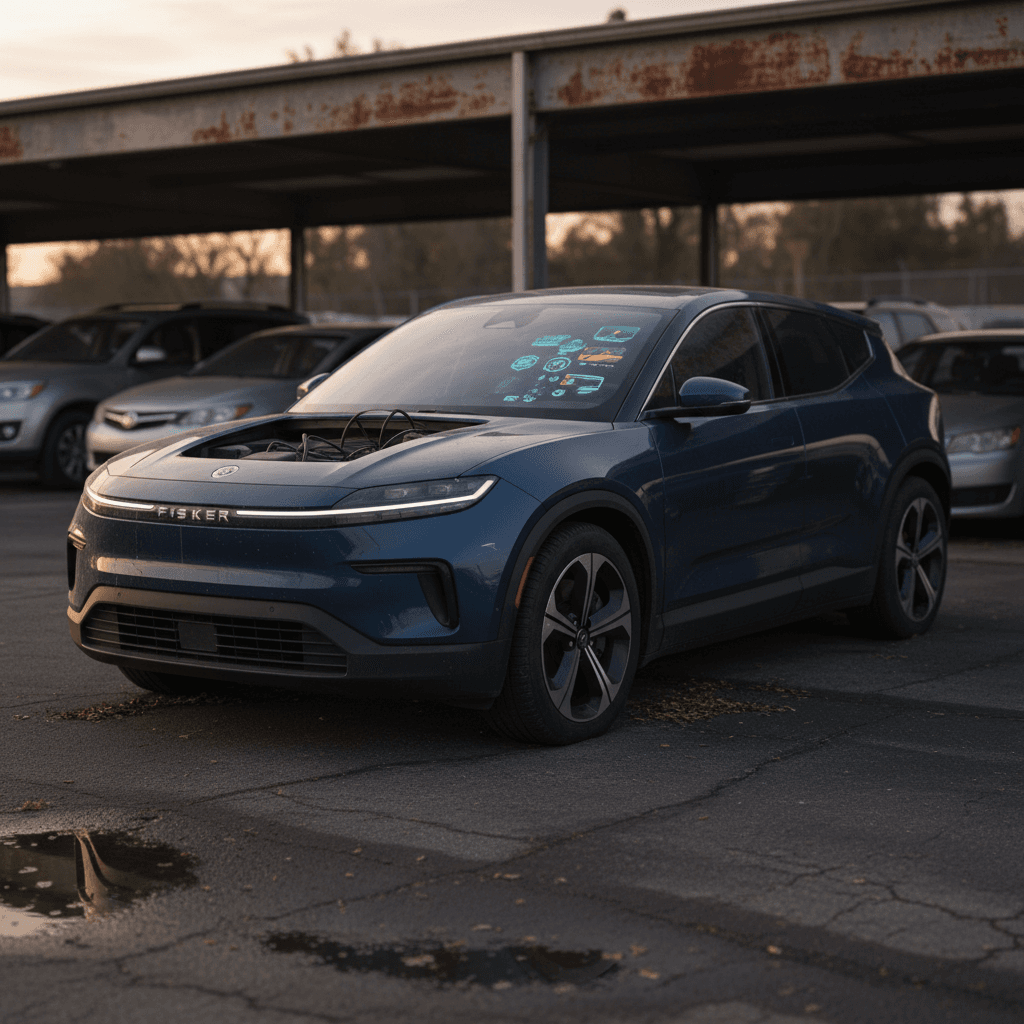
If you’re searching for 2023 Fisker Ocean reliability, you’re probably weighing a tempting used price against some unsettling headlines. On paper, the Ocean offered big range, slick styling and eco‑credentials. In practice, early production, rushed software and Fisker’s 2024 bankruptcy have turned reliability into the central question for any current or future owner.
Quick take
Overview: 2023 Fisker Ocean reliability at a glance
2023 Fisker Ocean reliability snapshot (as of 2026)
The 2023 Fisker Ocean isn’t a typical “unreliable car” in the old‑school, mechanical sense. The underlying EV platform, supplied by Magna Steyr, is broadly competent. The trouble is in the software integration, safety‑critical controls and after‑sales support. Early owners reported everything from sticky exterior door handles and glitchy gear selection to apps that bricked cars after an update. Layer on top that Fisker itself is gone, and you’re looking at a fundamentally different ownership proposition than a used Hyundai or Ford EV.
Orphaned EV reality check
The biggest 2023 Fisker Ocean reliability issues owners report
Common 2023 Fisker Ocean reliability complaints
Not every Ocean has every problem, but these patterns come up again and again.
Door handles & entry
Owners have reported sticky exterior door handles that fail to open, key fobs that stop working or only respond intermittently, and glitches that force drivers to unlock via the app or climb in through the trunk.
Unexpected rollaway & gear issues
Some drivers say the Ocean appeared to be in Park but rolled, or failed to engage the selected gear correctly, one of several issues that attracted NHTSA attention.
Software instability
From frozen touchscreens and disappearing driver‑assist features to full "no‑start" events after over‑the‑air (OTA) updates, many reliability complaints are ultimately software‑driven.
When things go wrong
- Braking feel anomalies, described as a brief jolt or slip, sometimes tied to regen transitions.
- Loss of power or no‑start conditions after software updates or 12‑volt battery problems.
- Interior quality issues: broken rearview mirrors when adjusted, misaligned trim, paint defects on delivery.
- Slow or inconsistent service responses when Fisker was still operating; now, support is fragmented across third parties and owner groups.
When things go right
- Owners who’ve had relatively trouble‑free Oceans praise the quiet ride, packaging and range.
- Some report that later software versions smoothed out early glitches, especially around key fobs and regen tuning.
- Magna’s build quality on the underlying platform is often described as solid, when software isn’t getting in the way.
That split, between delighted owners and deeply frustrated ones, is exactly why you see such polarized opinions about 2023 Fisker Ocean reliability.
How to read mixed owner reviews
Safety and braking concerns: what the NHTSA is looking at
Beyond everyday glitches, the 2023 Fisker Ocean has drawn scrutiny for potentially safety‑critical issues. The National Highway Traffic Safety Administration (NHTSA) has opened multiple investigations and ultimately recalls relating to braking behavior and rollaway risk. Owners have described moments where the brakes felt like they released briefly under hard pressure, or where regenerative braking over bumps created a jolt that didn’t inspire confidence.
Key safety‑related reliability issues on the 2023 Fisker Ocean
What regulators and owners have flagged so far.
| Issue | Symptoms owners describe | Fisker / regulator response | What it means for you |
|---|---|---|---|
| Regen braking behavior | Jolt or brief "slip" when braking over bumps; feeling that braking force changes unexpectedly | Fisker pushed an OTA update in late 2023 to retune regen and told NHTSA it met standards, but investigation activity continued. | Treat any braking weirdness as a serious test‑drive red flag; walk away if the seller can’t show evidence of recall work or updates. |
| Rollaway / gear selection | Car appears in Park but moves; or doesn’t respond to shift commands as expected | Part of a broader set of complaints about gear logic and software; subject to NHTSA scrutiny and recalls. | On a used purchase, verify the shifter behavior repeatedly on a flat surface and incline; don’t accept "it’s probably a software thing" as an answer. |
| Loss of propulsion | Sudden loss of drive power while moving, sometimes with warning lights | More than 100 such events have been documented across various reports and complaints. | During a test drive, pay attention to any hesitations or unexpected warnings; if in doubt, do not buy that vehicle. |
Always check a specific VIN for open recalls before test‑driving or purchasing any used Ocean.
Non‑negotiable safety standard
Software glitches, OTA updates and “unfinished” features
If there’s a single phrase that captures 2023 Fisker Ocean reliability, it’s this: unfinished software shipped on a finished car. Reviewers and early owners consistently reported that core features felt beta‑level at launch. Advanced driver assistance systems would appear one day and vanish the next. Adaptive cruise control was printed on window stickers but disabled, with a promise of future activation. The rotating center screen, a hero feature, could crash the infotainment system when moved between portrait and landscape.
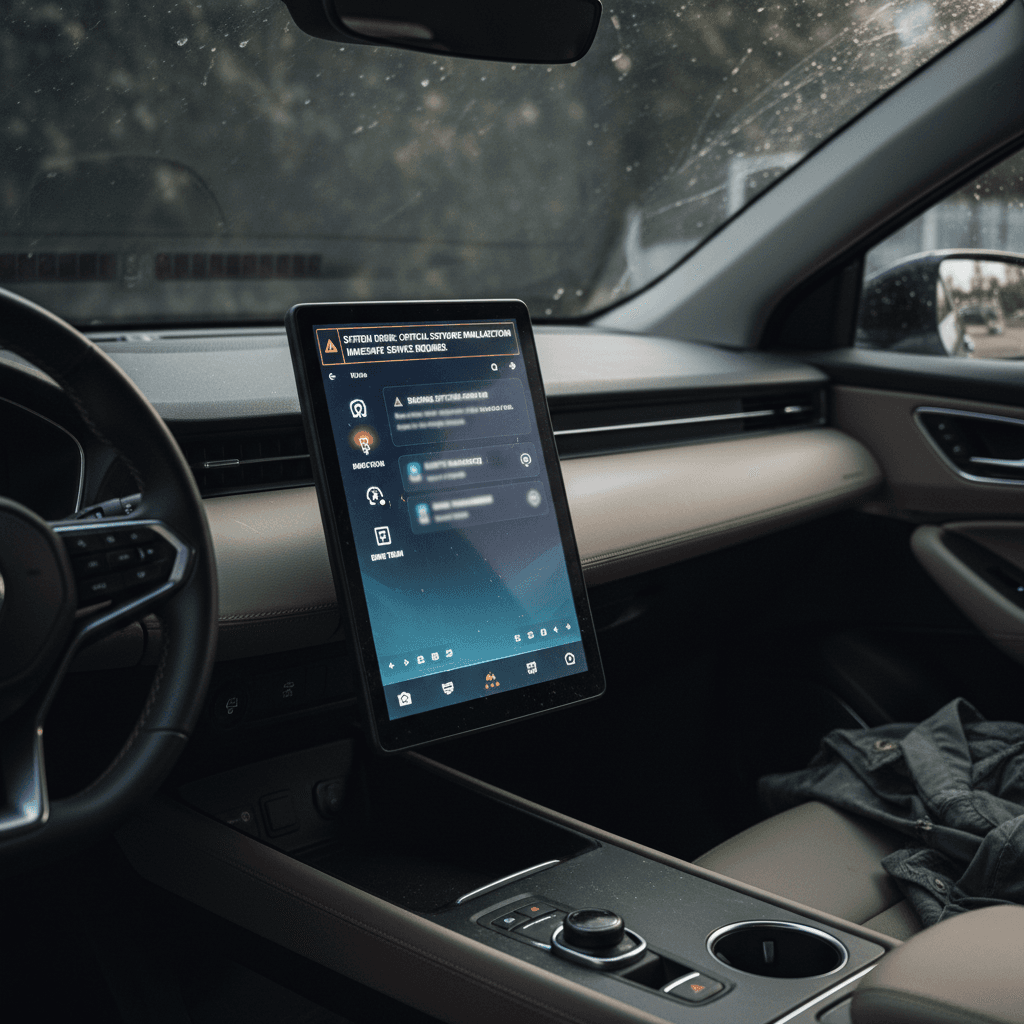
- Driver‑assist (ADAS) features like blind‑spot warning and lane‑keep assist disappearing after working initially, then returning after a reboot or update.
- In‑car audio randomly cutting out, apps show as "playing" but no sound from any source, sometimes persisting across resets.
- Multiple outstanding software updates visible to owners, but difficulty getting them installed or understanding what they fix.
- OTA updates that improved some things (like key fob responsiveness) while introducing new bugs or, in worst cases, leaving cars undrivable.
Why this matters more now that Fisker is gone
Battery, range and core EV systems: bright spots and unknowns
Ironically, one of the Ocean’s strongest selling points, the battery and range, hasn’t been the main source of reliability headlines. The Ocean Extreme trim was rated around 360 miles of EPA range, putting it near the top of its class when new. The high‑voltage battery pack and drive units come from established suppliers and, so far, haven’t produced a wave of pack‑level failures in the way software and controls have produced day‑to‑day headaches.
Where the 2023 Ocean holds up reasonably well
Not everything about Ocean reliability is doom and gloom.
Competitive range
The Ocean Extreme’s rated range is still competitive with many 2024–2025 EVs on the used market. For buyers who don’t fast‑charge constantly, this is a genuine advantage, as long as the rest of the car behaves.
Charging hardware
Level 2 AC charging appears broadly conventional. DC fast‑charging speeds are not class‑leading, but there’s no systemic pattern of connector or hardware failures the way we see with software.
Thermal management
We haven’t seen widespread reports of packs overheating or derating under normal use. The bigger risk is losing access to software that manages and reports on these systems over time.
The big unknown: long‑term battery support
How Fisker’s 2024 bankruptcy changes the reliability story
In June 2024, Fisker filed for bankruptcy and indefinitely suspended Ocean production. That single event reframed 2023 Fisker Ocean reliability overnight. Before bankruptcy, reliability risks were largely about time and software maturity: could Fisker fix early‑run issues and stabilize the platform? After bankruptcy, the question shifted to support and accountability: who is on the hook to fix anything, and for how long?
What changed after bankruptcy
- No traditional dealer network to fall back on; even before bankruptcy, service was centralized and often slow.
- Warranty obligations became uncertain, especially for second and third owners, as assets were sold off and reorganized.
- A leasing company that bought many Oceans now manages software/cloud access for its fleet, but private owners depend on a patchwork of solutions.
- The Ocean became an “orphaned EV”: the original manufacturer is gone, but thousands of cars are still on the road.
Owner communities stepped in
- Owner‑led groups created their own apps and connectivity workarounds to replace Fisker’s cloud services.
- Volunteer networks help source parts, document fixes and organize in‑person update events around the world.
- This is inspiring from a right‑to‑repair perspective, but it’s not a substitute for a stable OEM‑backed service ecosystem.
The result is a car that may be fixable, but only if you’re comfortable with a very non‑traditional ownership model.
Think of the Ocean like a startup phone OS
Real‑world ownership: support networks, DIY fixes and risk tolerance
The 2023 Fisker Ocean has attracted a remarkably dedicated owner base. Many people spent $60,000–$70,000 on early builds because they loved the design, sustainability story and range. When the company collapsed, they didn’t just walk away, they founded nonprofits, documented DIY repairs and negotiated with asset buyers to keep connectivity alive. That passion is admirable, but you should be clear‑eyed about what it means for you as a potential buyer.
Which type of owner are you?
Your risk tolerance matters more with a 2023 Ocean than with most EVs.
The tinkerer
You’re comfortable with forums, unofficial apps and troubleshooting. You see “unsupported” as a challenge. For you, a deeply discounted Ocean can be an interesting project, if you accept that some issues may never be fully resolved.
The commuter who just wants it to work
You want to plug in, drive and service the car like any other vehicle. For you, the Ocean’s fragmented support and software complexity are a major strike against it, no matter how attractive the price.
The value hunter
You’re open to risk at the right number. If an Ocean is priced dramatically below comparable EVs and passes a rigorous inspection, you might decide the upside outweighs the downside, especially if you don’t rely on it as your only vehicle.
How Recharged thinks about Ocean risk
Ready to find your next EV?
Browse VehiclesShould you buy a used 2023 Fisker Ocean in 2026?
This is the core question behind every search for “2023 Fisker Ocean reliability.” The honest answer is that the Ocean is a niche, high‑risk choice in today’s used EV market. That doesn’t mean nobody should buy one. It does mean you should compare it ruthlessly against alternatives like a used Tesla Model Y, Hyundai Ioniq 5, Kia EV6, VW ID.4, Ford Mustang Mach‑E or Nissan Ariya.
2023 Fisker Ocean vs mainstream used EVs (reliability & support lens)
How the Ocean stacks up against more common used EV choices.
| Factor | 2023 Fisker Ocean | Mainstream used EV (Tesla, Hyundai, Ford, etc.) |
|---|---|---|
| Manufacturer status | Bankrupt; no conventional warranty or dealer network | Healthy OEMs with service networks & recall processes |
| Software maturity | Documented bugs, unfinished features, owner‑led patches | Generally mature, with regular OEM‑backed updates |
| Parts & repairs | Limited, with growing reliance on third‑party and owner networks | Stable parts pipelines and trained dealer/service techs |
| Resale value | Deeply discounted, volatile, may be hard to resell | Predictable depreciation with broad buyer base |
| Ownership profile | Best suited to enthusiasts and risk‑tolerant buyers | Suitable for mainstream drivers and first‑time EV owners |
This table focuses on reliability and support, not performance or styling.
Who probably should NOT buy an Ocean
Checklist: how to assess a used Fisker Ocean
Used 2023 Fisker Ocean pre‑purchase checklist
1. Verify recall and NHTSA status
Run the VIN through official recall lookup tools and search for open NHTSA investigations tied to that specific vehicle. If the seller can’t document recall work, that’s a major concern.
2. Test brakes and gear selection thoroughly
On a safe road and empty parking lot, perform repeated stops, including over rough surfaces, and multiple Park/Drive/Reverse transitions on flat ground and a mild incline. Any jolt, slip or unpredictable behavior is a deal‑breaker.
3. Stress‑test software and infotainment
Rotate the center screen, switch between apps, use navigation, Bluetooth and streaming. Watch for freezes, reboots, missing driver‑assist features, and persistent warning messages.
4. Inspect doors, handles and mirrors
Open every door from inside and out multiple times. Test the key fob repeatedly from different distances. Adjust the rearview mirror gently and check for looseness or cracks.
5. Check 12‑volt battery health
Ask for recent service records showing 12‑volt battery tests or replacement. A weak 12‑volt battery can strand modern EVs, and the Ocean’s software history makes clean power especially important.
6. Confirm charging behavior
Plug into a known‑good Level 2 charger and, if possible, a DC fast charger. Verify that charge rates look normal and that the car doesn’t throw unexpected errors when plugging or unplugging.
7. Evaluate support options near you
Before you buy, identify independent EV shops, regional Ocean specialists and owner groups within reasonable distance. If nobody within a few hours can or will touch the car, that risk needs to be priced in, or you should walk away.
8. Get an independent EV inspection
Whenever possible, pay a third‑party EV specialist to inspect the car. At Recharged, our <strong>Recharged Score</strong> process includes battery diagnostics and a deep systems check; look for similar rigor if you’re buying outside our marketplace.
FAQ: 2023 Fisker Ocean reliability and long‑term ownership
Frequently asked questions about 2023 Fisker Ocean reliability
Bottom line: when the 2023 Ocean makes sense, and when it doesn’t
The 2023 Fisker Ocean is a case study in how modern vehicle reliability is about far more than motors and metal. Underneath, you have a competent EV platform with impressive range and packaging. On top of that sit unfinished software, safety investigations, and a bankrupt OEM. That combination turns reliability into a question not just of how often things break, but of who will be there to fix them five years from now.
If you’re a technically inclined, risk‑tolerant buyer who understands orphaned products and is willing to lean on owner communities, a heavily discounted 2023 Fisker Ocean can be a fascinating, if unpredictable, EV. If you want predictable reliability, strong resale value and straightforward service, you’re better off in a used Model Y, Ioniq 5, EV6, ID.4 or similar, ideally sourced through a marketplace like Recharged that backs each car with clear battery health data and expert guidance.
Whatever you choose, treat your research into 2023 Fisker Ocean reliability as a reminder of how central software, support and business stability have become to modern car ownership. Specs sell cars, but in 2026, it’s the invisible layers, updates, diagnostics, and the people behind them, that determine whether you’ll still want to live with that EV in 10 years.