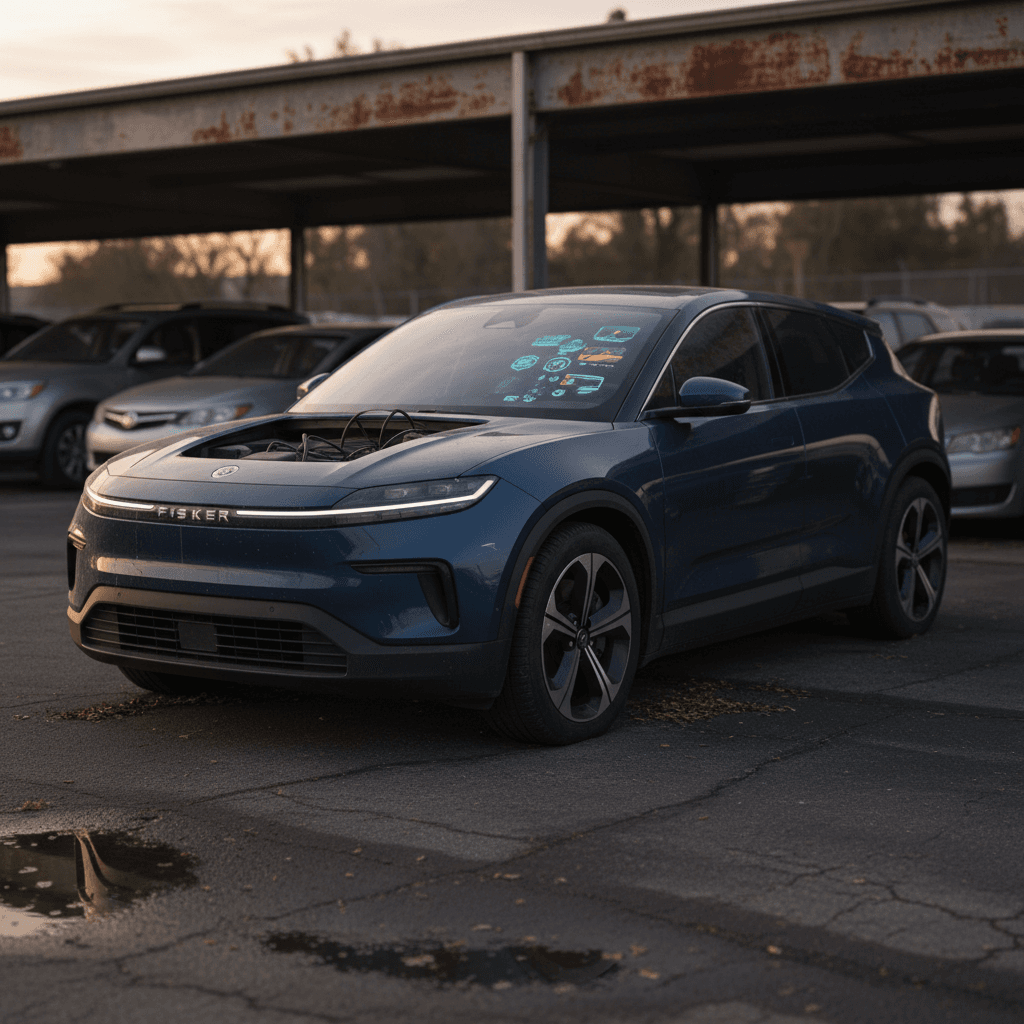
If you’re researching 2023 Fisker Ocean problems, you’re probably seeing a mix of glowing design reviews and horror stories about glitches, recalls, and, most seriously, Fisker’s 2024 bankruptcy. The Ocean can be stylish, efficient and genuinely fun to drive, but it also carries some of the highest ownership risk of any modern EV, especially on the used market.
Quick take
Overview: Should You Worry About 2023 Fisker Ocean Problems?
Why people love the Ocean
- Sharp, distinctive design and a roomy cabin
- Strong range on higher trims (around 350 miles when new on Extreme)
- Fun features like California Mode and a rotating central screen
- Good real‑world efficiency and solid performance
Why shoppers hesitate
- Company bankruptcy in 2024 and uncertain support
- Multiple software bugs and glitchy driver-assistance systems
- Door-handle and braking recalls on 2023–2024 models
- Very poor resale values and limited dealer appetite for trade‑ins
If this were only about a few software updates, the story would be simple: buy the car at a discount, live with some rough edges. But the 2023 Fisker Ocean’s problems are intertwined with Fisker’s collapse, and that’s what makes this a high‑risk proposition compared with a used Hyundai Ioniq 5, Tesla Model Y, or Ford Mustang Mach‑E.
Who the Ocean is (and isn’t) for
Big Picture: Fisker’s Collapse and What It Means for Owners
Fisker began U.S. deliveries of the Ocean in 2023 and ultimately built around ten thousand vehicles. Even before the company hit serious financial trouble, reports of quality and software issues started to pile up. By mid‑2024, production was paused and Fisker filed for bankruptcy, suspending future Ocean production and leaving existing owners in limbo.
How Fisker’s Collapse Changes the Risk Profile
The same technical issues look very different when the manufacturer is gone.
No traditional factory backup
Service & parts uncertainty
Aggressive depreciation
Grassroots owner support
Most Common 2023 Fisker Ocean Problems Reported by Owners
Where 2023 Fisker Ocean Issues Tend to Show Up
Most 2023 Fisker Ocean issues fall into one of four buckets: software bugs, everyday usability frustrations, safety‑related defects, and long waits (or dead ends) for service. Not every Ocean will have every problem, but as a used buyer you should assume you’ll encounter at least some of these.
- Glitchy door handles that may stick or fail to open reliably
- Key fobs that intermittently stop working or have very short battery life
- Driver‑assistance features that disappear, disable themselves or behave inconsistently
- Infotainment system lag, random reboots and audio system bugs
- Unpredictable regenerative braking strength or settings that don’t persist
- Random warning messages or chimes without an obvious cause
- Reports of 12‑volt battery failures and occasional loss‑of‑power incidents
Not all problems are equal
Safety-Related Issues and Recalls
Three areas deserve special attention if you’re worried about 2023 Fisker Ocean problems: door latches, braking behavior, and sudden loss of power. These aren’t just forum gripes; they’ve triggered formal recalls and investigations.
Key Safety Concerns on 2023–2024 Fisker Ocean
Always run the VIN through official recall databases before you buy.
| Issue | Model years affected | What can happen | What to verify on a used Ocean |
|---|---|---|---|
| Outer door handles sticking | 2023–2024 | Door may fail to open from outside, or require excessive force. | Confirm recall work is documented; test all four doors repeatedly from inside and outside. |
| Inconsistent regenerative braking / deceleration | 2023–2024 | Driver may experience unexpected changes in slowing behavior, which can increase stopping distance. | Test‑drive at different regen settings; braking should feel predictable and consistent. |
| Loss-of-power incidents | Primarily 2023 | Vehicle may lose most of its available power, limiting speed and acceleration. | Ask seller directly about any loss‑of‑power events and review service history for related repairs. |
Details and status of major safety‑related problems you should ask about.
How to check recall status
Software and UX Quirks: The Daily Annoyances
If there’s a single theme that runs through owner complaints, it’s software that feels unfinished. Early cars shipped with features that weren’t fully enabled, over‑the‑air updates didn’t always download reliably, and each new update seemed to fix some bugs while introducing others.
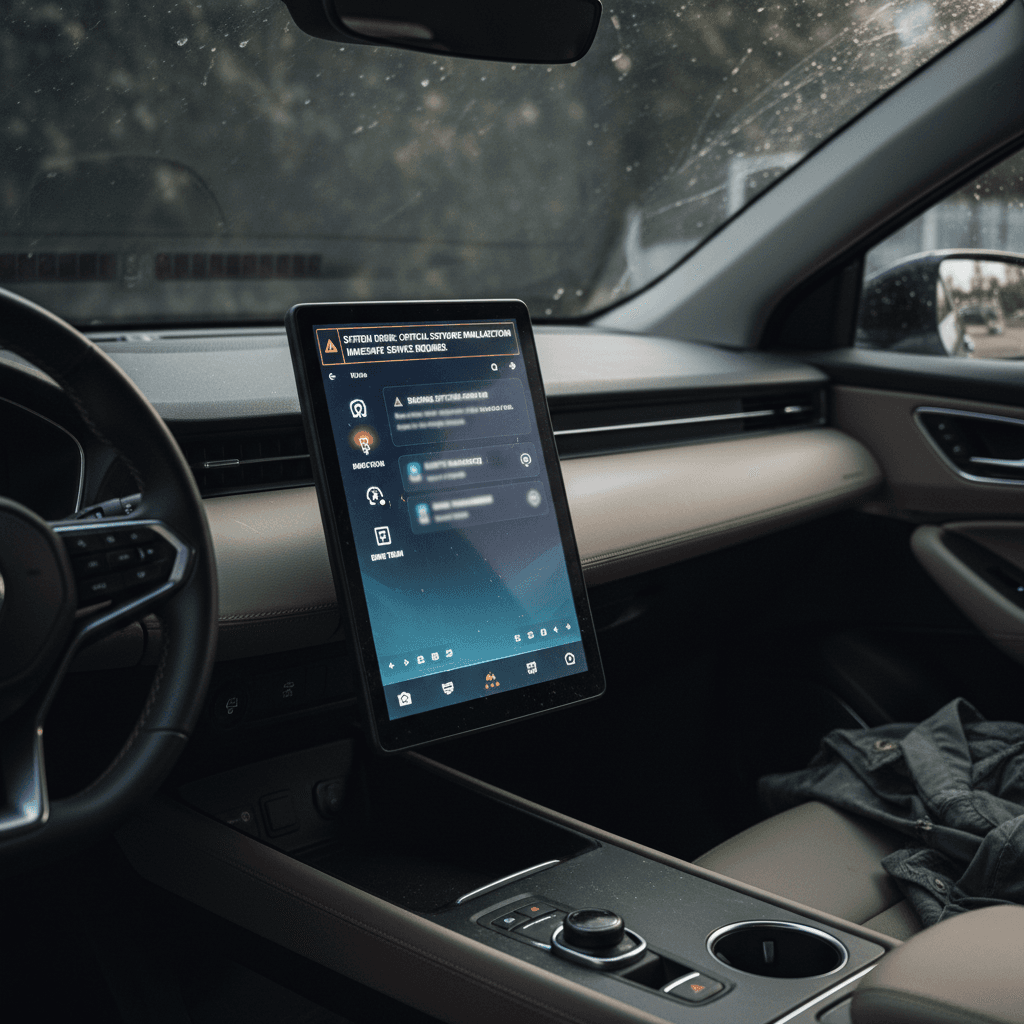
Common Day‑to‑Day Frustrations on the 2023 Ocean
Individually small, collectively exhausting if you rely on the car every day.
Key fob & locking issues
Regen & drive modes
Infotainment glitches
Advanced driver‑assistance systems (ADAS) have also been a sore spot. Some owners have described blind‑spot monitoring and lane‑keeping functions that appear one day and vanish the next, or advertised features like adaptive cruise control that exist on the steering wheel buttons but not yet in the software.
Why ADAS glitches matter more than a flaky radio
Battery, Range and Charging: Are They a Weak Point?
Compared with its software and support story, the 2023 Fisker Ocean’s core EV fundamentals are actually competitive. Higher trims launched with range estimates around 350 miles when new, and many owners report that real‑world efficiency is in line with other midsize electric SUVs when driven reasonably.
- DC fast‑charging speeds that are respectable but not class‑leading
- AC charging that fits typical home Level 2 setups
- Some complaints about 12‑volt battery failures and related lock‑in issues
- Limited public‑charging ecosystem support and fewer third‑party ownership tools than more established brands
Battery health vs. brand health
If you’re shopping used, focus less on the original EPA rating and more on the specific car in front of you: current range at typical state of charge, how often it’s been fast‑charged, and whether any battery‑related errors have appeared on the instrument cluster or app.
Ownership Risks After Bankruptcy: Parts, Service and Updates
For most modern EVs, when something breaks you book a service visit through an app or local dealer and the rest is logistics. With a 2023 Fisker Ocean, that assumption doesn’t hold. You’re dependent on a patchwork of independent repair shops, third‑party apps, and a passionate but unofficial owner community.
1. Software and connectivity
The Ocean relies heavily on cloud‑connected services for features like remote access, app‑based locking and some diagnostics. After Fisker’s collapse, maintaining those back‑end systems became a negotiation between asset buyers and owner groups.
Some third‑party apps now restore lost functions, but they’re community or startup projects, not guaranteed, long‑term OEM platforms.
2. Parts & repair
Simple wear items like tires and wiper blades are easy; proprietary body and electronic parts are another story. Expect longer waits, creative sourcing and, in some cases, the need to ship your vehicle to a specialist familiar with the Ocean.
All of that translates into higher inconvenience risk, even if the cash cost of individual repairs is reasonable.
The uncomfortable truth about orphan vehicles
This is where working with an EV‑specialized retailer matters. At Recharged, every used EV is evaluated with a Recharged Score that looks beyond cosmetics and odometer readings to assess battery health and real‑world supportability. With an orphan brand like Fisker, that kind of independent assessment is critical.
Used 2023 Fisker Ocean Buying Checklist
If you’re still intrigued by the Ocean’s design or pricing, treat your purchase like a high‑stakes inspection rather than an impulse buy. Here’s a structured checklist to work through before you sign anything.
Step‑By‑Step: Evaluating a Used 2023 Fisker Ocean
1. Verify recall completion
Use the VIN to check for open recalls, then match those against service invoices. Confirm that the door‑handle and braking‑related repairs were completed and that the issues haven’t resurfaced.
2. Test every door and handle repeatedly
From outside and inside, open all four doors multiple times. Try with the car locked/unlocked, in different temperatures if possible. Any sticking, excessive force or intermittent behavior is a red flag.
3. Stress‑test the key fobs and app
Lock and unlock the car many times in a row using both fob and app. Walk away, return, and confirm the vehicle recognizes you reliably. Ask how often the fob batteries have been changed.
4. Put the software through its paces
Rotate the center screen, switch driving modes, adjust climate settings, start and stop navigation and media. Watch for freezes, reboots, missing features and warning messages. If possible, note the software version and research known issues for that build.
5. Evaluate driver‑assistance features
On a safe test route, gently verify that blind‑spot monitoring, lane‑keeping, and any available adaptive cruise behave consistently. If a feature is advertised in the listing but not present in the menus, ask why.
6. Measure real‑world range
Start at a known state of charge, drive a fixed distance at typical speeds, and see how many percentage points you use. This gives a rough sense of current battery health versus expectations for that trim.
7. Probe service history and support
Ask for all service records and specifically about any loss‑of‑power incidents, 12‑volt battery replacements, or repeated software visits. Then ask where the seller expects future service to be handled.
8. Get an independent EV inspection
If you’re serious about the car, invest in an inspection from an EV‑savvy shop, or work with a marketplace like <strong>Recharged</strong> that provides a third‑party battery and health report up front.
How a Recharged Score can help
Ready to find your next EV?
Browse VehiclesAlternatives to a Used Fisker Ocean
If what draws you to the Ocean is its mix of range, design and price, you do have lower‑risk options among used mainstream EVs. They may not match every quirk or feature, but they’ll offer better support and long‑term confidence.
Lower‑Risk Alternatives With Similar Missions
Used EVs that deliver practicality and range without orphan‑brand anxiety.
Tesla Model Y (used)
Hyundai Ioniq 5 / Kia EV6
Ford Mustang Mach‑E
Use Ocean pricing to your advantage
FAQ: 2023 Fisker Ocean Problems
Frequently Asked Questions About 2023 Fisker Ocean Problems
Bottom Line: Is a Used 2023 Fisker Ocean Worth It?
The 2023 Fisker Ocean is one of the most polarizing EVs on the used market. On one hand, it delivers standout design, competitive range and a genuinely enjoyable driving experience when everything is working as intended. On the other, it carries a history of software bugs, recalls, shaky customer support, and the very real complication of being an orphaned vehicle after Fisker’s bankruptcy.
If you’re a risk‑tolerant enthusiast who understands the trade‑offs, has access to an EV‑savvy shop, and can secure the car at a deep discount, a 2023 Ocean can still make sense as a calculated gamble. But if you’re looking for a low‑drama daily driver with strong institutional support, you’re better served by a used Model Y, Ioniq 5, EV6, Mach‑E or other mainstream EV from a stable brand.
Whichever path you choose, don’t let the sticker price be your only guide. Focus on battery health, serviceability, and long‑term ownership costs. Platforms like Recharged are built to make that evaluation easier, combining verified diagnostics, fair pricing, financing options and EV‑specialist guidance so you can enjoy the benefits of electric driving without unwanted surprises.