If you’re eyeing a used 2023 Chevy Bolt EUV, you’ve probably heard two competing stories: on one hand, it’s one of the best-value EVs of the last few years; on the other, you remember the early Bolt battery-fire headlines. This guide walks through the real-world 2023 Chevy Bolt EUV problems, how the 2023 model differs from earlier years, and what you should look for if you’re buying one used.
Bottom line up front
How Reliable Is the 2023 Chevy Bolt EUV?
Let’s start with the big picture. Independent reliability data shows the 2023 Bolt EUV scoring better than the average new car in overall reliability among 2023 models. Surveys of owners highlight only modest trouble spots in areas like in-car electronics, climate control, and minor body hardware, while critical systems such as the electric motor, battery pack, and drive system perform well over the first few years of ownership.
2023 Chevy Bolt EUV at a Glance
How to read reliability scores
Battery Problems & Recalls: Did 2023 Bolts Fix the Fire Issue?
Earlier Chevy Bolt EVs (2017–2022) were hit with a very public battery-fire recall that involved replacing packs across multiple years. Understandably, that history hovers over every used Bolt listing. The crucial detail for shoppers: 2023 Bolt EUV models were built after GM reworked the battery supply and quality processes, and there has been no broad battery-fire recall on the 2023 model year to date.
- 2023 Bolt EUV packs come from the post-recall production run with updated quality controls.
- There is still the possibility of individual battery defects (and occasional one-off replacements), but not a systemic safety defect like earlier years experienced.
- GM backs the high-voltage battery with a long warranty, typically 8 years/100,000 miles in the U.S., often longer in certain EV-friendly states.
Don’t confuse “replaced battery” with “bad car”
Most Common 2023 Chevy Bolt EUV Problems
Dig through owner forums, complaint databases, and real-world mileage reports, and a pattern emerges. The typical 2023 Chevy Bolt EUV problems fall into a few buckets rather than a single glaring flaw:
Where 2023 Bolt EUV Owners Report Issues
From most to least common in day-to-day complaints
1. Software & Infotainment
Glitchy Android Auto/Apple CarPlay, frozen screens, odd warning messages, and the occasional "ghost" check-engine light that clears on its own.
2. Driver Assistance Tech
Forward collision warning acting too aggressively, lane-keep assist ping-ponging, or Super Cruise map/software hiccups on Premier models.
3. Charging Behavior
Slow or inconsistent DC fast-charging speeds, session interruptions at some public stations, and confusion around charge limits or scheduling.
4. Noises & Squeaks
Cold-weather steering squeaks, interior rattles, and general NVH (noise, vibration, harshness) complaints that don’t affect drivability.
5. Build & Trim
Piano-black interior plastics that scratch easily, misaligned panels or hood latches, and the occasional weatherstrip or seal noise.
6. One-Off Mechanical Issues
Isolated cases of coolant or pump failures, brake component issues, or a car that "bricks" and needs warranty repair, rare, but attention-grabbing when they happen.
Context matters
Software, Infotainment & Electronics Glitches
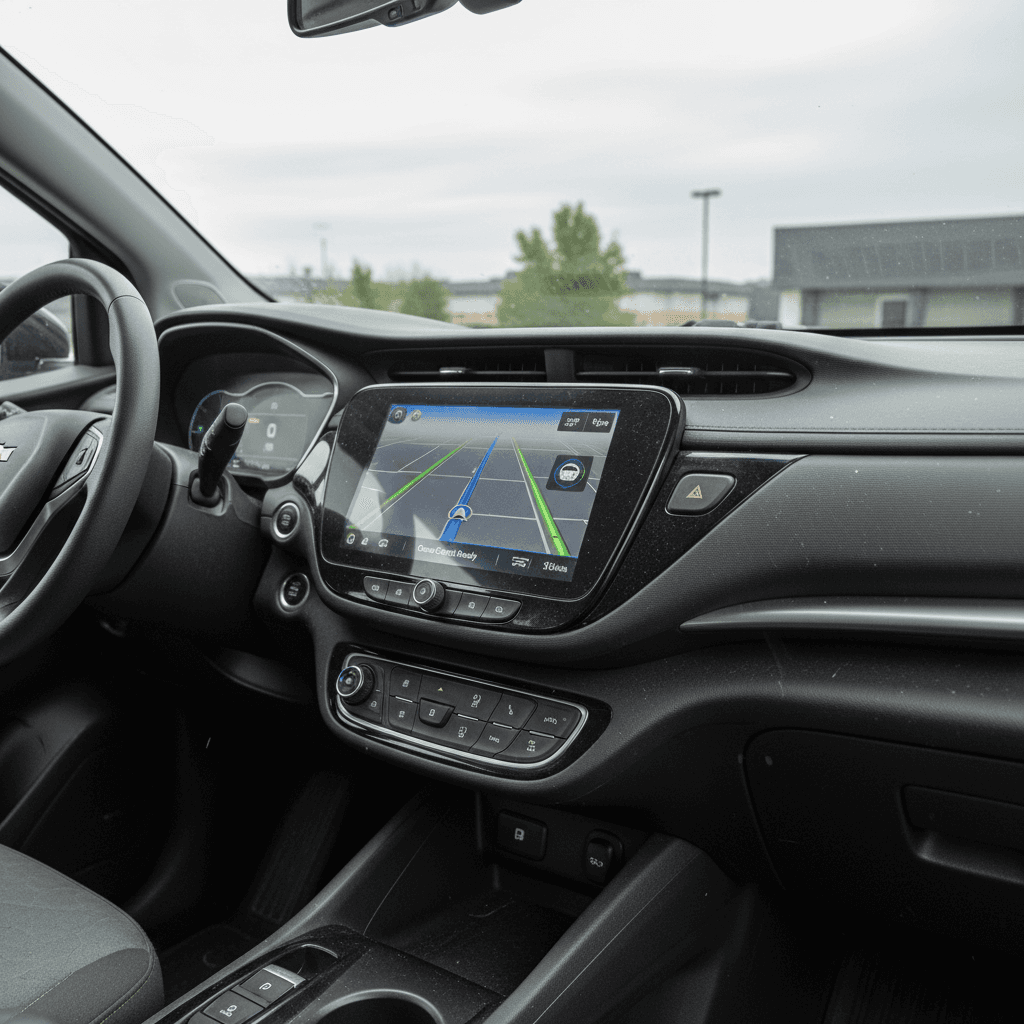
Like most modern EVs, the 2023 Bolt EUV is a rolling software platform. That’s a blessing when updates fix bugs over the air, and a curse when the car wakes up cranky. Owners most often complain about in-car electronics rather than mechanical failures.
- Touchscreen lag, freezes, or random reboots of the infotainment system.
- Android Auto and Apple CarPlay dropouts or failure to connect, especially after a phone OS update.
- Backup camera or parking sensors occasionally failing to display or throwing a warning.
- Mysterious error messages (for example, “conditions not correct for shift” or “propulsion power reduced”) that clear after a restart but scare the daylights out of new EV drivers.
First line of defense: soft reset & updates
Forward Collision, Super Cruise & Driver-Assist Issues
On the Premier and Redline trims with more advanced driver assistance, some owners report that the helpful robots in the front bumper get a little overexcited. Complaints center around forward collision warnings, automatic emergency braking, lane-keeping assist, and, on equipped cars, GM’s Super Cruise hands-free system.
Common Driver-Assistance Complaints on the 2023 Bolt EUV
What owners report, and what it usually means in practice
| System | Typical Complaint | Severity for Safety | What to Do |
|---|---|---|---|
| Forward Collision / AEB | Too-sensitive warnings, unnecessary brief braking when nothing obvious is ahead. | Moderate | Have sensors inspected and software updated; keep windshield and sensor areas clean. |
| Lane Keep Assist | “Ping-ponging” within the lane or tugging at the wheel on curves. | Low–Moderate | Treat it as a gentle helper, not autopilot. Disable on tricky roads if it feels intrusive. |
| Super Cruise (Premier) | Map updates not installing correctly, system unavailable on mapped roads. | Low | Dealer software update usually resolves; confirm subscription and map data status. |
| Traction / Stability Control | Warning lights after hitting rough patches or snow/ice. | Low–High | If lights persist, get codes read; a sensor, wheel-speed, or brake issue may be at fault. |
None of these are universal; many owners report smooth operation. But when they appear, they’re highly noticeable.
Don’t outsource your situational awareness
Charging & DC Fast-Charging Quirks
Every EV has a charging personality. The Bolt EUV’s reputation is for being predictable rather than blazing fast, but 2023 owners still report a few charging-related problems worth understanding.
- Conservative DC fast-charging curve: The Bolt EUV rarely lives in the social-media brag zone of 150–250 kW. Think more in terms of time-to-80% than peak numbers, and plan highway charging stops around meals and breaks.
- Station compatibility issues: Some reports of public DC fast chargers stopping sessions early, negotiating at lower power than expected, or refusing to start until the connector is reseated. Often the culprit is the station, not the car, but it feels the same to you on a road trip.
- Onboard charger and Level 2: Home and workplace Level 2 charging is usually drama-free. If you’re seeing repeated charge faults, try a different EVSE and have the car’s charge port inspected for damage or debris.
- Software-limited charge: Charge limits, scheduled departure, and off-peak settings can confuse new owners and look like a problem when the car is just obeying your last menu tap.
Test fast charging before you buy (if you can)
Build Quality: Squeaks, Noises & Interior Wear
The 2023 Bolt EUV is not a luxury car. It’s a cleverly packaged, value-forward EV wearing a mainstream Chevy badge, and the interior plastics, seals, and trim remind you of that when the weather turns cold or the road surface gets choppy.
- Cold-weather steering squeaks: Owners from multiple model years, including EUVs, report a rubbery squeak when turning the wheel in cold or wet conditions. Annoying, yes. Dangerous, no. Some dealers apply lubricant or replace components; others shrug.
- Interior rattles and buzzes: Common culprits include the hatch area, center console, and door panels. Often fixable with felt tape, clip replacements, or a patient technician who’s willing to chase noises.
- Piano-black trim scratching: The shiny black plastic around the center stack and console looks great in photos and terrible after a year of keys, phones, and dust. Light scratches are cosmetic, but if this kind of wear bothers you, plan for a wrap or trim protectors.
- Hood latches and weatherstrips: A few 2023 owners report hood-latch replacements or adjustments and wind noise from door seals. Again, more nuisance than safety issue, but something to test-drive for on the highway.
The upside: EV hardware holds up well
What to Check When Buying a Used 2023 Chevy Bolt EUV
Shopping used is where you really feel the tension between the Bolt EUV’s value and its past headlines. The good news: a smart inspection narrows your risk dramatically. Here’s how to interrogate a used 2023 Bolt EUV before you let it into your driveway.
Used 2023 Bolt EUV Buyer’s Checklist
1. Run the VIN for recalls & service history
Verify there are <strong>no open recalls</strong> and ask for dealer service records. Pay attention to any repeated visits for the same complaint (especially electronics or charging).
2. Inspect battery health data
Use an EV-specific battery test, like the <strong>Recharged Score battery health diagnostic</strong>, or at minimum compare the car’s current full-charge range estimate to its original 247-mile rating, factoring in temperature and driving history.
3. Road-test the driver aids
On your test drive, deliberately engage adaptive cruise (if equipped), lane keep, and forward collision warning. You’re looking for consistent behavior, not overreactive braking or warning lights that stay on.
4. Listen for squeaks, rattles & wind noise
Take the car onto a rough road and then up to highway speeds. Note any steering squeak, hatch rattles, or wind noise around doors and mirrors. These are often fixable, but they’re negotiating leverage.
5. Test Level 2 and (ideally) DC fast charging
Confirm the included charge cable works, then, if possible, visit a public DC fast charger. A healthy car should start and maintain a charge without throwing repeated errors or dropping to single-digit kW instantly at moderate state of charge.
6. Scan for warning lights and stored codes
Before purchase, ask the seller or dealer to scan for <strong>stored diagnostic codes</strong>, even if no lights are on. Recurrent codes for propulsion, charging, or driver-assist modules warrant deeper investigation.
Why a third-party battery report matters
Ownership Tips to Prevent or Reduce Problems
Once you own a 2023 Bolt EUV, the goal is to keep it in the boring, reliable majority and out of the “my car died at a fast charger” minority. A lot of that comes down to habits: how you charge, how you update, and how quickly you act on warning signs.
Charging & Battery Care
- Aim for 20–80% for daily use where practical, especially if you DC fast charge often.
- Don’t fear DC fast charging, but avoid habitually charging from near-empty to 100% at high power in extreme heat.
- Keep the charge port clean; inspect the pins and gasket for damage before every road trip.
- Use scheduled charging to align with off-peak rates and give the pack time to precondition before departure in cold weather.
Software & Maintenance
- Stay current on software, have the dealer check for updates during tire rotations or annual inspections.
- Document every glitch with dates, mileage, and photos; patterns help technicians fix the root cause.
- Respect the 12‑volt battery; many EV weirdnesses start with a weak accessory battery. Replace it proactively at the first sign of trouble.
- Use a trusted EV-aware shop for tires and brakes; they’ll understand regen braking and proper lift points.
Don’t ignore “reduced propulsion” messages
How Recharged Helps With Used 2023 Bolt EUVs
If you like the 2023 Bolt EUV on paper but feel wary about getting stuck with someone else’s experiment, that’s exactly the gap Recharged is built to close. We focus on used EVs, and the Bolt EUV is one of the star players in that universe, when you have the right data.
Buying a Used 2023 Bolt EUV Through Recharged
More transparency, less guesswork
Verified Battery Health
Every Recharged vehicle comes with a Recharged Score Report that includes battery diagnostics, charge behavior, and real-world range indicators, so you’re not buying blind.
Problem & Recall Screening
We check for open recalls, repeat problem patterns in service history, and warning lights before a car is listed. Questionable vehicles simply don’t make the cut.
Financing & Delivery
Recharged offers EV-friendly financing options, trade-in support, and nationwide delivery, plus an Experience Center in Richmond, VA if you want an in-person walkthrough.
Ready to find your next EV?
Browse VehiclesHuman help, not just a listing
FAQ: 2023 Chevy Bolt EUV Problems & Reliability
Frequently Asked Questions About 2023 Bolt EUV Problems
The 2023 Chevy Bolt EUV lives in a strange place: it carries the baggage of earlier Bolt battery recalls but not the defect itself, while quietly racking up high-mileage success stories with relatively few serious problems. If you understand its quirks, conservative fast charging, software that occasionally needs a reboot, and build quality that’s more practical than plush, a well-vetted 2023 Bolt EUV can be one of the smartest used EV buys on the market. The key is data: know the battery, know the history, and don’t be shy about walking away from a sketchy example in favor of one with a clean report and a transparent seller.