If you’re eyeing a used luxury EV, the 2023 Cadillac Lyriq is probably on your short list, and so are questions about 2023 Cadillac Lyriq problems. As Cadillac’s first Ultium-based EV, it mixes striking design and smooth performance with some predictable first-year teething issues. The good news: many are software-related and fixable. The bad news: they can still be disruptive if you buy the wrong example or skip a careful pre‑purchase check.
A first-year EV with growing pains
Overview: How Worried Should You Be About 2023 Lyriq Problems?
Let’s put things in perspective. Industry data shows that 2023-model-year vehicles, across brands, have seen more issues than in years past, driven largely by infotainment and over‑the‑air software hiccups, not mechanical failures. The Lyriq follows this pattern. Owners report a mix of nuisance bugs (frozen screens, app glitches) and more serious concerns (charging interruptions, driver-assistance malfunctions), but widespread catastrophic failures are not the norm.
If you’re considering a used 2023 Lyriq, you’re weighing three things: - How common and severe the known issues actually are - Whether software updates and recalls have addressed them - How to buy a specific car whose history suggests it’ll be trouble‑free for years We’ll walk through all three, and I’ll flag exactly what to ask a seller or dealer before you sign.
Big-Picture Reliability: What the Data and Owners Say
How the 2023 Lyriq Stacks Up
Owner feedback on the 2023 Lyriq is polarized: some drivers report near‑perfect experiences over tens of thousands of miles, while others describe repeated visits for software, charging, or driver-assist issues. That kind of spread is typical of a first‑year EV. The pattern that emerges is clear: well‑maintained, fully updated Lyriqs tend to be very satisfying to live with, while cars that miss key updates or bounce between dealers can be far more frustrating.
Focus on the individual car, not the averages
Most Common 2023 Cadillac Lyriq Problems
While every vehicle is different, owner forums, reviews, and service bulletins point to a few recurring 2023 Cadillac Lyriq issues. Think of these not as automatic deal‑breakers, but as items you should test and verify during a pre‑purchase inspection.
Charging Problems: Home, Public, and DC Fast Charging
The Lyriq’s Ultium battery pack itself has not been the source of widespread failures, but the charging experience hasn’t been flawless. Common complaints include: - AC home charging that stops unexpectedly or fluctuates wildly in power - "Charge later" or scheduled charging that fails to start or repeatedly trips the breaker or home station - DC fast charging sessions that quickly drop from high power (100+ kW) to very low rates or cut off entirely, especially on longer road trips - Early overheating reports on DC fast charge, sometimes "fixed" by software that quietly limits power instead of truly resolving the root cause
Watch for unstable charging behavior
Some of these issues have been linked to buggy interactions between the Lyriq and GM’s own Ultium home chargers or certain third‑party EVSEs. Others stem from onboard charging software that needed updates. Dealers have replaced suspect wallboxes, applied software fixes to the onboard charger, or updated battery‑related control modules to improve fast‑charge behavior, but results can vary.
Software, Infotainment, and Driver-Assist Glitches
Like many modern EVs, the 2023 Lyriq leans heavily on software. That’s both a strength and a weakness. Owners have reported: - Main display or instrument cluster going black or freezing until the next restart - Audio system bugs, odd chimes, or loss of sound - Navigation or camera views failing to load, or features like surround vision disabled until an update - Over‑the‑air (OTA) updates that fail mid‑install or require a dealer visit to complete - Driver‑assist systems, adaptive cruise, lane‑centering, even emergency braking, temporarily unavailable or throwing fault messages
On some early 2023s, higher‑end features such as Super Cruise and 360‑degree cameras arrived via later software campaigns. Not every update has gone smoothly. In a few documented cases, owners experienced multiple driver-assistance failures and safety‑system warnings that led to repeated dealer visits and lengthy repair stays. Many of those cases were ultimately traced to faulty calibrations or control modules rather than hardware failures, but from an owner’s point of view, the downtime is what hurts.
Take driver-assist warnings seriously
Build Quality, Hardware, and Early-Production Quirks
Beyond software, 2023 Lyriq owners have flagged a handful of traditional hardware issues, most of them minor but annoying: - Power liftgate or trunk that stops working or won’t latch correctly - Squeaks and rattles in the cabin, especially around the dash or panoramic roof - Occasional water leaks or wind noise around doors and glass - Misaligned trim, imperfect paint, or interior panel fitment on early production builds
To Cadillac’s credit, many of these are addressed under warranty with adjustments or part replacements. Still, you’ll want to approach any 2023 Lyriq with the mindset you’d use on a first‑model‑year luxury car: inspect carefully, test every powered feature, and document anything that doesn’t feel right so it can be handled before the sale or under warranty.
Key Recalls and Service Campaigns on 2023 Lyriq
Because the Lyriq was Cadillac’s first Ultium-based EV, GM has issued several recalls and service campaigns aimed at improving charging behavior, software stability, and driver-assistance performance. Exact campaigns vary by build date and configuration, but they’ve included: - Programming updates for the battery energy control module (BECM) to address DC fast‑charge overheating and warning messages - Software updates for driver-assist and safety systems, including Super Cruise and surround‑view cameras - Fixes for infotainment and OTA‑update reliability - Hardware checks or updates on charging components and high‑voltage systems in specific VIN ranges
Always run a VIN recall check
A recall is not a reason to dismiss a car outright. In fact, a vehicle that has had all its major software and hardware campaigns done by a competent dealer can be a better long‑term bet than one that’s never been back in the shop. The key is making sure the car you’re considering is fully up to date today.
Should You Avoid Early 2023 Lyriq Builds?
Not every 2023 Lyriq is created equal. Cadillac ramped up production over the model year, and the earliest builds saw the roughest edges. That doesn’t mean every early VIN is trouble, but it does mean you should be extra careful if you’re looking at one built in the first months of production.
Early-build 2023 Lyriq
- More likely to have incomplete software at delivery.
- Higher odds of infotainment, driver-assist, or charging bugs that required later updates.
- Possibly subject to more service bulletins and campaigns.
- Can be a good value if all fixes are documented and the car behaves cleanly today.
Later-build 2023 Lyriq
- More factory updates baked in from day one.
- Owners often report fewer and less severe issues.
- Still benefits from the latest software, but usually needs fewer major campaigns.
- Typically commands a price premium over earlier builds.
Ask for the build date
Buying a Used 2023 Cadillac Lyriq: Checklist
If you’re looking at a used Lyriq, you’re not just buying a luxury crossover, you’re buying someone else’s software history. Here’s a practical checklist you can follow at any dealership or with a private seller. At Recharged, our EV‑specialist team follows a similar playbook and condenses the results into a Recharged Score Report so you don’t have to guess.
Pre-Purchase Checklist for a 2023 Lyriq
1. Confirm recall and campaign completion
Ask the seller for a full print‑out of completed recalls and service campaigns. Pay particular attention to any battery, charging, or driver-assist updates. If something’s still open, have it handled before delivery.
2. Verify current software versions
From the infotainment menus, note software and map versions. Ask the service department (or a Recharged advisor) whether the car is on the latest approved build and whether any updates have failed in the past.
3. Test home-style Level 2 charging
If possible, plug the Lyriq into a 32–48A Level 2 charger for at least 30–45 minutes. Watch for stable current, no unexplained session drops, and a cord that’s warm but not excessively hot.
4. Run a real DC fast-charge test
On a nearly empty battery, connect to a reputable DC fast charger. The Lyriq should quickly ramp up, then taper gradually. Sudden drops to very low power or early session termination are warning signs.
5. Exercise every driver-assist feature
On a safe, marked road, test adaptive cruise, lane‑keeping, and, if equipped, Super Cruise. You want clean engagement, stable operation, and no lingering fault messages afterwards.
6. Check all cameras and park aids
Cycle through rear, surround, and front views. Confirm parking sensors, cross‑traffic alerts, and blind‑spot warnings work consistently. These are common trouble spots on tech‑heavy vehicles.
7. Inspect build quality inside and out
Look closely at panel gaps, paint, weatherstripping, and interior trim. Listen for rattles on a rough‑road test drive. Cosmetic issues aren’t deal‑breakers, but they can hint at how carefully the car was assembled or repaired.
8. Review a battery health report
For any used EV, request an independent battery health evaluation, not just a guess at range. Recharged includes a verified <strong>Recharged Score battery report</strong> so you know how the pack is aging before you buy.
How Recharged simplifies this process
Ready to find your next EV?
Browse Vehicles
Battery Health, Range, and Ultium Pack Longevity
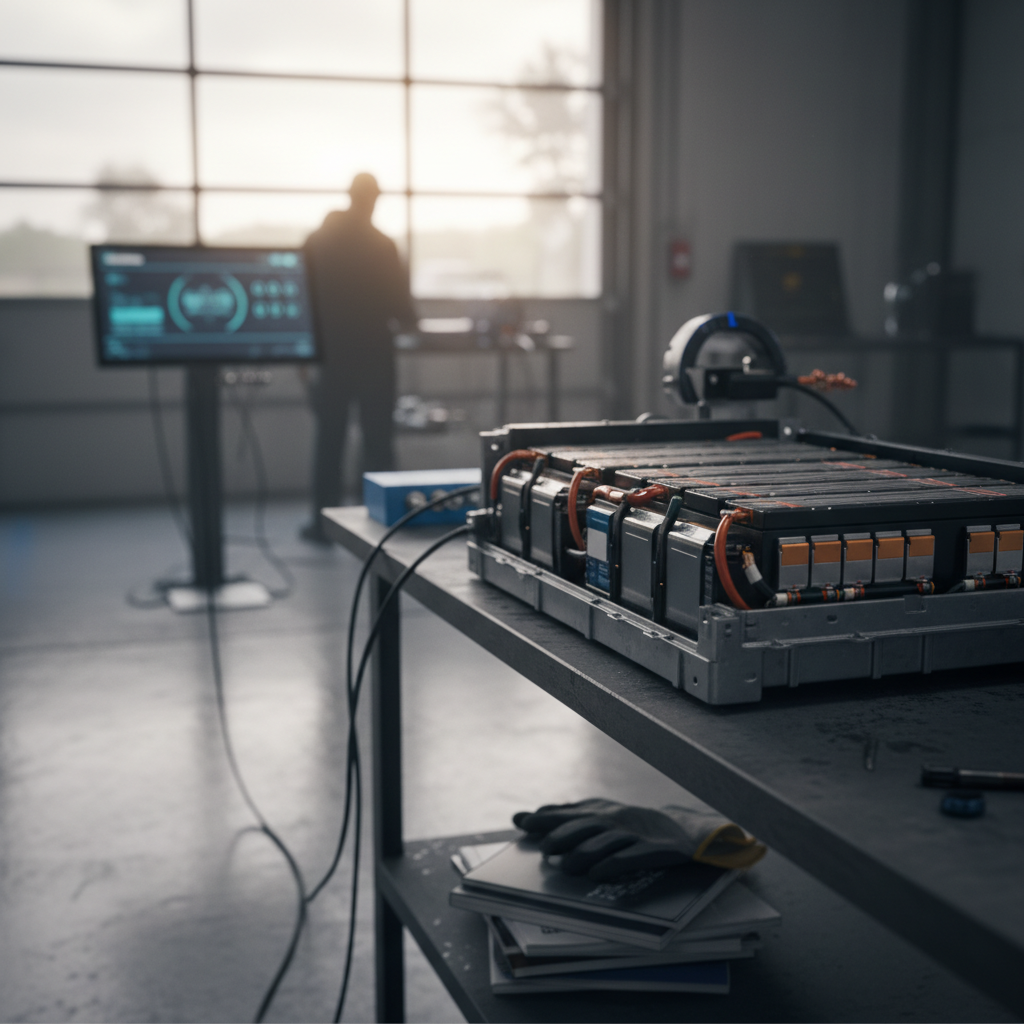
So far, the 2023 Lyriq’s Ultium pack hasn’t generated the kind of widespread battery‑pack failures that doom a used EV’s value. Most concerns center on charging control and thermal management software, not on the cells themselves. That’s encouraging if you’re shopping used, but you still want to approach battery health with clear eyes.
- Real‑world range can vary significantly with climate, driving style, and wheel/tire choice, even on a healthy pack.
- Repeated DC fast charging is unlikely to "kill" the pack overnight, but heavy fast‑charge use can accelerate degradation over many years.
- Software updates can change both indicated range and charging curves, so compare current range estimates with original EPA ratings only as a rough guide.
- A professional diagnostic scan and capacity test provide a far clearer picture than a quick glance at the dash.
Use data, not guesswork, on battery health
Cost of Ownership: Warranty, Repairs, and Depreciation
The 2023 Lyriq sits in an interesting place for used buyers: as a first‑year luxury EV, it has already taken a substantial initial depreciation hit, yet demand for stylish, long‑range electric crossovers keeps resale values relatively strong. That can work in your favor if you find a well‑cared‑for example at the right price.
Key Ownership Cost Factors for a Used 2023 Lyriq
Balance warranty coverage, expected repairs, and long‑term value.
Factory warranty coverage
Out-of-pocket repair risk
Depreciation and resale
Budget for occasional dealer visits
FAQ: 2023 Cadillac Lyriq Problems & Shopping Tips
Frequently Asked Questions
Bottom Line: Is a 2023 Lyriq a Smart Used EV Buy?
The 2023 Cadillac Lyriq is not a perfect EV, but very few first‑generation luxury electrics are. Its most notable problems cluster around software, charging behavior, and early‑build quirks rather than fundamental mechanical flaws. For a patient, informed used buyer, that can be good news: you have a chance to capture a lot of luxury and range for less money, as long as you avoid cars with persistent glitches or incomplete updates.
If you’re comfortable doing some homework, or letting a specialist do it for you, a 2023 Lyriq that passes a thorough charging test, shows clean diagnostic reports, and has its recalls handled can be a rewarding long‑term partner. If you’d rather not become your own service advisor, consider working with a dedicated EV retailer like Recharged, where every vehicle comes with a transparent Recharged Score Report, verified battery health, and support from people who live and breathe electric vehicles every day.