If you’re eyeing a 2023 Audi e-tron GT, you’re probably wondering how far it really goes on a charge, not just on paper, but in the real world. Officially, the 2023 e-tron GT is rated at 238 miles of EPA range, with the hotter RS version at 232 miles. In independent highway tests, though, it has proven it can do better. This range test guide breaks down what to expect day to day, how conditions affect your numbers, and what used shoppers should look for in a battery‑powered Audi flagship.
Key takeaway
Battery, EPA range and what they really mean
Before you dive into any 2023 Audi e-tron GT range test results, it helps to understand what’s behind the numbers. Every 2023 e-tron GT uses a large 93.4 kWh battery pack with about 83.7 kWh usable energy. That pack runs on an 800‑volt architecture shared with the Porsche Taycan, which allows very high DC fast‑charging speeds and consistent power delivery over long highway drives.
- EPA combined range rating: 238 miles for the e-tron GT quattro, 232 miles for the RS e-tron GT.
- EPA efficiency rating: 82 MPGe combined (about 41 kWh/100 miles).
- Battery: 93.4 kWh gross, 83.7 kWh usable; 800‑volt system designed for repeated fast charging.
- On-board AC charger: 11 kW (240V Level 2), roughly 9–11 hours from empty to full at home.
EPA range is measured on a standardized test cycle. It’s a good comparison tool, but it rarely matches what an individual driver will see. Temperature, speed, elevation, wheel choice and how hard you lean on that instant electric torque can easily move your real‑world range up or down by 10–25% from the label.
2023 e-tron GT battery & range at a glance
Don’t compare EPA to WLTP directly
2023 Audi e-tron GT range test results
Independent highway testing has been kinder to the 2023 Audi e-tron GT than the EPA label would suggest. In a well‑documented 75‑mph real‑world test, both the standard e-tron GT and the RS version slightly beat their EPA ratings, each covering about 240 miles on a single charge, roughly 1–3% more than the combined estimate.
2023 Audi e-tron GT range test vs EPA
How EPA ratings compare to independent 75‑mph highway tests.
| Model | EPA combined range | Observed highway range (75 mph) | Difference | EPA combined efficiency |
|---|---|---|---|---|
| e-tron GT quattro | 238 miles | ≈240 miles | +2 miles (+1%) | 82 MPGe |
| RS e-tron GT | 232 miles | ≈240 miles | +8 miles (+3%) | 81 MPGe |
Actual numbers will vary, but this gives a realistic benchmark for planning trips.
In practice, that means a healthy 2023 e-tron GT can generally deliver 215–260 miles on a full charge, depending on your mix of city and highway driving, weather, and how often you use its performance. Owners who mostly drive in town at moderate speeds often report efficiency that would support 260+ miles on a mild day, while sustained 80‑mph interstate runs in winter can drag usable range closer to 200 miles.
Realistic planning buffer
How driving conditions change your range
The 2023 Audi e-tron GT is a genuinely quick grand‑touring EV, and that performance comes with some trade‑offs. The car’s weight, sticky tires and dual‑motor powertrain all affect efficiency, especially at higher speeds. Here’s how different factors typically move the needle during a range test.
What hurts (or helps) your 2023 e-tron GT range
Think in terms of +/- miles vs the 238‑mile EPA rating.
Cold weather
Temperatures below ~40°F can shave 15–25% off your range, especially on short trips.
- Battery warms up slowly.
- Cabin heat uses lots of energy.
- Preconditioning helps a lot.
High speeds
Sitting at 75–80 mph instead of 65 mph is one of the biggest range killers.
- Expect 10–20% less range on fast interstates.
- The sleek aero helps, but weight and power matter.
City cruising
City and suburban driving with light traffic often beats EPA.
- Regenerative braking recovers energy.
- Smoother, slower driving means less drag.
Hills & elevation
Long climbs increase consumption, but descents give some back.
- Plan extra buffer in the mountains.
- Use strong regen modes downhill.
Wheel & tire choice
Larger wheels and stickier tires boost grip but usually cut range.
- Sportier setups can cost 10–15 miles.
- Check your car’s wheel size when comparing tests.
Payload & towing
Cargo and passengers add weight and hurt efficiency a bit.
- Roof boxes are worse than trunk luggage.
- Towing can dramatically reduce range, plan frequent fast charges.
Winter road‑trip watch‑out
Charging speeds and planning longer trips
Range is only half the story. The 2023 Audi e-tron GT’s 800‑volt system is built for very fast DC charging, which makes the car feel more capable on road trips than the raw EPA number suggests. Audi quotes a maximum of about 270 kW on compatible ultra‑fast chargers and a 5–80% session in a little over 20 minutes under ideal conditions.
2023 e-tron GT charging overview
Approximate charging times and what they mean for real‑world use.
| Charging type | Power | 0–100% (approx.) | Best use case |
|---|---|---|---|
| Level 1 (120V wall outlet) | 1–1.4 kW | 2–3 days | Emergency top‑ups; not practical as a primary solution. |
| Level 2 home / workplace | 11 kW onboard | 9–11 hours | Overnight charging from low state of charge. |
| Public DC fast (150 kW) | ~150 kW peak | 5–80% in ~30–35 min | Highway stops where 270‑kW units aren’t available. |
| High‑power DC (250–270 kW) | Up to ~270 kW | 5–80% in ~22–23 min | Best case: add 150–180 miles on a coffee or lunch stop. |
Actual times vary by charger, state of charge and temperature, but these figures are a solid planning baseline.
On a long trip, it’s more efficient to charge in the middle of the battery, say from 10–15% up to 60–80%, than to top off all the way to 100%. That’s where the e-tron GT pulls the most power from the charger. In real‑world terms, you’re often looking at 150–180 miles of added range in about 20–25 minutes on a strong DC fast charger.
Good news for frequent drivers
Efficiency tips to match or beat test results
The 2023 Audi e-tron GT is tuned to be engaging first and hyper‑efficient second, but you can still get impressive range if you drive with a bit of intent. Simple behavior changes can easily swing your consumption by 10–20%, which is the difference between stopping early and making it to the charger you actually prefer.
Six quick ways to stretch your 2023 e-tron GT’s range
None of these kill the fun, but they all help the numbers.
Use Efficiency mode
For daily commuting, swap into the car’s most efficient drive mode.
- Softens throttle response.
- Optimizes climate control.
- Can add 10–20 miles of range over a long day.
Watch your speed
Highway aero drag climbs quickly above 70 mph.
- Driving at 65–70 mph instead of 80 mph can save 10–15% energy.
- On a 240‑mile trip, that’s 20–30 extra miles.
Smart climate use
Cabin heat is a major draw in cold weather.
- Precondition while plugged in.
- Use seat and wheel heaters instead of blasting air.
- In mild weather, try Eco HVAC settings.
Leverage regen
Adjust regenerative braking to suit traffic.
- Use stronger regen in stop‑and‑go.
- Let the car slow itself downhill instead of coasting in Neutral.
Plan smoother routes
Stop‑and‑go traffic and steep climbs both hurt range.
- Sometimes a slightly longer but steadier route uses less energy.
- Combine errands to avoid multiple cold starts.
Tire & maintenance basics
Low tire pressure and worn tires kill efficiency.
- Check PSI monthly, especially with temperature swings.
- Stick with EV‑rated tires when replacing.
Track your own baseline
Used 2023 e-tron GT: what to know about range
With 2023 models already flowing into the used market, the e-tron GT is becoming an intriguing alternative to new luxury EVs. Range remains one of the top questions for used shoppers, and it’s smart to focus on how the car has been treated, not just the odometer. High‑powered fast charging and performance use are what this car is built for, but poor charging habits over time can nibble at usable capacity.
Battery health & degradation
A well‑cared‑for 2023 Audi e-tron GT should retain the majority of its usable capacity through the first 5–8 years, especially if the previous owner kept daily charges around 70–90% and limited deep discharges.
- Look for any sign of abrupt range loss or repeated battery warnings in the vehicle history.
- A small drop from the original 238‑mile label is normal; a big drop isn’t.
- Audi’s battery warranty (8 years or 100,000 miles in the U.S.) adds a backstop for major issues.
How Recharged approaches used e-tron GTs
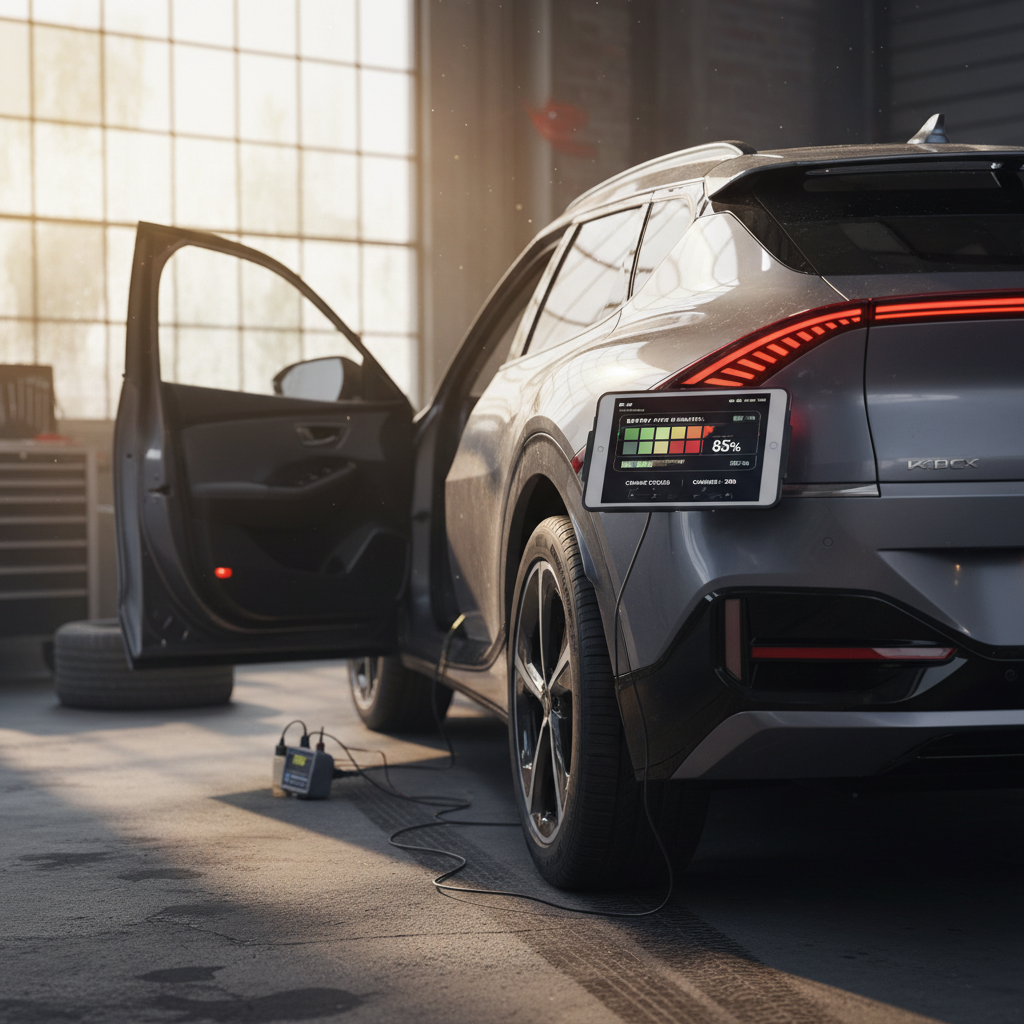
At Recharged, every used EV, including the 2023 e-tron GT, comes with a Recharged Score and battery health report, so you can see how much usable capacity the pack still has.
- Independent battery diagnostics beyond the dash guess‑o‑meter.
- Fair‑market pricing that reflects real range and condition.
- EV‑specialist support that can explain what the numbers mean in plain language.
If you’re trading in a performance EV, Recharged can also provide an instant offer or consignment listing, plus nationwide delivery for buyers who find “their” e-tron GT online.
Used 2023 Audi e-tron GT range & battery checklist
1. Compare indicated range at 100% to EPA
Fully charge the car during a test drive or ask for a photo. The projected range at 100% won’t be perfect, but if it’s dramatically below 200 miles on a mild day, dig deeper into battery health.
2. Review charging history, if available
Ask how often the car was DC fast charged vs home‑charged, and whether it regularly sat at 100%. Occasional long trips are normal; daily DC fast charging without reason is a red flag.
3. Inspect tires and wheels
Oversized or aggressive performance tires may look great but can knock range down. Factor that into your expectations and potential replacement plans.
4. Match range to your lifestyle
List your longest regular drives. If your typical week rarely exceeds 150–180 miles between easy charging opportunities, the e-tron GT’s usable range is more than sufficient.
5. Ask for a third‑party battery report
If you’re not buying through Recharged, consider an independent EV inspection to validate pack health, especially on higher‑mileage 2023 cars.
6. Confirm warranty status
Check in‑service date and mileage so you know how much battery and powertrain coverage remains.
FAQ: 2023 Audi e-tron GT range questions
Frequently asked questions about the 2023 e-tron GT’s range
Bottom line: Is the 2023 e-tron GT’s range enough?
If you’re shopping for maximum range at any cost, the 2023 Audi e-tron GT isn’t the top of the spec sheet. But that’s not really its mission. In real‑world range tests, it reliably matches or edges past its 238‑mile EPA rating, and its rapid DC charging makes up ground on long trips. For drivers who value design, dynamics and charging performance over a huge headline range number, and whose regular routes sit well below 200 miles between easy charging options, the 2023 e-tron GT is more than up to the task.
If you’re considering a used 2023 e-tron GT, pay close attention to battery health and how the car was driven and charged. That’s where Recharged can help. Every vehicle listed on our platform comes with a Recharged Score battery health report, transparent pricing and EV‑savvy guidance from first click to delivery. That way, when you take your own “range test” on day one, the results match the expectations you had when you signed the papers.