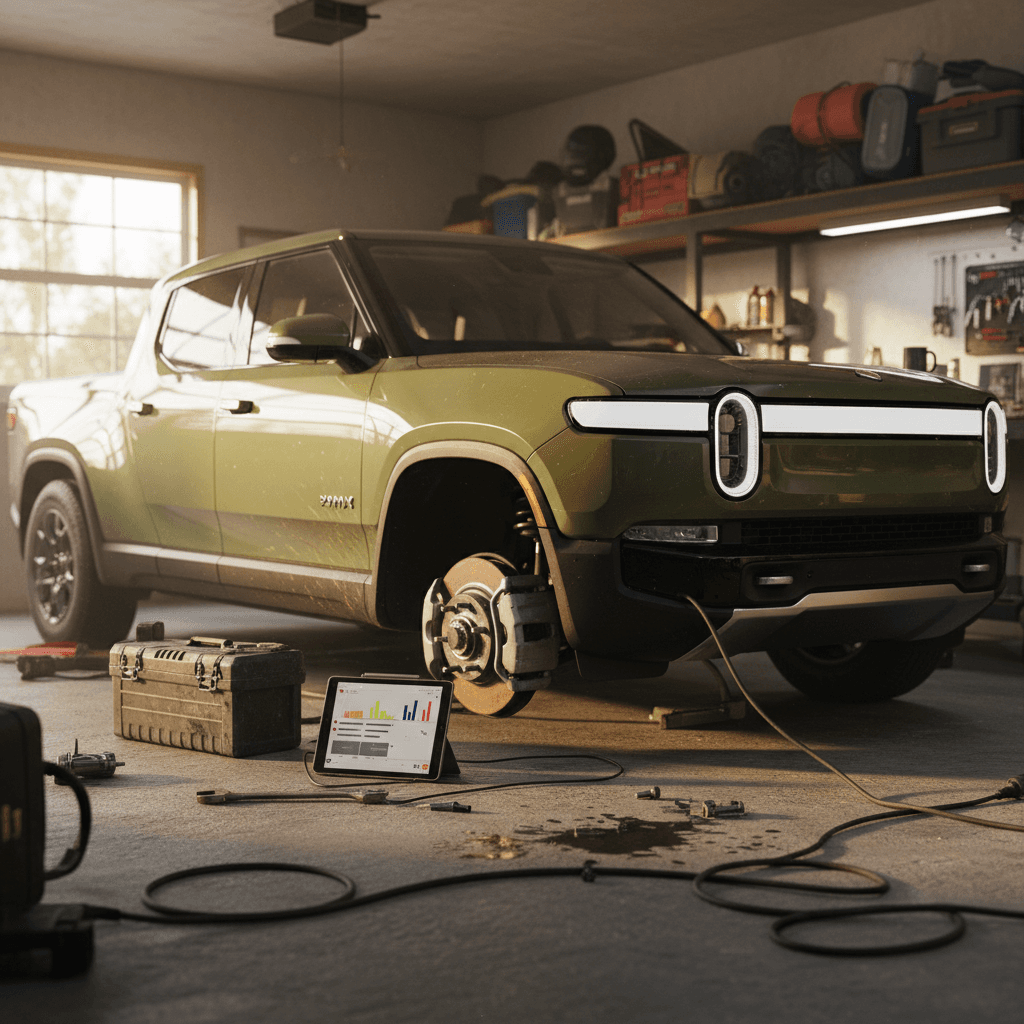
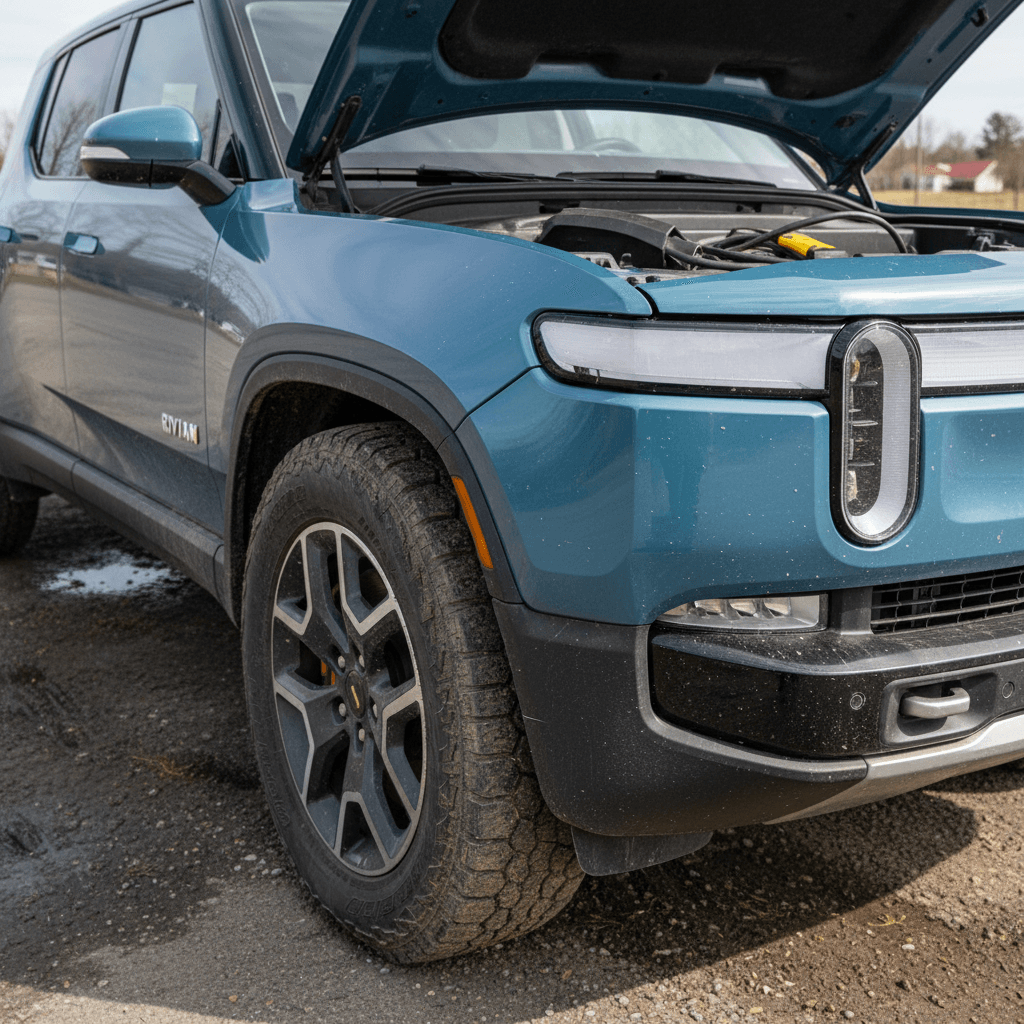
If you’re eyeing a 2022 Rivian R1T, you’ve probably heard horror stories and love letters in equal measure. Early trucks from a brand‑new automaker were always going to have teething pains, and the 2022 R1T is no exception. The good news: most 2022 Rivian R1T problems and fixes are now well understood, parts have been redesigned, and many issues are already covered by recalls or warranty work.
Early-build vs. later 2022 trucks
Overview: 2022 Rivian R1T problems and fixes
2022 Rivian R1T at a glance
Across owner forums, reliability surveys, and long‑term media tests, a pattern has emerged. The 2022 R1T is not a disaster, but it’s not as trouble‑free as a well‑sorted, decade‑old gas pickup either. The truck’s problems cluster in a few big buckets: build quality and trim, suspension and ride‑height hardware, electrical/12V systems, and software or driver‑assist quirks. We’ll walk through each, explain how the issues show up, and what owners and shops are doing to fix them.
How bad is it really? Reliability snapshot for 2022 R1T
What owners report
- Some 2022 R1T owners have sailed past 40,000–50,000 miles with nothing but minor tweaks and recalls.
- Others have seen their trucks in the shop half a dozen times in the first year for things like half‑shaft noise, sensor faults, or trim fixes.
- Service delays and parts shortages can turn small problems into big inconveniences if you rely on the truck as your only vehicle.
How to read that as a buyer
- This is an early, complex EV truck from a newcomer brand. Expect more visits to service than a typical used Toyota, but not necessarily more serious failures.
- Many of the worst early parts, half‑shafts, seals, sensors, some suspension components, have updated replacements that largely solve the issue.
- On a used 2022, the key question isn’t “Has it had problems?” but “Have the right fixes already been done?”
Pro tip for peace of mind
Quick checklist: Before you buy or schedule service
Fast checks for 2022 R1T owners and shoppers
1. Run the VIN for recalls
Use Rivian’s account portal or NHTSA’s recall lookup to confirm every safety recall on the 2022 R1T has been performed. Pay special attention to steering/suspension, seatbelts, and software‑related recalls.
2. Inspect panel gaps and trim
Walk the truck slowly. Look at hood, doors, tailgate, and tonneau cover for uneven gaps, rubbing, paint chips at edges, and loose trim or weather‑seals. These are common and fixable, but you want them documented.
3. Listen for clicks and hums while driving
On a test drive, do full‑lock turns in a parking lot and a highway run. Listen for front‑end clicking under load and low‑frequency hum or vibration at steady speed, both can hint at half‑shaft or hub issues.
4. Watch the dash for warnings
Any time you power up the truck, scan the cluster for 12V battery warnings, suspension errors, airbag or seatbelt alerts, and driver‑assist faults. Take photos; they help service diagnose intermittent issues.
5. Test everything that moves
Check powered tonneau cover (if equipped), frunk and tailgate, windows, mirrors, powered gear tunnel doors, seat adjusters, and charge port door repeatedly. Inconsistent operation now is a future service visit.
6. Verify charging and range behavior
Plug into both DC fast charging and AC Level 2 if possible. Confirm normal charge speeds for your pack and realistic highway range for your driving, abnormal behavior can suggest battery, software, or cooling issues.
Build quality and trim issues
If you’ve seen early R1Ts in person, you’ve probably noticed the panel gaps before you even pop the frunk. Body alignment, paint nibs, and weather‑seal fit were weak spots on many 2022 trucks, especially early builds. The good news: they’re rarely safety issues, but they can be annoying, and expensive, if you’re out of warranty.
Typical 2022 R1T build-quality problems and fixes
Panel gaps & misalignment
What you’ll see: Uneven gaps around doors, hood, tailgate, or charge door. Sometimes panels lightly rub, chipping paint at the corners.
Typical fix: Rivian service can often realign panels and adjust latches. In more severe cases, they may replace trim or seals and repaint chipped edges.
Buyer tip: A truck that’s already had gap and paint work documented by Rivian is often better than one that clearly needs it but hasn’t been touched.
Paint quality & chips
What you’ll see: Small paint defects from the factory, plus chips around the wheel arches and rocker panels from off‑road use or gravel.
Typical fix: Factory defects may be handled by Rivian under warranty. Rocker protection film or mud flaps help prevent new damage; cosmetic fixes can be handled by a good body shop.
Water leaks & wind noise
What you’ll see: Occasional reports of water intrusion around doors, rear glass, or the gear tunnel, and wind noise from mis‑seated seals.
Typical fix: Rivian often replaces updated door or glass seals, reseals weather‑stripping, and adjusts latching points. Catching this early protects interior materials.
Powered tonneau cover trouble
Suspension, half-shafts, and ride-height sensors
Underneath the glossy off‑road marketing, the R1T is a heavy, very quick electric truck with complex air suspension. That’s a recipe for noise and wear if early hardware isn’t quite right. Many 2022 owners have reported front‑end clicks, suspension thumps, or ride‑height errors that require updated parts.
Common 2022 R1T suspension and driveline complaints
How owners describe the issues, and what usually fixes them.
| Symptom | Where you notice it | Likely cause | Typical fix |
|---|---|---|---|
| Clicking or clunking on acceleration/turn-in | Parking lot U‑turns, pulling out of driveways | Front half‑shaft or CV joint wear on early parts | Replacement with updated half‑shafts and related hardware; alignment check |
| Low-speed knocking over bumps | Neighborhood streets, rough roads | Loose or worn suspension links or bushings | Inspection, torque check, and replacement of noisy links/bushings |
| "Vehicle too low" or height errors | Randomly at start-up or after parking | Ride-height sensor or air suspension sensor faults | Sensor replacement, recalibration of air suspension system |
| Uneven tire wear, feathering | After 10,000–20,000 miles | Alignment out of spec, sometimes after suspension work | Four‑wheel alignment, suspension check; rotate tires more frequently on heavy EVs |
How to test on a drive
Electrical problems, 12V battery, and warning messages
Like most modern EVs, the R1T uses a high‑voltage pack to move the truck and a smaller 12‑volt battery and low‑voltage system to run computers, contactors, and accessories. On some 2022 trucks, that low‑voltage side has been a trouble spot, showing 12V battery warnings or odd error cascades that leave the truck undriveable until it’s rebooted or towed.
Typical electrical issues on 2022 R1T
12V battery warnings
What happens: You may see messages about the 12V battery needing service or replacement, along with limited features or reduced drive readiness.
Likely fix: Rivian service can test and replace the 12V batteries and, importantly, reset or reinitialize the battery control module so the new battery profile is recognized.
Owner move: Take screenshots of every warning and note temperatures and how long the truck sat, those clues help pinpoint whether it’s hardware or software.
Random warning cascades
What happens: A flurry of unrelated warnings, brakes, suspension, driver assist, sometimes resolves with a restart but may come back.
Likely fix: This can stem from a low‑voltage power hiccup or a failing module. Service will pull logs, check grounds and connectors, and update firmware. Intermittent cases may need component replacement.
Seatbelt/airbag sensor faults
What happens: Some 2022 R1Ts were affected by seat sensor and airbag‑related issues that triggered warning lights.
Likely fix: Many of these were handled through recalls and technical service bulletins, with updated sensors or harnesses installed by Rivian.
Don’t ignore 12V warnings
Software glitches, infotainment and driver-assist systems
Rivian leans heavily on software to give the R1T its character: big touchscreen, elaborate drive modes, OTA updates, and increasingly sophisticated driver‑assist features. For the most part, that’s a plus, 2022 trucks are meaningfully better now than they were when they left the factory. But software also drives a lot of the day‑to‑day annoyances owners report.
- Touchscreen freezes or reboots while driving, usually fixed with a soft reset or the next update.
- Bluetooth or phone key misbehavior: intermittent lock/unlock, dropped connections, or slow app response.
- Glitchy navigation or route planning, especially in areas with spotty data coverage.
- Driver‑assist quirks, such as lane keeping getting confused by poor lane markings or temporary construction zones.
The upside of software-heavy trucks
Charging behavior and battery health on 2022 R1T
With any used EV, one of the first questions is, "How’s the battery?" The encouraging news so far: owners of 2022 R1Ts with 30,000–50,000 miles commonly report little to no noticeable long‑term range loss in day‑to‑day use. That lines up with what we’ve seen at Recharged when we run our battery diagnostics on early Rivian trucks.
What to watch in charging and range behavior
DC fast charging speeds
Normal: A healthy 2022 R1T will ramp up quickly at a compatible DC fast charger when the pack is warm and low, then taper as it fills.
Red flag: If speeds are dramatically lower than Rivian’s published curves on multiple chargers in good conditions, it’s worth a check for battery cooling or software issues.
Apparent range loss
Normal: Range will swing with temperature, speed, and towing. Cold‑weather drop is not the same as permanent degradation.
Red flag: If the truck’s estimated range at 100% charge has permanently fallen far below original spec, or you can’t achieve even 70–75% of that number in mild weather, ask for a battery‑health report.
Using a battery health report
A professional test, like the Recharged Score battery health report, looks at pack capacity and charging behavior instead of just trusting the dash guess‑o‑meter. It’s one of the best tools you have when evaluating a used 2022 R1T.
Temperature and towing matter
Major recalls 2022 R1T owners should check right away
Because 2022 was Rivian’s first full year of volume production, a cluster of recalls followed as the company discovered issues in the field. The specifics change over time, but several themes have shown up on 2022 R1Ts: steering and suspension fasteners, seatbelt and airbag sensors, and software behavior for driver‑assist and braking systems.
Key recall categories affecting many 2022 R1Ts
Always verify exact recall campaigns by running your VIN, this is a general guide, not a legal list.
| Recall area | Why it matters | What the fix usually involves |
|---|---|---|
| Steering & suspension fasteners | Loose fasteners could affect steering feel or suspension integrity in extreme cases. | Inspection of specific bolts and joints; re‑torque or replacement to updated spec. |
| Seatbelt/airbag sensors | Faulty sensors could affect proper airbag deployment strategy. | Replacement of sensors or wiring harnesses; software updates to validate correct operation. |
| Driver-assist & braking software | Incorrect behavior from hands‑free or automated systems can increase crash risk. | OTA or service‑center software updates, sometimes with new calibration procedures. |
| High-voltage or ground connections (later recalls) | Improperly grounded components can create electrical or safety concerns. | Inspection of high‑voltage ground points; rework or replacement of the affected components if needed. |
If you’re buying used, insist on documentation that these recalls are complete or already scheduled.
Don’t assume recalls are done
Rivian service experience: What to expect
When things do go wrong, your experience will depend heavily on how close you live to a Rivian Service Center or whether you’re covered by mobile service. Owners love the people and the coffee; they’re less thrilled with how long it can take to get an appointment or a part, especially during recall waves.
Strengths owners highlight
- Friendly, EV‑savvy staff who often go above and beyond once your truck is in the bay.
- Mobile service for many issues, saving you a long trip for smaller fixes.
- OTA updates that prevent at least some visits in the first place.
Pain points to plan for
- Appointment slots that can be weeks or months out during busy periods.
- Parts delays on less common components, leaving trucks parked for extended stretches.
- Communication gaps, owners sometimes have to push for clear updates.
Make a backup plan
Buying a used 2022 R1T: What to look for
The right 2022 R1T can be a screaming deal: serious performance, real off‑road chops, and a cabin that still feels fresh in 2026. But you need to separate the trucks that have had their early‑build sins corrected from the ones still waiting to visit the service bay. Here’s how to stack the odds in your favor.
Used 2022 R1T inspection checklist
Confirm build date and configuration
Early‑2022 builds are more likely to have original half‑shafts, tonneau covers, and sensors. Later‑year trucks often left the factory with revisions. Ask the seller for the exact build month and original window sticker if they have it.
Get complete service and recall history
Request Rivian service records and cross‑check against recall campaigns. A truck that’s been in several times for known early issues, and now shows a clean slate, can be a better bet than one with no history at all.
Inspect underbody and off-road wear
Many R1Ts see dirt. Look for scrapes on skid plates, control arms, and battery pack protection. Light cosmetic wear is fine; deep gouges in structural parts are not.
Test drive like you own it
Combine city, highway, and rough pavement. Test all drive modes, pay attention to noises, and verify the truck tracks straight and brakes smoothly. Make sure every warning light stays off after startup.
Check charging and home compatibility
If possible, fast‑charge the truck and also try your home Level 2 setup or a public AC charger. Confirm the truck charges normally and that you have, or can install, the right outlet at home.
Get a third-party battery and health report
A used R1T is a major purchase. A detailed inspection and <strong>Recharged Score battery health report</strong> can flag hidden issues, confirm pack health, and give you leverage if something needs attention before you sign.
Where Recharged fits in
Ready to find your next EV?
Browse VehiclesFAQ: 2022 Rivian R1T problems and fixes
Common questions about 2022 Rivian R1T problems
Bottom line: Is a 2022 R1T worth it?
A 2022 Rivian R1T is not the safe, boring choice. It’s a fast, charismatic electric truck from a young automaker that’s still growing up. That means more quirks, more service visits, and more dependence on over‑the‑air updates than a conventional pickup. It also means a driving experience that owners genuinely love and a used‑market price that can look very tempting compared with a new, similarly capable EV truck.
If you go in with clear eyes, armed with a VIN recall check, a detailed service history, a careful test drive, and ideally a professional battery and health report, a 2022 R1T can be a deeply satisfying buy. If you need a truck that simply disappears into the background, this probably isn’t it. But if you can live with a few early‑adopter battle scars in exchange for serious performance and personality, the right 2022 R1T is worth chasing down.
And if you’d rather not do that detective work alone, Recharged can help. Our EV specialists live in this data every day, our Recharged Score puts numbers behind battery health and value, and we can guide you through financing, trade‑in, and nationwide delivery. That way, you spend less time worrying about 2022 Rivian R1T problems and fixes, and more time enjoying the truck you actually ended up with.