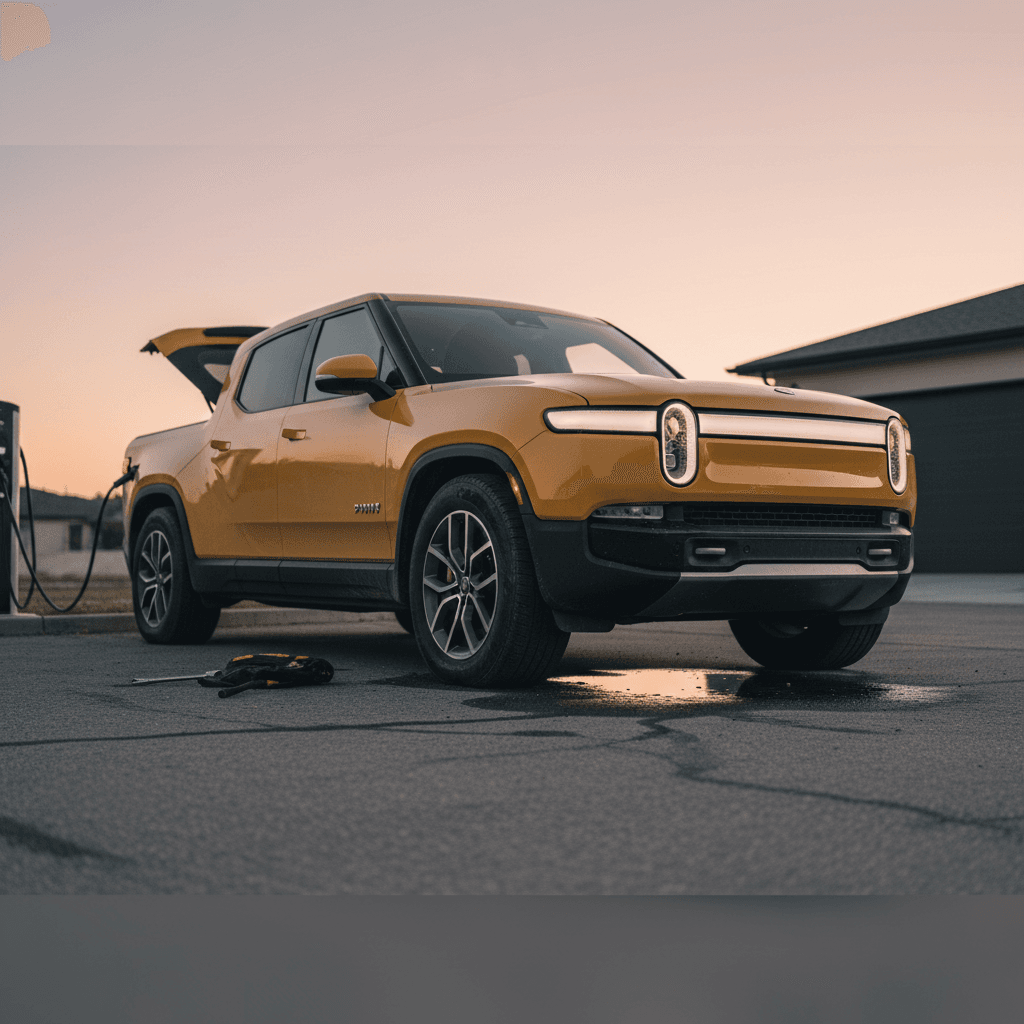
The 2022 Rivian R1T is a first‑generation, first‑model‑year electric pickup from a brand‑new automaker. Of course people are Googling “2022 Rivian R1T problems.” The question isn’t whether early R1Ts had issues, they did. The question is: which issues matter now, what’s been fixed, and how do you shop smart if you’re eyeing a used one?
Early adopter, or rolling beta test?
How the 2022 R1T fits into Rivian’s evolution
Gen 1, 2022 R1T
- First customer trucks delivered late 2021 into 2022.
- Quad‑motor only, large battery pack.
- Most hardware systems essentially v1.0: suspension, seals, interior trim, tonneau cover.
- Many parts quietly superseded in 2023–2024.
Later R1T builds
- Running hardware changes: revised half‑shafts, dampers, seals, interior fasteners.
- Continuous software updates improving efficiency, driver‑assist, UI, phantom drain.
- Gen 2 trucks (2024–2025) brought deeper hardware and electronics revisions, plus new drive units.
Why this matters: an early‑build 2022 R1T that never saw much service can be a very different animal from a later‑2022 truck that’s had updated suspension, seals, and software. When you’re shopping used, you’re buying build date plus service history, not just a model year.
Anecdotal picture of 2022 R1T ownership
Most common 2022 Rivian R1T problems
Where 2022 R1Ts most often misbehave
Based on owner reports, recalls and service patterns
Software & electronics
Suspension & steering
Build quality
Early VINs vs later 2022s
Battery health, range and phantom drain
Good news first: there’s no broad pattern of catastrophic battery failures in 2022 R1Ts. The pack itself is proving robust. Where owners have complained is in range consistency and vampire/phantom drain, how much the truck loses just sitting.
- Many owners report 1–2% battery loss per 24 hours when parked, especially with Gear Guard on and the truck connected to the app regularly.
- Some early trucks saw 4–6% per day until Rivian fixed specific issues (like a mis‑read frunk/hood latch or early firmware).
- Cold weather exaggerates apparent drain because the pack warms itself and state of charge readings swing with temperature.
- Towing, off‑road modes and high speeds drastically cut real‑world range versus the EPA number, this isn’t a Rivian problem so much as EV truck physics.
How to live with phantom drain
If you’re browsing used listings, focus less on drain anecdotes and more on overall pack health. That’s exactly what Recharged’s Recharged Score battery health diagnostics is built to surface: how the actual usable capacity and DC fast‑charge behavior look today, not how the truck felt in a forum post from 2022.
Software bugs and over‑the‑air fixes
Rivian is a software‑heavy automaker in the Tesla mold. That’s a blessing and a curse. Many of the 2022 R1T’s most irritating problems were software bugs that later vanished in an over‑the‑air update, but early owners did live through some rough builds.
- Instrument cluster or center screen rebooting while driving, usually resolving on its own.
- Glitchy camera views: backup camera going fuzzy, delayed or blank until a hard reset.
- Early driver‑assist rough edges, lane centering ping‑ponging, inconsistent traffic‑aware cruise in stop‑and‑go.
- App connectivity hiccups, including delayed climate preconditioning or status updates.
The modern recall: OTA
When you evaluate a 2022 R1T today, the question is less “Did it have bugs in 2022?” and more “Is it on current, stable software now?” A truck that’s been regularly updated and hasn’t been ignoring update prompts will behave very differently from a garage queen that sat on an old firmware for two years.
Suspension and steering issues
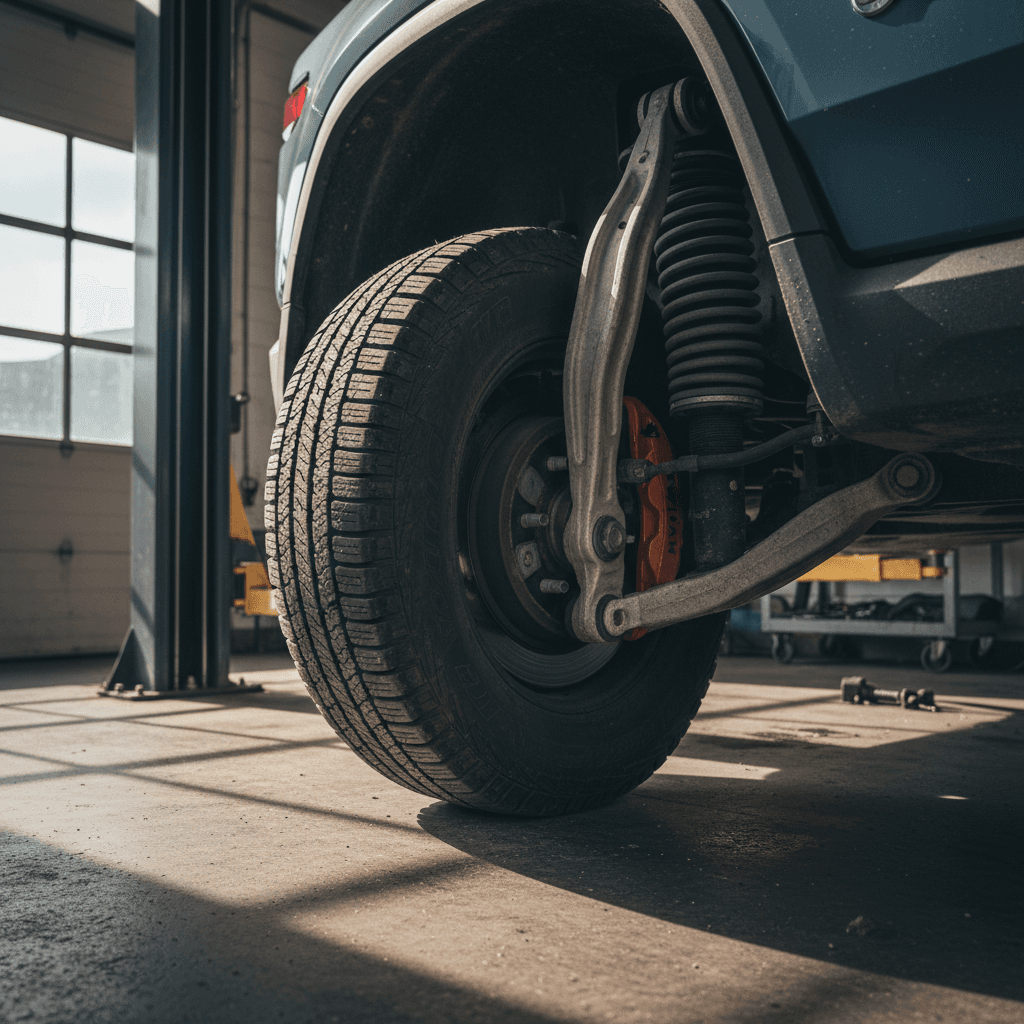
Put 7,000 pounds of battery pickup on clever air suspension and then ask it to go fast, tow, and bomb down washboard trails, it’s not shocking that the 2022 R1T’s suspension became a recurring topic.
Typical 2022 R1T suspension & steering complaints
Not every truck has these issues, but these are the patterns you’ll see in service records.
| Issue | What it feels like | Common root cause | What Rivian usually does |
|---|---|---|---|
| Front half‑shaft clunk or shudder | Clicking or vibration under acceleration, especially at low speed or full lock | Early half‑shaft design and torque loading in Quad‑motor setup | Replaces front half‑shafts with updated parts; rechecks alignment |
| Steering wheel shake at highway speeds | Noticeable vibration at 65–75 mph | Wheel balance, alignment, or early front damper tuning | Rebalances tires, performs alignment; sometimes fits updated Gen 2 dampers |
| Air‑suspension leak or sag | Truck lowers overnight or sits unevenly | Leaky air spring, line or valve block | Replaces affected components and re‑calibrates suspension |
| Rear suspension squeaks/clunks | Noises over bumps or driveway transitions | Bushings, links or incorrectly torqued hardware | Re‑torques or replaces components; checks for related recall work |
Many of these were addressed with revised parts in later service campaigns.
New 2026 recall: rear suspension toe link
The upside: a 2022 R1T that’s had its half‑shafts, dampers and any recall suspension work done is often better than it was new. The downside: if you buy one that’s missed those appointments, you might inherit someone else’s “I’ll deal with it later” noises.
Body, glass and interior rattles
If there’s a leitmotif across launch‑year EV startups, it’s this: build quality takes a couple of years to catch up to the design ambition. Rivian was no exception. Owners of 2022 R1Ts have commonly reported:
- Wind noise from the driver’s window or small front “triangle” glass, sometimes requiring resealing or glass replacement.
- Water leaks around the windshield or fixed glass if early sealant runs weren’t perfect.
- Loose under‑body panels or wheel‑well liners that needed re‑fastening after rough use.
- Door panel and interior trim rattles on rough roads, particularly in the doors, dash, and rear cab area.
- Multiple windshield replacements due to chips and cracks, partly truck geometry, partly luck.
The bright side of early teething
From a buyer’s perspective, you’re not trying to find a 2022 R1T that’s never had a squeak. You’re trying to find one where the squeaks triggered a thorough service visit, and the owner was picky enough to have them addressed properly.
Charging hardware and ports
The R1T’s charging hardware is generally solid, but a few patterns show up among 2022 trucks:
- Occasional DC fast‑charge sessions that ramp slowly or stop unexpectedly, especially on older or finicky third‑party chargers.
- Charge‑port doors that misbehave, sticking, not closing flush, or failing to open reliably in cold weather.
- Rare reports of onboard AC charger faults that required module replacement under warranty.
- Software updates changing charge‑curve behavior, which some owners interpret as a hardware problem when it’s really calibration.
What to test on a test drive
Key recalls affecting 2022 R1T trucks
Rivian has issued several recalls and service campaigns that touch 2022 R1Ts. Many were proactive and OTA‑fixable, but you still want documentation.
Major recall themes for 2022 Rivian R1T
Not an exhaustive VIN‑specific list, always run a VIN check, but these are the big buckets to know about.
| Recall theme | Type of fix | Why it matters for you |
|---|---|---|
| Suspension hardware / rear toe link | Physical inspection and replacement of bolts and/or links at a service center | Prevents the risk of a rear suspension joint separating after prior service work. |
| Steering & control arm / knuckle campaigns (earlier years) | Inspection and re‑torque or replacement of components | Ensures the front end is tight, aligned and safe under heavy loads. |
| Driver‑assist / Hands‑Free Highway Assist bugs (later model years) | Over‑the‑air software update | While primarily affecting newer software builds, 2022 owners benefit from the same safety and behavior updates. |
| Misc. body and latch issues | Service center adjustments or part replacement | Reduces the chance of unexpected hood/frunk warnings or water ingress. |
A clean recall history is a good sign the previous owner stayed engaged with Rivian service.
Always run the VIN
• All open recalls are addressed
• There’s a clear history of service visits, not years of silence
That’s exactly the kind of work Recharged bakes into each vehicle’s Recharged Score Report so you don’t have to play detective.
What to check on a used 2022 Rivian R1T
Used 2022 R1T inspection checklist
1. Build date & VIN range
Ask for the door‑jamb sticker and note the month/year of manufacture. Extremely early 2022 trucks (very low VINs) are more likely to have had long service punch‑lists, good if addressed, concerning if ignored.
2. Suspension noises and stance
On the test drive, listen for clunks, shudders or squeaks over bumps and during low‑speed turns. Park on level ground and step back: the truck should sit level, not leaning or sagging at a corner.
3. Steering and alignment
At highway speeds, the wheel should be steady with no vibration, and the truck should track straight with a light grip. Excessive correction or pull suggests alignment or tire issues, and potentially underlying suspension wear.
4. Wind noise and leaks
On a smooth road, listen around the driver’s window and the small front glass for wind hiss. After a wash or rain, check carpets and headliner for signs of water intrusion.
5. Software status
Sit with the truck in Park and dig through the menus: confirm it’s on current software, all cameras display cleanly, and there are no persistent system warnings or driver‑assist errors.
6. Charging behavior
If possible, plug into both Level 2 and a DC fast charger. Verify smooth connection, reasonable charging speeds for the state of charge and temperature, and no sudden disconnects.
7. Service history documentation
Request a printout or screenshots of the Rivian service history. Look for evidence of recall work, suspension updates, glass/seal fixes and software campaigns, signs of a cared‑for truck.
Beware the silent history
When a 2022 R1T is actually a good buy
Signs of a strong 2022 R1T candidate
- Mid‑range mileage (30k–70k) with consistent service history.
- Documented completion of suspension and recall work.
- Recent software, no active warnings, driver‑assist behaving normally.
- Trim, seals and glass already replaced where they were problematic.
- Battery health confirmed with third‑party diagnostics, not just guesses from the dash.
Red flags to walk away from
- Persistent suspension noises the seller shrugs off as “normal Rivian stuff.”
- Water leaks, heavy wind noise, or obvious glass/seal issues.
- Owner can’t produce any meaningful service records for an early‑build truck.
- Multiple warning lights, especially related to airbags, braking, or high‑voltage systems.
- Fast‑charge sessions that repeatedly fault out on more than one public charger.
How Recharged can de‑risk a 2022 R1T
Ready to find your next EV?
Browse VehiclesFAQ: 2022 Rivian R1T problems
Common questions about 2022 R1T reliability
Bottom line on 2022 R1T reliability
If you want an electric pickup that feels like it was designed by people who camp, climb and read design magazines, the 2022 Rivian R1T remains deeply appealing. It is not, however, a dull appliance. Early trucks asked their owners to be collaborators as Rivian debugged suspension noises, trim, software and phantom drain.
In 2026, the smart move isn’t to fear every “2022 Rivian R1T problems” thread, it’s to read them as a to‑do list. Use them to ask sharper questions, demand better documentation, and insist on a proper inspection of suspension, software and battery health. With that homework done, a well‑sorted 2022 R1T can deliver its full, weird, charming potential without making you feel like an unpaid beta tester.
If you’d rather not decode all of that alone, buying or selling through Recharged wraps the messy parts, battery diagnostics, recall verification, fair‑market pricing and nationwide logistics, into one transparent, EV‑specialist process. That way you can focus on the fun stuff: picking a color, planning the first road trip, and discovering exactly how much torque you really need on a gravel on‑ramp.