If you’re eyeing a 2022 Hyundai Kona Electric, you’ve probably heard about battery recalls, charging headaches, and mysterious warning lights. The good news: 2022 models avoided the worst early‑generation battery problems. The bad news: they still have a few distinct quirks you should understand, especially if you’re buying used. This guide walks you through the most common 2022 Hyundai Kona Electric problems and fixes, so you can shop (and drive) with your eyes open.
Quick take
How Worried Should You Be About a 2022 Kona Electric?
What Hyundai fixed by 2022
- High‑profile battery fire recalls mainly hit 2019–2020 Kona Electric packs. By the 2022 model year, Hyundai had changed cell sourcing and battery quality controls.
- Battery‑management software had gone through multiple updates, improving range estimates and safety monitoring.
- Hardware tweaks to charging and power electronics trickled in from earlier recall and campaign lessons.
What owners still complain about
- Confusing range drops or app‑reported state‑of‑health numbers.
- Slow or inconsistent DC fast‑charging, especially in cold weather or at low state of charge.
- Random infotainment freezes, camera glitches, and one‑off warning messages.
- 12V battery drains that leave the car “dead” despite a full high‑voltage pack.
- Normal but surprising tire wear and road noise for a small crossover with instant torque.
Perspective check
The Biggest 2022 Hyundai Kona Electric Problems
- Perceived or real range loss and confusing battery state‑of‑health readings from apps or OBD tools.
- Slow, inconsistent, or failed DC fast‑charging sessions, especially in cold weather or on specific networks.
- Occasional Level 1/Level 2 charging failures that clear after unplugging or a dealer software update.
- Intermittent infotainment and camera glitches: frozen screens, black backup camera, laggy response.
- Random warning lights or “limited power” messages that vanish on the next restart but shake your confidence.
- 12V battery drains that leave the car unable to “wake up,” even if the main pack is full.
- Normal EV‑related tire wear and some reports of suspension clunks or motor noise at higher mileage.
Before you buy used
Battery Health, Range Drop and True Degradation
The question every used‑EV shopper asks: “Is the battery still good?” For the 2022 Kona Electric, the answer is usually yes, Hyundai’s chemistry and pack quality had matured by this point, but you may see range changes and odd numbers from third‑party apps.
Common 2022 Kona Electric Battery‑Related Concerns
What owners notice, and what it usually means
App‑reported SOH drops
Owners using OBD apps sometimes see state‑of‑health fall into the low‑90% range by 50k–70k miles.
What it often is: How the app interprets Hyundai’s data, or a software update changing the math, not necessarily real, linear degradation.
Range estimate swings
Drivers report the guess‑o‑meter dropping 10–20% from what the car showed when new, especially after winter or lots of highway miles.
What it often is: The algorithm adapting to recent driving, climate control use, and terrain, not pure capacity loss.
Cold‑weather range hit
Near‑freezing temps can slash range noticeably versus summer.
What it is: Normal EV behavior. Cold cells and cabin heat both cost energy, even with a healthy pack.
Battery warranty basics
How to Quickly Evaluate Battery Health on a Test Drive
1. Start with state of charge and range
Note the displayed state of charge (SOC) and estimated range before you set off. A realistic rule of thumb for a healthy 2022 Kona Electric is roughly 230–250 miles at 100% in mild weather with mixed driving.
2. Drive a known loop
Take a 20–30 mile drive that includes some highway and some city streets. Compare miles driven to SOC used. If you drive 25 miles and lose 15%–18% SOC in mild weather, the pack is behaving normally.
3. Watch for power limitation warnings
During moderate acceleration or highway passing, you shouldn’t see power‑limit warnings or sudden loss of oomph. If you do, and the car isn’t at very low SOC, that’s a red flag to have the high‑voltage system scanned.
4. Ask for battery service history
A clean record or a single warranty repair isn’t a concern. Repeated visits for “battery fault” or “won’t charge” that never seem fully resolved are a reason to look harder, or walk away.
DC Fast-Charging and Home Charging Issues
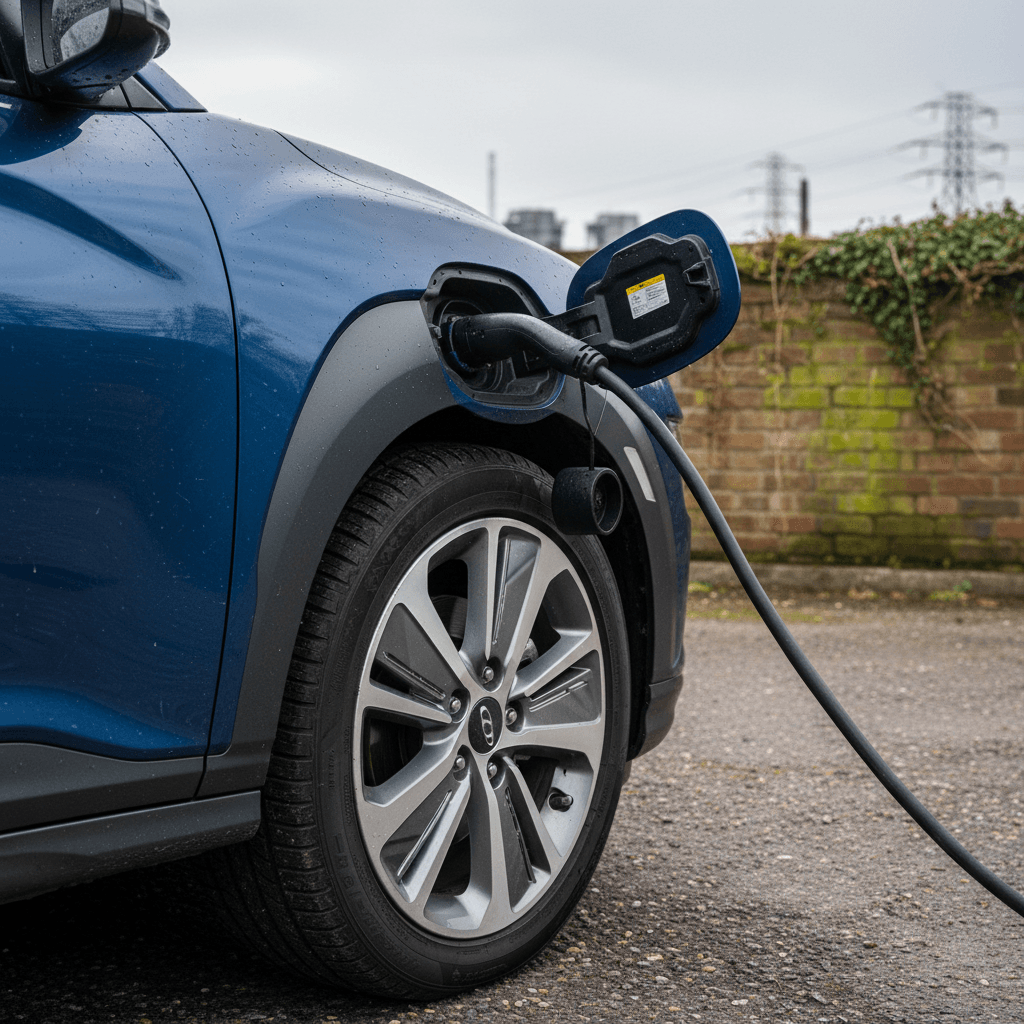
By 2022, the Kona Electric’s charging hardware was fairly mature, but owners still report two main patterns: DC fast‑charging that’s slower than expected, and occasional charge sessions (AC or DC) that simply fail to start until you unplug and try again.
What to Expect from a Healthy 2022 Kona Electric on Charge
Slow DC charging isn’t always the car’s fault
- Session won’t start: Unplug, lock the car, wait 30–60 seconds, and try again. If it becomes a pattern at many stations, ask a Hyundai dealer to check for software updates or fault codes.
- Charge stops early: Inspect the connector for damage or looseness, try another stall, and watch for any dash warnings. If the car stops charging repeatedly at different locations, that’s diagnostic time.
- Home Level 2 quirks: Miswired or undersized circuits can trip breakers or cause the Kona to reduce current. A licensed electrician should confirm you have a dedicated 240V circuit sized correctly for your EVSE.
Best way to test charging on a used Kona
12V Battery Drain and “Dead Car” Complaints
If the high‑voltage pack is the heart of your Kona Electric, the little 12V battery is the ignition switch. A surprising number of owners across Hyundai and Kia EVs, including 2022 Kona Electric drivers, report situations where the car won’t start or “wake up,” even though the main pack is full. The culprit is often a weak or drained 12V battery, or a module that isn’t going to sleep properly.
Typical 12V Battery Problem Symptoms
What you might see in a 2022 Kona Electric
Completely dead car
You press Start and nothing happens, no lights, no chimes. The car may need a jump to power up its systems.
Random warnings, then failure
Strange messages (“Check EV system,” “Power limited”) appear, then the car refuses to go into gear until the 12V is revived.
Parasitic drains
Less common, but some owners and techs have traced drains to modules near the charge port or telematics systems that stay awake, quietly flattening the 12V.
Practical Fixes for 12V Issues on the 2022 Kona Electric
1. Replace the original 12V battery proactively
If you’re buying a 2022 Kona with its factory 12V still in place and the car is more than 3–4 years old, budgeting for a fresh, higher‑quality 12V battery is cheap insurance against no‑start surprises.
2. Check for software updates and TSBs
Hyundai has quietly issued software updates across several EVs to tame 12V behavior. Have a dealer check for open technical service bulletins or software campaigns tied to power management.
3. Rule out simple causes
Short trips, leaving the car powered on, or accessories plugged into 12V/USB sockets can all stress the small battery. Make sure doors and hatch are fully closed and chargers unplug when not in use.
4. Monitor 12V health over time
If you own the car, consider a simple Bluetooth battery monitor. A steady pattern of deep discharges or low resting voltage means it’s time to replace the battery or investigate parasitic drains.
5. Document repeat failures under warranty
If the car repeatedly dies and dealers only replace the 12V without investigating further, insist on deeper diagnostics and keep every repair order. Persistent, unresolved issues are leverage for escalated support.
Electronics, Infotainment Glitches and Warning Lights
Like most modern cars, the 2022 Kona Electric is a rolling computer. The upside is that many issues are software‑fixable. The downside is that you may see odd, intermittent behavior that feels unnerving even when the underlying hardware is fine.
- Infotainment freezes or reboots: The center screen may lock up, lag badly, or restart. Often fixed by a software update, hard reset, or in rare cases, a replacement head unit under warranty.
- Backup camera and sensor quirks: Black screens, delayed camera image, or false parking sensor alerts pop up in owner reports. Dirt, ice, or a marginal camera module are common culprits.
- Random dashboard warnings: Messages about charging faults, limited power, or driver‑assist system errors that vanish on the next restart are usually software or sensor‑calibration blips.
Simple DIY resets to try first
When it’s usually minor
- Glitches that happen once, then disappear after a restart.
- No trouble codes stored when the dealer scans the car.
- Issues clearly tied to weather (fogged or iced‑over sensors).
When to insist on deeper diagnostics
- Repeated “Check EV system” or “Power limited” messages.
- Loss of regen, limp‑home mode, or full loss of drive while underway.
- Warning lights that return immediately after every reset.
Motor Noise, Tire Wear and Suspension Clunks
Strip away the powertrain and the Kona Electric is still a small crossover. That means conventional wear items, tires, brakes, bushings, that age just like they would on a gas Kona, with a few EV‑specific twists.
Common NVH and Wear Complaints
(Noise, vibration, harshness)
“Wheel of misfortune” motor noise
Earlier Konas were known for a distinctive droning or grinding motor noise that sometimes required motor and reduction‑gear replacement. Reports on 2022 cars are rarer but not nonexistent.
Fix: If you hear a rhythmic whine or grinding that changes with speed, have a Hyundai EV‑experienced tech listen. Motor and gear issues are serious but usually covered under powertrain warranty.
Fast front tire wear
Small crossovers with instant EV torque tend to eat through front tires faster than you expect, especially on factory eco‑focused rubber.
Fix: Rotate tires on schedule, budget for higher‑quality replacements, and check for cupping or uneven wear that might signal an alignment issue.
Suspension clunks and rattles
Over bumps, some owners report front‑end clunks as bushings, sway‑bar links, or strut mounts age, more tied to mileage and road quality than to the 2022 model year itself.
Fix: A suspension inspection should pinpoint worn parts. This is standard wear‑and‑tear on any crossover, not a Kona‑only curse.
Recalls, Battery Fire History and Warranty Coverage
If you’ve heard scary headlines about Kona Electric battery fires, those mostly trace back to 2019–2020 cars that used earlier battery cells and were subject to large recall campaigns. By 2022, Hyundai had rolled out revised packs and software, and the high‑profile fire risk story largely moved on. Still, any used EV deserves a recall and warranty status check.
Battery and High‑Voltage System Context for the 2022 Kona Electric
What’s different compared with early‑generation Kona EVs
| Model years | Main issue | Status for 2022 buyers | Your action |
|---|---|---|---|
| 2019–2020 Kona Electric | High‑voltage battery fire risk and battery‑management software faults | Large recalls and battery replacements; most issues specific to earlier packs | If you’re cross‑shopping, confirm battery replacement and recall completion. |
| 2021 Kona Electric | Transition period with updated packs and control logic | Some overlap with earlier campaigns for specific components or software | Run a VIN check and confirm all campaigns are complete. |
| 2022 Kona Electric | Benefited from updated pack design and prior recall lessons | No equivalent, broad battery‑fire recall footprint to early years | Still run a VIN recall search and confirm dealer records are clean. |
Always verify recall and campaign completion by VIN before you buy.
Leverage Hyundai’s EV warranties
Used 2022 Kona Electric Pre‑Purchase Checklist
Whether you’re buying from a neighbor or a professional marketplace like Recharged, the best way to avoid expensive surprises is to put the car through a thoughtful, EV‑specific inspection. Here’s a practical checklist tailored to the 2022 Kona Electric.
2022 Kona Electric Used‑Car Checklist
1. Run a VIN recall and warranty check
Use Hyundai’s official tools or ask the seller for a printout showing open recalls, completed campaigns, and remaining warranty. No paperwork and a vague story? That’s a yellow flag.
2. Review service history for patterns
A single 12V battery replacement or software update is normal. Multiple visits for “won’t start,” “won’t charge,” or “EV system fault” with no clear resolution are cause for caution.
3. Inspect tires and brakes closely
Uneven tire wear can hint at alignment issues or hard use. On a Kona Electric, brake pads often last a long time thanks to regen, so heavily worn pads at modest mileage may signal aggressive driving or lots of stop‑and‑go with little regen use.
4. Listen for motor and suspension noise
On your test drive, turn off the radio and climate fan. At 30–60 mph, you should hear a smooth whir, not a grinding or droning. Over bumps, listen for clunks from the front end.
5. Test all driver‑assist and infotainment features
Try adaptive cruise, lane‑keeping, parking sensors, cameras, and Apple CarPlay/Android Auto. Glitches aren’t always deal‑breakers, but they’re bargaining chips, and sometimes point to modules that need attention.
6. Perform the two‑step charging test
Plug into a Level 2 charger and, if possible, a DC fast‑charger. Verify sessions start smoothly, the car takes expected power, and there are no error messages. This is exactly the kind of EV‑specific test that <strong>Recharged</strong> bakes into our <a href="/articles/what-is-the-recharged-score">Recharged Score battery and charging diagnostics</a>.
7. Confirm keys, telematics and OTA capability
Make sure both keys work, the Hyundai connectivity app can pair if available, and the car accepts updates. That’s your pathway to future bug fixes.
When to Walk Away, and When to Get Help
Red‑flag patterns that justify walking away
- Documented repeat failures of the high‑voltage battery, power electronics, or drive unit.
- Multiple 12V battery deaths with no identified cause, plus parasitic drain notes in dealer records.
- Unresolved charging issues across different stations and cables.
- Structural accident damage near the battery, charge port, or front motor that wasn’t repaired by a qualified EV shop.
When a good car is worth saving
- Minor infotainment bugs or a single frozen screen, often fixed with updates.
- One‑off warning messages that never return and leave no codes.
- Normal range loss after years of highway use and cold winters.
- Tire, brake, or suspension wear that matches the mileage.
If you’re not sure which bucket a particular Kona falls into, a structured inspection and battery‑health check, like the Recharged Score included with every EV on Recharged, can give you an objective read before you commit.
FAQ: 2022 Hyundai Kona Electric Problems and Fixes
Frequently Asked Questions About 2022 Kona Electric Problems
The 2022 Hyundai Kona Electric isn’t the problem‑child its earliest siblings were, but it isn’t flawless either. Most of the issues you’ll hear about, range estimate quirks, slow or inconsistent charging, finicky electronics, and 12V battery drama, are manageable with the right expectations and a careful pre‑purchase check. If you do your homework, insist on solid service history, and put the car through a proper charging and road test, a 2022 Kona Electric can be a thrifty, dependable way into EV ownership. And if you’d rather have experts sweat the details, shopping through Recharged means every used EV comes with a transparent Recharged Score report, verified battery health, and guidance from people who live and breathe electric cars every day.