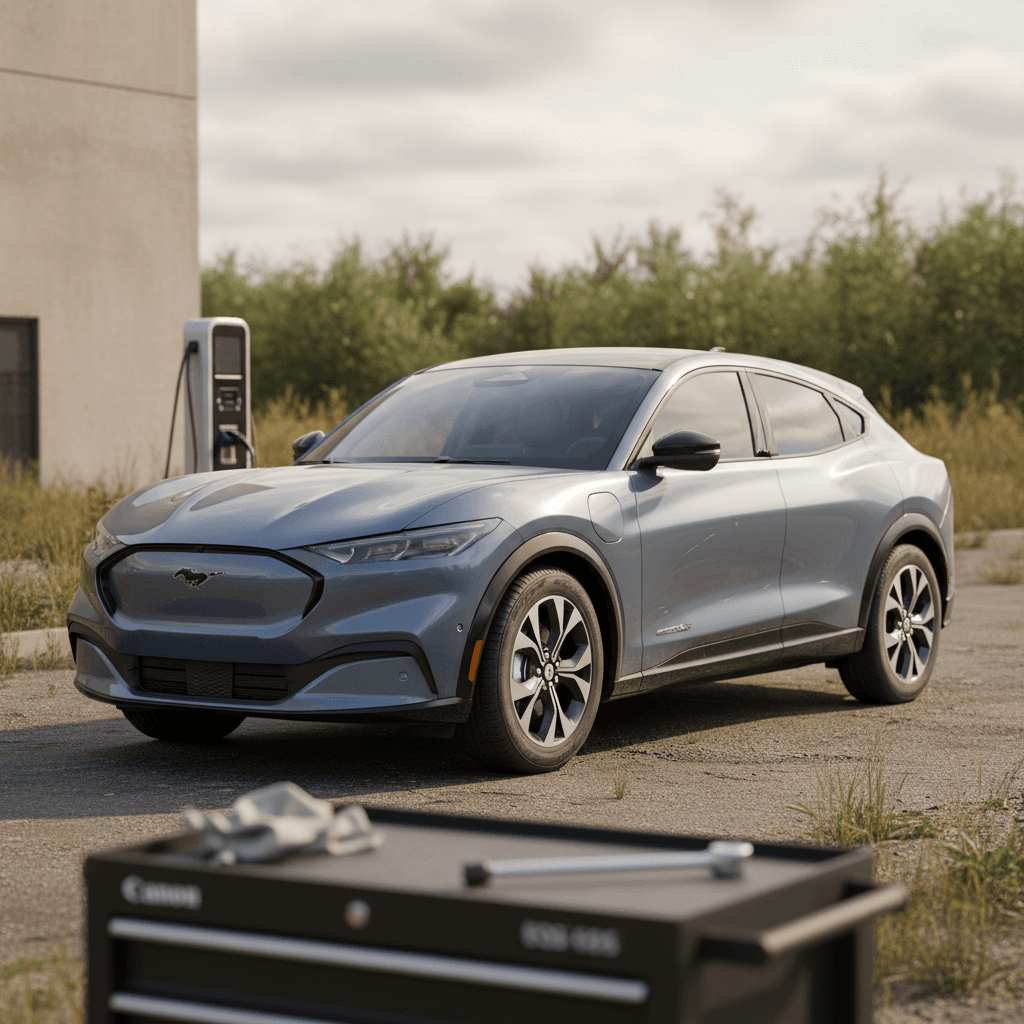
If you’re shopping used and searching for the 2022 Ford Mustang Mach-E reliability rating, you’ve probably seen some mixed signals. On paper, the 2022 Mach-E scores lower than average for reliability in several survey-based ratings, yet many owners report trouble‑free daily use and high satisfaction. The truth lives in between those extremes, and it matters if you’re about to put real money into a used EV.
Headline verdict
Overview: How Reliable Is the 2022 Mustang Mach-E?
2022 Mustang Mach-E Reliability Snapshot
For context, traditional reliability ratings blend hard problems (breakdowns, parts replaced) with nuisance issues (software bugs, infotainment glitches, trim rattles). The 2022 Mach-E has taken most of its hits on the nuisance side and on a few high‑profile recalls, not on catastrophic battery pack failures. That’s cold comfort when you’re stranded, but it’s an important distinction if you’re evaluating long‑term ownership risk versus everyday annoyance.
Model-year risk profile
How Major Rating Agencies Score the 2022 Mach-E
Survey-based reliability ratings
Consumer-facing rating services that survey thousands of owners have largely converged on a similar story for the 2022 Mach-E:
- Below-average overall reliability versus the 2022 compact SUV segment.
- Biggest trouble spots in in-car electronics, charging hardware, and driver-assist systems.
- Powertrain hardware and basic mechanical components score closer to average.
In plain English: the Mach-E’s software and electronics have dragged its reliability rating down more than its motors or suspension have.
Owner review sites
Contrast that with owner reviews on sites like Kelley Blue Book, Edmunds, and Cars.com, where the 2022 Mach-E typically earns:
- Overall ratings in the 4.3–4.7 out of 5 range.
- High scores for performance, styling, and quietness.
- Lower scores when owners have repeated service visits or long waits for parts.
This split, soft reliability scores but strong satisfaction, is classic for first‑wave EVs: early adopters tolerate more issues because they love how the car drives and fits their lifestyle.
How to read a “below-average” rating
Key Recalls Affecting the 2022 Mustang Mach-E
By 2026, the 2022 Mustang Mach-E has been covered by a cluster of important recalls and field service actions. Most of these are fully fixable by a Ford dealer (sometimes via over‑the‑air update), but an unfixed recall is a red flag on any used listing.
Major 2022 Mustang Mach-E Recalls That Affect Reliability
Use this as a checklist when you run a VIN through Ford’s recall lookup or the NHTSA database.
| Issue / campaign | What can happen | Typical symptoms | Fix type |
|---|---|---|---|
| High-voltage battery junction box / contactor (NHTSA 22V-412 and related actions) | Overheating contactors can open under load, causing sudden loss of drive power. | “Stop Safely Now” warnings, power loss under acceleration, vehicle won’t move until restarted or towed. | Software calibration update plus, in some cases, hardware replacement of the junction box or contactors. |
| Rear right halfshaft (22S55) | Improperly manufactured halfshaft can fail prematurely, causing noise or loss of drive to one axle. | Clunking or grinding from rear, vibration under load, possible loss of propulsion at that wheel. | Inspection and replacement of affected halfshaft assembly. |
| Door latch / lock malfunction (25S65 family recall affecting 2021–2025) | Rear doors may not open from inside or could fail to latch properly, creating an entrapment or opening risk. | Rear passengers stuck inside, doors not latching, warning messages about doors ajar. | Latch replacement and updated parts; often a straightforward dealer visit. |
| Rearview camera software glitches (2025 multi‑line camera recall) | Camera image can freeze, delay, or fail to display in reverse, raising crash risk in tight maneuvers. | Black or frozen rear camera screen when shifting into reverse. | Software update via dealer or over‑the‑air (OTA) where available. |
| Earlier AWD power/acceleration software issues (select 2021–2022 builds) | Software may mis-handle certain faults, leading to unintended power reduction or, in rare cases, acceleration anomalies. | Sudden drop in power, warning indicators, inconsistent pedal response. | Control module software updates; most affected vehicles should have been addressed by now. |
Recall coverage can depend on build date, trim, and battery configuration. Always check by VIN before you buy.
Don’t ignore open recalls
Common Issues and Owner Complaints
Typical 2022 Mach-E Reliability Pain Points
Not every car has these problems, but they show up often enough in surveys and forums to watch for.
High-voltage contactor / junction box faults
Probably the highest‑profile issue for early Mach-Es. Some 2021–2022 cars experienced loss of power under load when contactors overheated and opened. Ford’s software updates reduced stress on the hardware and added safeguards, but some vehicles also needed physical parts replaced.
Infotainment & screen glitches
Owners of 2022 Mach-Es report intermittent bugs with the big center touchscreen: frozen displays, slow reboots, or functions that vanish until a restart. These are annoying more than dangerous, but they’re a big reason electronics show up as a weak spot in reliability surveys.
Door latch & lock behavior
Beyond the formal latch recall, some owners have dealt with quirky door behavior: doors not opening on the first try, warnings about doors ajar, or interior handles feeling inconsistent. Often the fix is updated parts and software, but you’ll want to test every door repeatedly on a test drive.
Charging and DC fast-charge issues
A subset of owners report difficulty initiating DC fast charges, especially at non‑Ford networks, or slower‑than‑expected charging curves. Sometimes that’s station‑side; sometimes it’s software on the car. Make sure any used Mach-E you’re considering has the latest software and test it at a DC fast charger if possible.
12V battery and OTA update hiccups
Like many modern EVs, the Mach-E leans heavily on its 12‑volt system and software updates. Early cars occasionally bricked themselves during failed OTA updates or suffered 12V battery drain. Ford has refined the process, but if an owner ignored update prompts the car may be behind on important fixes.
Cold-weather quirks
In colder states, owners frequently mention reduced range and slower charging, plus stiff door seals and windows sticking in freezing rain. These are more EV‑typical annoyances than Mach‑E‑specific defects, but they still matter if you live in a northern climate.
What owners say
Battery Health vs. Electronic Gremlins
From a used‑EV risk standpoint, you care about two different things: long‑term battery health (can this pack still support my range needs?) and short‑term reliability headaches (will software or hardware glitches keep sending me back to the dealer?). The 2022 Mach‑E is more worrisome on the second front than the first.
High-voltage battery and range
- Real‑world reports suggest modest degradation on 2021–2022 Mach-Es, often on the order of 5–10% after several years, depending on usage and climate.
- There have been recalls around the junction box/contactors, but widespread reports of full battery pack replacements are rare.
- If a previous owner relied heavily on DC fast charging, expect somewhat more degradation and pay closer attention to SoH (state of health) data.
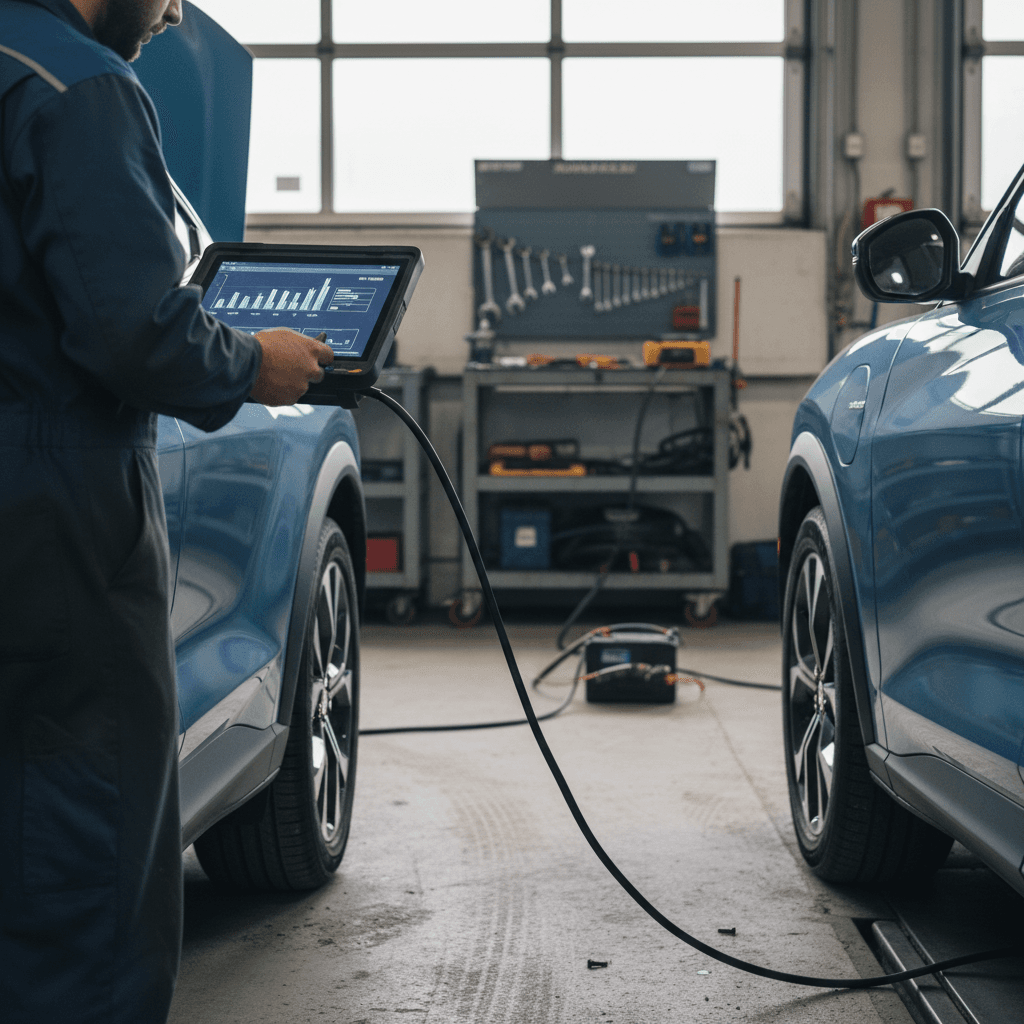
This is where a third‑party health check, like the Recharged Score battery diagnostics, becomes especially valuable, because it measures what generic reliability ratings can’t: how much usable energy is left in this specific pack.
Electronics, modules, and software
- The Mach-E platform leans hard into software: BlueCruise, big OTA updates, complex power management.
- Early builds, including many 2022s, saw more software bugs and module misbehavior than mature Ford models.
- Updates have improved stability, but a car that’s been neglected on software, or has a history of repeated module failures, can still be a headache.
When reliability surveys ding the 2022 Mach‑E, they’re usually capturing this electronic complexity rather than structural or battery failure. You can’t see that by looking at the car, which is why service records and a pre‑purchase scan matter.
How Recharged reduces the guesswork
How 2022 Mach-E Reliability Compares With Rivals
If you’re cross‑shopping a used 2022 Mach‑E against a Tesla Model Y, Hyundai Ioniq 5, or Kia EV6, it helps to zoom out. None of these first‑wave mass‑market EVs are paragons of old‑school Toyota‑like reliability, but the way they fail, and how often, does differ.
2022 EV Reliability: Mach-E vs Key Alternatives
High-level comparison based on public reliability data, recall history, and owner reports.
| Model (2022) | Overall reliability trend | Biggest pain points | Owner satisfaction feel |
|---|---|---|---|
| Ford Mustang Mach-E | Below average | Software glitches, HV contactor/junction box recalls, door latches, camera software. | High for driving experience; frustration concentrated among owners with repeat service visits. |
| Tesla Model Y | Average to below average (varies by source) | Fit/finish, squeaks/rattles, some electronics and sensor issues; fewer HV battery recalls than Mach-E so far. | Very high; many owners tolerate defects because they love the Supercharger network and performance. |
| Hyundai Ioniq 5 | Average or slightly above | 12V battery quirks, some charging‑station compatibility issues, limited dealer EV expertise in some regions. | High; owners praise comfort and efficiency, with fewer serious defects reported than Mach-E early years. |
| Kia EV6 | Average | Infotainment bugs, occasional charging hiccups, some build‑quality complaints. | High; similar powertrain to Ioniq 5, with generally fewer headline‑grabbing recalls than Mach-E. |
This is a directional comparison, not a substitute for inspecting an individual vehicle.
Where the 2022 Mach-E fits
Used 2022 Mach-E Buyer’s Reliability Checklist
If you’re serious about a 2022 Mach‑E, don’t just glance at a reliability score and roll the dice. Use a structured checklist to separate clean, well‑updated cars from the problem children.
Reliability Checklist for a Used 2022 Mustang Mach-E
1. Run a VIN recall check
Use Ford’s official recall lookup and the NHTSA database to confirm all <strong>major recalls</strong>, especially the battery junction box/contactors, rear right halfshaft, door latches, and rear camera software, have been completed. Ask the seller for documentation.
2. Verify software and OTA update history
On the vehicle, check for recent software versions in the settings menu and ask the owner when they last saw an over‑the‑air update. A Mach‑E that hasn’t updated in a long time may be missing important reliability fixes.
3. Get a battery health report, not just range claims
Don’t rely on "It still gets about 250 miles." Use a <strong>professional battery health diagnostic</strong>, like the Recharged Score, to see state of health, usable capacity, and any stored high‑voltage fault codes that might hint at looming issues.
4. Test every door and latch repeatedly
Cycle all doors from inside and out, several times. Look for doors that fail to pop on the first try, don’t latch cleanly, or trigger "door ajar" messages. Recalls may cover some latch issues, but weird behavior is still a negotiation point.
5. Stress-test the infotainment system
Spend at least 10–15 minutes tapping around the big center screen. Pair a phone, load navigation, adjust drive modes. Watch for freezes, sudden reboots, or persistent lag, all signs that the car may need software attention.
6. Check charge behavior on Level 2 (and DC if possible)
If you can, plug into a 240‑volt Level 2 charger and confirm the car charges normally. Ideally, also try a DC fast charger to ensure it initiates sessions without repeated faults or aborted attempts.
7. Review service and warranty history
Ask for printouts of dealer visits. One or two early recalls are normal; a thick stack of repeated repairs for the same HV or electronics issue is a serious warning sign. Also note when the <strong>basic and battery warranties</strong> expire.
8. Consider buying from an EV‑focused retailer
A seller who understands EVs, like Recharged, can provide diagnostics, transparency, and support that a typical auction‑sourced used car lot won’t. That’s especially valuable on a model with a more complex reliability profile like the 2022 Mach‑E.
What Recharged adds on a used Mach-E
Ready to find your next EV?
Browse VehiclesWhen a 2022 Mach-E Can Still Be a Smart Buy
Given the reliability headlines, why would you still consider a 2022 Mustang Mach-E? Because risk is only half the equation, the other half is value. By 2026, early Mach-Es often trade at meaningful discounts to similar‑range rivals, precisely because shoppers have read the same reliability stories you have. If you can identify a well‑behaved car with a clean history, that discount becomes your upside.
Signs you’ve found a good 2022 Mach-E
- All major recalls show as completed by a Ford dealer, with documentation.
- Battery health is strong for its age, with modest degradation and no history of HV faults.
- Service history shows limited, resolved issues, not the same problem repeated over and over.
- Current software versions and a track record of OTA updates.
- Test drive is drama‑free: no warning lights, no charging quirks, no intermittent electronics gremlins.
When to walk away
- Open or incomplete recalls, especially for high‑voltage or structural items.
- Owner reports multiple "Stop Safely Now" incidents or loss of power events, even after recall work.
- Inconsistent or missing service records, or a car that’s bounced between dealers.
- Screen freezes, repeated module faults, or obvious charging problems during your test.
- A seller who can’t or won’t answer basic questions about software updates and warranty status.
Discounts come with strings attached
Viewed through a cold, data‑driven lens, the 2022 Ford Mustang Mach-E reliability rating sits below average for its class. But ratings don’t buy cars, people do. If you approach the 2022 Mach‑E with open eyes, lean on tools like the Recharged Score, and insist on clear documentation for recalls and software history, you can still end up with a quick, practical, uniquely American EV that fits your life without constantly testing your patience.