If you own or are shopping for a 2022 Ford Mustang Mach-E, you’ve probably heard about battery shutdowns, software fixes, and that big door-latch recall. This guide walks through the key 2022 Ford Mustang Mach-E recalls list, what each one actually fixes, and how to protect yourself as a current owner or used EV shopper.
Recall snapshot for 2022 Mach-E
Overview: Why 2022 Mach-E recalls matter
The 2022 Mustang Mach-E sits at an awkward intersection of first‑generation EV tech and real‑world duty. Ford pushed software‑defined performance and fast‑charge capability; reality pushed back in the form of battery contactor overheating, occasional sudden power loss, and later, a high‑profile recall for rear passengers potentially being locked in by electronic door latches. None of this makes the Mach-E a bad EV, but it does mean you need to be deliberate about recall status, especially if you’re buying used.
Key recall themes for 2021–2022 Mustang Mach-E
Quick 2022 Mustang Mach-E recalls list
Here’s a simplified, owner‑friendly overview of major U.S. safety recalls that can affect a 2022 Mustang Mach-E. Exact applicability depends on build date, trim, and prior repairs, so always confirm by VIN:
Major recalls that may affect a 2022 Mustang Mach-E
These are the headline safety campaigns a 2022 Mach-E owner or used buyer should ask about. Names and IDs are simplified for clarity; your VIN lookup will show the precise NHTSA and Ford campaign codes.
| Theme | Approx. Ford code | Primary risk or symptom | Typical remedy type | Applies to 2022? |
|---|---|---|---|---|
| High‑voltage battery contactor / power loss | 22S41 | Possible sudden loss of drive power from overheated contactors under high load | Software update to monitor and limit stress; sometimes dealer visit | Yes, many 2022 builds |
| Battery contactor overheating – enhanced remedy | 23S56 | Follow‑on campaign improving earlier software fix and addressing parts built longer than first thought | Revised software; inspection and repair if damage detected | Yes, selected 2022 extended‑range & GT |
| Software update error clean‑up | Follow‑up to 22S41/23S56 | Some vehicles mis‑recorded as repaired when the software wasn’t correctly installed | Dealer re‑flash and verification | Yes, a subset of 2021–2022 |
| Electronic door latches may stay locked (rear) | 25S65 | Rear passengers, including children, can be trapped if exterior handle doesn’t unlock the latch | Software update to latch/BCM logic | Yes, 2022 within broad 2021–2025 range |
| Backup camera / vision system glitches | Multiple camera campaigns | Blank or frozen rearview camera image that can distract or reduce rear visibility | Software update to the image processing module | Some 2022 units depending on options |
Use this table as a starting checklist, then verify open recalls through Ford or NHTSA using your VIN.
Recall IDs vs. marketing names
High-voltage battery power loss recalls (22S41 & 23S56)
The most serious and widely discussed early Mach-E recall involved the high‑voltage battery contactors. These are heavy‑duty switches inside the battery pack that connect or disconnect power to the drive system. Under repeated DC fast‑charging and hard acceleration, some contactors in 2021–2022 vehicles could overheat, deform, and open unexpectedly, cutting drive power.
- Ford’s first big remedy was the 2022 campaign commonly referred to as 22S41, using a software update to monitor contactor temperature and limit power if the system sensed trouble.
- In 2023, Ford launched a follow‑up campaign, often referenced as 23S56, when it determined the suspect internal components were used slightly longer in production than first believed, and that some vehicles might still experience overheating despite the earlier software patch.
- Both campaigns touch a large number of 2022 Mustang Mach-E vehicles, particularly extended‑range and GT trims built between mid‑2020 and mid‑2022.
What a contactor failure feels like
What the dealer actually does
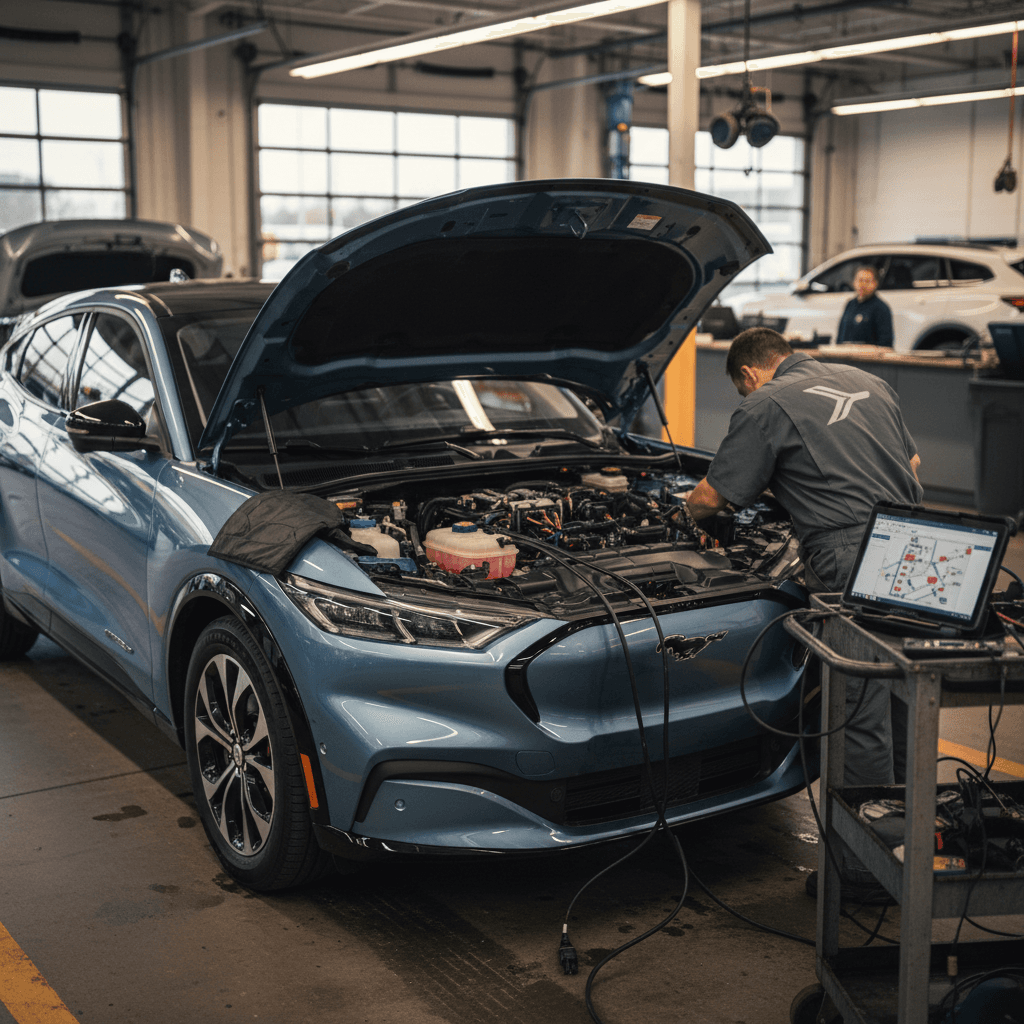
For most 22S41/23S56 visits, dealers install updated software on the Battery Energy Control Module (BECM) and related controllers. The new logic watches contactor behavior more closely and can limit battery output before damage occurs. In some cases, if diagnostics show previous overheating, components inside the pack may need to be replaced.
If your 2022 Mach-E had the early recall done quickly, it may still be invited back for the expanded 23S56 remedy.
How to confirm your 2022 is covered
- Use your VIN on the Ford recall page or NHTSA site.
- Look for open recalls related to high‑voltage battery, power loss, or contactors.
- If your car shows both a completed and an open campaign in this area, ask the dealer to walk through the history, they’ll see which software version is currently installed.
If you’re shopping used, ask for dealer service printouts that show all recall actions, not just a salesperson’s word for it.
Software update error cleanup recall (2024–2025 follow-up)
Even recalls sometimes need recalls. By 2024–2025, Ford and regulators concluded that some 2021–2022 Mach-E vehicles were marked as successfully repaired under 22S41 and/or 23S56 when the software hadn’t actually taken or had been installed incorrectly. That led to a narrower, administrative‑sounding campaign focused on verifying and, if needed, re‑doing the software fix on specific VINs.
Used‑buyer move: ask for the software printout
Door latch lock malfunction recall (25S65, 2021–2025)
Fast‑forward to 2025 and the Mustang Mach-E’s headline recall is no longer about batteries but about electronic door latches. Ford announced a campaign commonly referred to as 25S65, covering nearly 200,000 Mach-E SUVs from model years 2021–2025. Affected vehicles, including many from 2022, can experience a condition where an electronic latch remains locked even after the driver exits and closes the front door.
In practical terms, that means a child or other rear passenger could be stuck in the back seat if they can’t operate the inside release. It’s not an every‑day occurrence, but it’s the kind of edge case regulators take seriously, especially in an EV that leans heavily on software‑controlled hardware.
- Symptom: After the driver or front passenger exits and closes their door, one or more rear doors may remain electronically locked and not respond correctly to the exterior handle.
- Risk: A child or other occupant who can’t use the interior release could be temporarily trapped in the rear seat.
- Remedy: Dealers apply a software update for the latch/body control logic. Ford schedules owner letters and typically targets completion by late summer/early fall of the campaign year.
Families should prioritize this fix
Camera and vision-related recalls affecting 2022 Mach-E
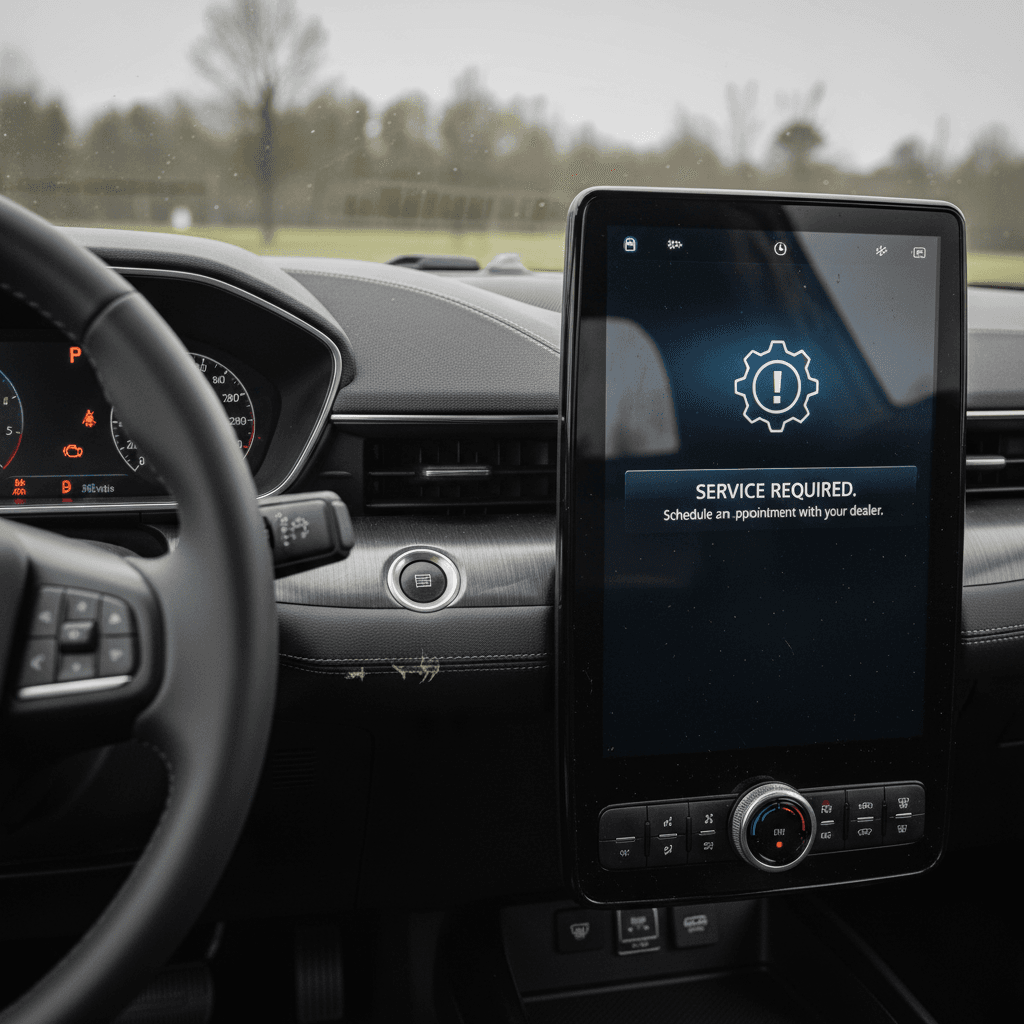
Ford has launched several large camera‑related recalls across its lineup in 2024–2025, mainly around rearview camera images that go blank or freeze, or that linger on the screen too long after shifting out of Reverse. Some campaigns focus on other models, but certain Mach-E years and trims are swept in depending on which camera module and software they use.
What 2022 owners might see
- Intermittent blank rearview image when selecting Reverse.
- Camera feed that freezes and doesn’t update as you move.
- In some cases, the camera image can remain displayed after you’ve shifted into Drive, which is a distraction risk.
Issues like these, combined with federal rear‑visibility standards, are why these campaigns tend to be large and software‑driven.
How fixes are delivered
The good news: camera recalls are nearly always software updates to the image processing or infotainment modules. For a 2022 Mach-E, that often means a quick dealer visit, sometimes paired with other open campaigns.
If you notice camera weirdness but don’t see an open recall by VIN, still log the complaint with your dealer so it’s on record.
How to check your 2022 Mach-E for open recalls
Because multiple campaigns overlap, battery contactors, software verification, door latches, cameras, the only reliable way to know where your 2022 Mustang Mach-E stands is to run a VIN‑specific check and then verify the work history.
Step-by-step: Confirm recall status on your 2022 Mach-E
1. Locate your 17‑digit VIN
You’ll find it at the base of the windshield on the driver’s side, on the door jamb label, in your registration, and inside the FordPass app.
2. Check Ford’s official recall lookup
Go to Ford’s recall search page, enter your VIN, and review any open or completed safety campaigns, pay special attention to high‑voltage battery and door‑latch items.
3. Cross‑check with NHTSA
Use the same VIN on the federal recall lookup tool. Sometimes NHTSA’s site surfaces campaigns or wording slightly differently than Ford’s, which can be useful context.
4. Ask a dealer for a service history printout
A Ford service advisor can pull a report showing which recalls were performed, on what date, and whether software updates successfully completed. This is gold when you’re buying used.
5. Verify software update completion
Once a recall visit is done, confirm in the car and/or FordPass that the software version has changed and that no new warning messages appear after a few drives.
6. Document everything
Keep PDFs or photos of all recall paperwork. If you ever pursue warranty, lemon‑law, or resale value discussions, a paper trail helps your case.
How Recharged handles recall status
Ready to find your next EV?
Browse VehiclesRecalls & used 2022 Mach-E shopping: what to look for
A car with a long recall sheet isn’t automatically a bad car; it’s often the opposite. It shows the manufacturer and regulators are paying attention. The 2022 Mustang Mach-E is a textbook example: ambitious EV hardware, tweaked in public via over‑the‑air updates and dealer campaigns. If you’re buying one used, the game is not to find a car with “no recalls,” but to find one where the important ones have been done, and done properly.
Red flags when shopping a used 2022 Mach-E
Questions that separate a great used EV from a headache.
Unexplained power loss history
If the seller mentions sudden shutdowns, especially after DC fast‑charging, and there’s no clear record of the battery contactor recalls being completed, walk carefully.
Ask: When and where were the high‑voltage battery recalls performed?
No paperwork for "all recalls done"
“All updates are done” is not a document. You want service records or screenshots from Ford’s system showing specific campaign IDs marked complete.
Ask: Can you show a dealer printout of completed recalls?
Ignored warning lights
Persistent powertrain, battery, or camera warnings suggest either unfinished recall work or new issues. Don’t accept “they all do that” as an answer.
Ask: Has a Ford technician scanned this car since the warnings appeared?
If you buy through a private seller, you’re the service advisor, the warranty clerk, and the quality control department all at once. Buying through a specialist used‑EV retailer like Recharged shifts a lot of that homework onto people who do this every day, with structured inspections and standardized reports.
Owner checklist: staying safe and current on recalls
Even after all known recalls are completed, software‑defined cars like the 2022 Mustang Mach-E evolve. New campaigns may appear as Ford and regulators gather more data. A light maintenance routine for your recall status pays off just like tire rotations or brake inspections.
Simple habits for a safer 2022 Mach-E
Check for new recalls twice a year
Make it a ritual: when you rotate tires or change wiper blades, run your VIN through Ford and NHTSA again. New campaigns can be added years after a vehicle is built.
Keep FordPass notifications enabled
Many recall and service notifications flow through the app. Don’t silence the one channel that’s trying to tell you about free safety repairs.
Pair recall work with regular service
When you’re at the dealer for tires, brakes, or alignment, ask them to scan for any open campaigns on your Mach-E. The software updates are usually quick.
Test basic safety functions monthly
Verify all doors open from inside and out, the rear camera behaves normally, and no new warning messages appear on startup. Little quirks can be early clues.
Save every repair order
Whether it’s a recall or goodwill fix, keep digital copies. They help with resale value and give future shops context if issues reappear.
Thinking about trading out of your 2022 Mach-E?
FAQ: 2022 Ford Mustang Mach-E recalls
Common questions about 2022 Mustang Mach-E recalls
Bottom line: Is a 2022 Mach-E still worth it?
The 2022 Ford Mustang Mach-E is a landmark electric crossover with some first‑draft scars. The battery contactor recalls and later door‑latch campaign don’t disqualify it; they simply raise the bar for how carefully you vet any individual car. If you confirm that all relevant recalls are completed, the software is current, and the high‑voltage battery is healthy, a 2022 Mach-E can still deliver the quiet speed, instant torque, and daily‑driver usefulness that made it such a hit.
If you’d rather not play amateur recall investigator, working with a specialist used‑EV retailer like Recharged can simplify the process. Every vehicle comes with a Recharged Score Report detailing battery health, pricing fairness, and recall status, plus EV‑savvy support from first click to delivery. In a world of evolving software and long recall lists, that kind of transparency isn’t just nice to have, it’s part of staying safe and enjoying the car you actually bought.