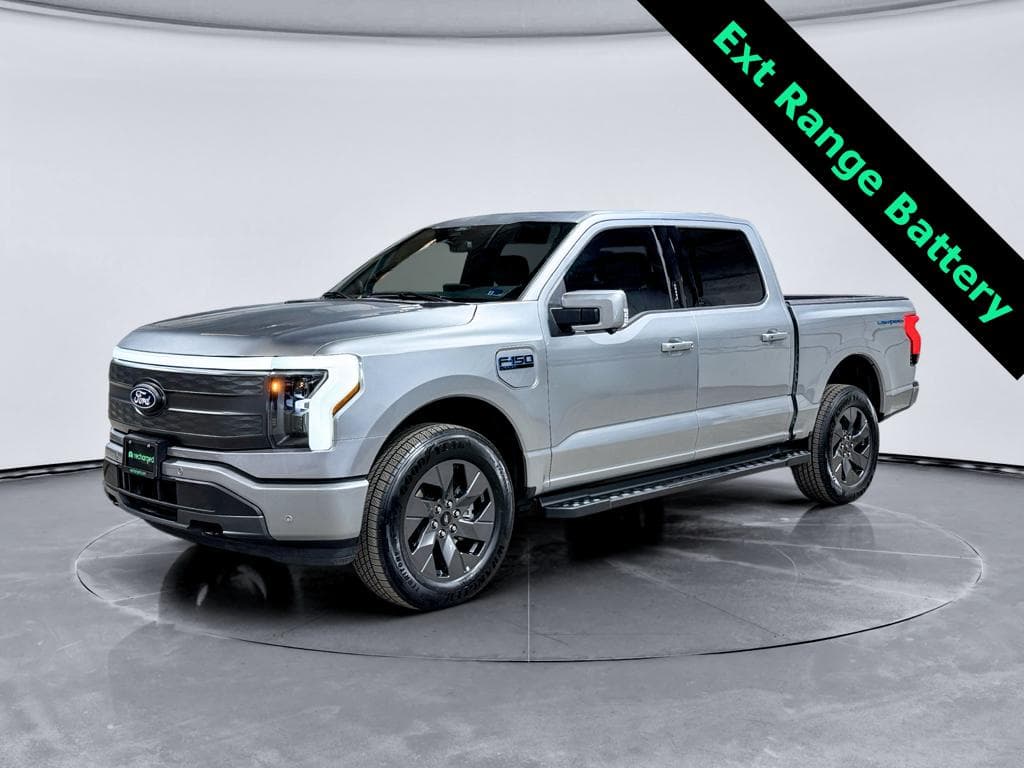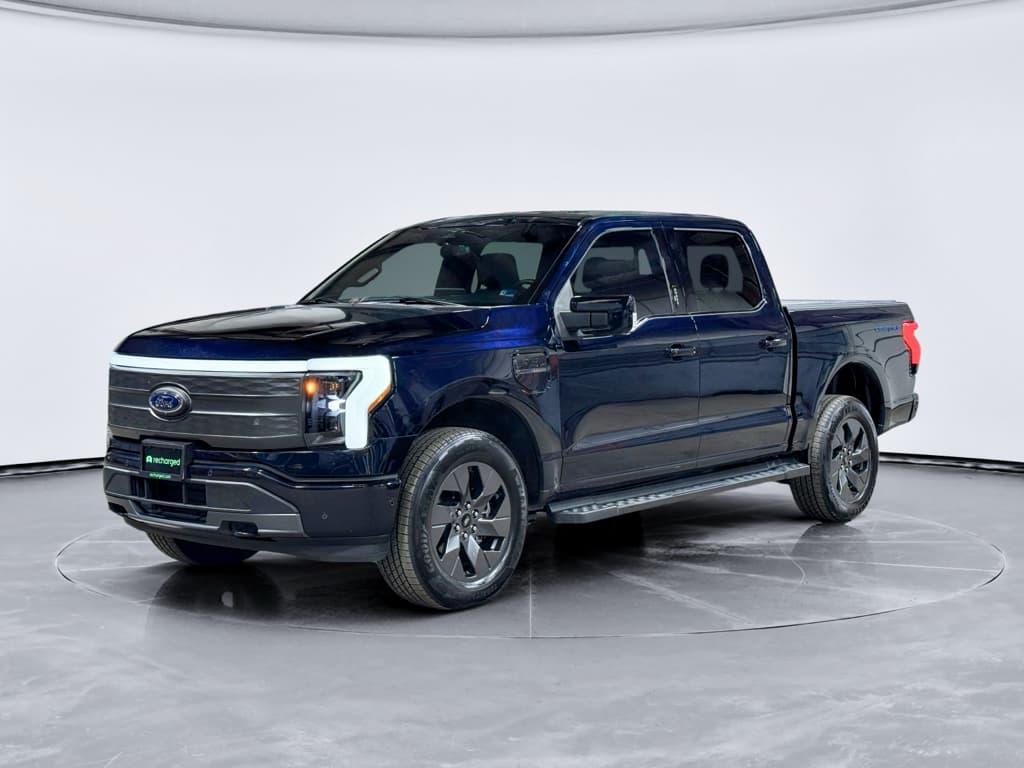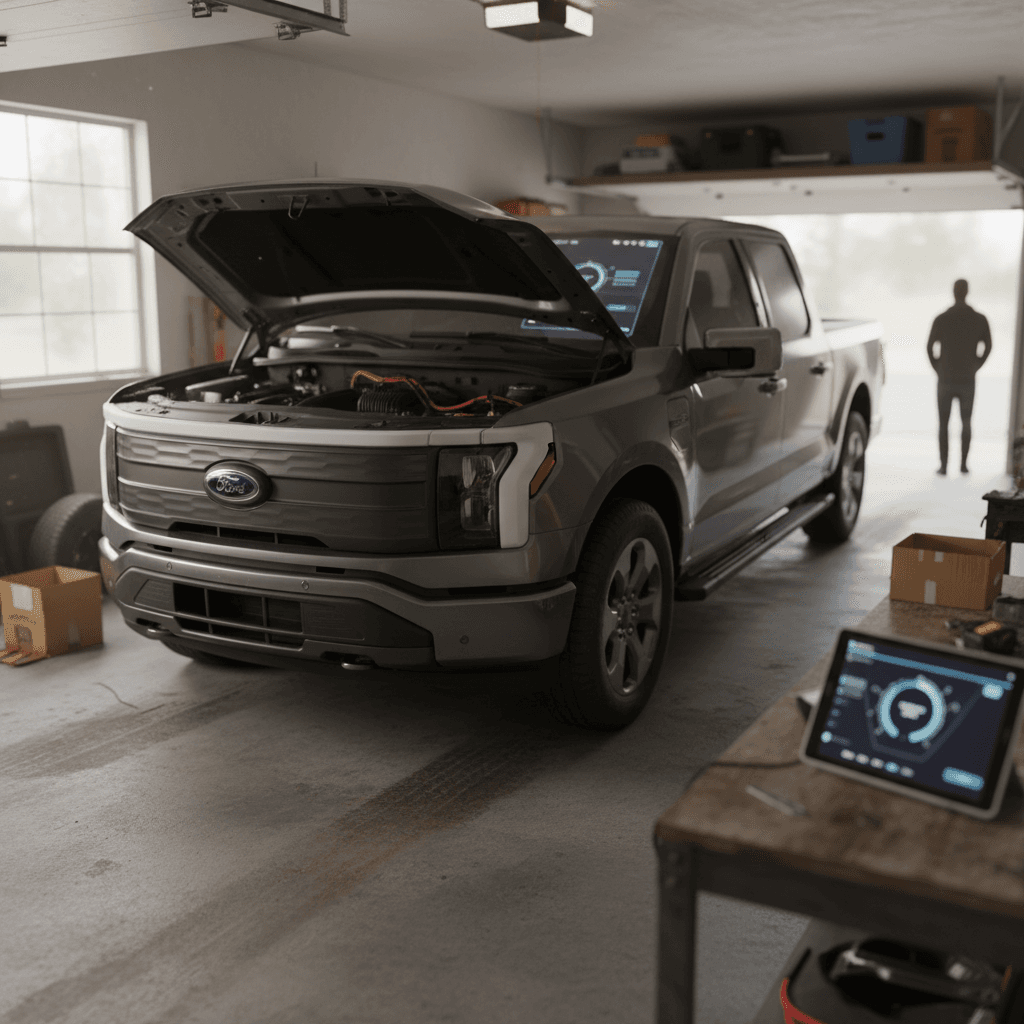
If you’re hunting for a work-capable electric pickup, a used 2022 Ford F-150 Lightning is suddenly tempting. Prices have dropped hard, Ford has already announced the end of this first-generation Lightning, and the truck itself delivers staggering torque, a huge frunk, and near-silent cruising. But the 2022 model year was also the guinea pig: first out of the gate, first to get recalls, and first to take a depreciation punch. This review walks you through whether a used 2022 Lightning is a smart buy, or a truck-shaped science experiment you don’t want in your driveway.
Used 2022 Lightning in one sentence
Overview: What the 2022 F-150 Lightning Gets Right (and Wrong) Used
What the used Lightning nails
- Effortless power: Dual-motor all-wheel drive and up to ~563 hp deliver instant shove that embarrasses many sports cars.
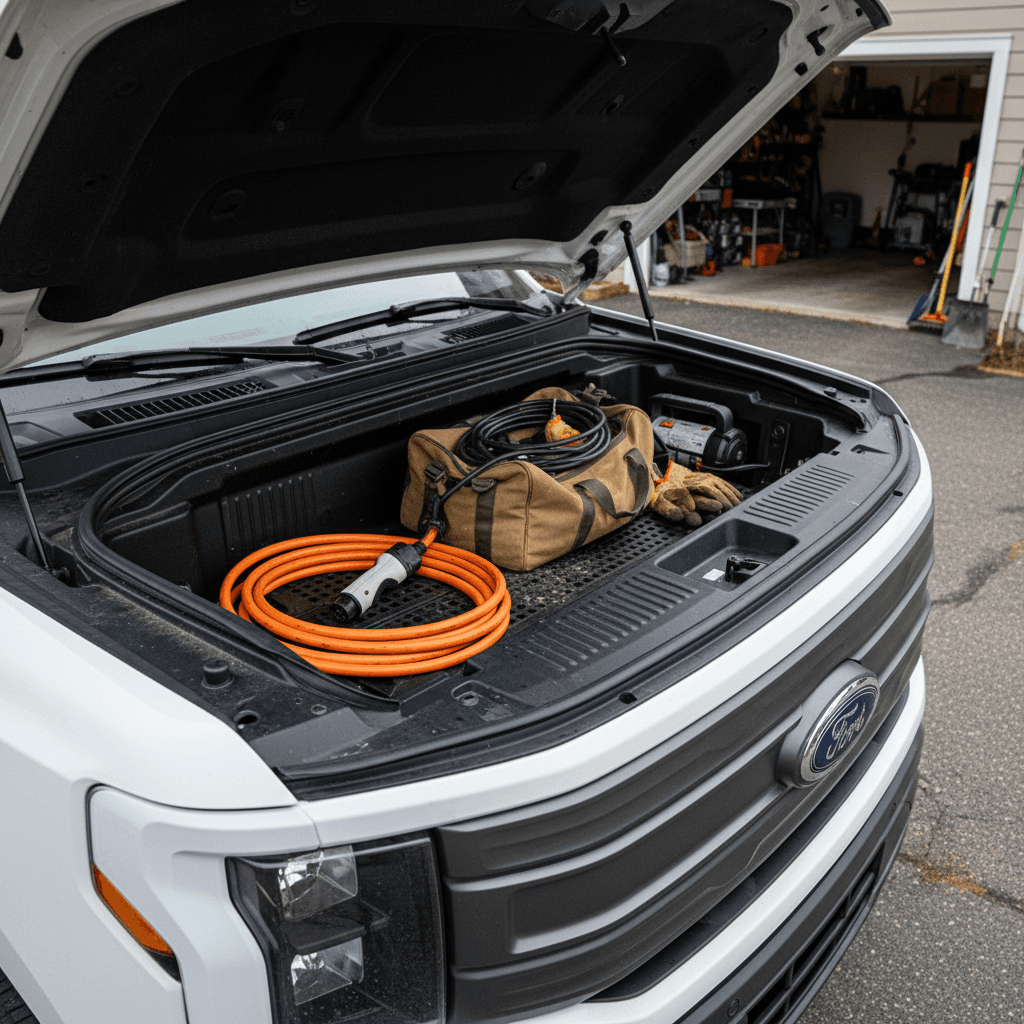
- Everyday usability: It’s still an F-150 inside, big cab, familiar controls, huge storage including the Mega Power Frunk.
- Home-as-generator tech: With the right hardware, Lightning can power your home during outages.
- Steep depreciation: Painful for first owners, but a massive opportunity if you’re buying used.
Where the 2022 model bites back
- Range hit when towing: Expect roughly half the EPA range with a sizable trailer, and plan charging stops carefully.
- Mixed reliability and recalls: Early trucks saw battery, software, and park-module issues that you’ll want to confirm are fully addressed.
- Charging speed just OK: 150 kW peak DC rate is fine but no longer class-leading among electric trucks.
- Uncertain long-term support: Ford is pivoting away from this fully electric setup to a next-gen range-extended truck, which may affect perception and values.
Key Specs: Batteries, Range, Power and Towing
2022 F-150 Lightning Core Numbers (U.S. Models)
Every 2022 Ford F-150 Lightning is a dual-motor, all-wheel-drive truck based on the aluminum F-150 platform. The smaller pack, often referred to as the Standard-Range battery, delivers roughly 230 miles of EPA-rated range in most trims, while the Extended-Range pack pushes that to roughly 300–320 miles depending on configuration. Power output spans from the low 400s in lower trims to around 580 horsepower in higher-spec Extended-Range trucks, with torque well above 700 lb-ft in all versions. Towing ranges from 7,700 pounds (Standard-Range with tow package) to about 10,000 pounds with the Extended-Range battery and Max Trailer Tow Package, though range drops quickly with a heavy trailer.
Trim shortcuts when you’re shopping used
Driving Experience: How the Lightning Feels After a Few Years
From behind the wheel, a used 2022 F-150 Lightning still feels more like a luxury SUV than a work truck. The instant torque masks the truck’s weight around town, and the absence of engine noise makes highway cruising genuinely relaxing. Steering is light but accurate for a full-size pickup, and most owners report that ride quality, especially on Lariat and Platinum models, remains impressively composed even after 30,000–50,000 miles.
What the used Lightning feels like to live with
Everyday behavior matters more than 0–60 times when you’re buying three years on.
City driving
In stop-and-go traffic, the Lightning is in its element. Regenerative braking smooths your commute and the low-speed torque makes merging and short on-ramps easy, even with a bed full of gear.
Highway comfort
Once up to speed, the truck is quiet and stable. Wind and tire noise are more noticeable than drivetrain noise, simply because the motors are nearly silent.
Handling & confidence
You’ll always feel the weight, but the low-mounted battery keeps body motions in check. The result is a truck that feels secure in corners rather than top-heavy.
Good news for second owners
Real-World Range & Charging for a Used 2022 Lightning
On paper, a 2022 F-150 Lightning with the Standard-Range battery delivers around 230 miles of EPA-rated range, and Extended-Range versions stretch into the low 300s. In the real world, especially three or four years on, that translates to something more like 180–200 miles for a Standard-Range truck and 240–280 miles for an Extended-Range in mixed driving, less in winter or at sustained highway speeds. That’s still plenty for most daily use, but it’s important context if you’re coming from a gas F-150 that will happily knock off 500-mile days.
Range and charging reality check for used buyers
1. Expect some range loss vs. EPA
EV batteries naturally lose a bit of capacity over time. A well-cared-for 2022 Lightning may show single-digit percentage loss by 2026, but abuse, repeated fast charging, or extreme climates can accelerate that. Always ask for battery health data if it’s available.
2. Highway speeds cost you range
Drive 80 mph into a headwind with a lifted truck and big all-terrains and you’ll see the range estimate fall quickly. This isn’t unique to the Lightning, but the numbers are more noticeable when you start with 250 miles instead of 600.
3. DC fast charging tops out around 150 kW
The Lightning’s peak fast-charge rate is about 150 kW. That’s respectable, but rivals now push past 200 kW. On a road trip, plan for 30–45 minute stops from low state-of-charge to 80% rather than 15–20 minute splash-and-dash sessions.
4. Home Level 2 charging makes or breaks ownership
If you can plug into a 240-volt circuit overnight, the Lightning is easy to live with, wake up full every morning and forget about public chargers most days. Relying on public DC fast charging as your primary source will get old (and expensive) in a hurry.
Cold weather note
Towing & Hauling: Where the Electric F-150 Shines, and Struggles
A used 2022 Lightning is a brilliant short- to medium-distance tow rig, and a frustrating long-distance one. Hook up a 3,000–5,000 pound trailer and the truck feels rock solid, with instant torque for on-ramps and grades. The built-in trailer profiles, integrated brake controller, and clever camera views make backing and hitching straightforward. But range drops roughly in half with a mid-size camper or enclosed trailer, which means 90–140 miles between fast charges in many real-world scenarios.
Towing with a Used 2022 Lightning: What to Expect
Approximate behavior based on owner reports and instrumented tests; your exact numbers will vary with load, speed, terrain and weather.
| Use case | Trailer weight | Typical range hit | Who it suits |
|---|---|---|---|
| Boat to the lake | 2,000–4,000 lb | Mild; often 25–35% loss | Weekend boaters within 40–60 miles of home. |
| Landscaping / utility trailer | 3,000–6,000 lb | Moderate; 40–50% loss | Contractors hauling locally with predictable routes. |
| Mid-size travel trailer | 5,000–7,500 lb | Severe; ~50%+ loss | Best for shorter trips with known fast-charging along the route. |
| Max tow, long grades | 8,000–10,000 lb | Very severe; frequent fast-charging | Realistically not ideal unless you tow infrequently and plan stops carefully. |
Think in terms of legs between charges, not just tow rating numbers on a spec sheet.
Don’t buy it as your cross-country tow vehicle
Reliability & Recalls: What 2022 Owners Have Learned
The 2022 Lightning doesn’t have decades of data behind it the way a gas F-150 does, but a picture is starting to form. Owners report generally solid drivetrains, the motors and big battery pack haven’t turned into a widespread disaster, but first-year trucks have seen their share of issues: early battery-module recalls, software glitches that required dealer visits, and more recent recalls for the integrated park module that can affect the truck’s ability to reliably hold “Park.”
Common issues to ask about on a 2022 Lightning
Most problems are manageable, as long as they’ve already been fixed on the truck you’re buying.
Battery-related recalls
Early 2022 trucks were subject to battery-module recalls, including rare cases of pack replacement and temporary 80% charge limits. Verify that all battery recalls were completed and ask for paperwork. A detailed battery health report is even better.
Software and OTA updates
Over-the-air updates fix a lot, but some early trucks got stuck mid-update or needed dealer intervention. During your test drive, check for glitchy screens, frozen cameras or odd driver-assist behavior.
Park-module and roll-away recall
Ford has recalled certain 2022–2026 Lightnings for an integrated park-module issue that can prevent the transmission from actually locking in Park. Make sure the software fix has been applied before you sign.
Regular truck stuff still matters
Suspension bushings, tailgate latches, power running boards, bed covers, these are still F-150 parts and can wear or fail like any other pickup, especially if the truck towed or lived on job sites.
How Recharged helps here
Depreciation & Used Pricing: Why 2022 Lightnings Got So Affordable
Here’s the twist: the same factors that stung early adopters make the 2022 F-150 Lightning surprisingly affordable as a used truck in 2026. Many well-optioned XLTs and Lariats that stickered in the $70,000s, sometimes even higher when dealer markups ran wild in 2022, have been trading hands for barely half that after just three or four years. High depreciation relative to gas F-150s, fast-changing EV incentives, and Ford’s public shift toward a next-generation range-extended truck have all pushed prices down.
2022 Lightning Used-Value Snapshot (2026)
Why depreciation can be your friend
Pre-Purchase Checklist for a Used 2022 F-150 Lightning
Before you fall in love with the big frunk and silent launches, slow down and give the truck a proper inspection, especially because first-model-year EVs can hide issues behind pretty software skins. Here’s a practical checklist you can take with you to the lot or private seller.
Used 2022 Lightning Buyer’s Checklist
1. Confirm battery type and health
Ask for the original window sticker or Ford build report to verify Standard- vs Extended-Range battery. Then, request any available battery health report. On Recharged, this is built into the Recharged Score so you can see real data, not guess off a dashboard gauge.
2. Check recall completion and software level
Run the VIN through Ford’s recall lookup or ask the seller for documentation. On the test drive, verify that driver-assist systems work normally, the infotainment system doesn’t freeze, and camera views engage quickly when shifting into reverse.
3. Inspect tires, brakes and suspension
Heavy EV trucks eat consumables. Check for uneven tire wear (especially on the inside edges), listen for clunks over bumps, and feel for vibration under braking that could signal warped rotors or worn components.
4. Test charging at Level 2 and DC fast
If possible, plug into a Level 2 charger and, ideally, a nearby fast charger. Watch for error messages or unusual noises from the charge port or pack cooling system. You want a truck that charges cleanly, every time.
5. Examine bed and underbody for abuse
Crawl under the truck with a flashlight. Look for bent suspension components, impact marks, rust starting on exposed metal and evidence of hard off-road use. In the bed, check for dented wheel wells, hacked-in accessory wiring and poorly mounted bed covers.
6. Match the truck to your daily pattern
Be honest about your driving. If you routinely do 250–300 highway miles a day with no chance to charge, this truck will frustrate you. If you do 40–120 miles with regular overnight charging, it can be a dream. Your use case matters more than the brochure.
How Recharged can simplify all of this
Is a Used 2022 Lightning Right for You?
Great fit if this sounds like you
- You have (or can install) reliable Level 2 charging at home or work.
- Your typical day is under 150–200 miles, even in winter.
- You tow occasionally and mostly within 50–100 miles of home, boats, sleds, small campers, utility trailers.
- You want a full-size truck that drives more like a quiet luxury SUV but still works like an F-150.
- You’re comfortable owning a first-generation EV and plan to keep it long enough that resale swings don’t keep you up at night.
You may want to think twice if…
- Your tow life is all about long-distance RV trips with minimal downtime.
- You can’t reliably charge at home and would depend on public fast charging daily.
- Your climate is extremely cold and your daily routes already push the edge of the truck’s rated range.
- You need a truck that will tow heavy in remote areas with sparse charging infrastructure.
- You prefer proven designs with a decade of reliability data over cutting-edge tech.
Viewed through a 2026 lens, a used 2022 Ford F-150 Lightning is no longer a moonshot experiment. It’s a deeply capable, remarkably refined electric truck with some well-understood limits. If your life fits its range envelope and you do your homework on battery health, recalls and charging, a used Lightning can be one of the best deals in the truck world right now. If you’d like help sorting out which trims, batteries and price points make the most sense for you, Recharged’s EV specialists and Recharged Score Reports are built precisely for that job.