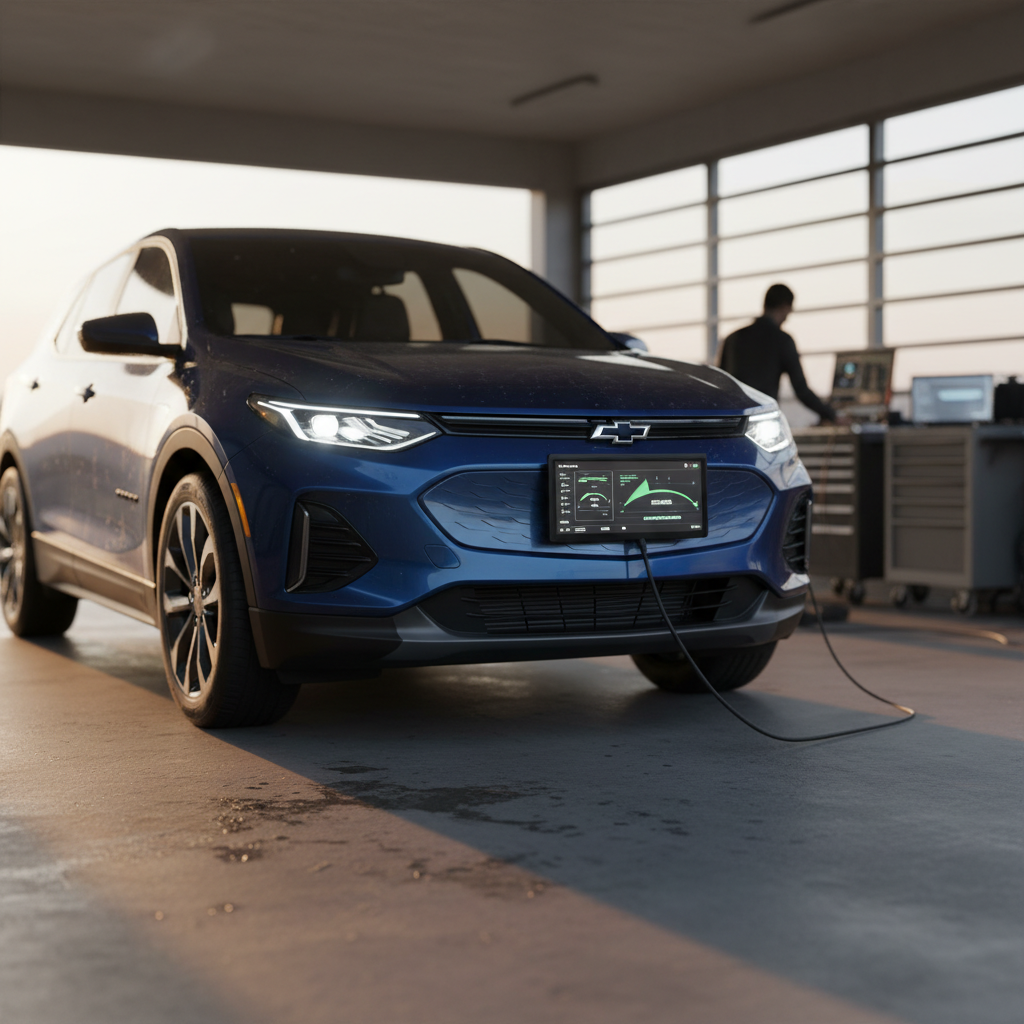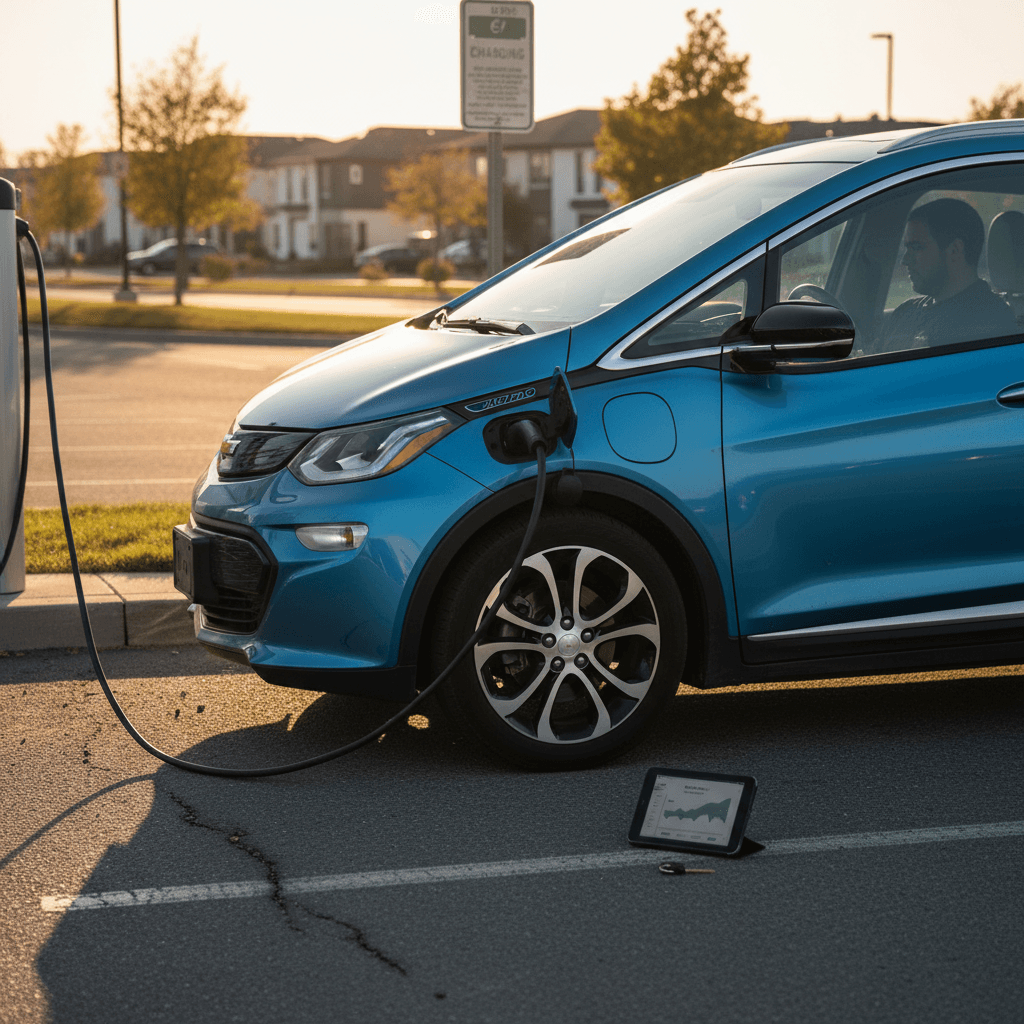
If you’re shopping for an affordable, genuinely useful electric car, a used 2022 Chevrolet Bolt EV will show up in every smart search. It’s the year Chevy fixed most of the early annoyances, sharpened the styling, and quietly turned the Bolt into one of the most rational EV buys on the road, recall baggage and all.
2022 Bolt EV in one sentence
2022 Bolt EV as a used buy: the short version
What the 2022 Bolt EV gets right
- 259 miles EPA range from a 65 kWh battery – still competitive with many newer, pricier EVs.
- Big refresh for 2022: better seats, nicer interior, modern infotainment, cleaner exterior.
- Standard DC fast charging on all trims, plus an 11.5 kW onboard charger for quick home Level 2 charging.
- Tiny footprint, huge usefulness: hatchback body, generous rear legroom for the size, flat load floor.
- Used pricing that undercuts many gas crossovers while obliterating them on running costs.
Where it still shows its age
- Slow DC fast charging (~55 kW peak) compared with today’s 150–250 kW EVs.
- No all‑wheel drive, no heat pump – winter range and traction suffer versus some rivals.
- The battery‑fire recall story is long and messy; you need to verify the latest recall work.
- It’s a tall hatchback, not an SUV; some shoppers just want the SUV look and ride height.
- Driver‑assist is good but not class‑leading and Super Cruise is EUV‑only, not on this EV hatch.
TL;DR buying advice
2022 Chevrolet Bolt EV key specs that still matter
2022 Bolt EV at a glance
2022 Chevrolet Bolt EV core specs
Key numbers for the 2022 Bolt EV hatchback, not the larger Bolt EUV.
| Spec | 2022 Bolt EV |
|---|---|
| Battery capacity (usable) | ~65 kWh |
| EPA range | 259 miles |
| Onboard AC charging | 11.5 kW (up to ~40 mi/hr on a 48A Level 2) |
| DC fast‑charge peak | ~55 kW CCS |
| 0–60 mph | ~6.5–6.7 seconds |
| Drive layout | Single‑motor front‑wheel drive |
| Body style | 5‑door compact hatchback |
| Seating | 5 passengers |
Specs shown are for U.S.‑market 2022 Bolt EV models.
Driving the 2022 Bolt EV: city scalpel, highway compromise
Behind the wheel, the 2022 Chevrolet Bolt EV is less eco‑appliance and more over‑caffeinated city car. Instant torque means it launches away from lights and darts through gaps in traffic with the kind of low‑speed urgency small gas hatchbacks only dream about. The steering is light but precise enough, and with the battery pack mounted low, the Bolt feels planted in corners without punishing you over bad pavement.
One‑pedal driving done right
Where the Bolt EV shows its age is sustained highway work. There’s enough power for American interstate speeds, but the short wheelbase and narrow track mean it can feel a bit busy and bobbly on expansion joints. Wind and tire noise are acceptable, not luxury‑car quiet. If your life is 30 miles of urban/suburban sprawl each way, you’ll love it. If you regularly crush 400‑mile road days, you’ll notice the compromises, and the slow DC fast‑charging, pretty quickly.
Real-world range & charging: how livable is it today?
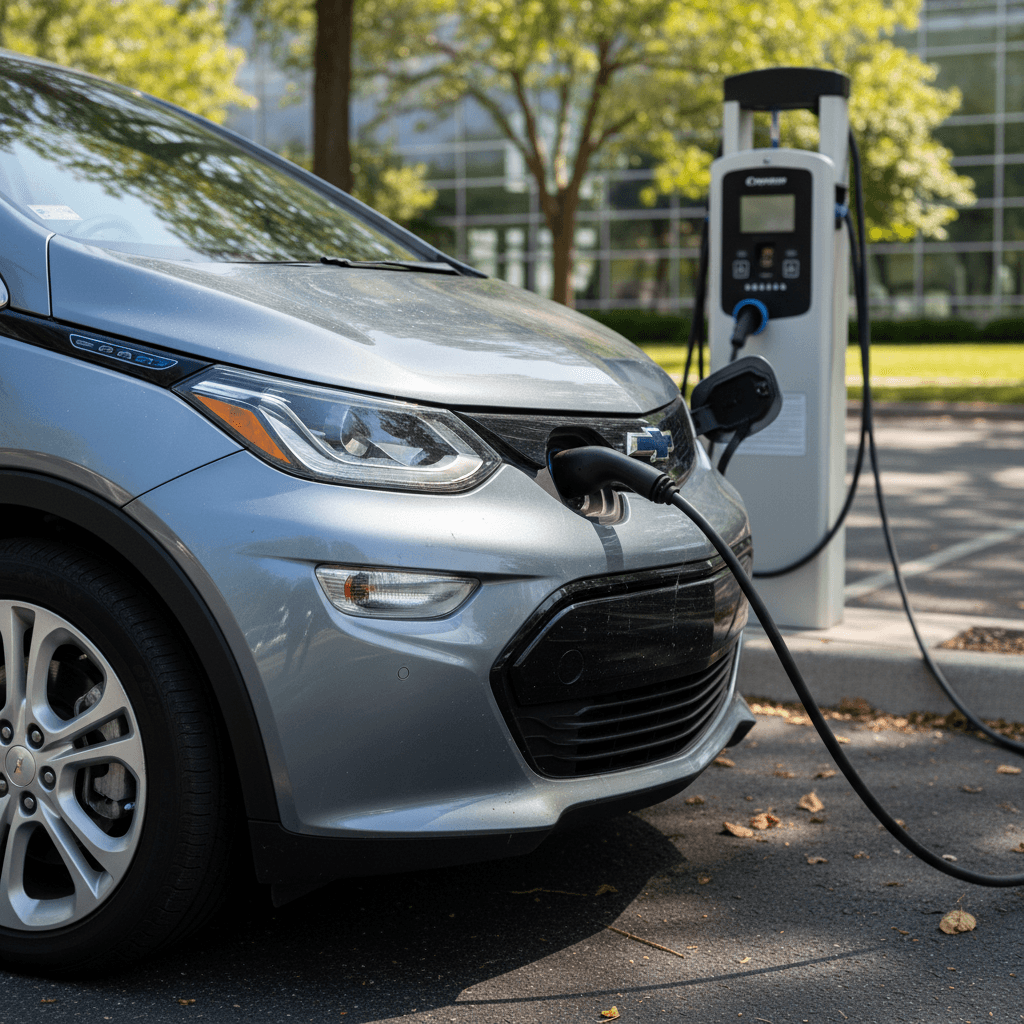
On paper the 2022 Bolt EV’s 259‑mile EPA rating looks almost suspiciously generous for such a small car. In the real world, it’s more honest than most. In mixed suburban driving at legal-ish speeds, you can expect something close to that number, especially in mild temperatures.
What owners usually see for range
Broad rules of thumb, not lab conditions.
City & suburban
Think 240–270 miles on a charge in warm weather if you’re mostly under 50 mph with lots of regen opportunities.
Highway at 70–75 mph
More like 190–220 miles per charge depending on wind, temperature, and how much you use climate control.
Cold weather
In freezing temps, plan for 20–35% less range, especially on the highway, since the Bolt lacks a dedicated heat pump.
About that DC fast charging…
- Home charging: with its 11.5 kW onboard charger, a 40–48A Level 2 home station can refill a nearly empty pack in roughly 7–8 hours overnight.
- Workplace / public Level 2: a typical 6–7 kW public station adds roughly 25–30 miles of range per hour.
- Road‑trip fast charging: going from ~10% to 80% often takes around 45–60 minutes, tapering aggressively above 60–70%.
Make the most of the Bolt’s charging
Cabin, comfort & tech: big upgrades over early Bolts
If you’ve sat in a 2017–2021 Bolt EV and thought, “Great drivetrain, why do the seats hate me?” the 2022 refresh is your redemption arc. Chevy recontoured the front seats, improved padding, and generally made the cabin feel less like a science project and more like a modern small car. It’s still plastic‑heavy, that’s how you get this much range at this price, but the design is cleaner and the materials feel less discount‑bin.
Interior & tech highlights on the 2022 Bolt EV
What changed versus earlier years, and what didn’t.
Infotainment & controls
- 10.2‑inch central touchscreen with crisp graphics and an intuitive layout.
- Standard wireless Apple CarPlay and Android Auto.
- Physical climate controls remain, no hunting through menus just to adjust temperature.
- Available premium audio and surround‑view camera on 2LT trim.
Space & comfort
- Improved front seats with better bolstering and support than pre‑2022 Bolts.
- Surprisingly generous rear legroom for adults, thanks to a long wheelbase.
- 16.6 cubic feet of cargo space behind the rear seats; over 50 cu ft with seats folded.
- Upright seating position and large glass area make it easy to place in tight cities.
Bolt EV vs Bolt EUV, quick clarification
Safety, crash ratings and driver-assist features
The 2022 Bolt EV benefits from a safety story that is mostly straightforward, with one very large asterisk: the high‑voltage battery recall, which we’ll tackle in the next section. Structurally, the Bolt has performed well in crash testing, and Chevy equips the 2022 model year with a decent suite of active safety tech out of the box.
- Standard automated emergency braking with pedestrian detection.
- Lane‑keeping assist and lane‑departure warning.
- Automatic high beams.
- Available adaptive cruise control (2LT with packages).
- Rear cross‑traffic alert and blind‑spot monitoring available on 2LT.
How Recharged evaluates safety on used Bolts
Battery recall, reliability and what it means used
You can’t talk about a used 2022 Chevrolet Bolt EV without addressing the elephant in the garage: the battery‑fire recalls. By late 2021 General Motors had recalled every 2017–2022 Bolt EV and 2022 Bolt EUV for potential defects in LG‑supplied battery packs that, in rare cases, could cause fires when the pack was charged to full or near‑full capacity.
The good news
- Many 2022 cars received brand‑new replacement battery packs under recall, effectively resetting battery age.
- Replacement packs often came with updated chemistry and fresh warranties from GM, which can actually make a recalled Bolt a better used buy if the work is fully documented.
- Software updates added safeguards and battery monitoring to reduce risk, even on packs that weren’t physically replaced.
The catch
- As of 2024–2025, GM issued additional recall communications for some 2020–2022 cars, acknowledging that even “fixed” vehicles might need updated remedies.
- Not every owner has promptly completed the latest recall work, so you must verify all recalls are closed on any 2022 Bolt you’re considering.
- Some insurers and apartment complexes still have outdated anxieties about early Bolt fires; you may need to show proof of completed recall repairs.
Non‑negotiable step: verify recall status
Set the recall saga aside for a moment, and the underlying Bolt EV platform has proven stout. Owners routinely rack up high mileage with minimal drivetrain drama. The single‑speed gearbox and electric motor are simple pieces of hardware compared with a turbo gas engine and multi‑speed automatic. Most long‑term complaints center on cabin wear and tear, infotainment quirks, and the occasional DC fast‑charging handshake issue at public stations, not catastrophic mechanical failures.
Used 2022 Bolt EV pricing, value and depreciation
By 2025, used 2022 Chevy Bolt EV prices in the U.S. had settled into a particularly inviting band: well below most new compact crossovers, yet offering far lower running costs and gasoline immunity. Market data shows refreshed 2022–2023 Bolts commanding a premium over earlier model years thanks to the nicer interiors, 11.5 kW onboard charger, and styling updates.
Approximate 2022 Bolt EV used price ranges (U.S., late 2025)
These are typical asking ranges for clean‑title vehicles; local markets and mileage can swing numbers up or down.
| Trim / mileage | Typical price range | Notes |
|---|---|---|
| 2022 Bolt EV 1LT, ~20k–40k miles | $16,000–$19,000 | Best value sweet spot if you don’t need every option. |
| 2022 Bolt EV 2LT, ~20k–40k miles | $18,000–$22,000 | Leather, more safety tech; often worth the extra money. |
| Higher‑mileage 2022s (50k+ miles) | $14,000–$17,000 | Check battery health carefully; price should reflect miles. |
| Low‑mileage, heavily optioned cars | $21,000–$24,000 | Pay a premium only if condition and recall history are stellar. |
Price ranges are directional, not guaranteed offers. Always compare multiple listings in your area.
Where the Bolt EV punches above its weight
On Recharged, every 2022 Bolt EV listing includes a Recharged Score Report that rolls battery health data, pricing analysis, and market comps into one transparent snapshot. Instead of guessing whether a given car is a deal or a trap, you can compare the Recharged Score and see how it stacks up against other Bolts, and against rival EVs like the Hyundai Kona Electric or Nissan Leaf Plus.
Checklist: what to inspect on a used 2022 Bolt EV
Pre‑purchase checklist for a used 2022 Bolt EV
1. Confirm recall history & battery work
Ask for service records showing completion of all battery‑related recalls. Run the VIN through Chevy’s recall lookup. Ideally, you’ll see documentation of either a replacement pack or the latest software remedies.
2. Review battery health & range estimates
On a full charge, the guess‑o‑meter should show numbers broadly in line with your climate and driving profile. If a full charge in mild weather shows dramatically less than ~220–240 miles, dig deeper. A Recharged Score Report includes battery diagnostics so you’re not guessing.
3. Inspect charging ports and try multiple chargers
Check the CCS and J1772 ports for damage or corrosion. If possible, test the car on a Level 2 station and, ideally, a DC fast charger to confirm it handshakes correctly and charges at expected rates.
4. Check tires, brakes and suspension wear
EVs are heavy and torque‑rich; they can chew through tires and suspension bits faster than you’d expect. Uneven tire wear or clunks over bumps may indicate alignment or suspension issues.
5. Test all infotainment and driver‑assist systems
Pair your phone, try wireless CarPlay/Android Auto, and test backup cameras, parking sensors and any available adaptive cruise or lane‑keeping features. Glitches here are annoying, and sometimes expensive, to sort out.
6. Look for water intrusion and interior wear
Because many Bolts live urban lives, spilled coffee and rain‑soaked cargo happen. Check under the cargo floor, around door seals, and under the rear seats for dampness, smells, or mold. Confirm that seat fabrics or leather aren’t excessively worn for the mileage.
Don’t ignore software updates
Who the 2022 Bolt EV is perfect for, and who should skip it
You’ll probably love a 2022 Bolt EV if…
- You drive under 150 miles most days and can charge at home or work.
- You want a car that’s easy to park and thread through city traffic but still seats four adults in comfort.
- You’re focused on total cost of ownership more than badge prestige or SUV styling.
- You’re okay planning charging stops on the handful of longer trips you take each year.
- You appreciate a hatchback that hauls bikes, pets and Ikea runs without burning a drop of gas.
You might want something else if…
- You regularly do 300–400‑mile days and hate stopping more than 20–30 minutes to charge.
- You need all‑wheel drive and lots of ground clearance for snow or rough roads.
- You insist on the latest ultra‑fast DC charging or a bigger battery for towing.
- You’re uncomfortable with any vehicle that has a high‑profile recall history, even if the fix is complete.
- You simply want a larger, SUV‑shaped EV like a Hyundai Ioniq 5, VW ID.4, or Tesla Model Y.
FAQ: 2022 Chevrolet Bolt EV as a used car
Frequently asked questions about the 2022 Bolt EV used
Bottom line: is a used 2022 Chevy Bolt EV worth it?
Viewed in 2026, the 2022 Chevrolet Bolt EV is a deeply rational used‑EV choice wearing a slightly irrational reputation. The recall headlines were loud, but they also resulted in many cars getting fresh packs and updated software. If you’re willing to do your homework on recall status and battery health, you’re rewarded with a compact hatchback that delivers real 250‑mile‑class range, an improved interior, and running costs that make gas cars look like a bad habit.
No, the Bolt EV won’t match newer EVs for DC fast‑charging speed or SUV swagger. But if your life is measured in errands, commutes, coffee runs, and the occasional weekend away within a few hundred miles, it’s hard to find more electric car for the money. A properly vetted 2022 Bolt EV, backed by a Recharged Score Report and expert guidance from Recharged’s EV specialists, is one of the smartest ways to join, or stay in, the EV world without overpaying for the privilege.