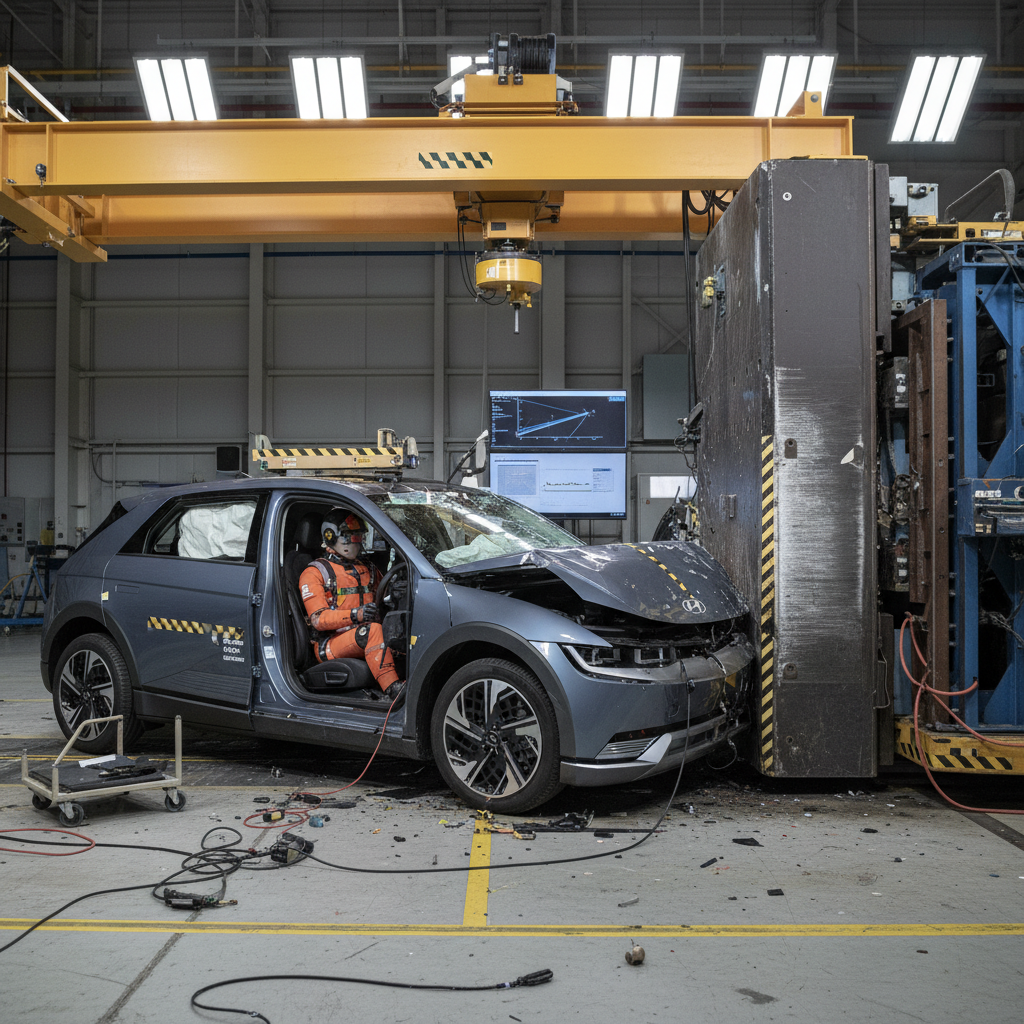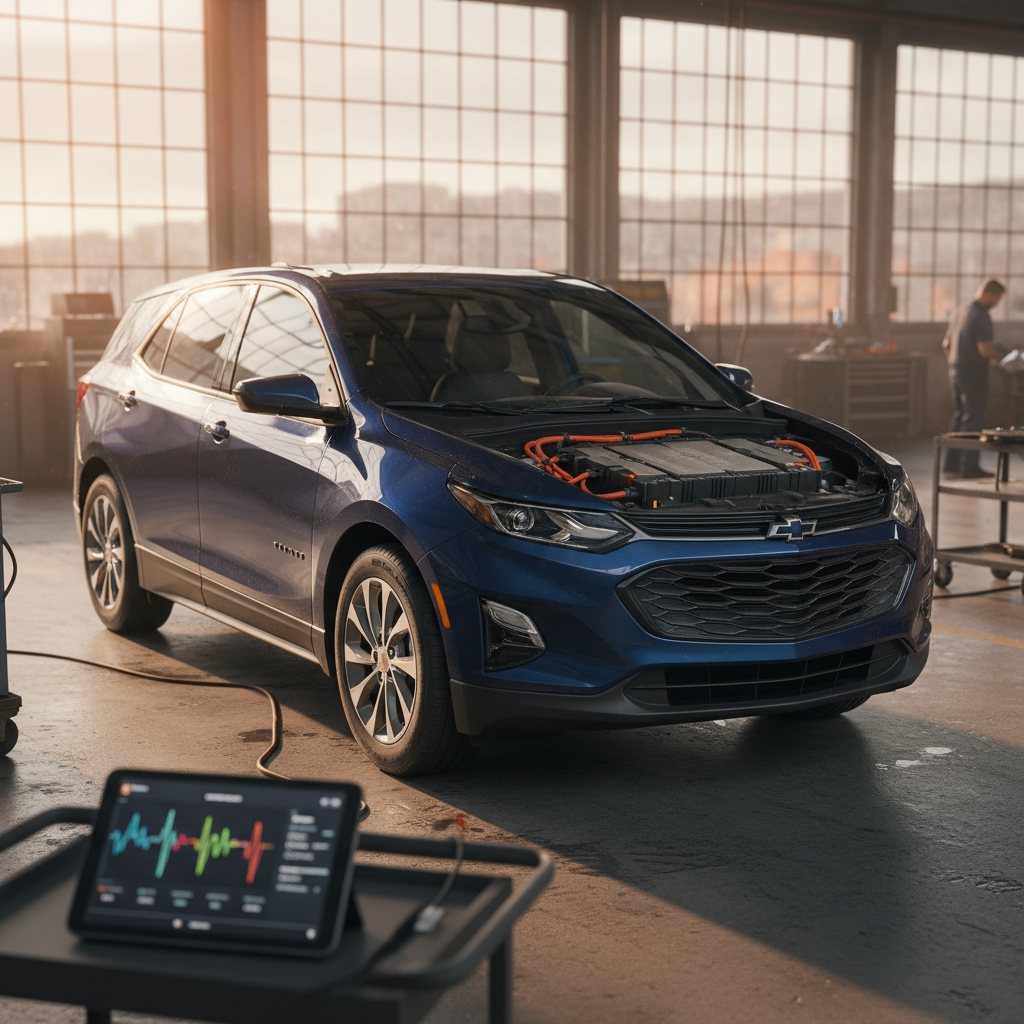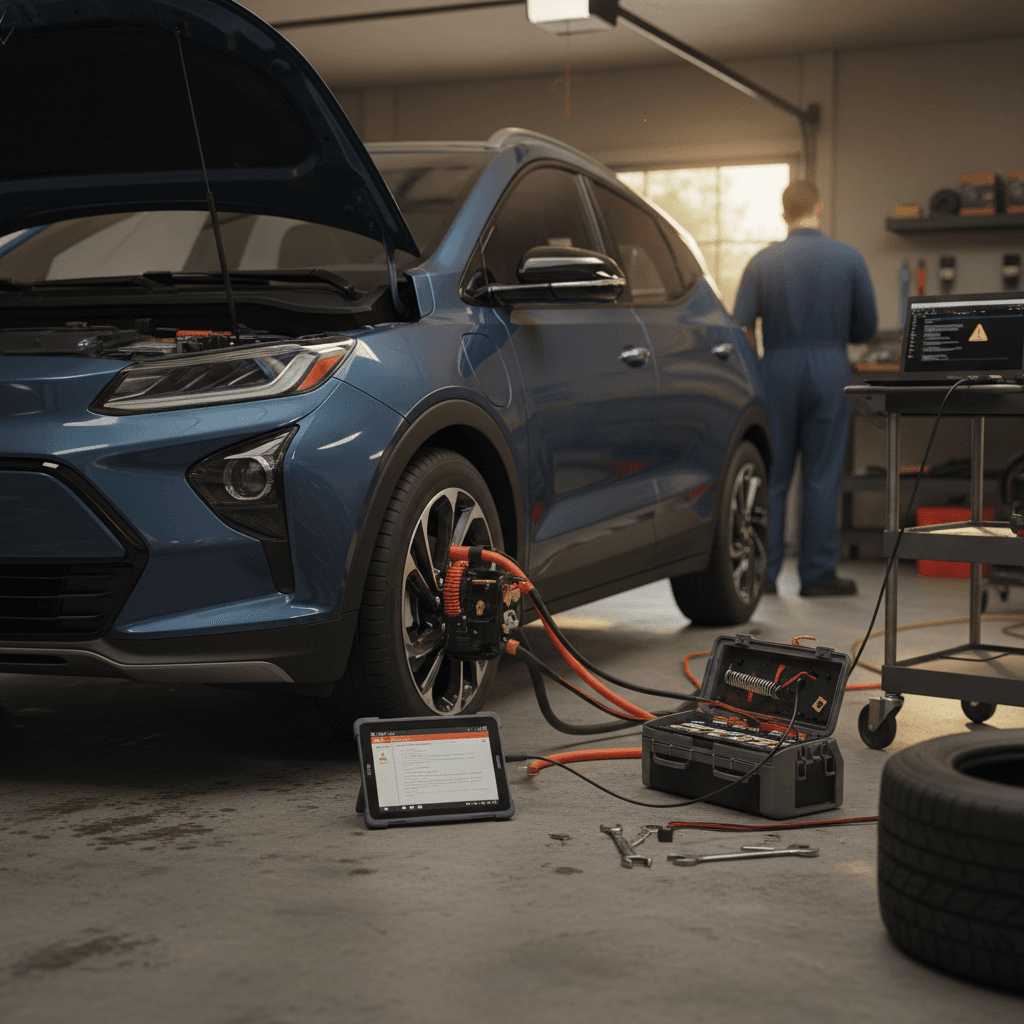
If you’re looking at a 2022 Chevrolet Bolt EUV, you’ve almost certainly heard about **battery fire recalls** and other safety campaigns. The 2022 Bolt EUV was swept up in GM’s large-scale battery recall and has since been affected by follow‑up software and seat belt–related recalls. This guide pulls together a clear, practical **2022 Chevrolet Bolt EUV recalls list** and explains what each campaign actually means for you as an owner or used‑EV shopper.
Model covered in this guide
Overview: Why 2022 Bolt EUV recalls matter
GM’s recall history with the Bolt family is unusual even by EV standards. A combination of **LG‑supplied battery defects**, software fixes, and later follow‑up campaigns means there isn’t just one recall to check, you need to understand **which battery is in the car**, what software it has, and whether the seat belt fire‑risk recall was completed. The upside: when the right recall work has been done, the 2022 Bolt EUV can be a strong, efficient used EV value with fresh or closely‑monitored battery hardware.
Chevy Bolt EV/EUV recall context at a glance
Always verify by VIN
Quick 2022 Chevy Bolt EUV recalls list
Major 2022 Chevrolet Bolt EUV recalls
Key national‑level safety recalls and campaigns that typically apply to the 2022 Bolt EUV. Exact applicability depends on VIN and build date.
| Area | Typical NHTSA / GM reference | What’s being fixed | Risk if not fixed | Applies to 2022 EUV? |
|---|---|---|---|---|
| High‑voltage battery fire risk | NHTSA 21V650, GM N212345940 (expansion of 21V560) | Defective LG battery modules replaced or restricted via software; pack monitored for abnormal behavior. | In rare cases, damaged cells could overheat and start a fire, especially at high state of charge. | Yes – 2022 EUVs were included in the extended battery recall coverage. |
| Battery monitoring software re‑update | Follow‑up campaigns on earlier battery recall software (2023) | Re‑installs or corrects battery diagnostics software that may have been installed incorrectly on a small subset of vehicles. | Incorrect software could fail to detect a failing module or re‑expose fire risk. | Yes – a very small number of 2022 EUVs needed a new software install. |
| Seat belt pretensioner exhaust fire risk | Seat belt exhaust recall affecting 2017–2023 Bolt EV/EUV | Adds a protective shield or cap to front seat belt pretensioner exhaust to keep hot gas from igniting carpet or insulation after a crash. | In a crash where the front seat belts deploy, exhaust gases could ignite interior materials near the B‑pillar. | Yes – 2022 EUV is within the 2017–2023 coverage window. |
| Misc. software / label actions | Service campaigns & technical bulletins | Instrument cluster messages, charging behavior, or labeling may be updated for clarity or compliance. | Lower risk than battery or seat belt issues but can affect usability and diagnostics. | Often – depends on production date and prior repairs. Check by VIN. |
Use this as a roadmap, then confirm coverage for your specific vehicle using the VIN look‑ups described below.
How to use this recalls list
Battery fire recall (21V650): what happened and what changed
The headline issue everyone has heard about is the **high‑voltage battery fire recall**. After investigating several incidents, GM concluded that certain LG‑built battery modules could develop **two simultaneous manufacturing defects**, a torn anode tab and folded separator, increasing the risk of an internal short and thermal runaway. The response was sweeping: GM expanded earlier campaigns to cover **all 2020–2022 Bolt EVs and the 2022 Bolt EUV** and ultimately stopped production until replacement packs and fixes were ready.
- Some 2022 Bolt EUVs were **held at the factory** until they could be fitted with updated battery packs before sale.
- Others left the factory early and were later addressed under recall **21V650 / GM N212345940**, usually through software limits, followed by diagnostics and, if needed, new modules or full pack replacement.
- As of 2023, GM shifted most 2020–2022 cars to an **advanced diagnostics strategy**: software continuously monitors the pack and only triggers a hardware replacement if it detects abnormal behavior.
How a 2022 Bolt EUV’s battery may have been handled
- Shipped with an updated battery pack from day one, **never needing replacement**, or
- Been subject to a software‑based recall that temporarily limited charge level while the system monitored for defects, or
- Received a **full battery pack replacement** at a dealer, resetting the battery warranty start date tied to that new pack.
For a used buyer, that last case is particularly attractive. A fresh pack under the original **8‑year/100,000‑mile battery warranty** can turn a 2022 Bolt EUV into one of the most value‑dense used EVs on the market. But you only know which scenario you’re looking at by checking the VIN history and dealer documentation.
Battery monitoring software updates and “re-recall” campaigns
Once GM moved to software‑based diagnostics on 2020–2022 Bolt EV and EUV battery packs, the story didn’t fully end. A **small subset** of vehicles later needed another recall because the diagnostic software either wasn’t installed correctly or didn’t meet the latest spec. That created a somewhat confusing situation: owners who thought the battery recall was “done” sometimes received a new notice tied to the same underlying problem.
Battery recall vs. battery software update: what’s the difference?
Both relate to fire risk, but they address different layers of the problem.
Hardware battery recall (modules or pack)
Goal: Fix the underlying hardware defect.
- Replaces suspect battery modules or the entire high‑voltage pack.
- Typically performed once per vehicle (unless a new defect is found).
- Can reset or extend battery warranty timing.
Battery diagnostics software update
Goal: Watch for early signs of trouble.
- Installs advanced monitoring software in the BMS.
- May temporarily cap charge level (for example at ~80–90%) during an observation period.
- Triggers a pack replacement only if it detects abnormal behavior.
Don’t ignore a software-only recall
Seat belt exhaust fire risk recall: 2017–2023 Bolt EV/EUV
Separate from the battery saga, GM issued a recall covering **seat belt pretensioner exhaust** on roughly 2017–2023 Bolt EV and EUV models. In certain crash conditions where the front seat belt pretensioners deploy, hot gas from the pretensioner’s exhaust can contact carpeting or insulation near the lower B‑pillar and, in rare cases, **ignite the material**.
- The fix usually involves adding a **small metal shield or cap** over the pretensioner exhaust to deflect hot gas away from the carpet.
- This isn’t a defect you’ll notice in daily driving, it only shows up **during a crash where the seat belts deploy**.
- Because the campaign spans many model years, a 2022 Bolt EUV is generally **included by default**, but you still need to confirm completion by VIN.
Why this recall matters even more on a used car
Other software and label-related actions
Beyond the big‑ticket battery and seat belt campaigns, a 2022 Chevy Bolt EUV may also be affected by **smaller software and compliance actions**. These don’t always show up in the news cycle but can impact how the car behaves or how information is presented to the driver.
- Instrument cluster or infotainment updates that refine **warning messages** (for example, “Service Safety Restraint System” behavior).
- Updates to **charging logic** or on‑screen prompts to better align with the latest battery monitoring strategies.
- Potential **labeling corrections** (such as tire or load placards) where printed information didn’t exactly match certification documents.
Safety recall (NHTSA campaign)
- Mandatory for the manufacturer once issued.
- Must be performed **at no cost** to you at a franchised dealer.
- Targets safety or compliance issues with clear defect language.
Service campaign / TSB
- Often optional and may be done only if you complain of an issue.
- Coverage terms vary; not always free outside warranty.
- Can still be very worthwhile on a complex EV like the Bolt EUV.
Where Recharged fits in
How to check if a 2022 Bolt EUV has open recalls
Because recall coverage depends so heavily on production batch and repair history, the **only reliable way** to know where a specific 2022 Bolt EUV stands is to run its VIN through both GM and NHTSA tools and then cross‑check with a Chevrolet dealer.
Step-by-step: Verify recall status on a 2022 Bolt EUV
1. Get the full 17‑character VIN
You’ll find it at the base of the windshield on the driver’s side, on the driver’s door jamb label, the registration, or the online listing if you’re shopping used.
2. Search NHTSA’s recall lookup
Go to NHTSA’s public recall lookup site, enter the VIN, and review any **open safety recalls**. This is your ground truth for U.S. safety campaigns that haven’t been completed yet.
3. Check GM’s owner or recall site
Visit Chevrolet’s recall/owner website, plug in the same VIN, and compare results. GM’s tool sometimes surfaces additional **service campaigns or closed recalls** that NHTSA doesn’t list in detail.
4. Call a Chevrolet service department
Ask a service advisor to pull the VIN and read you the status of the **battery recall, any battery software updates, and the seat belt fire‑risk recall**. Request printed or emailed documentation if possible.
5. Verify paperwork on a used purchase
If you’re buying from a dealer or private party, ask for service records showing recall completion, especially for battery and seat belt work. A one‑page service invoice is enough, but it should show the campaign code.
6. Repeat checks periodically
New recalls can be issued years later. Make a habit of checking your VIN on NHTSA’s site at least once a year, or after any major EV‑related news about the Bolt comes out.
What these recalls mean if you’re buying a used 2022 Bolt EUV
From a used‑EV shopper’s standpoint, the 2022 Bolt EUV is a classic case where **headline‑grabbing recall news and real‑world risk** don’t perfectly line up. The recalls are serious and shouldn’t be ignored, but they also mean you’re often looking at a vehicle with **newer‑than‑expected battery hardware**, updated software, and a long warranty shadow.
2022 Bolt EUV recalls: buyer upsides and watchpoints
Knowing the recall story can help you separate great cars from problem children.
Potential upsides for used buyers
- A car that already received a **new battery pack** effectively has its energy storage “clock” reset.
- Extensive recall coverage means **well‑documented fixes** and clear diagnostic procedures.
- Because of the recall stigma, pricing can be more attractive versus other EVs with similar range.
Key watchpoints to investigate
- Incomplete recalls, especially seat belt and battery‑software campaigns.
- Dealers who can’t explain whether the car is on a **diagnostic monitoring program** or had a pack swap.
- Evidence of repeated “Service Safety Restraint System” warnings without documented repairs.
How Recharged de-risks a used Bolt EUV
- Third‑party‑verified battery health data (beyond just reading the dash gauge).
- VIN‑based recall and campaign status at the time of listing.
- Fair‑market pricing analysis that bakes the recall history into the value picture.
Ready to find your next EV?
Browse VehiclesOwnership tips after recall repairs are done
Once the battery and seat belt recalls are properly taken care of, living with a 2022 Bolt EUV isn’t fundamentally more complicated than any other modern EV. But there are a few smart habits that align well with GM’s diagnostic strategy and help you get the most from the car over time.
- Avoid sitting at **100% charge** for long periods, especially in hot weather, unless you’re about to start a road trip.
- Use scheduled charging at home to finish charging **close to your departure time**.
- Pay attention to any new or repeating **warning messages** related to the battery, propulsion system, or safety restraints and get them checked promptly.
- Keep copies (digital or paper) of all **recall and warranty repair invoices**; they’re useful both for your own records and when you eventually sell the car.
- Check your VIN annually for **new recalls**, even if everything looks fine today.
Document everything
FAQ: 2022 Chevrolet Bolt EUV recalls
Common questions about 2022 Bolt EUV recalls
Bottom line: are 2022 Bolt EUVs safe to buy?
The 2022 Chevrolet Bolt EUV sits at an interesting intersection of **recall‑driven anxiety and genuine opportunity**. The recall history is real and deserves respect, especially around the battery and seat belt fire‑risk campaigns. But once those issues are addressed, ideally with documentation and, in some cases, a fresh battery pack, you’re left with a compact electric crossover that delivers strong efficiency, useful range, and modern features at a used‑car price point that undercuts many rivals.
If you’re considering a 2022 Bolt EUV, treat this **recalls list** as your roadmap: confirm battery recall status, verify the seat belt fix, ask pointed questions about software updates, and insist on paper trails. Whether you’re shopping on your own or through a platform like Recharged that bundles recall and battery health data, a bit of extra diligence turns a complex recall story into a strategic buying advantage.