If you’re eyeing a used 2022 Chevrolet Bolt EUV, you’ve probably heard two very different stories. On one side are happy owners quietly piling on electric miles. On the other are headlines about battery fires, steering-rack failures, and random error messages. This guide pulls those threads together so you can see the most common 2022 Chevrolet Bolt EUV problems and fixes, and know exactly what to look for before you sign anything.
Big picture on 2022 Bolt EUV reliability
Overview: Is the 2022 Bolt EUV a problem child?
Let’s start with the blunt facts. The 2022 Bolt EUV sits at the tail end of the original Bolt family, which was swept up in a global high-voltage battery recall covering 2017–2022 cars. Many 2022 EUVs were built after GM changed the battery manufacturing process, but most were still pulled into the recall for inspection and, in some cases, full pack replacement.
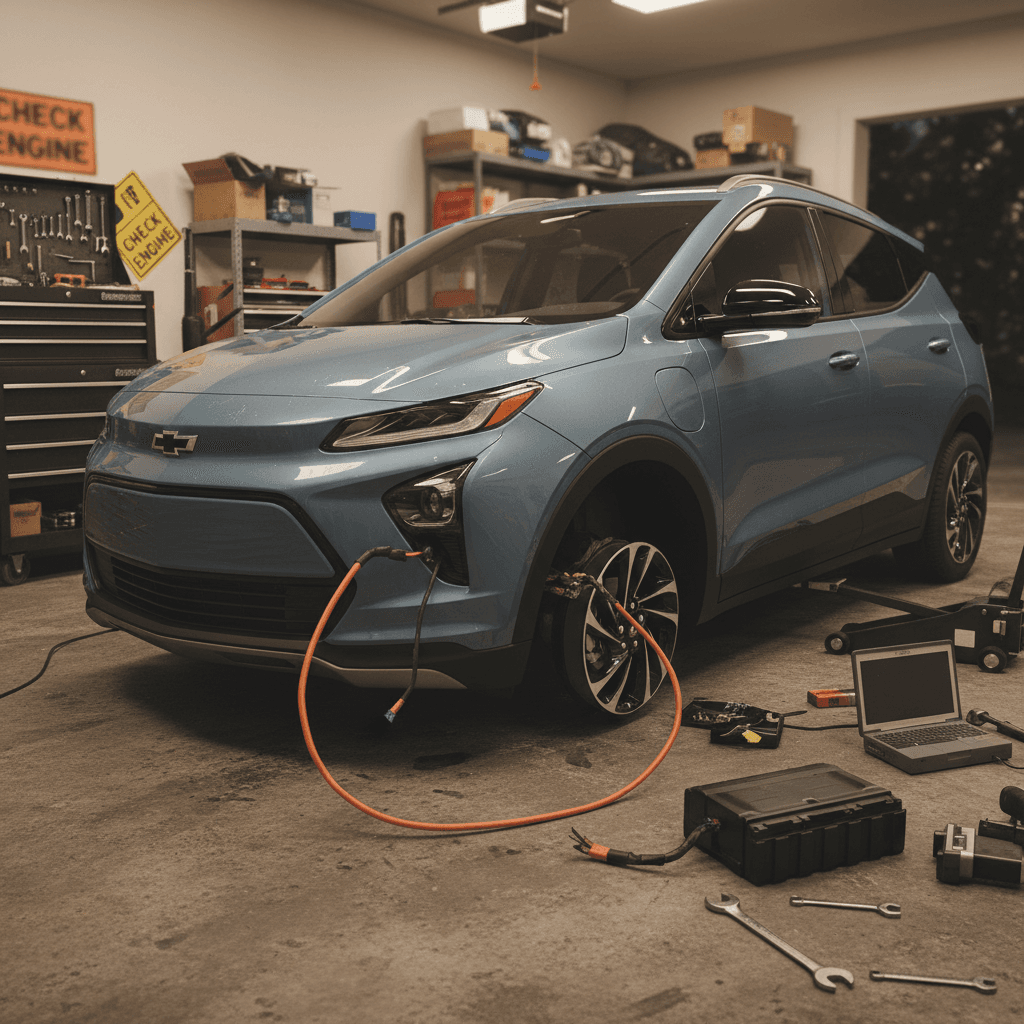
On top of that, owner reports and repair data highlight a pattern of: - Battery and charging quirks, especially early pack failures and limited charging modes - Software gremlins, random warnings, “Unable to Shift Soon” messages, and black infotainment screens - Steering noises and, more rarely, full steering-rack failures - Typical small-car issues: trim rattles, squeaky wipers, minor water leaks or wind noise
The good news? Most of these issues are well-documented, many are covered by recalls or technical service bulletins (TSBs), and a thorough pre-purchase inspection plus a solid warranty strategy can neutralize a lot of the risk. That’s where a structured checklist, and tools like the Recharged Score battery health report, earn their keep.
2022 Bolt EUV at a glance
Quick glance: Common 2022 Bolt EUV problems
Most common 2022 Bolt EUV problems (and how they feel)
What owners actually notice from behind the wheel
Battery & charging quirks
- Early high-voltage battery failures or replacement under recall
- Charge stops at 80–90% or won’t fast charge as expected
- “Charge fault” messages with some home EVSEs
Software & warning lights
- “Unable to Shift Soon” or “Conditions Not Correct for Shift” alerts
- Random traction control or airbag lights that clear on restart
- Black or frozen infotainment screens, dead audio
Steering & suspension
- Squeaking steering in cold or wet weather
- Front-end clunks over bumps
- In rare cases, steering rack replacement
How to use this guide
High-voltage battery: recall history and real longevity
The Bolt’s battery story is the elephant in the room. In 2021, GM expanded its battery-fire recall to cover all 2017–2022 Bolt EVs and EUVs. Many packs were replaced entirely; others had software applied to monitor and limit the pack if a defect was detected.
- 2022 Bolt EUVs built early in the model year often got full pack replacements under the recall.
- Later 2022 builds may have received a software update only, depending on their battery production batch and diagnostic results.
- After a successful remedy, owners were typically told they could resume normal charging and parking behavior.
Out in the real world, most 2022 Bolt EUV owners report normal battery aging once the recall work is done: modest range fluctuation as the battery management system (BMS) learns, then a slow and steady decline. A small minority, however, still see early pack faults, sudden range drops, or repeated charge faults that lead to another visit to the dealer.
Battery recall must‑dos
DIY battery health check on a 2022 Bolt EUV
1. Verify completed recalls by VIN
Run the VIN through a recall checker and ask the seller for paperwork on battery recall repairs. No documentation? Treat that as a red flag and price it accordingly.
2. Check displayed range vs. rated
With the car at 90–100% charge and climate off, compare the displayed range to the EPA rating (247 miles for the EUV). A healthy car with mixed driving should be reasonably close, adjusting for weather.
3. Drive from high to mid‑state of charge
On a long test drive, watch how the guess‑o‑meter behaves. Big, sudden swings in estimated range, especially under gentle driving, can hint at a confused BMS or underlying cell issues.
4. Ask for a professional SoH report
A shop or marketplace that knows EVs can run a <strong>state‑of‑health (SoH)</strong> test on the pack. On Recharged listings, you’ll see that as part of the <strong>Recharged Score battery health report</strong> so you’re not guessing.
Software glitches, error messages, and warning lights
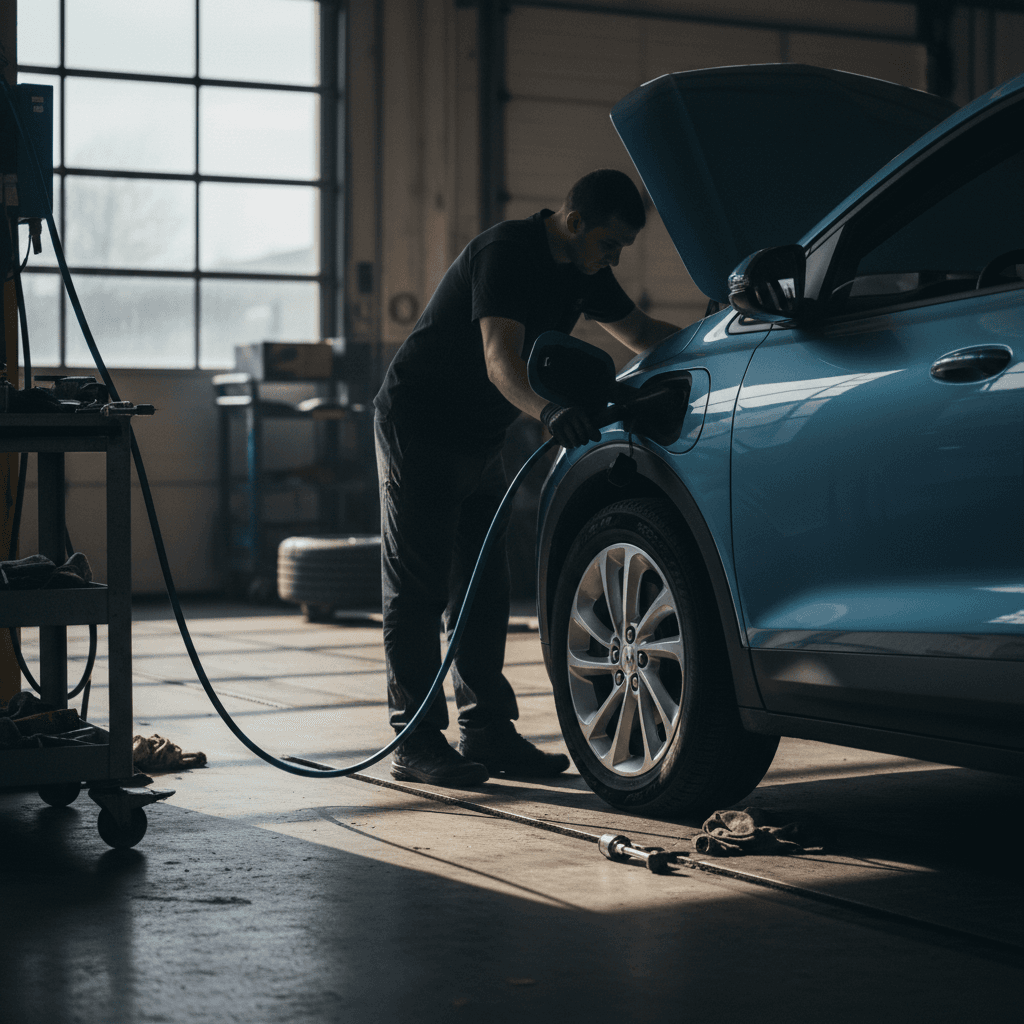
Modern EVs are rolling computers, and the 2022 Bolt EUV is no exception. Owners frequently report software‑flavored problems that may not leave any obvious physical damage, but can still ruin your day.
Typical software-related problems on the 2022 Bolt EUV
What you’ll see on the dash and how serious it usually is
“Unable to Shift Soon” / “Conditions Not Correct for Shift”
These warnings can appear even when you’re pressing the brake and doing everything right. They’re often tied to software logic around the shift controller, brake switch, or key detection. In most cases, owners report that a restart clears it, but repeated incidents warrant a dealer visit and sometimes module reprogramming.
Random traction control, ABS, or stability lights
Momentary ABS or traction control lights with no change in how the car drives can be as simple as a dirty wheel-speed sensor, low 12‑volt battery, or a software glitch. Persistent warnings, especially with loss of regen or reduced performance, need diagnostics right away.
Black or frozen infotainment screen
Another common complaint: a dead audio system, black center screen with only the Chevy logo pulsing, or navigation errors. Many of these are resolved with software updates or, occasionally, replacement of the infotainment module or SD card.
OnStar, driver-assist, and camera glitches
Some owners report red OnStar lights, disabled Super Cruise–style features, or camera systems that drop out. These issues tend to be intermittent and often track back to software, weak 12‑volt support battery, or flaky modules rather than the high-voltage system.
Quick reset tricks (that won’t void anything)
- Scan for stored fault codes with an OBD-II reader that supports EV parameters, or have a shop do it.
- Ask the selling dealer which control modules have the latest software updates, and request the update history.
- During a test drive, pay attention to any dash lights that appear and disappear, note the conditions and ask for them to be documented.
Steering and suspension: squeaks, clunks, and rack failures
Dig into owner forums and complaint databases and you’ll see a recurring theme: noisy front ends. A lot of 2017–2022 Bolts, and now 2022 EUVs, develop squeaks from the steering column or front suspension, especially in cold or wet weather. It’s annoying, but usually not dangerous.
More concerning is a smaller but growing cluster of reports about steering rack failures on 2022 Bolt EUVs. Drivers describe heavy steering, notchy feel, or the system locking up enough that the car had to be towed. Some owners argue this should be a formal recall; in many cases, racks have been replaced under warranty.
Common steering & suspension symptoms on a 2022 Bolt EUV
What noises usually mean, and when to worry
| Symptom | Most likely cause | How serious? | Typical fix |
|---|---|---|---|
| Squeak when turning wheel in cold/wet weather | Steering column boot, intermediate shaft, or upper strut mounts needing lubrication or replacement | Low, annoying but usually not a safety issue | Lubricate or replace affected components; sometimes updated parts |
| Clunk over bumps or during low-speed turns | Worn sway-bar links, strut mounts, or loose suspension hardware | Medium, can worsen over time | Inspect and replace worn parts; torque-check all fasteners |
| Heavy or jerky steering, especially at center | Steering rack internal wear or failure | High, this is a safety concern | Replace steering rack and perform alignment |
| “Service Power Steering” warning | Sensor/module fault or rack issue | High if steering assist is reduced | Immediate diagnostic with scan tool, repair or replace components |
Any steering issue that affects control or feels progressive should be treated as a safety defect, not just an annoyance.
How to test a 2022 Bolt EUV’s front end on a short drive
1. Full-lock turns in a parking lot
At low speed, turn the steering from lock to lock. Listen for squeaks, groans, or pops and feel for any notchy resistance.
2. Speed bump and driveway test
Drive slowly over speed bumps and angled driveways. Clunks or rattles from the front corners hint at worn links, mounts, or loose hardware.
3. Straight-ahead feel on highway
On a straight, lightly traveled road, the wheel should feel centered and stable, not wandering or vibrating. Any play or pulling needs attention.
4. Steering warning lights
Watch for any steering, stability, or power steering warnings. If they appear even briefly, ask for a scan and written explanation before purchase.
Charging issues: home, public, and DC fast charging
Charging complaints on the 2022 Bolt EUV cluster into two buckets: user‑interface confusion and genuine hardware or firmware problems. Remember, the Bolt’s DC fast‑charging performance is modest by modern standards even when it’s working perfectly, so it helps to separate normal behavior from real trouble.
How 2022 Bolt EUV charging problems usually show up
Decoding what your car is trying to tell you
Slow DC fast charging
The EUV tops out around the mid‑50 kW range, and it tapers quickly as the battery fills or in cold weather. If you’re comparing it to a 150 kW‑plus EV, it will feel slow, but that’s by design, not a defect.
Charge stops early at 80–90%
Often this is the charge limit setting, a departure timer, or off‑peak schedule doing its job. In other cases, the BMS may limit charge as it monitors for cell issues. Check all charge settings before assuming a hardware fault.
“Charge fault” or repeated charge aborts
These can stem from a worn or dirty charge port, a flaky home EVSE, bad wiring, or an internal charger fault. Try a different station and cable; if the fault follows the car, it’s time for diagnostics.
Normal vs. abnormal charging on a Bolt EUV
- Inspect the charge port for bent pins, corrosion, or debris and make sure the flap closes cleanly.
- Confirm what amperage the home circuit and EVSE can safely deliver, many issues trace back to under‑sized or mis‑wired home setups, not the car.
- Ask the seller how they’ve been charging: 120V trickle only, mixed Level 2, frequent DCFC. Heavy fast‑charge use isn’t necessarily bad, but it’s worth factoring into your expectations.
Brakes, one-pedal driving, and ABS warnings
Critics have taken shots at the Bolt’s conventional brake feel since the early years. The regenerative braking is strong and smooth, but when the friction brakes join the party, the pedal can feel numb or grabby. That’s partly calibration, not a defect, but it can mask real issues if you’re not paying attention.
Common brake and regen complaints
What Bolt EUV drivers report, and what to check
| Symptom | Likely cause | Severity | Next step |
|---|---|---|---|
| Soft, numb pedal with strong regen | Normal calibration; regen doing most of the work | Low | Compare feel with regen off or in different drive mode |
| Grinding noise after sitting in wet weather | Surface rust on rotors clearing on first few stops | Low | Drive and brake normally; if noise persists, inspect pads/rotors |
| ABS or brake-warning light, reduced regen | Sensor fault, low brake fluid, or more serious hydraulic issue | High | Stop driving and have system scanned; fix before purchase |
| Car won’t creep or respond normally when shifting from Park | Software logic around shift interlock, brake switch, or warning mode | Medium to high | Scan for codes, check for TSBs on shift‑system software updates |
Poor pedal feel is a preference issue; ABS warnings or sudden changes in stopping behavior are not.
Don’t ignore ABS or brake warnings
Interior, trim, and build-quality complaints
The Bolt EUV was engineered to hit a price point, and you can feel that in some of the details. Owner complaints in this department are less dramatic, but if squeaks and rattles drive you crazy, they still matter.
- Chattering windshield wipers or streaking in light rain
- Loose exterior trim pieces or misaligned hatch, leading to small water leaks or wind noise
- Rattles from the cargo area or rear seats on rough pavement
- Premature wear on seat fabrics or shiny spots on frequently touched plastics
The upside: easy fixes and better pricing
Diagnosing a used 2022 Bolt EUV before you buy
If you’re shopping used, you’re not buying a fresh-from-factory 2022 Bolt EUV. You’re buying how it’s been driven, charged, and serviced. Here’s how to stack the deck in your favor.
Pre‑purchase checklist for a 2022 Bolt EUV
1. Run the VIN for recalls and buyback history
Look for open recalls and ask explicitly about any manufacturer buyback or lemon‑law history. A properly repaired buyback can be a bargain, but only if you know exactly what was fixed and why.
2. Get a professional EV inspection
Ask for an inspection that goes beyond fluids and tire tread. You want a scan of all control modules, a brake and suspension check, and a <strong>battery health assessment</strong>. On Recharged, those checks feed into the <strong>Recharged Score</strong> so you can compare cars apples‑to‑apples.
3. Drive it in mixed conditions
Combine city streets, highway, and a few rougher surfaces. Pay attention to steering feel, front‑end noises, regen behavior, and any warning messages that flicker on and off.
4. Test multiple charging scenarios
If possible, plug into both a Level 2 charger and a DC fast charger. Confirm that charging starts reliably, stays active, and doesn’t throw charge‑fault messages. Ask the seller what they’ve used day‑to‑day.
5. Check the infotainment and electronics
Cycle through every major feature, audio, Bluetooth, cameras, driver-assist, heated seats and wheel. Black screens or dead systems that recover only after a restart should be addressed before sale.
6. Read the service history line by line
Look for repeated visits for the same concern: steering noises, shift‑system warnings, or battery/charging complaints. A one‑time repair is normal; a pattern suggests an unresolved root cause.
Buying from a general used-car lot
- Pros: Potentially lower prices, lots of inventory.
- Cons: Staff may not understand EV‑specific issues, limited battery testing tools, and generic warranties that don’t really cover high‑voltage components.
- Tip: Insist on a third‑party EV inspection and be ready to walk if the seller downplays recalls or can’t produce documentation.
Buying from an EV‑focused marketplace
- Pros: Listings that highlight battery health, open recalls, and common problems upfront.
- At Recharged, every car comes with a Recharged Score Report that measures battery state of health, checks for open campaigns, and documents test‑drive behavior.
- Tip: Use that data to compare a 2022 Bolt EUV against other EVs you’re considering, not just on price, but on long‑term peace of mind.
When to walk away, or lean on warranty and buyback history
Every used car has a story. With the 2022 Bolt EUV, your job is deciding whether that story is a chapter you’re willing to join. Some problems are well within the comfort zone of a good warranty; others are your cue to find a different car.
Red flags vs. manageable fixes on a 2022 Bolt EUV
How to separate normal quirks from serious trouble
Strong walk-away signals
- Open high-voltage battery or airbag recalls with no scheduled repair date.
- History of repeated steering rack or power steering failures.
- Multiple documented “unable to shift” or no‑start events with no clear fix.
- Charge‑fault errors across different stations that the seller can’t explain.
Issues you can manage with leverage
- Minor trim rattles, squeaky steering in cold weather, or chattering wipers.
- Infotainment resets that have a documented software update fix.
- Replaced battery pack under recall with paperwork and strong SoH data.
- Buyback history where the root issue is clearly repaired and warrantied.
Use problems to your advantage, not as a surprise
FAQ: 2022 Chevrolet Bolt EUV problems and fixes
Frequently asked questions about 2022 Bolt EUV problems
Bottom line: Shopping a 2022 Bolt EUV with confidence
The 2022 Chevrolet Bolt EUV is not a perfect EV, but it is an honest one. Its biggest drama, the battery recall, played out in public, which means you have better visibility into its history than you do with a lot of other compact EVs. Factor in its practical range, compact footprint, and relatively low used prices, and it’s still one of the more compelling electric runabouts you can buy, especially if you drive mostly around town.
Your job is to separate the good cars from the problem children. Focus on battery state of health, steering and suspension condition, a clean record of software updates and recall work, and how the car behaves on a real test drive and charge session. If a seller can’t give you straight answers, or the car can’t deliver a clean bill of health, there are plenty of other Bolt EUVs out there.
If you’d rather skip the detective work, start with a 2022 Bolt EUV listing that already has that homework done for you. On Recharged, every used EV comes with a Recharged Score battery health report, transparent pricing, and EV‑specialist support from first click to delivery. Whether you buy here or somewhere else, use the checklists in this guide and you’ll be miles ahead of the average shopper.