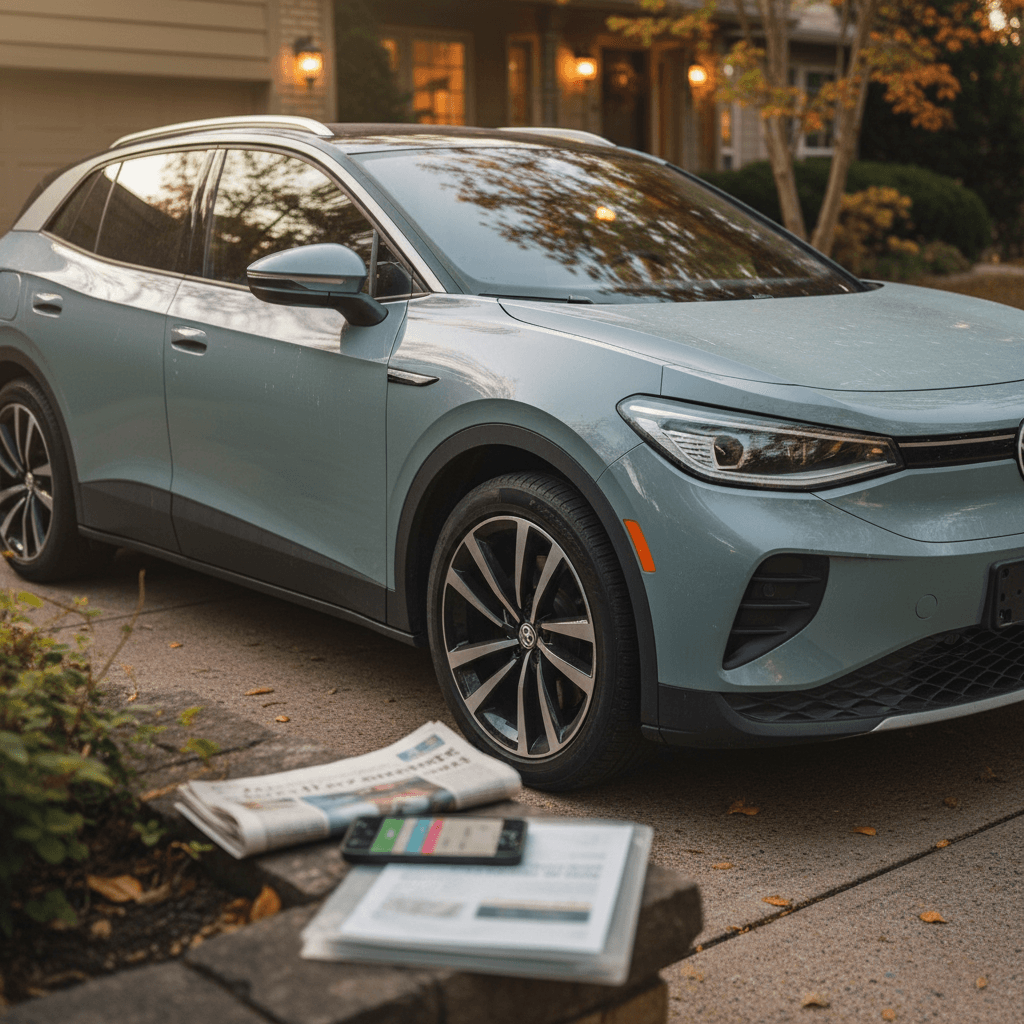
If you’re cross‑shopping affordable electric SUVs, a used 2021 Volkswagen ID.4 is probably on your radar. It was VW’s first mass‑market EV in the U.S., it won World Car of the Year, and today it’s one of the better bargains on the used‑EV market. But early‑build software frustrations, multiple recalls, and heavy depreciation mean you need to understand exactly what you’re buying.
Used‑market snapshot
2021 Volkswagen ID.4 as a used buy: the short version
What the 2021 ID.4 does well
- Spacious, quiet cabin with a genuinely comfortable ride and adult‑friendly back seat.
- Usable real‑world range around 190–230 miles when new, depending on trim and conditions.
- DC fast‑charging that’s competitive for its generation once updated software is installed.
- Big depreciation makes it one of the better values in the used‑EV crossover segment.
- Familiar VW driving feel that’s easy to adapt to if you’re coming from a gasoline Tiguan or Atlas.
Where the 2021 ID.4 can frustrate
- Early software was buggy and slow; cars without current updates can feel dated.
- 11+ federal recalls across 2021 ID.4s mean you must verify recall completion.
- Touch‑sensitive controls and non‑backlit sliders annoy many owners, especially at night.
- Charging curves on some batteries are slower than rivals, especially if software isn’t current.
- Resale values still falling as newer EVs with longer range and NACS ports arrive.
Verdict in one sentence
Key specs for the 2021 Volkswagen ID.4
2021 Volkswagen ID.4 headline numbers
2021 Volkswagen ID.4 major U.S. trims
The 2021 ID.4 launched in the U.S. with an 82 kWh (gross) battery and several trims. Names varied slightly over the year, but these are the versions you’ll most often see on the used market.
| Trim | Drivetrain | Approx. EPA range | Notable features |
|---|---|---|---|
| Pro RWD | Single‑motor RWD, 201 hp | ~260 miles | Value leader; cloth seats; smaller wheel options; good efficiency. |
| Pro S RWD | Single‑motor RWD, 201 hp | ~250 miles | Panoramic roof, power seats, upgraded lighting and interior materials. |
| 1st Edition | Single‑motor RWD, 201 hp | ~250 miles | Launch‑year special; unique wheels/badging; limited‑run trim. |
| Pro AWD | Dual‑motor AWD, 295 hp | ~240 miles | Quicker acceleration and all‑weather traction; modest range penalty. |
| Pro S AWD | Dual‑motor AWD, 295 hp | ~235 miles | Most fully loaded 2021 models; highest original MSRP and depreciation. |
Summary of the core 2021 ID.4 trims most U.S. shoppers will encounter.
Driving experience, comfort, and practicality
Behind the wheel, the 2021 ID.4 feels more like a conventional compact SUV than a science‑project EV. The steering is light but predictable, the suspension tuning leans toward comfort, and the cabin remains impressively quiet around town and on the highway. You don’t get the snap‑your‑neck acceleration of a performance‑tuned Tesla, but the 201‑hp rear‑drive models are more than adequate for daily commuting, and the 295‑hp AWD versions add the extra punch and all‑weather traction many buyers want.
- Ride quality is one of the ID.4’s strengths: it smooths out broken pavement better than many rivals in this price class.
- Cabin space is generous for passengers in both rows, and the flat floor makes the rear bench more usable for three across.
- Cargo room is competitive with other compact crossovers, and the squared‑off rear makes loading bulky items easier.
- Noise isolation is good, although the wide tires on some trims can add a bit of road roar on coarse asphalt.
Trim choice tip
Range and real‑world efficiency in a used 2021 ID.4
On paper, most 2021 ID.4 trims fall in the 250–260‑mile EPA range window. In the real world, especially a few years into the car’s life, you should plan around lower numbers. In independent 70–75 mph highway testing, Recharged has seen a healthy 2021 ID.4 1st Edition deliver roughly 190–200 miles on a full charge versus its 250‑mile EPA rating. That’s normal: high‑speed driving, weather, and accessories all cut into range.
What affects range most on a 2021 ID.4?
Understanding these variables will help you judge whether a specific used car meets your daily needs.
Cold weather
High speeds
Battery age & health
Don’t assume EPA range equals real‑world range
This is where Recharged’s Recharged Score battery health diagnostics matter. Instead of guessing from dash estimates, we measure pack performance directly and show you how the car’s usable capacity and projected range compare to when it was new. That context is critical when you’re choosing between multiple 2021 ID.4s with different mileage and fast‑charging histories.
Charging performance: home and public fast charging
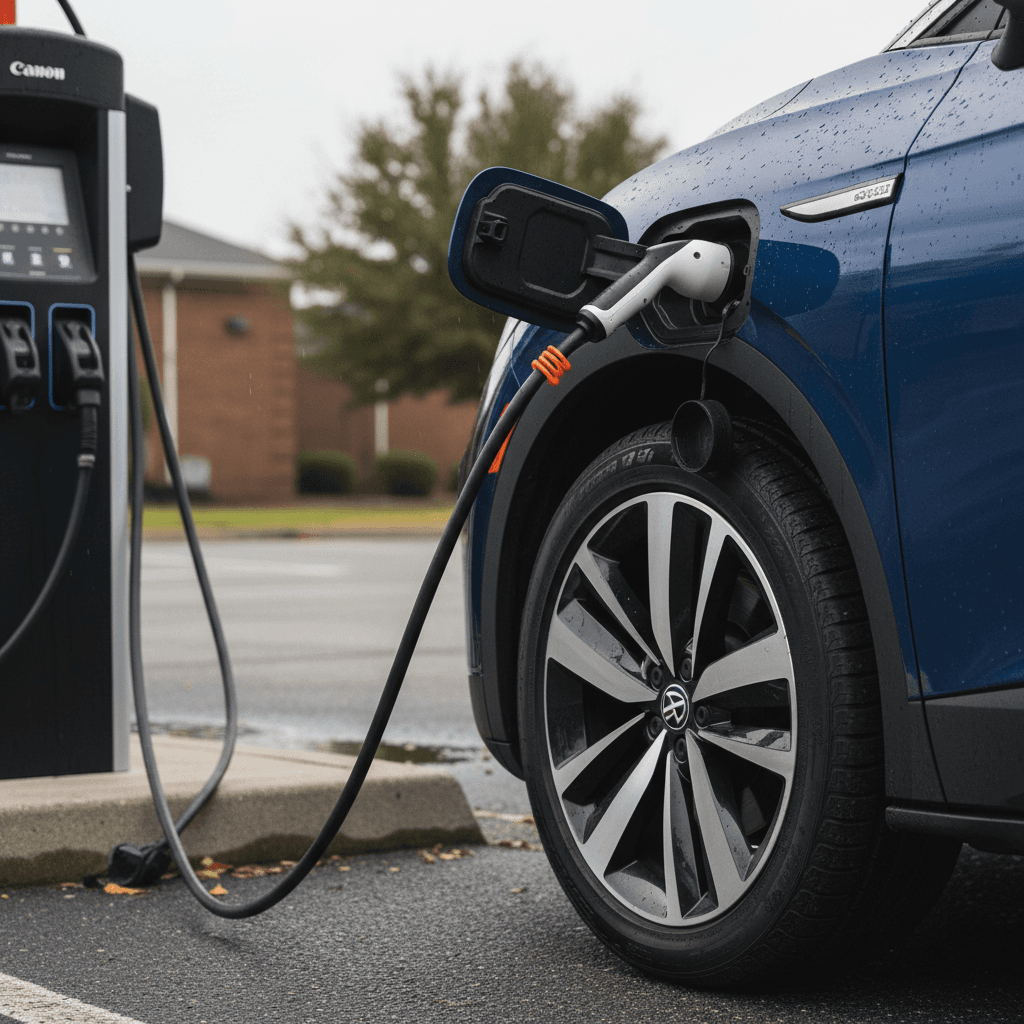
Every 2021 ID.4 sold in the U.S. can charge at up to roughly 11 kW on Level 2 AC, which means adding about 30–35 miles of range per hour on a typical 240‑volt home charger. For most owners, that’s plenty to refill from a typical commute overnight.
Typical charging times for a healthy 2021 ID.4
Approximate times from low state of charge to about 80% in common real‑world scenarios, assuming a healthy battery and moderate temperatures.
| Charging type | Power level | Approx. time (to ~80%) | Best use case |
|---|---|---|---|
| Level 1 (household outlet) | 120V, ~1.4 kW | ~30–40 hours | Emergency top‑ups only; not ideal as a primary solution. |
| Level 2 home / workplace | 240V, 40A (~9.6–11 kW) | ~7–9 hours | Overnight full recharge from low state of charge. |
| Public DC fast charging | Up to ~125–135 kW peak | ~35–45 minutes | Road‑trip top‑ups from roughly 10–80% in good conditions. |
Actual charging times vary with temperature, battery health, starting state of charge, and charger quality, but these ballpark figures are a good planning tool.
The more nuanced story is DC fast charging. Early 2021 ID.4s shipped with different battery suppliers, and peak charge rates varied: many LG‑sourced packs were capped lower than SK‑sourced ones. Over time, VW released software updates that improved the charging curve for many cars, but on the used market you’ll still see some 2021s that charge slower than others at the same station.
Fast‑charging due diligence
Keep in mind that the 2021 ID.4 uses the CCS fast‑charging standard, not Tesla’s NACS connector. In much of the U.S. that still gives you good access to Electrify America and other non‑Tesla networks, but future‑proof shoppers should factor in the industry’s shift toward NACS and the growing number of EVs that can use Tesla Superchargers directly.
Depreciation and used pricing for 2021 ID.4
From a dealer and remarketing standpoint, the 2021 ID.4 has been one of the steeper depreciators among mainstream EV crossovers. That’s bad news if you bought new at a $40,000‑plus MSRP, but it’s precisely what makes the car appealing on the used market in 2025–2026.
How hard has the 2021 ID.4 fallen in value?
Why depreciation cuts both ways
On Recharged, we benchmark every vehicle against live market data so you can see whether the asking price for a specific 2021 ID.4 is above, below, or right at fair market value. That’s baked directly into the Recharged Score, alongside battery health and reconditioning notes, so you’re not guessing whether a low price hides a problem.
Reliability, recalls, and known 2021 ID.4 issues
This is the part of the 2021 ID.4 story you can’t gloss over. As a first‑year mass‑market EV, it launched with teething issues, especially around software and electronic components. By 2026, the model has accumulated double‑digit NHTSA recall campaigns covering everything from potential rollaway risks to HV battery issues and door‑handle sensors.
Common pain points on 2021 ID.4s
Most are manageable if addressed, but you should confirm work history before you buy.
Software glitches & slow infotainment
Multiple recall campaigns
Door lock and keyless entry quirks
Dealer service capacity
Non‑negotiable step: run the VIN
The flip side: plenty of owners have racked up 30,000–50,000 miles in 2021 ID.4s with no major hardware failures, just the normal annoyances of slow software rollouts. As with most first‑generation EVs, variance is high. That’s why looking at individual vehicle history, recalls, software version, repair records, is more important than obsessing over the model’s reputation in isolation.
Battery health: what actually matters on a 2021 ID.4
The 2021 ID.4’s roughly 82 kWh pack has, so far, shown relatively modest degradation when properly managed. Most well‑cared‑for examples still deliver the majority of their original usable capacity after a few years. But pack health varies with how the first owner treated the car, how often it was fast‑charged, whether it lived in extreme heat, and whether software updates that tweak battery management were applied on time.
How to gauge a 2021 ID.4’s battery health
1. Don’t rely only on % and guesswork
The dashboard percentage and estimated miles can be misleading. A healthy pack and a slightly degraded pack may both show “100%” after a charge.
2. Look at miles vs. charge from recent trips
Ask for real‑world consumption data if the seller has it. How many miles did the car deliver from, say, 80% to 20% on a familiar route?
3. Note the car’s charging habits
A car that lived on home Level 2 and rarely fast‑charged is generally a safer bet than one that DC fast‑charged daily at high state of charge.
4. Consider climate history
Hot‑climate cars that parked outside without much thermal management can see faster degradation than those in milder regions.
5. Use third‑party diagnostics when possible
Tools that read pack data via the OBD port can estimate usable capacity, but they require some EV expertise to interpret correctly.
6. Leverage the Recharged Score
Every vehicle sold on <strong>Recharged</strong> includes a Recharged Score report with verified battery health, so you can compare ID.4s by actual pack condition, not just odometer miles.
Why verified battery health matters more than mileage
Ready to find your next EV?
Browse VehiclesChecklist: what to check before you buy used
Treat a used 2021 ID.4 like any other used car purchase, but with a few EV‑specific twists. Here’s a focused inspection roadmap you can follow or give to a pre‑purchase inspector.
Pre‑purchase checklist for a 2021 Volkswagen ID.4
1. Verify software version
From the infotainment menus, confirm the car is on a recent software build (many early cars were updated from 2.x to 3.x and beyond). Older builds can be buggier and slower.
2. Confirm all recalls are closed
Use the VIN with NHTSA or a VW dealer to make sure every applicable recall, especially safety and battery campaigns, has been performed.
3. Test all driver‑assist systems
On a test drive, check adaptive cruise, lane‑keeping, blind‑spot monitoring, and parking sensors. Confirm no warning lights linger on the dashboard.
4. Inspect charging hardware
Look at the charge port for damage or corrosion. Plug into both Level 2 and, if possible, a DC fast charger to verify reliable connection and reasonable charge rates.
5. Check tires and alignment
Heavy EVs like the ID.4 can chew through tires and reveal alignment issues. Uneven wear may hint at pothole damage or suspension problems.
6. Review service records
Ask for documentation of software updates, recall work, and any repairs. Consistent dealer visits for campaigns can indicate a conscientious prior owner.
7. Evaluate cosmetic wear carefully
Interior plastics and seat fabrics tend to hold up well; excessive scuffs, stains, or broken trim in a 2021 may suggest rough use overall.
8. Get a battery‑health report
On Recharged, you’ll see the Recharged Score battery report before you ever step into the car. If you’re shopping elsewhere, consider a specialized EV inspection.
Beware “cheap but unknown” cars
Who the 2021 Volkswagen ID.4 fits best (and who should skip it)
Great fit for these shoppers
- Value‑focused EV buyers who want a roomy electric crossover for less than a comparable Tesla or Hyundai/Kia.
- Suburban commuters with predictable daily driving under ~150 miles and access to Level 2 home or workplace charging.
- First‑time EV owners who prefer a traditional SUV driving feel and don’t need the latest bleeding‑edge tech.
- Families that need an easy‑to‑live‑with second car for school runs and local errands.
Might want to look elsewhere
- Drivers who regularly exceed 200–230 miles per day without reliable charging, range will feel tight.
- Shoppers who want direct Tesla Supercharger access and the emerging NACS ecosystem without adapters.
- Buyers who are extremely software‑sensitive and can’t tolerate any infotainment lag or UI quirks.
- Anyone unwilling to verify recall and software history or to work with a dealer for outstanding campaigns.
FAQ: 2021 Volkswagen ID.4 as a used EV
Frequently asked questions about the 2021 Volkswagen ID.4 (used)
Bottom line: is a used 2021 ID.4 a good buy?
Viewed through a used‑vehicle lens, the 2021 Volkswagen ID.4 is a classic case of first‑generation risk turning into second‑owner opportunity. Yes, it has more recalls and software history to track than many gas crossovers, and the charging experience isn’t as bulletproof as the newest EVs. But for the right buyer, someone who values space, comfort, and price over spec‑sheet bragging rights, it offers a lot of electric SUV for the money.
If you make sure the car you’re looking at has up‑to‑date software, closed recalls, and a healthy battery, a used 2021 ID.4 can serve as a capable daily driver for years to come. Shopping through Recharged adds an extra layer of confidence: every EV comes with a Recharged Score battery‑health report, transparent pricing, financing support, trade‑in options, and even nationwide delivery from our digital showroom or Experience Center in Richmond, VA. That combination of data and support is exactly what early‑generation used EVs like the ID.4 need, and what savvy buyers increasingly expect.