If you own or are shopping for a 2021 Tesla Model 3, you’ve probably heard there have been **multiple safety recalls** on this model year. The 2021 Tesla Model 3 recalls list can look intimidating at first glance, but once you break it down, most of the issues are well‑understood and many have already been fixed with software or quick hardware updates.
Quick context
Overview: Why the 2021 Model 3 Has Multiple Recalls
The 2021 Model 3 sits in the middle of Tesla’s rapid‑update era. Hardware, wiring, and software changed frequently, and the company leaned heavily on **over‑the‑air (OTA) updates** to add features and address problems. Federal regulators, especially the National Highway Traffic Safety Administration (NHTSA), have pushed Tesla to tighten up everything from trunk wiring to driver‑assist behavior, and those actions often span **several model years including 2021**.
2021 Model 3 Recall Landscape at a Glance
How Tesla Handles Recalls (and Why It Feels Different)
Over‑the‑air (OTA) updates
Many Tesla recalls, especially those related to Autopilot and driver‑assist behavior, are fixed by a software update that downloads while the car is parked. You may see a recall notice, then find that your 2021 Model 3 already installed the remedy in the background.
- No appointment needed
- Applies to large fleets at once
- Still counted as a formal NHTSA recall
Traditional service‑bay repairs
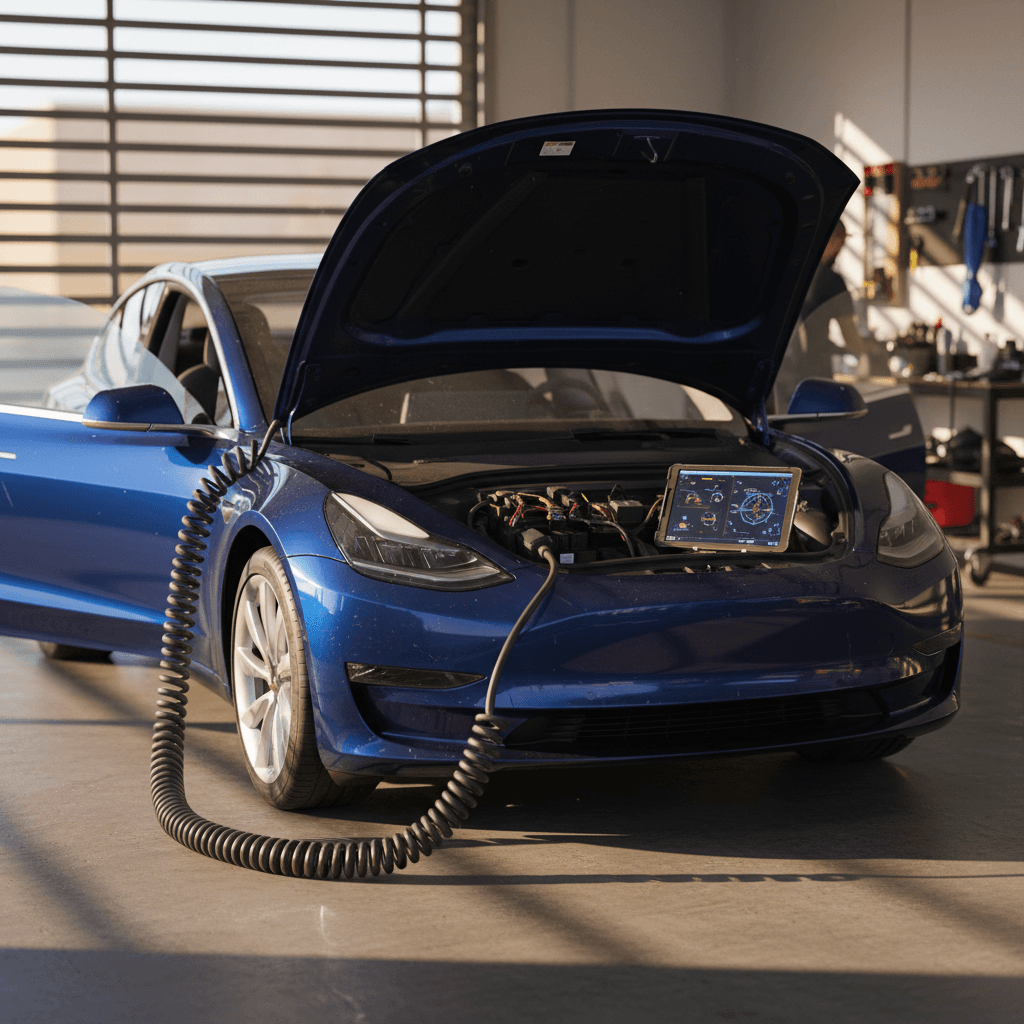
Hardware‑related recalls on the 2021 Model 3 still require a service visit. Typical examples include seat‑belt anchor inspections, hood‑latch adjustments, or trunk‑harness retrofits. Tesla will schedule a mobile or service‑center appointment and perform the repair at no cost.
- May involve parts wait times
- Shows as "open" until inspected
- Essential for resale value and safety
Don’t assume “no light” means no recall
Major 2021 Tesla Model 3 Recalls List
Below is a consolidated view of the **most important U.S. recall campaigns** that can affect a 2021 Tesla Model 3 as of early 2026. Exact applicability depends on build date, options, and where the car was originally sold, so you should always verify by VIN.
Key Recalls That May Affect a 2021 Tesla Model 3
High‑impact recall campaigns that commonly include 2021 Model 3 vehicles.
| System / Area | Typical Issue | Recall type | Fix type |
|---|---|---|---|
| Driver‑assist / Autopilot | Insufficient driver attention and collision‑avoidance safeguards | Large multi‑model software recall | OTA software update |
| Front trunk (frunk) latch | Secondary hood latch may not engage properly, raising risk of hood opening while driving | Mechanical recall on front‑latch components | Inspection / adjust or replace parts |
| Trunk / camera harness | Trunk‑lid wiring harness can fatigue, causing rearview camera loss | Wiring recall affecting trunk harness | Harness retrofit or protection added |
| Seat belts, front row | Front seat‑belt anchor or retractor may not be secured or installed to spec | Seat‑belt hardware recall | Inspection; re‑secure or replace components |
| Lighting / visibility | Tail lamps or other external lights may not operate correctly due to software faults | Software‑driven lighting recall | OTA update to lighting logic |
| SRS / airbags & restraints | Safety‑restraint system software behavior under certain impact conditions | Mixed software/hardware campaigns | OTAs plus inspections where required |
This list focuses on safety‑critical, widely applicable recalls. Your specific car may be involved in more (or fewer) campaigns.
Not a VIN‑specific list
Recall Details by System
1. Autopilot / Driver‑Assist Safety Recall Campaigns
One of the most significant modern Tesla recalls covers **Autopilot and related driver‑assist features** across millions of Model S, 3, X and Y vehicles, including many built for the 2021 model year. Regulators concluded the system didn’t do enough to ensure drivers stayed engaged or to prevent predictable misuse, so Tesla pushed a major OTA update to change visual alerts, steering‑wheel nag behavior, and how the system responds in certain conditions.
- Primarily a **software** remedy, delivered as an OTA update
- Affects how Autosteer, traffic‑aware cruise, and other assists behave
- May slightly change the way your 2021 Model 3 feels on the highway
- Shows up as a formal NHTSA recall even though no parts are replaced
What you can do
2. Front Trunk (Frunk) Hood‑Latch Issues
Several Tesla campaigns involve the **front trunk (frunk) latch system**, including vehicles in the 2021 Model 3 production window. In these recalls, the secondary latch may be mis‑positioned or not operate as intended. If the primary latch were to release and the secondary didn’t catch, the hood could open while driving and block forward visibility.
- Safety risk: Severely reduced visibility if the hood opens at speed
- Remedy: Inspect latch geometry and operation; adjust or replace parts
- Often completed via mobile service in a driveway or parking lot
- Takes roughly 30–60 minutes when parts are on hand
3. Trunk Harness and Rear Camera Visibility
Tesla has long chased issues with the **trunk harness and rearview camera wiring** on Model 3. Earlier campaigns focused on 2017–2020 vehicles, but harness‑routing improvements and expanded coverage mean some early‑2021 builds can be inspected or retrofitted as well. The concern is that repeated opening and closing of the trunk can fatigue the coaxial cable, leading to intermittent or failed rear camera view.
- Symptom: rear camera image drops out, flickers, or fails
- Risk: reduced rear visibility when backing, especially in crowded areas
- Fix: revised harness, better strain relief, or protective routing
- Status: on some cars this is a service‑bulletin type visit; on others it’s a formal recall campaign
4. Front Seat‑Belt Anchor and Retractor Inspections
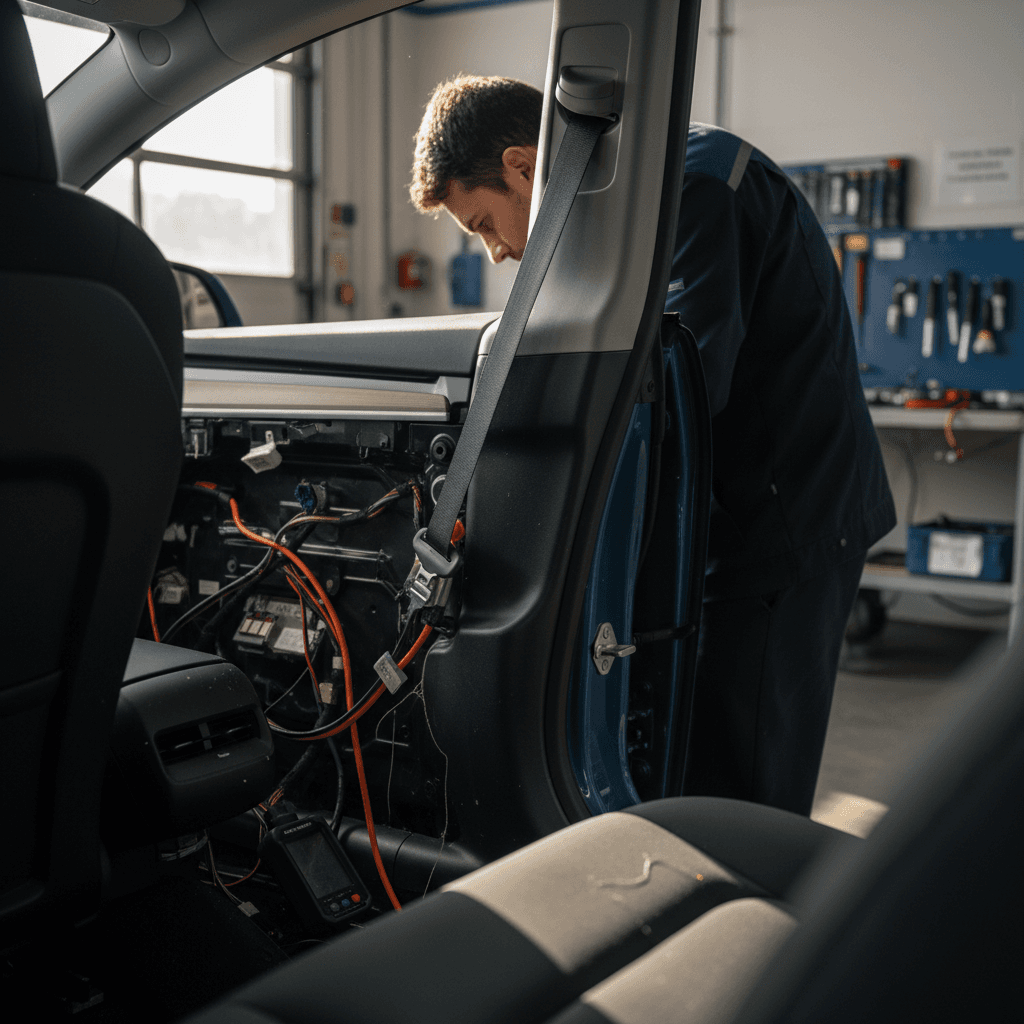
A series of Tesla notices and NHTSA campaigns center on **front seat‑belt anchor and retractor installation** on Model 3 and Model Y. For affected 2021 vehicles, the issue is not that the belts are inherently weak, but that a subset may not have been torqued or assembled exactly to specification on the factory line.
Seat‑Belt Related Concerns on 2021 Model 3
What the seat‑belt recalls and service campaigns are trying to prevent.
| Concern | What Tesla Checks | Owner Impact |
|---|---|---|
| Anchor fastener not torqued to spec | B‑pillar shoulder‑belt anchor hardware | No visible symptom; risk is reduced restraint performance in a crash |
| Retractor or pre‑tensioner installation | Mounting, orientation, and fastener engagement | May involve replacement of belt assembly if out of spec |
| Warning from on‑board diagnostics | Airbag/SRS warning messages | Car remains driveable, but safety system needs prompt attention |
If your car is in one of these campaigns, Tesla will physically inspect and, if needed, re‑secure or replace parts.
5. Lighting and Visibility Software Fixes
Tesla has also issued software‑based recalls tied to **exterior lighting behavior**, especially tail lamps that could fail to illuminate correctly under certain wake‑up scenarios. Some 2021 Model 3 vehicles share software branches and body‑control modules with later model years, so they can be swept into these campaigns even when the headlines focus on 2022–2023 cars.
- Risk: other drivers may misjudge your braking or presence at night
- Cause: software logic incorrectly flags faults or fails to command lamps
- Fix: OTA update that changes lamp‑control logic and fault‑detection thresholds
- Owner task: simply accept and install the software update when prompted
6. Airbag / Restraints Logic and Related Campaigns
A smaller set of campaigns involve **airbag and safety‑restraint system (SRS) software**. These aim to make sure the 2021 Model 3 deploys airbags and pre‑tensions belts in line with the latest regulatory test data. On some VINs this is purely a software calibration; on others it’s paired with physical inspections of sensors or modules.
Don’t ignore SRS warnings
How to Check if a 2021 Model 3 Has Open Recalls
Step‑by‑Step: See Every Recall for Your 2021 Model 3
1. Locate the full 17‑digit VIN
You’ll find it on the lower driver‑side windshield, on the door‑jamb label, and in the Tesla app under vehicle details. You need the VIN, not just "2021 Model 3."
2. Run the VIN through NHTSA’s recall lookup
Go to the official NHTSA recall search and enter your VIN. It will list any U.S. safety recalls not yet marked as completed for that specific car.
3. Check Tesla’s own recall page or app
Tesla maintains a VIN‑level recall portal and will also show open campaigns in the app under the Service section. This can include service bulletins and non‑NHTSA campaigns.
4. Compare dates and software versions
For OTA recalls, look at the campaign’s remedy software version and compare it to what your car is running. If you’re on a later version, the fix may already be installed.
5. Confirm completion records
For hardware recalls, ask for documentation that the campaign was performed, Tesla service records, digital invoices, or a RechargedScore‑style report if you’re buying used.
6. Re‑check annually
New recalls can be issued years after production. Make a habit of running your VIN through NHTSA once or twice a year.
How Recharged simplifies this
Ready to find your next EV?
Browse VehiclesWhat Recalls Mean When You’re Buying a Used 2021 Model 3
A long 2021 Tesla Model 3 recalls list doesn’t automatically make the car a bad buy. In fact, a vehicle that has **all recalls properly completed** can be a safer choice than one that’s never been called back but quietly carries an undiscovered defect. The key is understanding which campaigns matter most and whether they’ve been addressed on the specific car you’re considering.
How Recalls Affect a Used 2021 Model 3 Purchase
Think of recalls as clues about how well the car’s been cared for, not just red flags.
Completed safety recalls
Best‑case scenario. Documentation shows Autopilot, seat‑belt, hood‑latch, and wiring campaigns have been completed. This tells you the previous owner stayed current and that the car benefits from the latest fixes.
Open hardware recalls
Needs attention before delivery. An open seat‑belt or hood‑latch recall should be resolved before you take the keys. It’s free for the owner, but it takes time and coordination with Tesla service.
Pending software updates
Low friction but worth confirming. If the car is several software releases behind and has open OTA recalls, build that update time into your first days of ownership.
Buying private‑party
In a driveway deal, you’re usually the one who must:
- Run the VIN through NHTSA and Tesla tools
- Interpret each campaign and its status
- Negotiate price if key recalls are still open
That’s absolutely doable, but it takes homework and a bit of recall‑code decoding.
Buying through a specialist marketplace
With a used‑EV specialist like Recharged, those checks are built into the process. Our inspection includes:
- VIN‑level recall and service‑campaign review
- Battery‑health diagnostics via the Recharged Score
- Transparent documentation so you know what’s been done and what’s still outstanding
The goal is to remove recall guesswork from your purchase decision.
Tips for Owning a 2021 Model 3 After the Recalls
- Keep automatic software updates enabled unless you have a specific reason not to, this is how most recalls are remedied.
- Skim the release notes after major updates so you understand any changes in driver‑assist behavior or warnings.
- Schedule hardware recall work promptly, especially anything involving seat belts, airbags, or hood latches.
- After a trunk‑harness or lighting recall, test your rear camera and exterior lights in a dark area to be sure everything behaves normally.
- File and save all service invoices and Tesla service‑center summaries; they’re valuable when you eventually sell or trade the car.
- If you’re unsure whether a fix was completed, assume it wasn’t until you see clear documentation.
Make a simple recall log
2021 Model 3 Recalls FAQ
Frequently Asked Questions About 2021 Tesla Model 3 Recalls
Bottom Line on 2021 Model 3 Recalls
The 2021 Tesla Model 3 has attracted its share of attention from regulators, and on paper the recalls list is long. But when you separate major safety campaigns from minor software calibrations, a clear picture emerges: most issues are well understood, fixes are available, and many cars on the road today have already been updated.
If you already own a 2021 Model 3, your job is straightforward, check for open recalls regularly, install software updates, and complete any required inspections quickly. If you’re shopping used, insist on VIN‑level documentation and give extra credit to cars with thorough records and verified battery health. That’s where a transparent marketplace like Recharged can simplify the process with inspection reports, financing support, and expert EV guidance from start to finish.