If you’re hunting for a used luxury EV that still feels like a proper sports car, a 2021 Porsche Taycan is going to catch your eye, and probably your heart. But buying an early Taycan isn’t the same as buying a used Panamera with a different engine. You’re juggling performance, fast‑charging tech, battery health, and some very real depreciation.
Quick take
Who the 2021 Taycan Is (and Isn’t) For
Is a used 2021 Taycan right for you?
Match the car to your everyday reality before you fall for the badge.
Perfect for you if…
- You want sports‑car performance in a four‑door EV.
- You fast‑charge often and care about short stop times more than max range.
- You’re okay trading some efficiency for feel and feedback.
- You plan to keep the car 3–7 years and value Porsche build quality.
Think twice if…
- You regularly drive 250+ miles in winter between fast chargers.
- You want a simple EV with minimal menus and screens.
- You’re extremely sensitive to maintenance and repair costs.
- You need cavernous rear space or a big family hauler.
Used‑EV sweet spot
Thanks to steep early depreciation, the 2021 Taycan now sells for a fraction of its original MSRP. That makes it one of the most compelling ways to get into a true high‑end performance EV, as long as you buy carefully.
2021 Porsche Taycan model range and key specs
In the U.S., the 2021 Taycan lineup consisted of the base rear‑wheel‑drive Taycan, Taycan 4S, Taycan Turbo, and Taycan Turbo S. All share the same basic 800‑volt architecture and two‑speed rear axle, but power, battery options, and performance vary.
2021 Porsche Taycan trims at a glance
Approximate U.S. specs for common 2021 Taycan sedans. Exact performance depends on options like the Performance Battery Plus and launch control.
| Trim | Drive | Battery options (gross) | Peak hp (overboost) | 0–60 mph* | EPA range (approx.) |
|---|---|---|---|---|---|
| Taycan (base) | RWD | 79.2 / 93.4 kWh | 402 / 469 hp | ≈5.1 s | ~200–225 mi |
| Taycan 4S | AWD | 79.2 / 93.4 kWh | 522 / 562 hp | ≈3.8 s | ~200–225 mi |
| Taycan Turbo | AWD | 93.4 kWh | up to ~670 hp | ≈3.0 s | ~200 mi |
| Taycan Turbo S | AWD | 93.4 kWh | up to ~750 hp | ≈2.6 s | ~190 mi |
Numbers are approximate and rounded; always verify exact specs for the car you’re considering.
Battery size matters
2021 Taycan by the numbers
Driving experience: does it feel like a real Porsche?
On the road, the 2021 Taycan feels less like a science project and more like a low‑slung 911 that happens to run on electrons. The steering is quick and precise, body motions are tightly controlled, and the car shrinks around you in a way most big EVs simply don’t. Even the base rear‑drive car feels properly rapid; the Turbo and Turbo S are violently fast in launch control, to the point where you’ll be picking your sunglasses off the rear shelf.
Ride and handling
- Porsche Active Suspension Management and air springs (on most cars) let you glide over broken pavement in Normal mode, then tighten everything up in Sport and Sport Plus.
- The Taycan is heavy, north of 4,700 pounds in many specs, but it hides it well with a low center of gravity and a brilliantly tuned chassis.
- Optional rear‑axle steering makes the car feel smaller in town and more planted at speed.
Noise and feel
- Cabin noise is well‑controlled but not tomb‑silent; you still hear the tires and wind, which actually makes it feel more like a sports sedan than a pod.
- The optional Porsche Electric Sport Sound adds a synthesized whir that some owners love and others switch off on day two.
- Brakes are strong, but the transition between regen and friction is more natural than in many EVs, it feels like a Porsche pedal, not a video game slider.
Sweet‑spot trims
Range, efficiency, and real-world road-trip behavior
If you’re cross‑shopping a 2021 Taycan with a Tesla Model S or newer Hyundai/Kia EVs, the Porsche will almost certainly come up short on paper range. Most 2021 Taycans land around 200–225 miles of EPA range depending on trim and battery, while an equivalent‑era Model S could crest 400 miles. In day‑to‑day mixed driving, many owners see 180–220 miles between charges if they use the pack down to low state of charge.
- Expect noticeably lower range in cold weather, especially at highway speeds.
- The bigger Performance Battery Plus not only goes farther, it holds higher charging speeds longer.
- Taycans are not efficiency champions, they trade a bit of consumption for grip, power, and that Porsche feel.
- For most commuters with home charging, range is a non‑issue; long‑distance drivers need to plan stops carefully.
Winter reality check
Charging performance: where the Taycan really shines
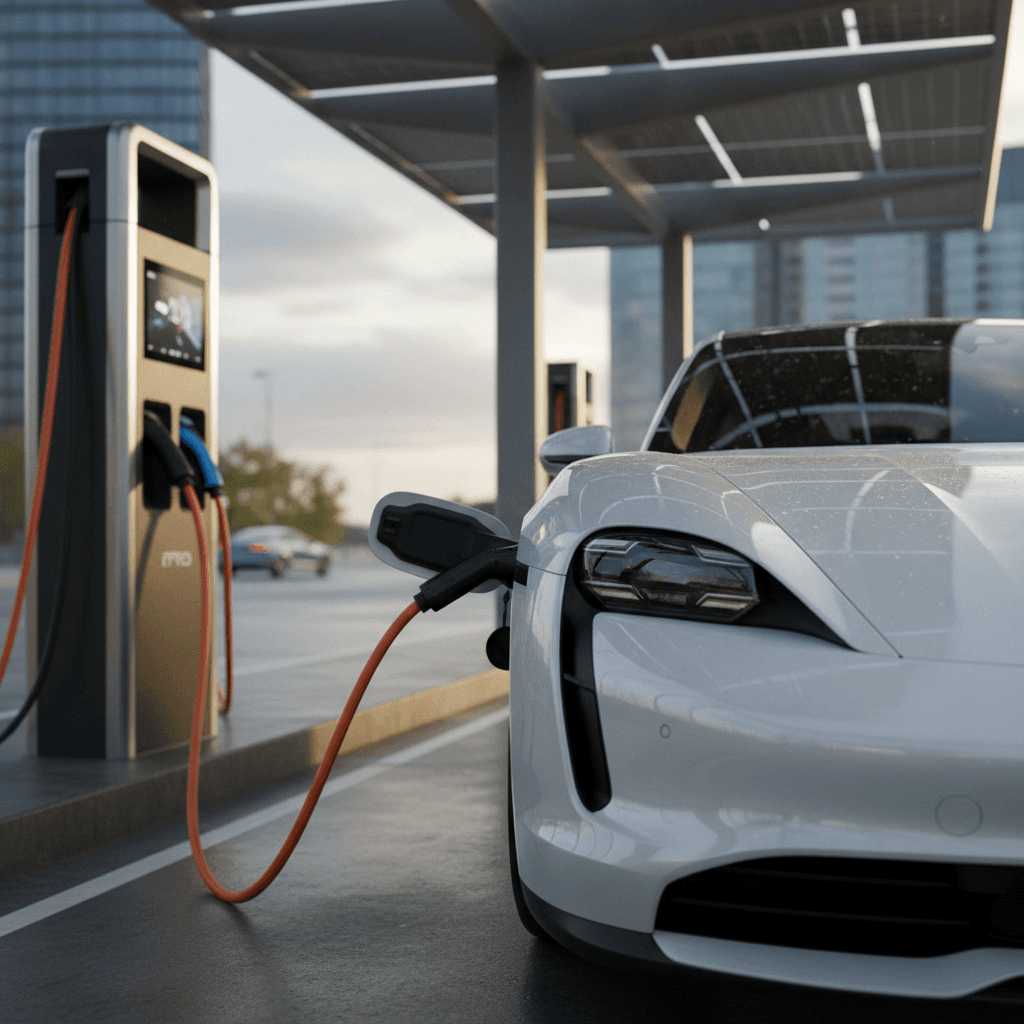
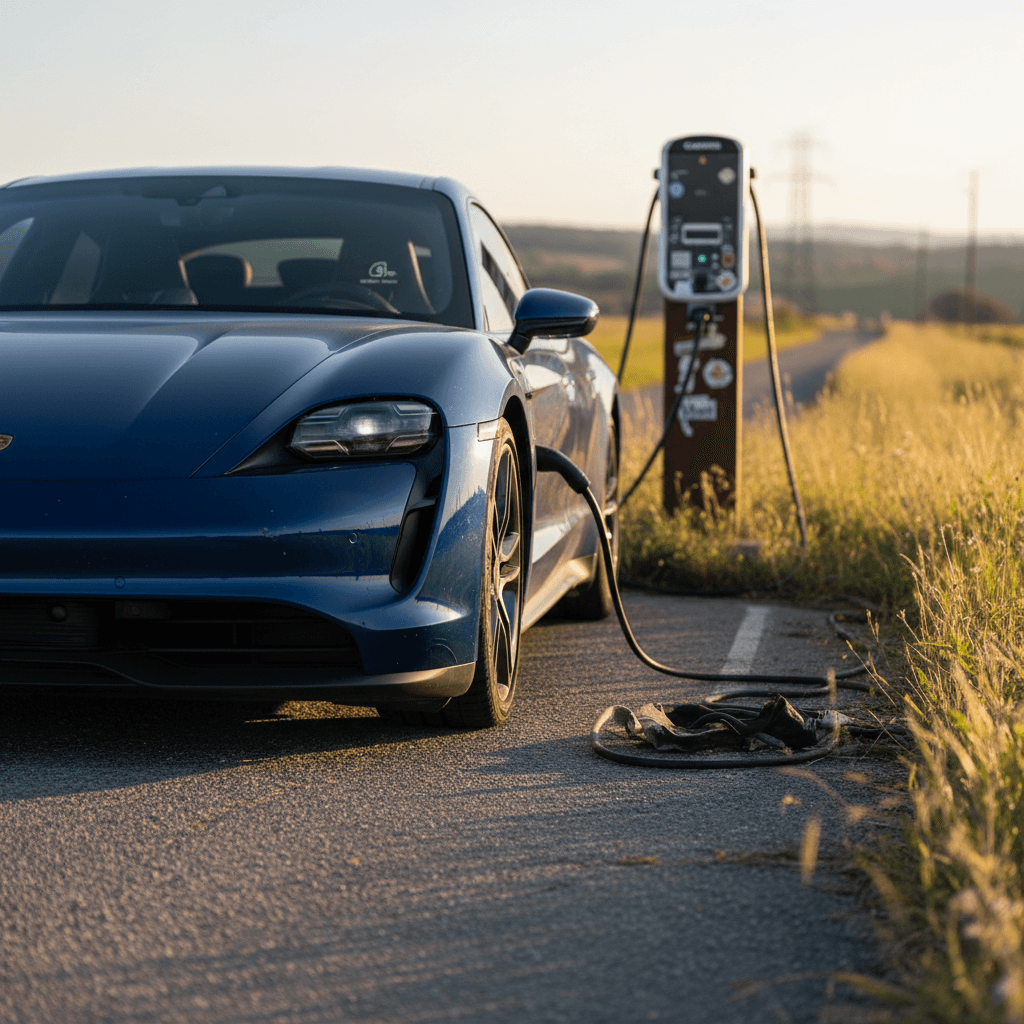
Range may not top the charts, but when it’s time to recharge, the 2021 Taycan is one of the fastest‑charging EVs of its era. Its 800‑volt system and sophisticated thermal management let many versions pull up to roughly 270 kW on suitable DC fast chargers and stay at high power longer than most rivals from 2021.
Charging the 2021 Taycan: what to expect
Fast in the right conditions, but infrastructure matters.
DC fast charging
- On a high‑power 800‑V station, Porsche quotes roughly 5–80% in about 22–25 minutes with the big battery.
- On more common 400‑V 50 kW chargers, the same 5–80% session can take around 90 minutes.
- Taycan’s DC curve is excellent: it gets you meaningful range quickly, ideal for road trips with frequent short stops.
AC home charging
- Standard onboard AC charging is about 9.6 kW, good for a full pack overnight on a 240‑V Level 2 setup.
- Many owners simply plug in at home and wake up to a full battery; DC fast charging becomes an occasional need.
Planning your stops
- Think in terms of time to add 100 miles, not just total range.
- The Taycan’s ability to recharge quickly can make a 200‑mile EV surprisingly easy to live with on long days, as long as your route has modern high‑power chargers.
Road‑trip tip
Interior, tech, and practicality
Slip inside a 2021 Taycan and you’re greeted by a low cowl, wide dash, and a lot of glass, and a lot of screens. Most cars have a curved digital instrument cluster, a central touchscreen, and a touch panel for climate controls; many also have an optional passenger display. Materials are generally excellent, with classic Porsche switchgear and solid-feeling doors, though some of the glossy black surfaces show fingerprints and micro‑scratches quickly.
Comfort and space
- Front seats are supportive and highly adjustable, especially with 14‑ or 18‑way options.
- Rear space is closer to a low‑roof midsize sedan than an SUV, adults fit, but headroom is tight for tall passengers.
- The sedan has a modest trunk and a small front trunk (frunk); it’s fine for trips but not a moving day hero.
Usability and tech
- Apple CarPlay and Android Auto are present, but some basic functions are buried in menus.
- The touch‑sensitive climate and seat controls feel futuristic but can be fiddly while driving.
- Driver‑assist features like adaptive cruise and lane‑keeping were often optional, not standard, so check the build sheet.
Spec check
Reliability, battery health, and recalls
By 2021, the Taycan was still an early‑generation EV, and like most complex German luxury cars, it hasn’t been completely drama‑free. The good news is that the high‑voltage battery pack itself has not developed a widespread reputation for catastrophic failure, and Porsche’s battery warranty (typically 8 years/100,000 miles for capacity) offers some peace of mind. Most issues show up instead as software gremlins, charging quirks, or minor hardware faults, the kind of things you feel as annoyances more than wallet‑killers, provided you’re under warranty.
Common owner‑reported issues on early Taycans
Not every car has these problems, but they’re themes worth asking about.
Software & infotainment
- Occasional frozen screens or rebooting infotainment.
- Glitchy Bluetooth or smartphone integration.
- Most are addressed with software updates; ask for full update history.
Charging behavior
- Some owners report inconsistent DC fast‑charging speeds if the car’s battery is cold or software is out of date.
- Others note picky communication with certain third‑party chargers.
Camera and driver aids
- As of early 2026, Porsche is recalling many 2019–2025 Taycans for a backup camera visibility issue that’s fixed via software at the dealer.
- Check that the recall work has been completed or scheduled.
Warranty is your friend
Depreciation and used pricing for 2021 Taycan
Here’s where the 2021 Taycan gets very interesting for used shoppers. These cars were expensive when new, often cresting six figures with options, and like many early luxury EVs they’ve dropped fast. That’s painful for the first owner, but it can put a serious car within reach if you’re coming from a new mid‑tier EV budget.
What 2021 Taycans cost new vs. now
Approximate U.S. pricing based on national guidebooks and market data as of early 2026. Actual values vary with mileage, condition, options, and region.
| Model (2021) | Original MSRP (base) | Typical used asking price (2026) | Approx. value retained |
|---|---|---|---|
| Taycan (base) | ≈$81,000 | ≈$48,000 | ~60% |
| Taycan 4S | ≈$108,000 | ≈$60,000 | ~55–65% |
| Taycan Turbo | ≈$155,000 | ≈$87,000 | ~55–60% |
| Taycan Turbo S | ≈$189,000 | ≈$94,000 | ~50–55% |
Use this as a ballpark, not a quote. Always check up‑to‑the‑minute pricing when you shop.
How hard has it fallen?
What to look for when buying a used 2021 Taycan
Essential checks before you sign for a 2021 Taycan
1. Verify battery state of health
Ask for a recent, <strong>quantitative battery health report</strong>, not just “it charges fine.” At Recharged, every Taycan includes a Recharged Score battery diagnostic so you know exactly how much usable capacity remains before you buy.
2. Confirm battery size and key options
Decode the VIN or build sheet to see whether the car has the Performance Battery or Performance Battery Plus, adaptive air suspension, rear‑axle steering, and driver‑assist packages. These all affect both price and livability.
3. Check charging history and habits
A Taycan that’s lived its life on home Level 2 charging with only occasional DC fast‑charge sessions is ideal. Heavy, repeated fast‑charging isn’t a deal‑breaker, but it makes a thorough battery check even more important.
4. Inspect wheels, tires, and brakes
Performance EVs are hard on consumables. Check for expensive 21‑inch wheels with curb rash, mismatched tires, and worn brake pads or rotors, especially on Turbo and Turbo S models that see spirited driving.
5. Scan for software updates and recalls
Ask for service records showing completed software updates, including the backup‑camera recall and any charging‑system updates. A dealer can pull this by VIN; Recharged includes this in every Score Report.
6. Budget for insurance and maintenance
Get insurance quotes in advance and assume higher‑than‑average costs for tires, brakes, and alignment work. A Taycan is still a Porsche, running costs are closer to a sports sedan than a mainstream EV.
How Recharged can help
Ready to find your next EV?
Browse VehiclesHow the 2021 Taycan compares to newer Taycans and rivals
The Taycan has evolved quickly since 2021. Newer models boast more range, smarter efficiency tuning, and even quicker charging, one reason the car has recently started winning major EV‑of‑the‑year awards. That doesn’t make a 2021 obsolete, but it does shape where it sits in today’s market.
2021 Taycan vs. updated Taycan
- Later model years add more battery capacity and range, plus refinements to thermal management and charging behavior.
- Some newer trims offer up to the high‑200‑mile range, versus roughly ~200–225 miles for many 2021s.
- If you road‑trip constantly, a newer Taycan may be worth the premium. If you mostly commute and do regional drives, a well‑bought 2021 can make more sense.
2021 Taycan vs. other used luxury EVs
- Tesla Model S (similar years): Longer range and easier charging network access, but softer steering feel and less special cabin.
- Mercedes EQS / BMW i4: Plush and quiet, but can’t match the Taycan’s steering feel or fast‑charging curve.
- Lucid Air (early cars): Huge range and efficiency, but less established ecosystem and service footprint than Porsche.
Head vs. heart
FAQ: 2021 Porsche Taycan
Frequently asked questions about the 2021 Taycan
Bottom line: should you buy a 2021 Taycan used?
The 2021 Porsche Taycan isn’t the rational choice if you treat EVs like rolling calculators of kilowatt‑hours and miles. Newer cars go farther on a charge, and some cost less to own. But if you care how a car feels when you roll into a corner or merge onto a short on‑ramp, the early Taycan still delivers a kind of driving joy that most electric sedans only hint at.
As a used buy in 2026, the Taycan is all about buying the right example: the right battery, the right options, clean service and software history, and a verified strong pack. Do that, and you end up with a car that looks and feels every inch a modern Porsche, and just happens to plug in at night instead of stopping for premium. If you want help finding that needle in the haystack, Recharged’s battery‑health diagnostics, transparent pricing, and EV‑savvy advisors are designed to make owning a 2021 Taycan as rewarding as driving one.