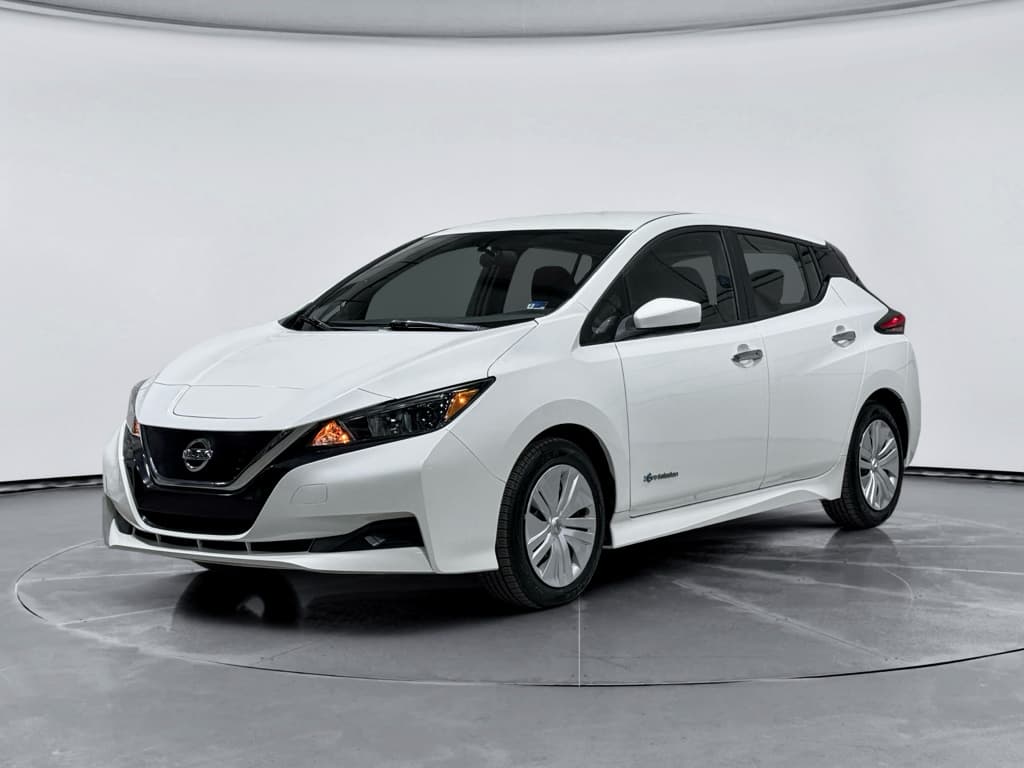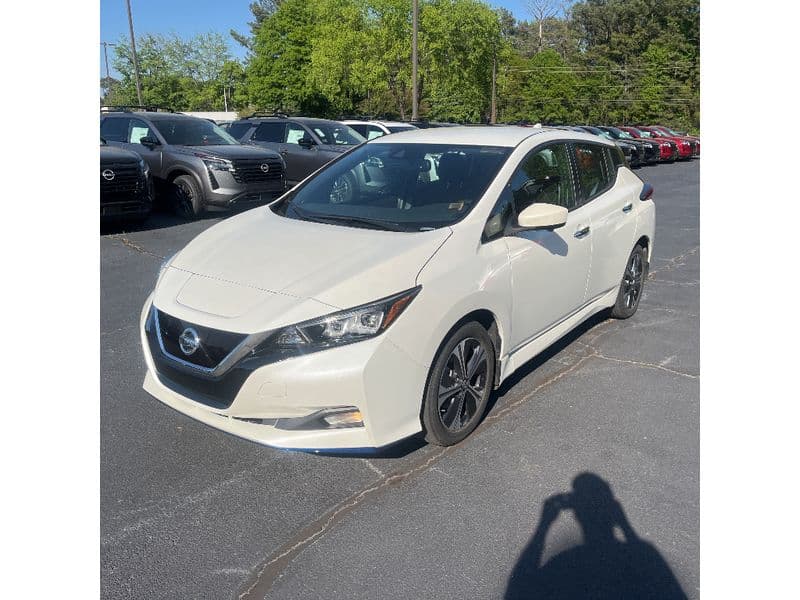
If you’re driving a 2021 Nissan Leaf, you’re sitting on one of the most common entry points into EV ownership. By 2025, a lot of those cars are hitting dealer lots as trade‑ins, and owners are asking the same question: what’s my 2021 Nissan Leaf trade in value really worth? This guide walks through the big pricing levers, battery health, range, mileage, and where you sell, so you can walk into any offer with realistic expectations and a strategy to squeeze out more money.
Why 2021 matters
2021 Nissan Leaf trade‑in value in 2025: quick overview
2021 Nissan Leaf value snapshot (typical retail positioning)
Those ranges describe rough retail asking prices for clean‑title 2021 Leafs with typical mileage and no major battery issues. Your trade‑in value usually lands several thousand dollars below that, because the buyer, whether it’s a franchise dealer, used‑car lot, or marketplace, needs room for reconditioning, transport, auction or listing fees, and profit.
These are ranges, not offers
What actually drives 2021 Nissan Leaf trade‑in value
Main value drivers for a 2021 Nissan Leaf
These factors matter more than model year alone
Battery health & usable range
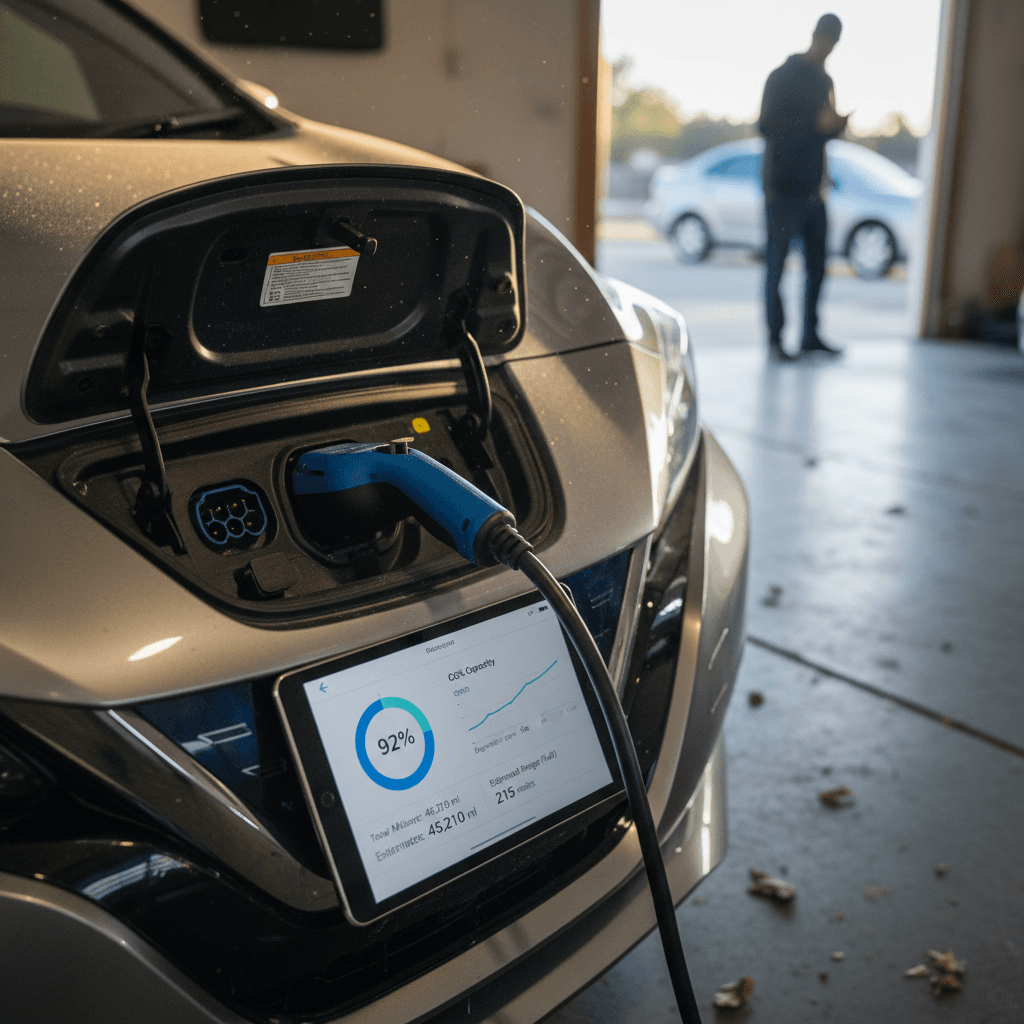
With any used EV, but especially the Leaf, which uses a passive‑cooled pack, battery State of Health is the number‑one value driver. Buyers pay a premium for packs that still deliver close to original range.
Trim & original range
A 2021 Leaf S with about 150 miles of EPA range is a very different asset than a 2021 Leaf SV Plus or SL Plus rated closer to 215–226 miles. Longer‑range Plus trims consistently command higher offers.
Mileage & usage pattern
Mileage still matters. A 2021 Leaf with ~30,000 miles will usually be worth more than one with ~70,000+. But a well‑maintained high‑mileage car with a strong pack can still out‑price a low‑mile Leaf with noticeable degradation.
History, condition & tires
Accidents, paintwork, curb‑rashed wheels, worn tires, and windshield cracks all drag your trade‑in down. Fresh tires and a clean interior, by contrast, make it easier for a buyer to retail your Leaf quickly.
Local market & seasonality
In some markets, dense cities with short commutes and strong public charging, a Leaf’s modest range is less of an issue. In others, shoppers expect 250+ miles and cross‑shop the Leaf against newer, longer‑range EVs, which can pressure values.
Interest rates and incentives
Financing costs, gas prices, and federal/state EV incentives all move used EV demand up or down. In years when new EVs are heavily discounted, used values, including 2021 Leafs, feel that pressure.
You can’t control macro trends or interest rates, but you can control most of what an appraiser sees: documentation, condition, tire tread, and how clearly you can speak to your battery’s health and typical range.
How battery health changes your trade‑in number
Battery health is where many 2021 Nissan Leaf owners are surprised. Two cars with the same trim and mileage can differ by thousands of dollars in trade‑in value if one pack is showing meaningful degradation and the other is still strong. That’s because the Leaf’s value is tied directly to how far it can realistically go on a charge.
Illustrative impact of battery health on 2021 Leaf trade‑in value
Assumes similar mileage, trim, and condition; numbers are directional examples, not quotes.
| Battery health (SOH) | Real‑world range vs new | Value impact vs "average" | Typical buyer reaction |
|---|---|---|---|
| ~90–100% | Very close to original | Strong side of local range | Seen as "no‑worry" commuter EV |
| ~80–89% | Noticeable, but usable | Around average pricing | Acceptable if price reflects lower range |
| ~70–79% | Reduced range | Often discounted | Appeals mainly to short‑trip or second‑car buyers |
| <70% | Significant loss of range | Heavily discounted | Much smaller buyer pool, often wholesaled |
Better battery health generally pushes your Leaf toward the top of the value range in your area.
Show, don’t just tell
Recharged tests and reports battery health on every EV it sells. When you trade or sell a Leaf into a platform that understands degradation patterns, and can explain them to the next buyer, you’re less likely to be punished simply because "it’s an older EV." The focus shifts from fear of the unknown to the numbers in front of you.
Range, trim, and options: S vs SV vs SL Plus
Standard 2021 Leaf (40 kWh)
- Typical trims: S, SV
- EPA range when new: roughly 150 miles
- Best fit: Short commutes, urban use, second car
- Value reality: Lower range makes these more price‑sensitive. Battery condition is critical, shoppers don’t want a 100‑mile car turning into a 70‑mile car in a few winters.
2021 Leaf Plus (62 kWh)
- Typical trims: S Plus, SV Plus, SL Plus
- EPA range when new: roughly 215–226 miles, depending on trim
- Best fit: Highway commuters, one‑car households, light road‑trip use
- Value reality: Longer range + stronger equipment list (especially on SL Plus) support higher trade‑in numbers and broader buyer interest.
Beyond the pack size, equipment differences, ProPILOT Assist, upgraded infotainment, premium audio, around‑view cameras, matter less for pure book value than mileage and battery health, but they do influence how quickly your Leaf will resell. Faster resale often equals a stronger trade‑in number because the buyer’s risk window is shorter.
Dealership vs online instant offer vs EV‑focused marketplaces
Who you sell or trade to can matter almost as much as what you’re driving. A 2021 Nissan Leaf looks very different to a truck‑heavy rural store than it does to a coastal EV‑heavy retailer. Here’s how the main channels typically stack up.
Common ways to move a 2021 Nissan Leaf
What to expect from each channel
Franchise / local dealers
Pros: Easy if you’re buying another car there; tax credit on trade value in many states; quick transaction.
Cons: Many stores still undervalue older EVs, especially Leafs, due to battery‑health uncertainty and slower runoff if they don’t specialize in EVs.
Online instant‑offer sites
Pros: Fast offers, convenient pickup, transparent process. You can shop multiple quotes without leaving home.
Cons: Algorithms can be conservative with EVs, especially if they can’t see a real battery health report; final offers may change at inspection.
EV‑focused marketplaces (like Recharged)
Pros: Specialists who understand Leaf depreciation and battery data; better ability to explain range to the next buyer; EV‑to‑EV upgrade paths.
Cons: Availability varies by region; process is typically more curated than mass‑market instant‑offer sites.
Where Recharged fits in
Ready to find your next EV?
Browse VehiclesStep‑by‑step: estimating your own 2021 Leaf trade‑in value
DIY checklist to ballpark your 2021 Leaf’s value
1. Identify your exact trim and battery
Confirm whether you have a standard 40 kWh Leaf (S or SV) or a 62 kWh Leaf Plus (S Plus, SV Plus, SL Plus). Range and value assumptions are very different between the two.
2. Pull odometer reading and service records
Write down current mileage and gather recent service invoices, tire receipts, and any warranty work. Clean history and documented care support the upper end of trade‑in ranges.
3. Get a credible battery health reading
If possible, obtain a recent battery SOH reading and note your typical real‑world range at various states of charge. A formal EV battery check, like the Recharged Score, carries more weight than a rough guess.
4. Scan your local retail market
Look up retail asking prices for similar 2021 Leafs in your region, same trim, similar miles, similar condition. Focus on actual listings that are <em>active</em>, not just high or low outliers.
5. Work backwards to trade‑in range
Subtract a realistic margin for reconditioning, transport, and profit, often $2,000–$4,000 from retail ask, to estimate what a professional buyer could pay and still come out whole.
6. Collect 2–3 real offers
Use your homework as a sanity check against instant offers, local dealers, and EV‑focused platforms like Recharged. The goal isn’t one perfect number, it’s a <strong>tight range</strong> you’re comfortable with.
Anchor the conversation
7 ways to boost your 2021 Nissan Leaf trade‑in offer
- Fix obvious, inexpensive issues first: burned‑out bulbs, minor interior stains, cheap trim pieces, and deeply dirty cabins all create excuses to haircut your value.
- Consider tires: if you’re near the wear bars, you’ll either be docked for tire replacement or the buyer will have to eat that bill. Pricing mid‑range tires can help you decide whether to replace them first.
- Get a professional‑level detail: a clean, odor‑free Leaf photographs better and appraises better. Smell, especially smoke, hits value hard.
- Document range and charging behavior: note whether your Leaf has been mostly Level 2 charged, rarely fast‑charged, and typically stored in moderate climates, all positives for battery longevity.
- Bring both keys and accessories: missing key fobs, charging cords, or cargo covers are easy ways to lose money. Replacing a smart key can run a few hundred dollars.
- Be realistic on cosmetic damage: a single prior accident that’s been properly repaired is not an automatic deal‑breaker, but heavy damage, frame repairs, or branded titles push you toward auction pricing.
- Shop EV‑aware buyers: a buyer who understands Leafs and can retail them confidently generally has more room to pay a fair number than one who’s nervous about stocking older EVs.
Trading a 2021 Leaf into another EV with Recharged
If your 2021 Nissan Leaf was your first EV, there’s a decent chance you’re now shopping for more range, more space, or faster charging. That’s exactly where Recharged is built to help: turning a known, older EV into a newer electric that better fits your life, without the usual uncertainty about batteries, pricing, or process.
How Recharged handles your Leaf
- Request an instant offer or consignment evaluation for your 2021 Leaf.
- Recharged reviews condition, history, and battery health instead of just mileage and book values.
- If you proceed, your Leaf is marketed with a Recharged Score Report that shows verified battery health to the next buyer.
Moving into your next EV
- Browse a used‑EV‑only inventory with transparent battery data and fair market pricing.
- Use Recharged’s financing tools to line up payments and term lengths that fit your budget.
- Choose from nationwide delivery or visit the Experience Center in Richmond, VA for in‑person support.
Keep it EV‑to‑EV
Common pricing pitfalls with used Leafs
Watch for these red flags
- Assuming gas‑car depreciation curves apply: EVs, especially earlier designs like the Leaf, depreciate differently. Range expectations keep rising, and that shapes what buyers will pay.
- Letting a buyer ignore battery health: if someone talks only about miles and Carfax but never about SOH or practical range, they may be anchoring low because they don’t understand, or can’t measure, the pack.
- Over‑investing right before sale: dropping thousands into cosmetic work rarely comes back dollar for dollar. Focus on repairs and maintenance that directly affect safety, drivability, and buyer confidence.
- Chasing the single highest online asking price: outlier listings that never sell don’t define the market. Look at cars that have been on the market for a while and those that actually move.
- Waiting too long when degradation accelerates: if you’re noticing your Leaf’s real‑world range shrinking faster year‑over‑year, it may be smarter to trade sooner, while there’s still a broad buyer pool.
FAQ: 2021 Nissan Leaf trade‑in value
Frequently asked questions about 2021 Nissan Leaf trade‑ins
Final thoughts: is now the right time to trade your 2021 Leaf?
By 2025, a 2021 Nissan Leaf trade in value isn’t defined just by book numbers, it’s defined by how much useful range is left, how your local market sees older EVs, and whether the buyer on the other side truly understands battery data. If your Leaf still meets your daily needs and the pack is holding up, there’s no fire drill to sell. But if you’re bumping into range limits, noticing faster degradation, or eyeing newer EVs with bigger packs and faster charging, this is a logical window to move.
Start by getting your facts in order: trim, mileage, condition, and a credible picture of battery health. Use that to frame a realistic value range, then compare multiple offers, including EV‑specialist platforms like Recharged that pair verified battery diagnostics with fair market pricing and expert support. That’s how you turn a 2021 Leaf you’ve outgrown into your next electric car without leaving money, or peace of mind, on the table.