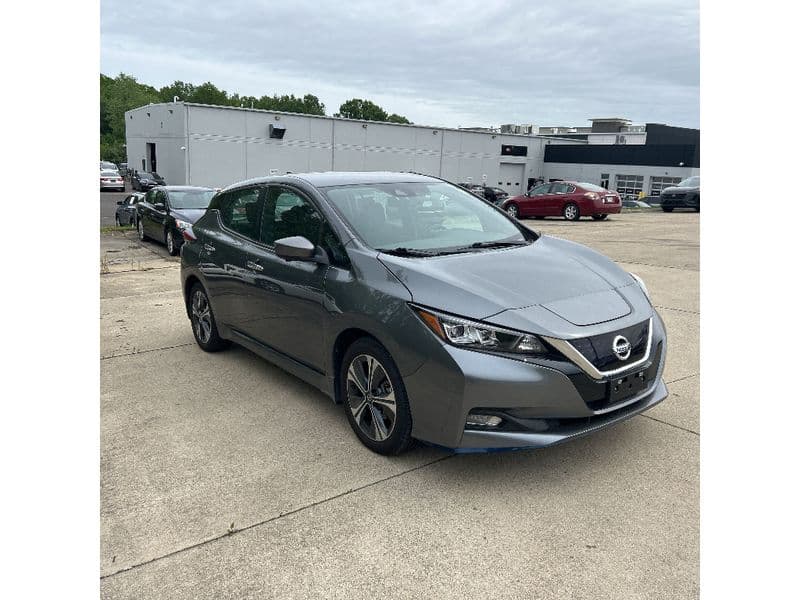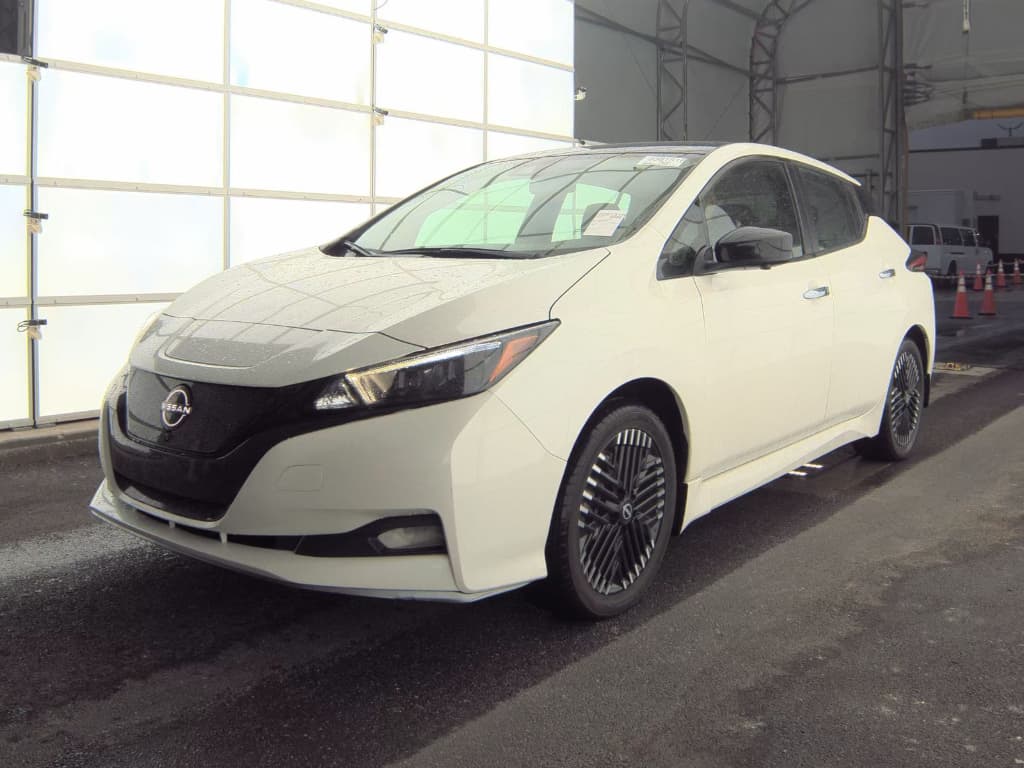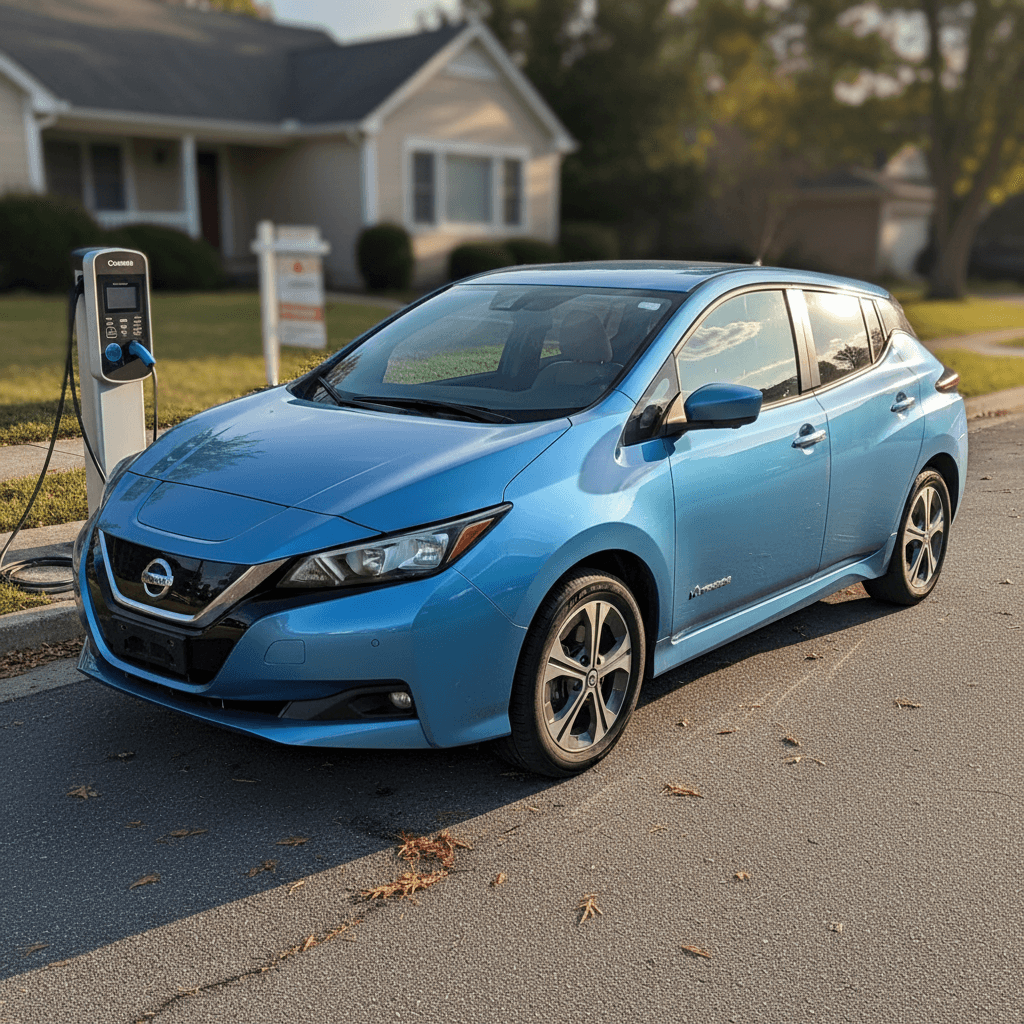
If you’re shopping for a budget-friendly used EV, a 2021 Nissan Leaf will pop up again and again, and usually for a lot less money than a comparable Tesla, Bolt, or Kona Electric. This used-focused 2021 Nissan Leaf review explains where the Leaf still shines, where it’s showing its age, and how to decide if its range and charging limitations fit your life before you sign anything.
Quick take
Overview: Should you buy a used 2021 Leaf?
Used 2021 Nissan Leaf: pros and cons at a glance
What matters most when the car is five years old and pre-owned
What the 2021 Leaf does well
- Low used prices versus most other EVs, often one of the cheapest modern EVs you can buy.
- Simple, proven design with a comfortable ride and easy around-town manners.
- Low running costs: no gas, minimal maintenance, and affordable tires/brakes.
- Good safety ratings and available ProPILOT Assist driver-assistance suite.
- Plus models offer genuinely usable range for most commuters.
Where the 2021 Leaf falls short
- CHAdeMO DC fast charging is being phased out in North America in favor of CCS and NACS, limiting road-trip options.
- Standard 40 kWh Leaf range can feel tight in cold climates or at highway speeds.
- Passive battery cooling means you must care about battery history and climate.
- Interior and tech feel older than similarly priced 2022–2024 EVs.
Used-buyer tip
Key specs and trims for the 2021 Nissan Leaf
By 2021, the Leaf lineup had settled into two basic flavors: the regular Leaf with a 40 kWh pack and the Leaf Plus with a 62 kWh pack. Both are front‑wheel drive hatchbacks with seating for five, but range and power are very different, and that matters enormously on the used market.
2021 Nissan Leaf trims and key differences
Use this to decode listings that just say “S,” “SV Plus,” or “SL Plus.”
| Trim | Battery | EPA range (mi) | Horsepower | Notable features |
|---|---|---|---|---|
| S | 40 kWh | 149 | 147 hp | Cloth seats, basic infotainment, fewer driver assists |
| SV | 40 kWh | 149 | 147 hp | Upgraded audio, navigation, more comfort features |
| S Plus | 62 kWh | 226 | 214 hp | Best range, stronger acceleration, value leader among Plus trims |
| SV Plus | 62 kWh | 215 | 214 hp | More equipment and tech, slightly lower range than S Plus |
| SL Plus | 62 kWh | 215 | 214 hp | Top trim: leather, Bose audio, 360° camera, more lux features |
EPA range figures are for new vehicles; expect some reduction on a used example depending on battery health.
Watch the word “Plus”
Real-world range: what you’ll actually see
Typical real‑world range for a healthy 2021 Leaf
EPA ratings are a great baseline, but what you care about in a used 2021 Leaf is what it actually delivers for your driving. A healthy 40 kWh Leaf can often cover around 120 miles in mild weather with mostly city speeds. Hop on the interstate at 70–75 mph or add freezing temperatures, and that can drop below 100 miles pretty quickly.
The 62 kWh Leaf Plus trims are a different story. Owners regularly report 180–200 miles in fair weather with a mix of highway and surface streets, and more in gentle city commuting. For a lot of U.S. drivers with home charging, that’s more than enough to get through a normal day without ever thinking about public chargers.
Range reality check
Battery health, degradation and warranty
Battery condition is the single biggest swing factor in whether a used 2021 Leaf is a smart buy or an expensive disappointment. The 2021 models still use air‑cooled packs. They’ve improved over early Leafs, but they’re more sensitive to heat, fast‑charging abuse, and long periods sitting at high state of charge than many liquid‑cooled rivals.
Battery basics on a 2021 Leaf
What to know before you fall in love with the price
Degradation patterns
Most 2021 Leafs with average use show modest capacity loss in the first 3–5 years, especially in mild climates. In very hot regions or with heavy fast‑charging use, you can see more noticeable loss.
Original battery warranty
In the U.S., Nissan provides an 8‑year/100,000‑mile warranty against excessive capacity loss (defined as dropping below 9 of 12 bars). Many 2021 cars are still within this window, depending on in‑service date.
Reading the bars
The Leaf’s dash shows 12 small capacity bars next to the bigger state‑of‑charge bars. A healthy pack should still show 11–12 capacity bars; 8–9 indicates notable degradation.
How Recharged handles Leaf batteries
Used 2021 Leaf battery checklist
1. Check capacity bars on the dash
With the car powered on, look to the right of the main battery gauge. Count the small bars. <strong>12 or 11 is ideal</strong>, 10 is acceptable if the price reflects it. Below that, think carefully unless you’re getting a very steep discount.
2. Verify remaining warranty coverage
Ask for the original in‑service date and mileage. Nissan’s capacity warranty runs for 8 years or 100,000 miles from first sale. A 2021 Leaf sold late in 2021 may stay covered into late 2029 if it’s under the mileage cap.
3. Review charging and climate history
Cars that lived in very hot regions, sat outside in the sun, or relied heavily on DC fast charging tend to show more degradation. Home‑charged commuter cars in temperate climates usually fare better.
4. Take a long-ish test drive
Start the drive near full, note the projected range, then drive at your normal speeds for at least 20–30 miles. Watch how quickly the estimated range and state‑of‑charge percentage drop.
5. Use an OBD app if possible
If you’re comfortable with tech, an OBD‑II dongle and a Leaf‑specific app can show <strong>state‑of‑health (SOH)</strong> as a percentage. It’s a more precise look than the dash bars alone.
Charging experience: home, public and CHAdeMO
Charging is where the 2021 Leaf shows both its age and its strengths. Around town, with home charging, it’s painless. On road trips that rely on public DC fast charging, the aging CHAdeMO standard can make life harder.
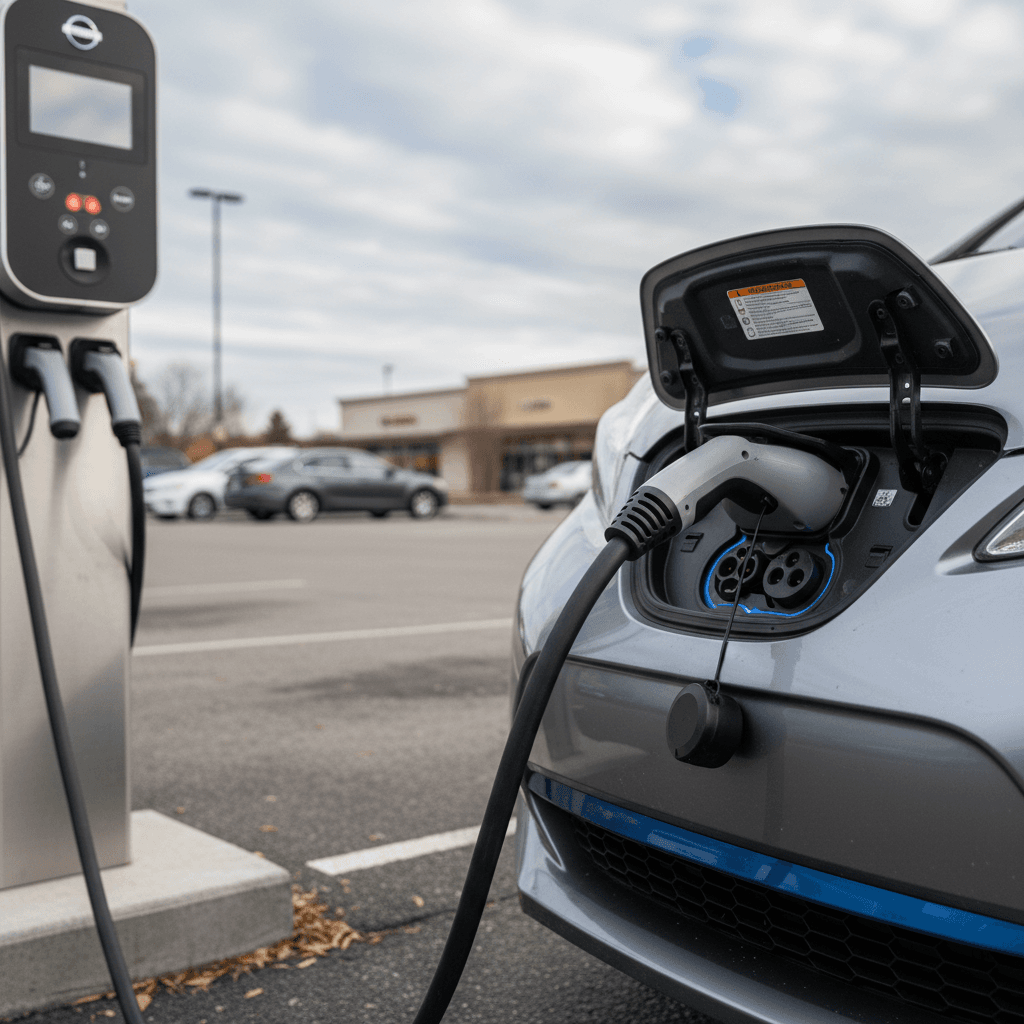
Home and Level 2 charging
- Every 2021 Leaf can charge at up to 6.6 kW on a 240V Level 2 charger.
- A 40 kWh Leaf can typically go from low to full in about 7–8 hours on Level 2, making overnight charging easy.
- The 62 kWh Leaf Plus takes closer to 10–11 hours from low to full, still fine for overnight if you plug in at home.
- If you can’t install a charger, a standard 120V outlet works, but it’s slow, more of a backup plan than a daily strategy.
DC fast charging and CHAdeMO reality
- All trims use a CHAdeMO port for DC fast charging; most new stations are being built with CCS or NACS instead.
- Many networks are quietly reducing or removing CHAdeMO plugs as they upgrade sites.
- For occasional road trips on major corridors, you can still find CHAdeMO in many regions, but expect fewer options and more planning.
- If your life involves frequent 300‑mile days, a 2021 Leaf is not the ideal road‑trip partner.
Plan around CHAdeMO
Driving impressions, comfort and performance
On the move, the 2021 Leaf feels like what it is: a well‑sorted compact hatchback that happens to be electric. The driving experience is quiet and relaxed. The steering is light, the ride is compliant, and the cabin is easy to see out of, which makes city driving and parking simple even for EV first‑timers.
What it’s like to live with a 2021 Leaf
Performance, comfort, and safety through a used‑buyer lens
Performance
The standard 40 kWh Leaf’s 147 hp feels punchy around town but can run out of breath on highway passes. The 214 hp Leaf Plus models have stronger mid‑range pull and feel more relaxed merging onto busy interstates.
Comfort & space
Five‑door hatchback practicality with generous headroom, a usable rear seat, and a cargo area that easily swallows groceries, strollers, or sports gear. Front seats are comfortable, especially on SV and SL Plus trims with heat and power adjustments.
Safety tech
Many 2021 Leafs include automatic emergency braking, blind‑spot monitoring, and lane‑keeping aids. Higher trims offer ProPILOT Assist, which can reduce fatigue in stop‑and‑go traffic and on long freeway slogs.
Crash safety
Ownership costs and resale value
As a used car, the 2021 Leaf’s biggest financial advantage is simple: depreciation has already done most of its work. These cars often sell for thousands less than similar‑age EVs with longer range, partially because of CHAdeMO and partially because “Leaf” doesn’t have the showroom sizzle of Tesla or Hyundai’s latest designs.
Day‑to‑day costs
- Electricity vs. gas: Even at average U.S. residential rates, most drivers will spend far less per mile than in a comparable gas hatchback.
- Maintenance: No oil changes, fewer moving parts, and regenerative braking that helps pads and rotors last longer.
- Insurance: Typically similar to other compact hatchbacks; quotes vary by region and trim.
Long‑term considerations
- Future resale: Expect values to track battery health and the fate of CHAdeMO. A well‑cared‑for Plus model should hold value better than a tired 40 kWh car with a worn pack.
- Incentives: Some states and utilities offer rebates for used EVs or home chargers. It’s worth a quick check before you buy.
- Upgrading later: Because you’re buying in after the biggest depreciation hit, you may find it easier to trade up in a few years if your needs change.
Where Recharged fits in
Ready to find your next EV?
Browse VehiclesWhat to check on a used 2021 Leaf
Shopping for a used EV is different from buying a used gas car. You’re not listening for engine noises, you’re evaluating software, charging hardware, and especially the battery. Here’s a focused checklist for a 2021 Leaf.
2021 Leaf used‑car inspection checklist
Confirm it’s really a Plus (if you want range)
Listings sometimes muddle trims. Verify the window sticker or VIN decode if the seller claims “Plus.” No Plus in the name? Assume it’s a 40 kWh car.
Inspect charging ports and test charge
Open the front charge door and inspect both the J1772 and CHAdeMO ports for damage or corrosion. If possible, plug into a Level 2 station during the test drive to confirm normal charging behavior.
Check tires for age and wear
EVs are heavy and hard on tires. Uneven wear can point to alignment issues; very old tires can hurt range and safety even if they have tread left.
Verify all driver-assist features work
Test adaptive cruise, lane‑keeping, and parking cameras if equipped. Warning lights or non‑functioning sensors can be costly to diagnose and repair.
Look for recalls and software updates
Ask for service records or run the VIN through Nissan’s recall tool. Make sure any open recalls have been addressed, and ask if the car has received recent software updates.
Ask how it was charged
A car charged mostly on Level 2 at home will usually have a happier battery than one fast‑charged multiple times a week, especially in hot climates.
Who the 2021 Leaf is (and isn’t) for
Is a used 2021 Leaf a good fit for you?
Match your driving life to the Leaf’s strengths
Great choice if…
- You have reliable home or workplace charging.
- Your daily driving is under 60–80 miles round‑trip.
- You mostly drive in the city or suburbs, not 80 mph freeways.
- You value low purchase price and low operating costs over the newest tech.
- You can live with planning carefully for the occasional long trip.
Probably not your car if…
- You routinely drive 150+ miles in a day with few charging options.
- You live in a region where CHAdeMO fast chargers are already scarce.
- You want cutting‑edge infotainment, the latest driver‑assist tech, or Tesla‑level range.
- You’re uncomfortable working around range limitations in winter.
FAQ: 2021 Nissan Leaf for used buyers
Frequently asked questions about the used 2021 Nissan Leaf
Bottom line: 2021 Leaf used-buying verdict
The 2021 Nissan Leaf is not the flashiest EV on the used market, and it’s not the longest‑range. What it is, when you buy carefully, is a quietly excellent everyday car for people whose lives fit inside its range envelope. The short‑range 40 kWh models make terrific second cars or city commuters; the Leaf Plus trims stretch that usefulness much farther, especially if you have home charging.
If you need a road‑trip champion or you live in a CHAdeMO desert, look elsewhere. But if you want to slash running costs, skip gas stations, and get into EV ownership without a sky‑high payment, a well‑vetted 2021 Leaf, especially one with a strong battery report, can be one of the best values in the used EV world. And if you’d like help finding one, Recharged is built to make that process simple, transparent, and a lot less stressful than shopping blind.