If you’re shopping for a used Tesla, the 2020 Model Y is probably high on your list. It was the launch year for Tesla’s breakout crossover, and with that first‑year halo comes a natural question: what does the full 2020 Tesla Model Y recalls list look like, and should you be worried?
Quick reality check
Why 2020 Model Y recalls matter for used buyers
Tesla sells a lot of software drama, but when you’re buying a five‑ or six‑year‑old EV the dull stuff matters: safety campaigns, service history, and who fixed what, when. Early‑build 2020 Model Y examples combined brand‑new manufacturing lines with aggressive rollout of Autopilot and Full Self‑Driving (FSD), which is why you see a dense trail of recalls and investigations tied to this model year.
Tesla recall landscape in context
Why VIN‑level checks matter
How Tesla handles recalls differently than other brands
Traditional automakers
- Mail you a letter, then wait for you to book a service visit.
- Even software‑related recalls often require plugging into a dealer laptop.
- Fix rates lag for older cars, especially if the owner has moved.
Tesla’s OTA‑heavy approach
- Pushes recall software fixes over the air, like a phone update.
- Many campaigns are marked "remedied" the moment you install the new firmware.
- Hardware recalls still require a service center or mobile tech, but scheduling is all done in‑app.
For a used‑car buyer, this means a 2020 Model Y can be fully recall‑up‑to‑date without ever having seen a service bay – but you need proof that the car actually took those updates.
Smart move when test‑driving
2020 Tesla Model Y recalls list: high‑level overview
Because Tesla tends to bundle multiple models into each NHTSA campaign, there isn’t a single tidy "2020 Model Y only" sheet. Instead, think of the 2020 Tesla Model Y recalls list as a stack of themes that repeat across model years: seat belts, suspension hardware, body latches, user‑interface compliance, and driver‑assistance behavior.
2020 Model Y recall themes (simplified)
This table groups major recall activity affecting the 2020 Tesla Model Y into buyer‑friendly categories. Exact campaign numbers and dates vary; always run a VIN through NHTSA for the current official list.
| Recall theme | Typical model years involved | Fix type | What it addressed |
|---|---|---|---|
| Seat belts & chimes | 2017–2023 3, 2020–2023 Y and others | Software + occasional hardware | Seat belt reminder chime logic; potential front/rear belt anchorage issues. |
| Suspension & steering | 2018–2021 3, 2020–2021 Y (select VINs) | Hardware | Control arm and suspension fasteners that could loosen or fail. |
| Liftgate & trunk hinges | 2020–2021 Y | Hardware | Rear liftgate harness routing and hinge fasteners that could wear or detach. |
| Hood/Frunk latch detection | 2013–2024 S/X, 2017–2024 3, 2020–2024 Y | Software | Open‑hood detection logic to prevent driving with an unlatched front trunk. |
| Instrument cluster & UI | Multiple 2020–2024 Tesla models | Software | Font‑size and warning‑label compliance with U.S. regulations. |
| Autopilot / FSD behavior | 2016–2024 S/X, 2017–2024 3, 2020–2024 Y | Software | How driver‑assistance features respond to traffic controls and visibility, and how they supervise the driver. |
| Tire‑pressure & lighting | Select 3/Y builds | Software | Tire pressure monitoring logic and headlight behavior in certain conditions. |
Use this as a roadmap; your specific car may have more or fewer campaigns depending on build date and software history.
This is not a legal recall record
Major 2020 Model Y recalls explained in plain English
Let’s translate some of the higher‑impact 2020 Model Y recall themes into what they actually mean for you and how worried you should be as a used buyer.
Key 2020 Model Y recall categories
What went wrong, how it’s fixed, and what to check on a used car
1. Seat belts & restraints
What happened: Multiple campaigns addressed how the car warns you when a seat belt isn’t fastened, plus a smaller hardware recall for some front and rear seat belt anchorages on Model 3/Y.
How it’s fixed: Most cars got an over‑the‑air software update to change the chime logic. Affected VINs with anchorage concerns required inspection and, in some cases, re‑torquing or replacing belt hardware.
What to do: Confirm there are no open seat‑belt recalls on the VIN, then physically tug each belt and latch to make sure it engages cleanly.
2. Suspension & steering fasteners
What happened: On a subset of early Model 3 and 2020–2021 Model Y, certain suspension control arm fasteners could loosen over time, potentially causing noise, misalignment, or in extreme cases a loss of control.
How it’s fixed: Tesla service inspects the relevant joints and replaces or re‑torques hardware as needed.
What to do: On a test drive, listen for clunks or pops over driveways and low‑speed turns. Ask for service records showing suspension work if the car falls in the affected build range.
3. Liftgate harness & hinges
What happened: Some 2020–2021 Model Y vehicles were recalled for rear liftgate wiring harness routing and hinge issues that could lead to damage over repeated opening and closing.
How it’s fixed: Tesla re‑routes or protects the harness and inspects hinge hardware, replacing parts if damaged.
What to do: Open the liftgate fully and watch and listen. Look at the wiring near the hinge for chafing, tape repairs, or corrosion, and check the recall status for that VIN.
4. Hood & trunk latch detection
What happened: A wide Tesla recall in 2025 covered hood‑latch detection logic on Model S, 3, X, and Y, including 2020 Model Y, to ensure the car won’t let you drive with an incompletely latched front trunk.
How it’s fixed: Over‑the‑air software update adjusts how the car monitors and warns about latch status.
What to do: With the car parked, open and close both the front trunk and rear hatch and confirm you get clear warnings if either is unlatched.
5. Instrument cluster & warning text
What happened: Some Tesla vehicles were recalled because certain dashboard text didn’t meet minimum font‑size requirements, a classic "paperwork" recall.
How it’s fixed: Simple software update that changes the font size or layout.
What to do: If the car is on a recent firmware version, you can treat this one as a non‑issue – but still verify no recalls are open.
6. Autopilot & FSD behavior
What happened: Regulators have pushed Tesla to adjust how Autopilot and FSD behave around stop signs, traffic lights, and poor visibility, leading to multiple software‑based recalls and an ongoing safety probe.
How it’s fixed: Over‑the‑air updates alter speed‑control behavior, following distance, driver monitoring and how easily the system disengages.
What to do: Treat FSD as a driver‑assist aid, not a robot chauffeur. Make sure the car has the latest updates and that warnings and nags feel appropriately insistent when you drive.
Software vs. hardware: which recalls really matter?
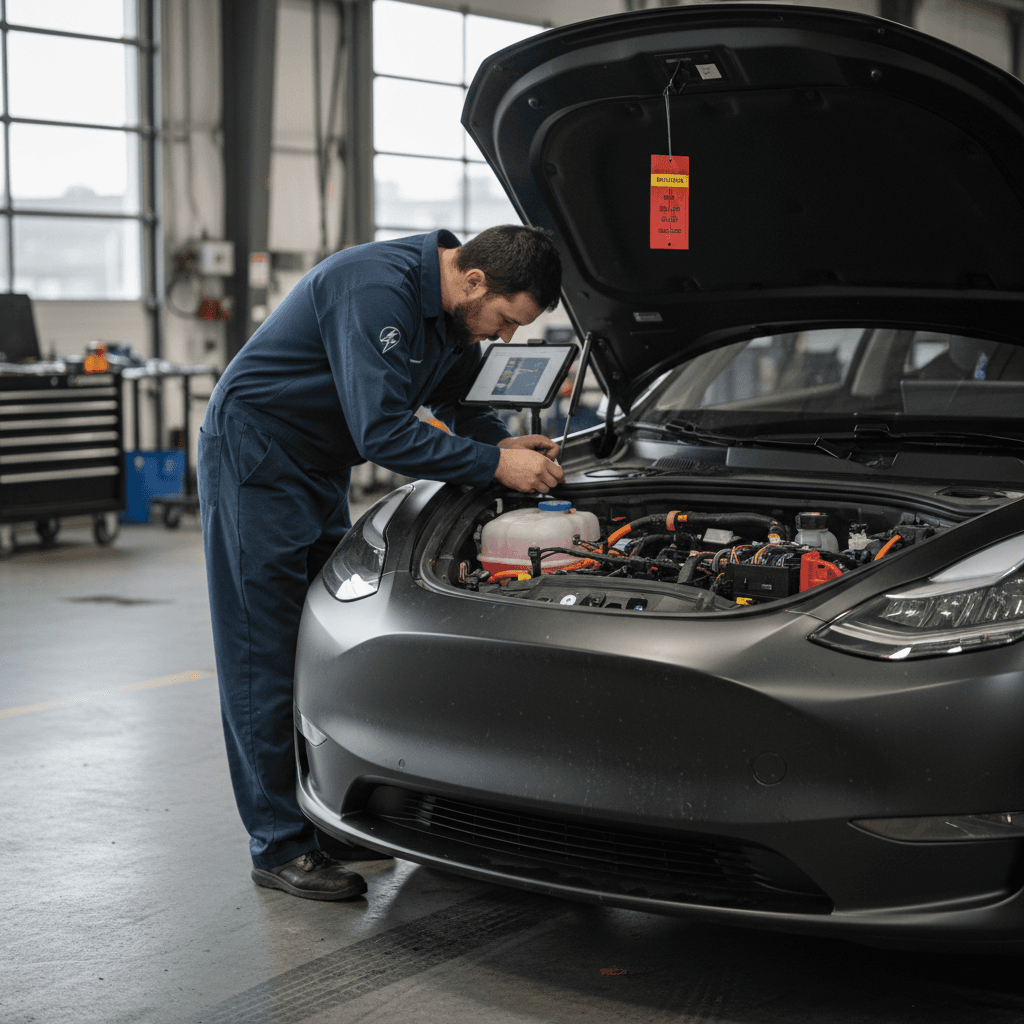
When you scroll through the 2020 Model Y recall list, the sheer number can be intimidating. The trick is to separate software‑only campaigns from hardware‑and‑inspection campaigns.
Mostly software (lower friction)
- Seat‑belt chime logic and instrument‑cluster font size.
- Driver‑assistance behavior around stop signs and traffic signals.
- Open‑hood detection and warning language tweaks.
If the car has been receiving updates regularly, these are usually already taken care of.
Hardware / inspection (higher priority)
- Seat belt anchorage inspections and re‑torque.
- Suspension control arm and steering fasteners.
- Liftgate hinges and wiring harness routing.
These are the recalls that deserve a careful look at both the service history and the car itself.
How Recharged handles this
Ready to find your next EV?
Browse VehiclesHow to check a 2020 Model Y for open recalls
Whether you’re buying from a private seller, a traditional dealer, or Tesla directly, you should independently confirm recall status. It takes five minutes and could save you five figures of regret.
Step‑by‑step recall check for a 2020 Model Y
1. Grab the full 17‑digit VIN
You’ll find it at the base of the windshield on the driver’s side, on the registration, or in the Tesla app under the vehicle details page.
2. Run the VIN through NHTSA
Go to the NHTSA recall lookup site and enter the VIN. This will show you any <strong>open safety recalls</strong> that still need to be completed on that specific car.
3. Ask the seller for Tesla service history
A conscientious seller should be able to show a PDF or screen capture of the car’s Tesla service history, including any recall work. If they can’t, that’s not an automatic deal‑breaker, but it is a negotiation point.
4. Check software version in the car
On the center screen, tap <strong>Controls → Software</strong>. A healthy car should be relatively close to the current release channel. Being many versions behind may mean the owner didn’t accept recall‑related updates.
5. Do a quick hardware walk‑around
Open and close both trunks, cycle each seat belt, and listen for clunks over bumps. You’re not replacing a Tesla technician, but you can often spot issues tied to past recalls or TSBs.
6. Confirm no scheduled recall appointments
If the seller uses the Tesla app, ask them to show that there are no pending service appointments for recall work that they simply haven’t gotten around to yet.
Recalls vs. common 2020 Model Y problems
One of the most confusing things about Tesla ownership is that not every widespread issue becomes a recall. Regulators only step in when there’s a clear safety defect. Cosmetic headaches, squeaks and rattles, even certain drivability quirks may never show up on an official campaign list.
How recalls differ from everyday 2020 Model Y issues
Both matter for buyers, but in different ways
What recalls cover
- Legally defined safety defects.
- Non‑compliance with federal safety standards.
- Problems serious enough that Tesla is obligated to provide a free fix.
Think seat belts, braking, steering, latches, visibility and critical software behavior.
What owner complaints cover
- Paint quality, panel gaps, interior trim fit.
- Wind noise, rattles, and squeaks.
- Touchscreen glitches, Bluetooth quirks, phantom alarms.
These show up in forums and owner surveys and are just as important to daily satisfaction, but they won’t appear on a recall list.
Want a deeper dive on 2020 Model Y issues?
Buying a used 2020 Model Y: recall checklist
You don’t need to memorize every campaign number filed since 2020. You do need a practical way to turn the abstract idea of "lots of Tesla recalls" into a sane buy/no‑buy decision on a specific car.
Recall‑focused checklist for 2020 Model Y shoppers
Confirm zero open safety recalls
Use the NHTSA VIN lookup plus Tesla’s own tools to make sure that particular 2020 Model Y has no outstanding safety campaigns. Open recalls should either be resolved before sale or clearly written into your purchase agreement.
Verify key hardware campaigns
Specifically ask about seat belt anchorage inspections, suspension/control‑arm checks, and liftgate hinge or wiring work. These are the items most likely to require hands‑on repair.
Review software‑related recall history
A car that’s consistently updated is less likely to have lingering safety issues – and it suggests more careful ownership overall.
Look for evidence of crash or abuse
Recall paperwork doesn’t cover accident repairs. Inspect panel gaps, repainting, and alignment closely. A sloppy body shop repair can undo what a recall was meant to fix.
Test driver‑assistance systems cautiously
If the car has Autopilot or FSD, use them briefly on a safe, familiar road. Pay attention to how often it nags you and how it handles lane centering and traffic controls. Anything that feels wildly off is worth a deeper diagnostic before you sign.
Lean on third‑party verification
With Recharged, every vehicle comes with a Recharged Score Report, including verified recall status, battery health and fair market pricing. If you’re buying elsewhere, consider an independent inspection from an EV‑savvy shop.
FAQ: 2020 Tesla Model Y recalls
Common questions about 2020 Model Y recalls
Bottom line: should recalls stop you buying a 2020 Model Y?
No – but they should absolutely shape **how** you buy one. The 2020 Tesla Model Y launched into a spotlight and has lived most of its life under a regulatory magnifying glass. That’s why its recall history looks busy on paper. In practice, a well‑maintained 2020 Y with clean recall status, current software and healthy battery remains one of the strongest used‑EV plays on the market.
Use this guide as your map: separate software tidy‑ups from serious hardware work, verify everything with a VIN check, and don’t be shy about asking for documentation. If you’d rather skip the detective work, shop 2020 Model Y listings on Recharged, where every vehicle includes a Recharged Score Report, expert support, and nationwide delivery – so you can enjoy the car’s performance and efficiency instead of worrying about what the previous owner forgot to fix.