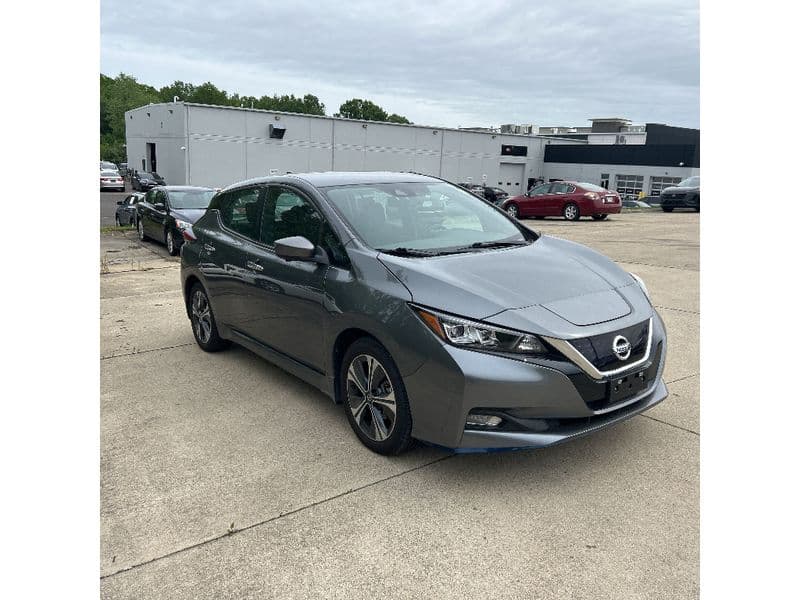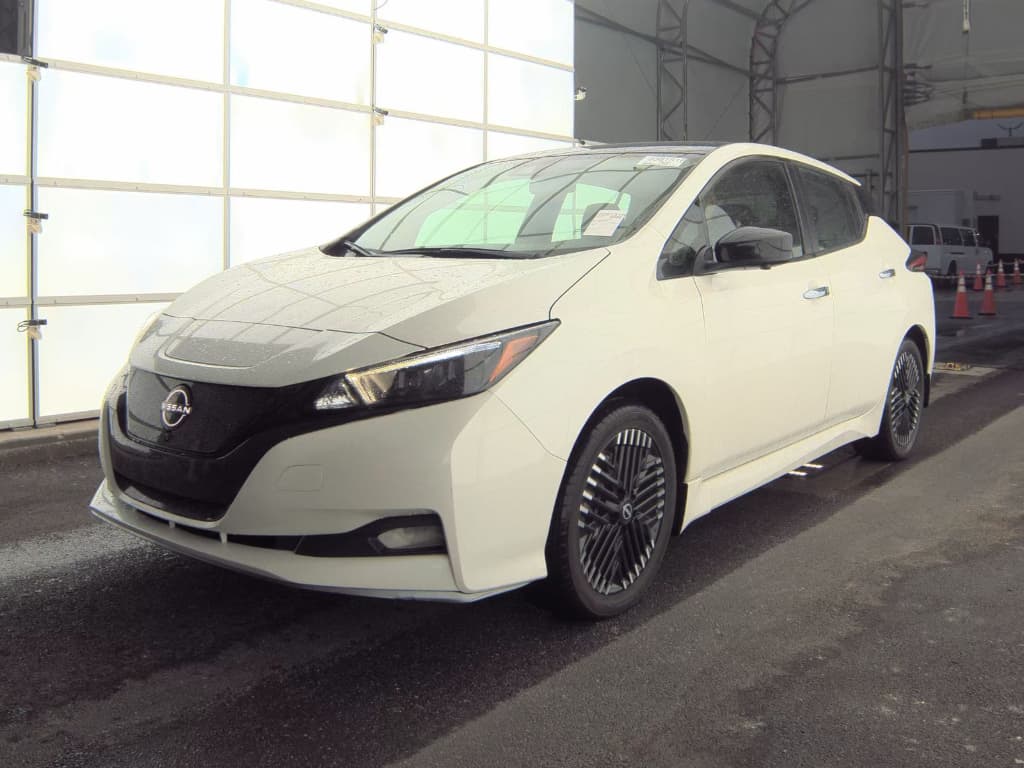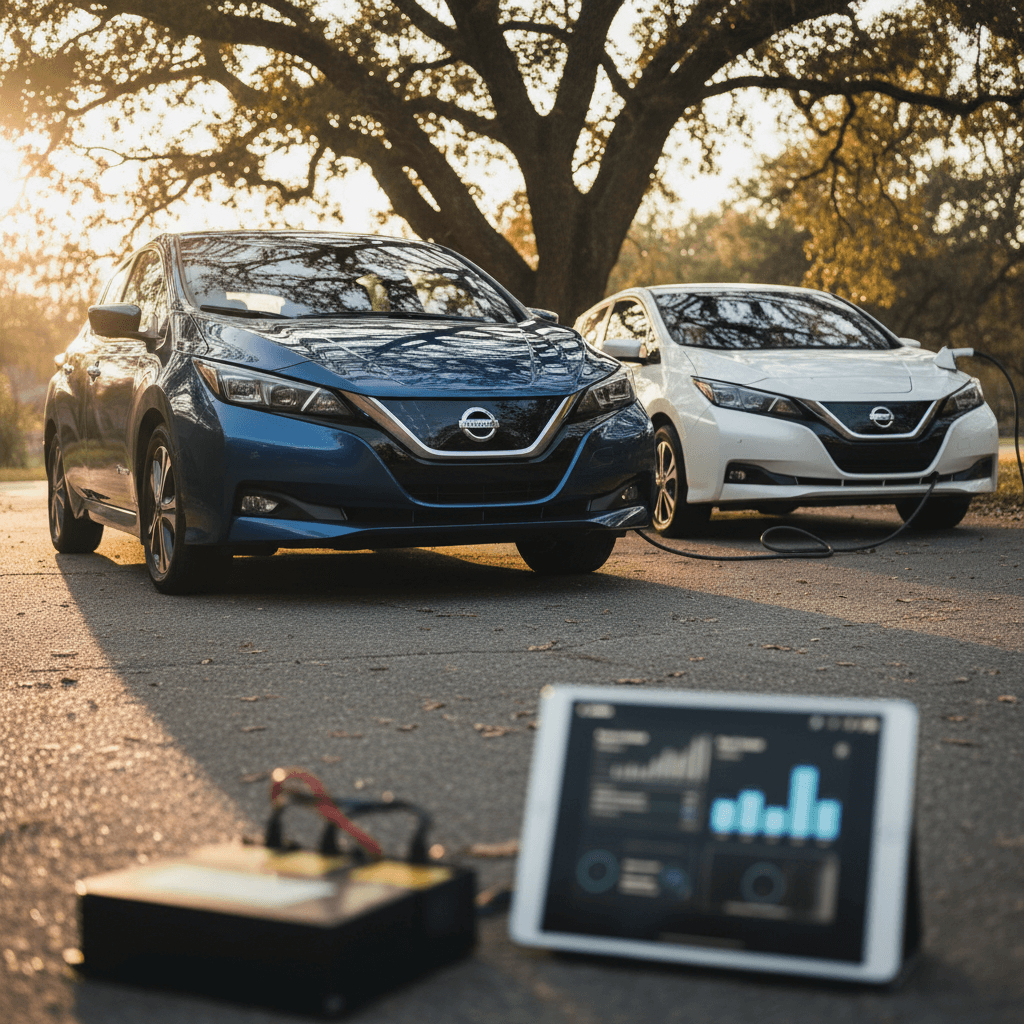
If you’re shopping for an affordable used EV, a 2020 Nissan Leaf is going to show up in your search results again and again. It’s one of the most common used electric hatchbacks on the market, but between two different batteries, fast-charging quirks, and heavy depreciation, it’s also a car you don’t want to buy blindly. This 2020 Nissan Leaf review focuses on what actually matters today: range, battery health, charging, and used-market value.
Two Leaf flavors in 2020
2020 Nissan Leaf at a Glance
Key 2020 Nissan Leaf Specs
The 2020 Leaf rides on the second-generation platform introduced for 2018. By 2020, the lineup had settled into two basic tracks: the standard car with 40 kWh (Leaf S and SV) aimed at commuters, and the Leaf Plus with 62 kWh (S Plus, SV Plus, SL Plus) for drivers who needed more range and highway capability.
2020 Nissan Leaf Trims & Battery Options
Use this to decode listings and understand what range and features you’re likely getting.
| Trim | Battery | Approx. EPA Range | Notable Highlights |
|---|---|---|---|
| S | 40 kWh | ~150 mi | Entry trim, cloth seats, smaller 7" display, DC fast charge optional |
| SV | 40 kWh | ~150 mi | More driver-assist tech, navigation, DC fast charge standard |
| S Plus | 62 kWh | ~226 mi | Longest-range Leaf, basic features but big battery |
| SV Plus | 62 kWh | ~215 mi | Better equipment, ProPILOT Assist, slightly less range due to weight |
| SL Plus | 62 kWh | ~215 mi | Top trim, leather, premium audio, all the safety tech |
Battery size, approximate EPA range, and key highlights for each 2020 Nissan Leaf trim.
Trim tip
Range, Batteries & Real-World Efficiency
On paper, the 2020 Nissan Leaf spans from modest commuter to genuinely useful road-trip companion. The 40‑kWh cars carry an EPA rating of about 150 miles, while the bigger 62‑kWh pack in the Leaf Plus bumps that to up to 226 miles in S Plus trim and around 215 miles for SV Plus and SL Plus. In independent testing, Leaf Plus models generally get close to their EPA numbers, though high‑speed highway driving can trim that figure, especially in cold weather.
City & Suburban Driving
- The Leaf is most efficient at lower speeds: stop‑and‑go and 35–50 mph suburban roads.
- For a healthy 40‑kWh Leaf, many owners see 120–140 real miles in mixed driving.
- 62‑kWh cars can comfortably cover 170–200 miles around town without anxiety.
Highway & Winter Conditions
- Sustained 70–75 mph driving hits efficiency hard, especially on the 40‑kWh pack.
- Plan on 20–30% less range in cold weather, particularly if you rely heavily on cabin heat.
- For regular highway use, the Leaf Plus is strongly recommended; the 40‑kWh Leaf can feel range‑starved on longer trips.
Cold‑weather reality
Battery degradation is a big part of any used Leaf conversation. Compared with many newer EVs, Leafs tend to lose capacity a bit faster over time because they rely on passive air cooling. For a typical 2020 car today, a 10–20% loss of usable capacity isn’t unusual, especially in hotter regions or on cars that have spent a lot of time fast‑charging. That’s why an objective battery health assessment is critical before you buy, something Recharged bakes into every vehicle’s Recharged Score battery report.
Charging: Home, Public & CHAdeMO Reality
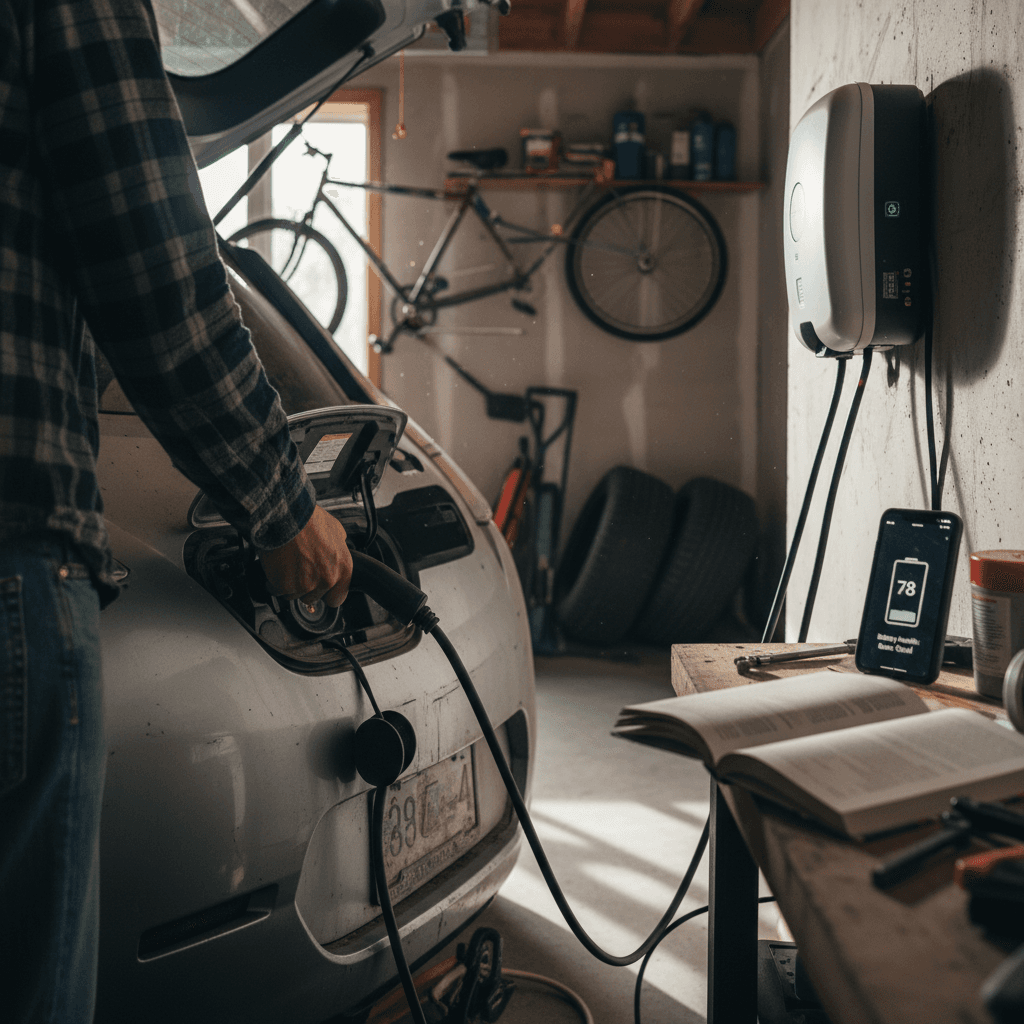
Charging is where the 2020 Nissan Leaf shows both its age and its commuter‑car roots. For daily driving, it works fine. For cross‑country road trips, you’ll want to look very closely at the map and the connector standard before committing.
How the 2020 Leaf Charges in the Real World
What to expect at home and on the road.
Level 1 (120 V)
Included cordset into a standard outlet.
- 2–4 miles of range per hour.
- Best for very short commutes or overnight top‑ups.
- Too slow to recover a big Leaf Plus battery from empty regularly.
Level 2 (240 V)
Home wallbox or public Level 2 station.
- Up to ~7 kW on 2020 Leaf.
- Roughly 8–25 miles of range per hour depending on battery size and conditions.
- Full charge in about 7 hours for either battery pack.
DC Fast (CHAdeMO)
Legacy CHAdeMO standard rather than CCS/NACS.
- Optional on S, standard on SV, SL and all Plus trims.
- The network is shrinking in North America as CCS and NACS take over.
- Fine for corridor travel where stations still exist, but long‑term support is a concern.
Important fast‑charging recall
From an ownership‑cost standpoint, the Leaf is most compelling if you can install a Level 2 home charger. That turns even the 40‑kWh model into a painless commuter: plug in when you get home, unplug every morning with the battery full. If you live on public charging and rely heavily on DC fast charging, the Leaf’s use of CHAdeMO, and recent safety recalls around Level 3 charging, make it a less future‑proof choice than CCS or NACS‑equipped rivals.
Driving Experience, Comfort & Practicality
Behind the wheel, the 2020 Leaf feels exactly like what it is: a practical compact hatchback that happens to be electric. It prioritizes comfort and ease of use rather than performance bragging rights.
Performance & Ride
- Instant EV torque gives brisk launches around town, especially in Leaf Plus trims.
- Front‑wheel drive and soft suspension tuning favor comfort over sharp handling.
- Noise levels are low at city speeds; wind and road noise become more noticeable on the highway.
- One‑pedal driving via Nissan’s e‑Pedal mode makes stop‑and‑go traffic less tiring.
Interior & Practicality
- Roomy front seats and decent rear space for adults, though three across in back is tight.
- Hatchback layout offers good cargo usability; the rear load floor isn’t perfectly flat.
- Infotainment is dated by 2026 standards but functional, with Apple CarPlay and Android Auto on most trims.
- Plenty of physical buttons and knobs, good news if you dislike touchscreen‑everything interfaces.
Standard safety tech is solid
Reliability, Recalls & Battery Health
On conventional reliability, things like interior trim, electronics, and the electric drivetrain, the 2020 Leaf is generally decent but not bulletproof. Owner surveys have flagged issues with charging systems, infotainment glitches, and a handful of recalls, including those related to the backup camera and rear glass. The real long‑term wildcard, though, is battery health.
- The Leaf’s air‑cooled pack is inherently more sensitive to extreme heat than liquid‑cooled competitors.
- Frequent DC fast‑charging, especially in high temperatures, accelerates degradation.
- Battery health varies widely car‑to‑car based on climate, storage, and use pattern.
- Nissan’s battery warranty (8 years/100,000 miles for defects and excessive capacity loss) may still cover some 2020 cars, but check eligibility and fine print.
Battery‑health checklist
Depreciation & Used 2020 Leaf Pricing
If you’re browsing 2020 Nissan Leaf listings and wondering why prices seem so low compared with what these cars cost new, you’re not imagining it. The Leaf is one of the heaviest‑depreciating EVs of its era, which is bad news for the original buyer but potentially great news for you, if you buy carefully.
What a 2020 Leaf Costs Today
Why depreciation is so steep
2020 Leaf vs. Chevy Bolt and Other Alternatives
A review of the 2020 Nissan Leaf isn’t complete without comparing it to its closest peers. In the U.S. used market, the most direct rivals are the Chevrolet Bolt EV, the Hyundai Kona Electric, and to a lesser extent older Tesla Model 3 and Hyundai Ioniq Electric models.
2020 Leaf vs. Key Used EV Alternatives
High‑level comparison of range, charging, and ownership pros/cons.
| Model | Approx. Range | Fast‑Charge Standard | Fast‑Charge Connector | Biggest Strength | Biggest Watch‑Out |
|---|---|---|---|---|---|
| 2020 Nissan Leaf (40 kWh) | ~150 mi | Optional/trim‑dependent | CHAdeMO | Low prices, simple commuter | Short range, aging fast‑charge standard |
| 2020 Nissan Leaf Plus (62 kWh) | 215–226 mi | Standard | CHAdeMO | Solid range, comfortable daily driver | CHAdeMO future, battery‑health variability |
| 2020 Chevy Bolt EV | ~259 mi | Standard | CCS | Long range, strong efficiency | Tight rear seat, previous recall history |
| 2020 Hyundai Kona Electric | ~258 mi | Standard | CCS | Excellent range, compact SUV body | Harder to find, often pricier |
| 2018–2019 Tesla Model 3 SR+ | 220–240 mi | Standard | Tesla / NACS | Supercharger access, strong resale | Higher pricing, build‑quality variation |
How the 2020 Leaf stacks up against popular used EVs with similar pricing.
Leaf vs. Bolt: who should pick which?
What to Look For When Buying a Used 2020 Leaf
8 Essential Checks Before You Buy a 2020 Leaf
1. Confirm battery size & trim
Double‑check whether you’re looking at a 40‑kWh standard Leaf or a 62‑kWh Leaf Plus. Don’t rely solely on the ad headline, verify VIN, badging, and range estimate on the dash.
2. Assess real battery health, not just mileage
Two Leafs with the same odometer reading can have very different remaining capacity. Look at the battery‑capacity bars on the instrument cluster and, ideally, use a scan tool or a service like Recharged’s <strong>Recharged Score</strong> to quantify battery state of health.
3. Check recall and software‑update status
Use the VIN to run an NHTSA recall search and confirm the seller has documentation for completed repairs, especially around DC fast‑charging and camera or glass recalls.
4. Test Level 2 and DC fast charging
If possible, plug the car into a Level 2 charger and a CHAdeMO fast charger during your test drive. Confirm charging starts, continues without errors, and reaches expected speeds after any recall software updates.
5. Inspect tires and brakes for uneven wear
EVs are heavy, and regenerative braking doesn’t eliminate traditional brake wear. Uneven tire wear or vibration on braking can signal alignment or suspension issues that will cost you later.
6. Evaluate interior and electronics
Cycle through the infotainment system, camera views, Bluetooth, CarPlay/Android Auto, and all power accessories. Glitches here are common owner complaints and can be annoying to live with.
7. Consider your charging ecosystem
Map out CHAdeMO fast chargers and Level 2 options near home, work, and your usual road‑trip routes. If CHAdeMO coverage is thin where you live, factor that into whether a Leaf is the right choice at all.
8. Get independent inspection & value check
Even on a budget EV, a pre‑purchase inspection is cheap insurance. Recharged combines inspection data, battery diagnostics, and market pricing into a single report so you can see whether a given 2020 Leaf is fairly priced.
Who the 2020 Nissan Leaf Is (and Isn’t) For
Great Fit If…
- You want a low purchase price and predictable running costs.
- Your daily driving is mostly short to medium commutes and errands.
- You can install Level 2 charging at home or have reliable workplace charging.
- You live in a mild climate where battery degradation is less aggressive.
- You’re comfortable owning a car that uses the legacy CHAdeMO connector and don’t rely on DC fast charging every week.
Poor Fit If…
- You regularly drive 200+ mile highway trips and depend on DC fast charging.
- You live in a very hot region and plan to keep the car for many years.
- You want access to the growing Tesla Supercharger / NACS ecosystem.
- You’re seeking the latest driver‑assist tech and big‑screen infotainment.
- You don’t have easy home charging and would rely heavily on public infrastructure.
Viewed through a new‑car lens, the 2020 Nissan Leaf’s short range (in 40‑kWh form), CHAdeMO connector, and air‑cooled battery are real drawbacks. But from a used‑car perspective, those same traits are exactly why prices have dropped into accessible territory. If you go in with clear eyes, verify battery health, and make sure the charging ecosystem around you actually works for CHAdeMO, a 2020 Leaf, especially a well‑cared‑for Leaf Plus, can still be a smart, low‑drama way into EV ownership. And if you’d rather not decode all of this on your own, Recharged’s combination of Recharged Score battery diagnostics, fair‑market pricing, financing, and trade‑in options can help you find a 2020 Leaf (or a better‑suited alternative) that fits your real‑world life, not just the brochure.