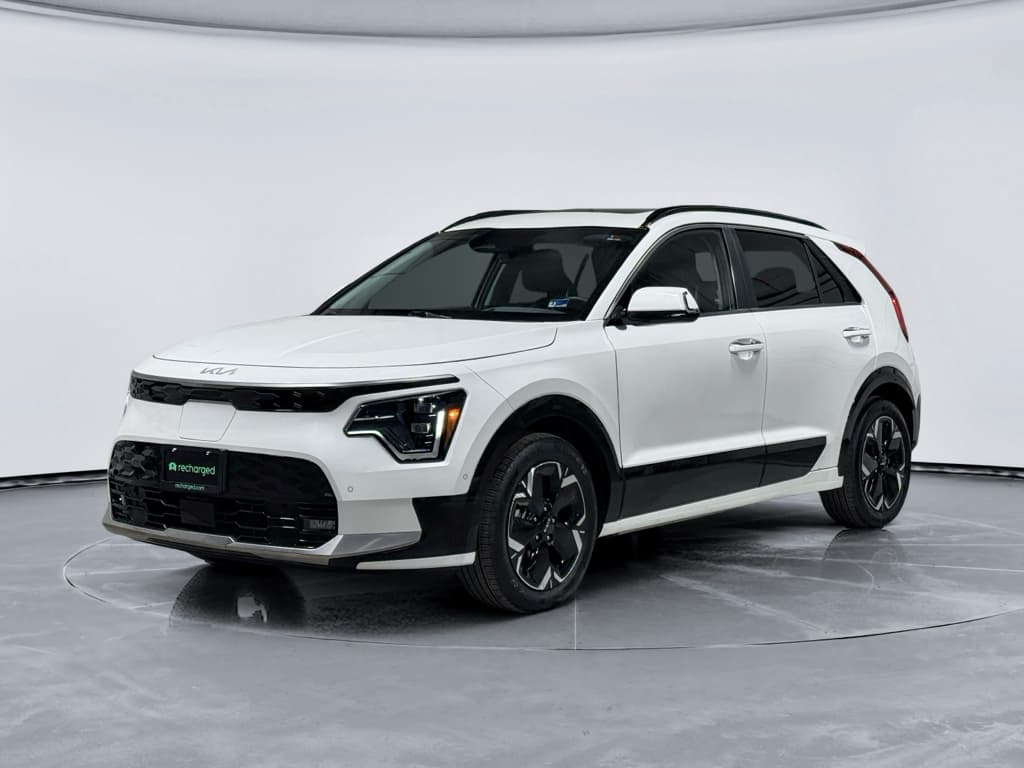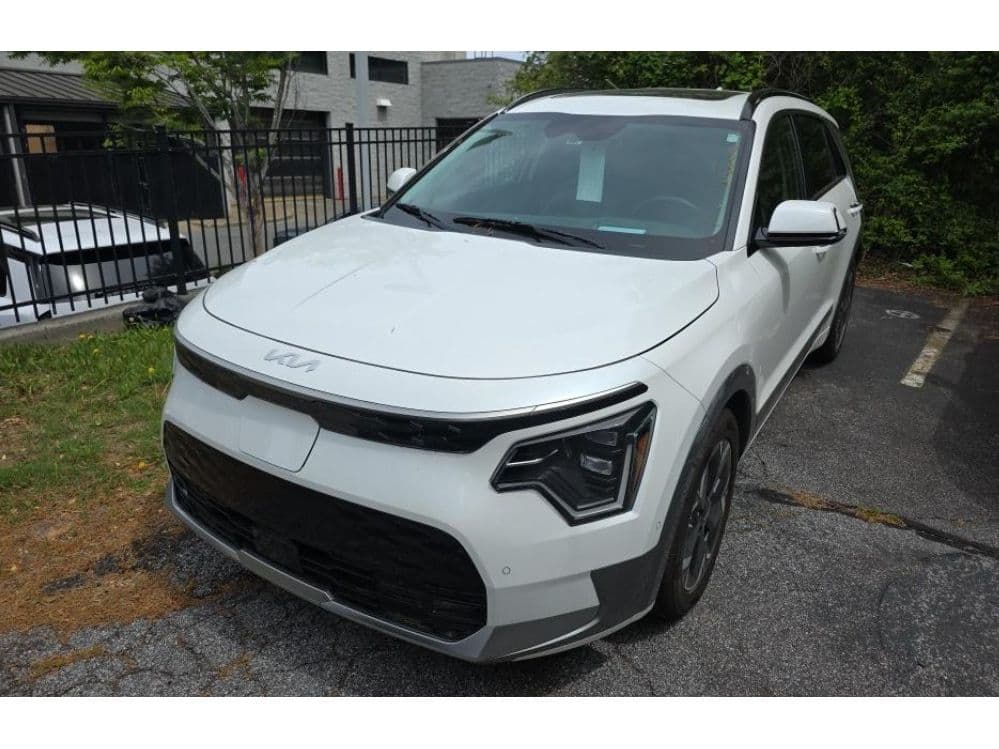
If you drive a 2020 Kia Niro EV and are thinking about upgrading, the first question is simple: what’s my 2020 Kia Niro EV trade in value right now? The honest answer is that no article can spit out a VIN‑exact dollar figure, but we can get you into a realistic ballpark, explain why dealers land where they do, and show you how to push your number higher, especially if you use a modern EV‑focused marketplace like Recharged instead of a traditional lot.
Context matters
2020 Kia Niro EV trade‑in value: quick answer
Typical 2020 Kia Niro EV value ranges in early 2025
For a 2020 Kia Niro EV with typical mileage (roughly 50,000–80,000 miles) and a clean history, many U.S. dealers in early 2025 are landing in the $10,000–$14,000 range for trade‑ins. Those same vehicles are often listed on retail lots for about $14,000–$18,000. Stronger battery health, lower miles or rare trims can push you toward the top of that band, or beyond it in a hot local market.
Don’t anchor only on book values
How much is a 2020 Kia Niro EV worth in 2025?
Illustrative value bands for 2020 Kia Niro EV in 2025
Approximate U.S. value ranges for a 2020 Niro EV as of early 2025, assuming a clean title and "good" condition. Local demand, options and battery health can move you above or below these numbers.
| Mileage band (2020 Niro EV) | Condition snapshot | Likely trade‑in range | Typical dealer retail range |
|---|---|---|---|
| Under 40,000 miles | Very clean, no accidents, strong battery health report | $13,000–$16,000 | $17,000–$20,000 |
| 40,000–60,000 miles | Normal cosmetic wear, no major damage, full records | $11,000–$14,000 | $15,000–$18,000 |
| 60,000–80,000 miles | Heavier wear, still driving well, warranty remaining | $9,500–$12,500 | $13,000–$16,000 |
| 80,000+ miles | High‑mileage commuter, some cosmetic or wheel rash | $7,500–$10,000 | $11,000–$14,000+ depending on battery health |
Use this as a sanity check when you start getting real offers, your VIN‑specific value will depend on far more detail than any table can capture.
These ranges line up with broader Kia Niro EV data showing 2019–2020 models typically retailing in the mid‑teens and trading in a few thousand dollars lower when mileage and condition are average. A very clean, low‑mileage 2020 EX Premium with desirable colors can still attract a surprisingly strong offer, while a high‑mileage car with a weak battery test will be treated more like a budget commuter than a near‑luxury EV.
Check both sides of the spread

Why 2020 Kia Niro EV trade‑in values look the way they do
Three forces that shape 2020 Niro EV trade‑in values
Understanding the “why” behind the number makes you a stronger negotiator.
EV price resets
New and used EV prices dropped sharply in 2023–2024 as automakers chased volume and tax‑credit rules shifted. That reset pulled older models like the 2020 Niro EV down with them.
Battery is the asset
For a five‑year‑old EV, dealers care far more about battery health than about leather vs. cloth or sunroof vs. no sunroof. A strong pack is what makes your car easy to resell.
Local EV demand
In EV‑dense metros with good charging, demand for used long‑range crossovers is higher. In areas with cheap gas and thin charging, the same 2020 Niro EV might sit longer and be worth less to a dealer.
On paper, the 2020 Niro EV has lost roughly half or more of its original MSRP after five years. That sounds brutal until you remember two things: first, most new‑EV buyers captured tax credits or discounts that softened the hit, and second, a lot of that depreciation is front‑loaded. Past year five, values tend to settle into more predictable, slower declines, especially for EVs with strong range like the Niro’s ~239‑mile EPA rating.
4 big factors that move your 2020 Niro EV trade‑in value
- Mileage and usage profile – Dealers expect around 10,000–15,000 miles per year. If your 2020 Niro EV is sitting under 40,000 miles in 2025, you’re below the curve and can usually push for more. Over 80,000? Expect tougher questions about long‑term range and wear.
- Battery health and degradation – A 2020 pack that still tests near original usable capacity is gold. Noticeable degradation, cell imbalances or error codes will pull offers down quickly, because reconditioning high‑voltage batteries isn’t cheap or simple.
- Condition and history – Clean Carfax or Autocheck, original paint, intact wheels and a detailed service history help a dealer sell your car quickly and justify a better trade‑in figure. Structural damage, airbags deployed or obvious bodywork put your Niro EV into a different, lower‑value bucket.
- Trim, options and color – EX Premium models with popular colors, active‑safety packages and larger infotainment screens are easier to retail than base cars in odd color combos. That doesn’t swing value as much as battery health, but it can nudge your number up or down by hundreds of dollars.
Hidden history hurts most
How battery health and warranty affect your offer
Battery health: the make‑or‑break metric
Unlike a gas crossover, your 2020 Niro EV’s value swings hard on state of health (SOH). A pack that still delivers close to its original usable capacity with minimal cell imbalance tells a buyer they’re getting many more years and miles of confident range.
Dealers now know that an EV with visible range loss is harder to sell, attracts lower offers and may sit on their lot longer. That risk is priced into your trade‑in number.
Warranty coverage: a safety net for the next owner
Most 2020 Kia Niro EVs in the U.S. left the factory with 8–10 years of high‑voltage battery and powertrain coverage, depending on first in‑service date and state rules. In 2025, that means many still carry several years of major‑component protection.
When a dealer can advertise “battery under warranty,” they can justify a higher retail price, and that can support a stronger trade‑in offer for you.
Where Recharged is different
Improving your 2020 Kia Niro EV trade‑in value
7 moves that can put real money back in your pocket
1. Get a battery health snapshot
If you can, obtain a recent battery health report or diagnostic from an EV‑savvy shop or marketplace like Recharged. Walking in with proof of a strong pack justifies aiming for the top of the trade‑in range.
2. Fix inexpensive cosmetic issues
Curb‑rashed wheels, missing trim pieces and heavily soiled interiors scare buyers more than they should. A few hundred dollars spent on basic detailing and touch‑ups can prevent a dealer from deducting a thousand or more “for reconditioning.”
3. Gather service and charging records
Print or download maintenance history, tire rotations, cabin filter changes and any high‑voltage system checks. If you’ve been gentle with fast charging and mostly used Level 2, note that too, dealers and future buyers care increasingly about how the pack has been treated.
4. Clear warning lights and complete recalls
Any dash lights, open recalls or outstanding software update campaigns are giant red flags. Get them handled before your appraisal so the buyer doesn’t assume the worst and crater the offer.
5. Time the market when you can
Seasonality still matters. Late winter and spring (tax‑refund season) often bring stronger demand and better numbers for used EVs. If you’re flexible, avoid trading in during slow sales months when lots are already packed with inventory.
6. Shop multiple offers
Get bids from at least two traditional dealers, one online car‑buying service, and an EV‑focused platform like Recharged. Seeing the spread lets you know whether your local Kia store is in the ballpark or far off base.
7. Be realistic, but use your data
If you’ve done the homework, know your battery SOH and understand local retail prices, you’ll recognize a fair offer when you see it. Push back respectfully with facts, not feelings, and walk away if a buyer can’t explain a big discount.
Know when not to over‑invest
Should you trade in or sell your 2020 Niro EV privately?
Trade‑in vs. private sale for a 2020 Kia Niro EV
Most owners are choosing between convenience (trade‑in) and maximizing price (private sale or consignment). Here’s how they stack up for a 2020 Niro EV in 2025.
| Option | Typical outcome | Pros for Niro EV owners | Cons for Niro EV owners |
|---|---|---|---|
| Dealer trade‑in | Lowest hassle, mid‑range price | Quick transaction, sales‑tax savings in many states, no strangers test‑driving your car | Lower offers, dealer may not value battery health as precisely, especially at non‑EV‑specialist stores |
| Private sale | Highest price if done well | Maximum control over price, you can market battery health, range and options directly to buyers | Takes time, requires marketing/photos, handling paperwork, and filtering unserious shoppers |
| Online instant offer | Fast, transparent starting point | Easy to compare a no‑haggle bid from your couch, often slightly better than a single local dealer’s first offer | Still built on averages, sight‑unseen adjustments are common once the car is inspected |
| Recharged consignment or instant offer | EV‑savvy pricing with battery data | Specialists understand the 2020 Niro EV, highlight its range and warranty, and can often net you more than a standard trade‑in | You’ll still need to schedule an inspection or upload photos, though the process is fully digital in most markets |
Remember: you can often combine the best parts of each path by using a specialist used‑EV marketplace instead of going fully DIY.
If your top priority is convenience, especially if you’re rolling equity straight into another car, trade‑in is the cleanest path. If you’re comfortable putting in time to photograph, list and show the vehicle, a private sale can beat trade‑in by $1,000 or more. Platforms like Recharged sit in the middle: you get EV‑specific pricing, expert help and battery‑health transparency without turning into a full‑time salesperson.
How Recharged values a 2020 Kia Niro EV
What goes into a Recharged valuation
Why your 2020 Niro EV doesn’t get treated like just another five‑year‑old used car.
EV‑specific data
We look at comparable Niro EV sales, not just generic compact crossovers. That includes trims, real transaction prices, and how long similar cars are taking to sell in your region.
Verified battery health
Every Recharged vehicle gets a Recharged Score battery diagnostic. Instead of guessing from mileage, we incorporate actual pack data, capacity, balance and error history, into your offer.
Flexible selling paths
Whether you want an instant offer, a higher‑upside consignment listing, or to trade out of your 2020 Niro EV and into another used EV, Recharged can match the process to your priorities.
Ready to find your next EV?
Browse VehiclesBecause Recharged only works with EVs, a 2020 Niro EV isn’t an oddball in a sea of gas SUVs, it’s the core of the business. That means the pricing models, specialists and buyers on the other side all understand why a well‑cared‑for Niro EV with solid battery health is still a compelling long‑range commuter in 2025.
Turn your 2020 Niro EV into your next EV
FAQ: 2020 Kia Niro EV trade‑in value
Common questions about 2020 Kia Niro EV trade‑in value
Bottom line on 2020 Kia Niro EV trade‑in value
By early 2025, most 2020 Kia Niro EV trade‑ins are landing somewhere between $10,000 and $14,000, with cleaner, lower‑mileage cars and stronger battery tests stretching above that range. The exact number you see will depend less on window‑sticker options and more on fundamentals: mileage, battery health, condition, history and local demand.
Your job as an owner is to narrow that wide band to a smart, realistic target, and then use data to fight for the top of it. Get a sense of your battery’s state of health, clean up the cosmetics, line up your records and compare multiple offers instead of grabbing the first one. If you’d rather skip the guesswork and work with people who speak EV fluently, a marketplace like Recharged can help you value, market and sell your 2020 Niro EV with battery‑health transparency and EV‑specialist support from start to finish.