If you’re considering a 2020 Chevy Bolt EV, one question matters more than almost anything else: how far will it really go on a charge? The official EPA number is impressive, but real‑world range tests, especially on the highway, in winter, or on a used battery, tell a more nuanced story. This guide pulls those pieces together so you know exactly what to expect from a 2020 Bolt EV in daily use.
Quick 2020 Bolt EV range snapshot
2020 Chevy Bolt EV range basics
For 2020, Chevrolet increased the Bolt EV’s battery from about 60 kWh to 66 kWh usable capacity, largely through improvements in cell chemistry rather than a bigger pack. That bumped EPA range from 238 miles on earlier models to 259 miles combined on the 2020 Bolt EV. That figure assumes mixed driving over the EPA’s test cycles at moderate temperatures.
2020 Chevy Bolt EV: key range specs
Those numbers make the 2020 Bolt a legitimately long‑range EV, especially considering its compact footprint and price point on the used market today. But as any EV owner learns quickly, your actual range depends heavily on how and where you drive.
EPA rating vs real-world range tests
Official ratings are a useful yardstick, but range tests from independent outlets help you translate them into real life. The 259‑mile EPA rating is derived from a mix of city and highway cycles. In contrast, highway‑only tests, like the 75‑mph loops some magazines run, usually show a lower number because aerodynamic drag climbs quickly with speed.
2020 Bolt EV: lab rating vs independent tests
Approximate figures from multiple road tests and owner reports, assuming a healthy battery and moderate weather.
| Scenario | Speed & conditions | Approx. usable range | What to expect |
|---|---|---|---|
| EPA combined rating | Mixed city/highway cycles, ~65–70°F | 259 miles | Achievable in balanced real‑world driving |
| Independent highway test | ~75 mph sustained, mild weather | ~180–210 miles | Noticeable hit vs EPA due to higher speeds |
| Mixed real‑world driving | Blend of city, suburban, some highway | 230–260 miles | Common for owners in moderate climates |
| Aggressive driving | Frequent hard acceleration, high speeds | <200 miles | Efficiency drops quickly when you drive it like a GTI |
Real‑world results vary, but patterns are consistent: the 2020 Bolt easily matches its EPA range in mixed driving, while sustained high‑speed highway use trims that number.
How to estimate your personal range
City vs highway range: what our tests show
One of the Bolt’s strengths is efficiency at lower speeds. In urban and suburban driving, you’re taking advantage of regenerative braking and spending less time fighting aerodynamic drag. On the highway, the tall, relatively narrow body and modest aero work against it more than in sleek sedans.
City & suburban driving
- Speed: Mostly 25–50 mph with stops and traffic lights.
- Range band: Many drivers see 250+ miles per charge in mild weather.
- Why: Regenerative braking recovers energy, and lower aero drag keeps consumption down.
- Good use case: Commuting, errands, rideshare, urban delivery.
Highway & interstate driving
- Speed: 70–75 mph typical U.S. interstate cruising.
- Range band: Think closer to 180–210 miles on a full battery.
- Why: Aero drag rises with the square of speed, and the Bolt’s shape isn’t as slippery as a low sedan.
- Good use case: Regional trips with planned DC fast‑charging stops every ~150 miles.
Highway test gotcha
How weather, terrain, and driving style change range
Three main factors swing your 2020 Bolt EV’s range up or down: temperature, elevation changes, and how you use the accelerator and climate controls. Understanding them turns range anxiety into simple range planning.
Biggest factors that move your 2020 Bolt’s range
Each one can add or subtract dozens of miles from a full charge.
Cold temperatures
Below freezing, your Bolt spends energy just keeping the battery and cabin warm. Drivers in harsh winters often see 20–40% less range, especially on short hops where the car reheats itself repeatedly.
Heat & A/C use
In hot climates, running max A/C shaves efficiency, though not as dramatically as winter heating. Expect a 5–15% hit on very hot days if you’re blasting the climate control.
Hills & elevation
Long climbs use extra energy; you’ll gain some back on the descent through regen, but not all of it. Mountain driving can trim range by 10–25% depending on grade and speed.
Driving style
Gentle acceleration and sticking to 65–70 mph pays dividends. Drive it like a hot hatch, and you’ll see the Guess‑O‑Meter shrink fast.
Payload & roof racks
Extra passengers and cargo add weight, while roof boxes and bike racks increase drag. Together they can knock another 5–10% off your range.
State of charge window
If you typically charge to 80–90% instead of 100% to preserve battery health, you’re simply working with a smaller usable slice of the 66 kWh pack.
Winter range reality check
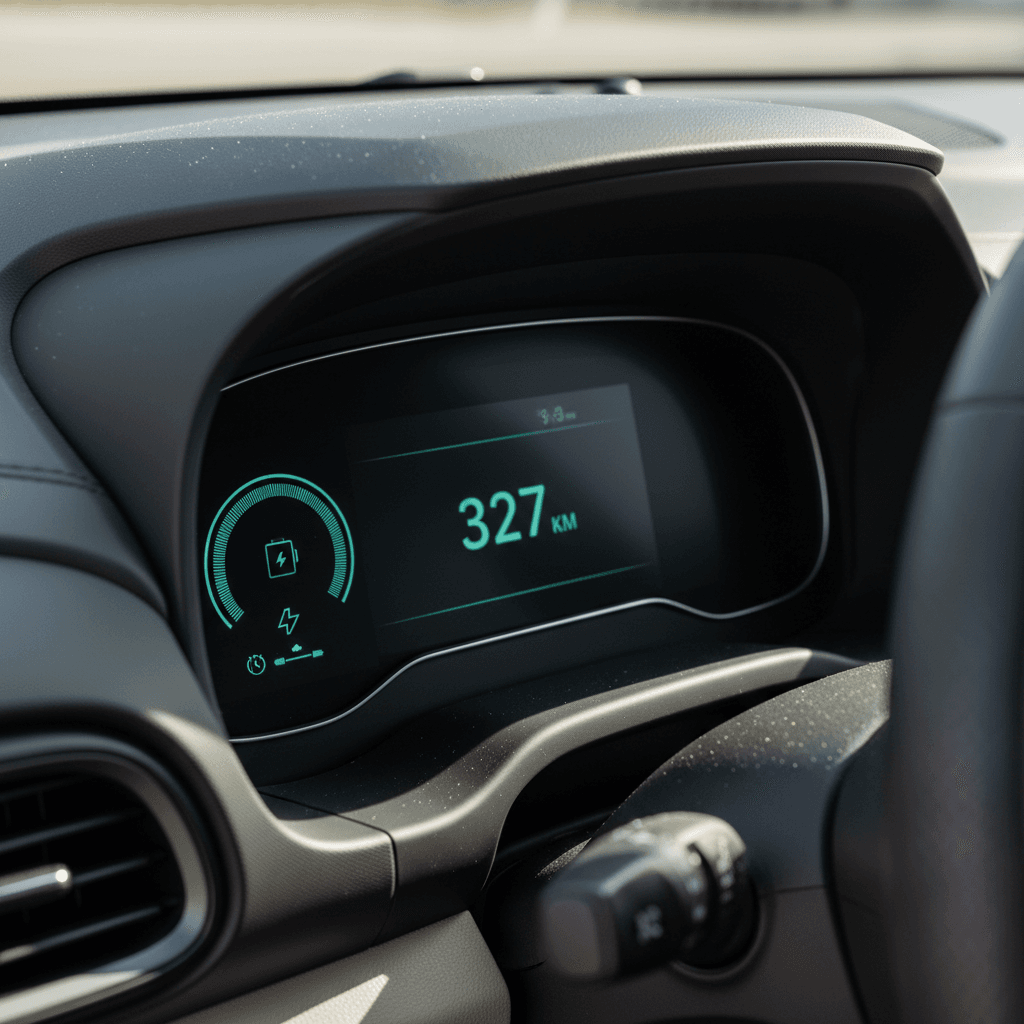
Range on a used 2020 Bolt: battery health & degradation
Every lithium‑ion pack loses some capacity over time. For the 2020 Bolt EV, the chemistry update that enabled 66 kWh usable capacity also aimed to keep degradation modest under normal use. Most owners who follow basic best practices, limiting frequent 100% fast charges and avoiding prolonged heat, see single‑digit percentage loss over the first few years.
What you might see from a healthy 2020 Bolt battery
Rough expectations for a well‑cared‑for 2020 Bolt EV; individual vehicles vary based on climate, mileage, and charging habits.
| Vehicle age / mileage | Typical capacity loss* | Estimated practical range (mild weather) | Notes |
|---|---|---|---|
| 0–3 years / up to ~40k mi | 0–7% | 240–255 miles | Many examples still near EPA rating in mixed driving |
| 3–6 years / ~40–80k mi | 5–12% | 220–245 miles | Slight but noticeable drop if you’ve lived with the car |
| 6–8+ years / 80k–120k+ mi | 10–20% | 200–235 miles | Heavily dependent on climate and charging history |
These are ballpark figures, not guarantees, but they give you a realistic frame of reference when test‑driving a used 2020 Bolt.
Battery warranty basics
Because the battery is such a large share of the car’s value, a used‑EV purchase should always include an objective view of actual, current battery health. That’s where a marketplace like Recharged can make your life easier: every vehicle listed includes a Recharged Score battery health report, based on real diagnostic data rather than guesses from the dash display.
How to plan trips around 2020 Bolt EV range
With realistic expectations, the 2020 Bolt EV is a capable road‑trip car, especially if you’re comfortable stopping every 120–170 miles to DC fast charge. The key is planning around its strengths, efficiency at moderate speeds, and working with the current DC fast‑charging network in your region.
Trip‑planning steps for a 2020 Bolt EV
1. Start with a conservative range assumption
For mostly highway driving in mild weather, use <strong>around 190–210 miles</strong> as your planning number. In winter, plan for 150–180 miles unless you’ve already built personal experience.
2. Use EV‑savvy route planners
Apps like A Better Routeplanner (ABRP), PlugShare, or your charging network’s app can suggest <strong>realistic charging stops</strong> based on speed, elevation, and weather. Plug in a 2020 Bolt profile, not just “generic EV.”
3. Aim to arrive with a buffer
Try to reach each fast charger with <strong>15–20% battery remaining</strong>. That protects you from unexpected detours, headwinds, or a station that’s temporarily offline.
4. Charge in the Bolt’s sweet spot
The Bolt charges quickest from roughly <strong>10–55%</strong> on DC fast charge. For long trips, it’s usually faster to make more frequent short stops than to sit from 60% to 100% at one station.
5. Watch real‑time consumption
On the road, keep an eye on your <strong>mi/kWh readout</strong> and projected arrival state of charge. If conditions are hurting range, back your cruise speed off 5 mph, it makes a bigger difference than you might think.
6. Mind charger reliability
Before committing to a route, use recent check‑ins on apps like PlugShare to see if the chargers you’re counting on have a good reliability track record.
Range sweet spot for road trips
7 ways to protect your Bolt’s range and battery
Whether you already own a 2020 Bolt or you’re about to buy one used, your habits will shape how much range you see years from now. The good news: you don’t need to baby the car, just follow a few common‑sense practices.
- Avoid leaving the car at 0% or 100% for long periods. It’s fine to charge to full before a trip, but try not to let it sit at 100% for days on end.
- Whenever possible, park in the shade or a garage, especially in very hot climates. Heat is a major aging factor for lithium‑ion packs.
- Use scheduled charging so the car reaches your target state of charge shortly before you drive, not hours beforehand.
- On road trips, lean on DC fast charging when you need it, but use Level 2 at home for your day‑to‑day top‑ups.
- Take advantage of one‑pedal driving and regen in town; smoother driving is easier on both your range and your brakes.
- Keep your tires properly inflated. Under‑inflation quietly eats range and can compromise safety.
- Stay current on software updates that may tweak charging behavior or energy‑usage displays.
Home charging and range confidence
Shopping for a used 2020 Bolt EV? Range questions to ask
When you’re evaluating a specific 2020 Bolt EV, you’re not just buying a spec sheet, you’re buying however many miles of healthy, usable battery that car still has. A smart shopper asks questions that connect directly to range.
Key range questions for a used 2020 Bolt EV
Ask the seller, and verify with data where you can.
How has it been charged?
Look for a car that primarily used Level 2 home charging and only hit DC fast chargers for trips. Occasional fast charging is no problem; constant 100% DC fast charging in desert heat is less ideal.
Where has it lived?
Cooler climates are kinder to batteries. A Bolt that spent its life in coastal Oregon will likely have a different degradation profile than one that sat outside in Phoenix summers.
What’s the real‑world range today?
A short test loop at typical speeds, starting from a known state of charge, can tell you more than any ad copy. Pay attention to estimated mi/kWh and how quickly the projected range falls.
Can I see a battery health report?
With Recharged, every used EV listing includes a Recharged Score that translates raw battery data into a simple, transparent picture of remaining capacity and expected range.
Check recall and warranty status
2020 Chevy Bolt EV range test: FAQ
Frequently asked questions about 2020 Bolt EV range
Bottom line: Is the 2020 Bolt’s range enough?
Look beyond the spec sheet and the 2020 Chevy Bolt EV still holds up remarkably well. With a 66 kWh pack and a 259‑mile EPA rating, it delivers near‑Tesla range without Tesla pricing on today’s used market. In mixed real‑world driving, most owners see 220–260 miles per charge in moderate weather; even its highway‑only and winter numbers are workable once you understand how to plan around them.
If your daily life looks like commuting, errands, and the occasional weekend getaway, a healthy 2020 Bolt EV has more range than you’re likely to use in a day, and with smart charging and driving habits, it should stay that way for years. When you’re ready to shop, starting with a transparent battery health report and expert guidance, like you get with a Recharged used EV and its Recharged Score, turns the "range test" from a guessing game into a simple checkbox on your buying list.