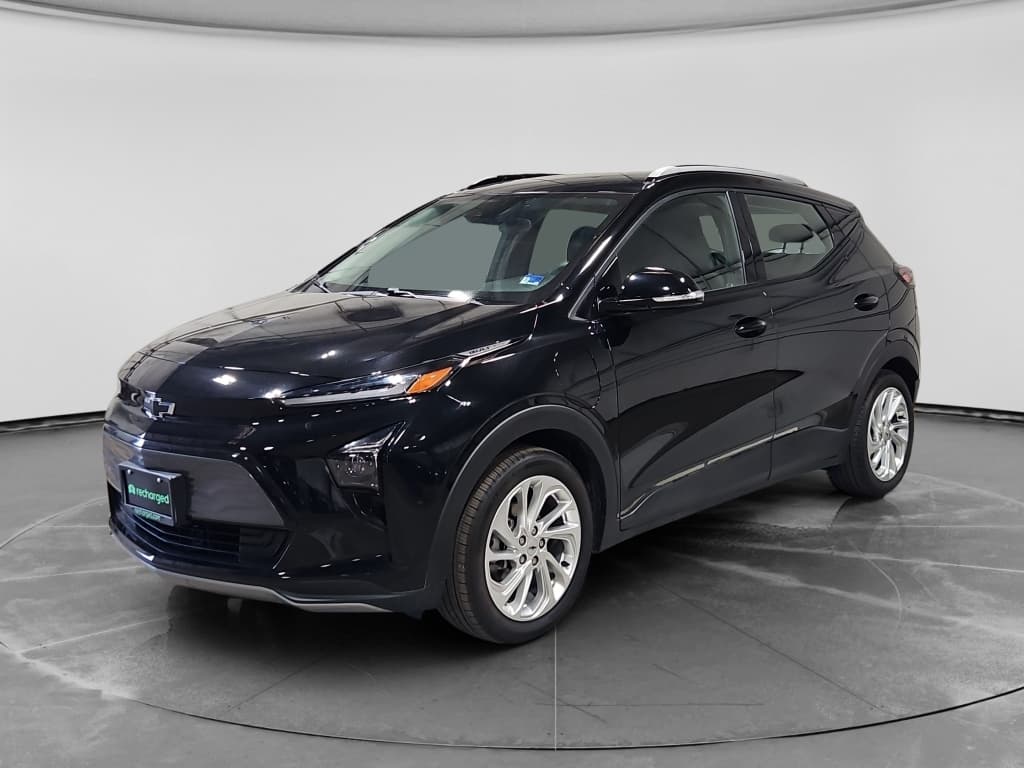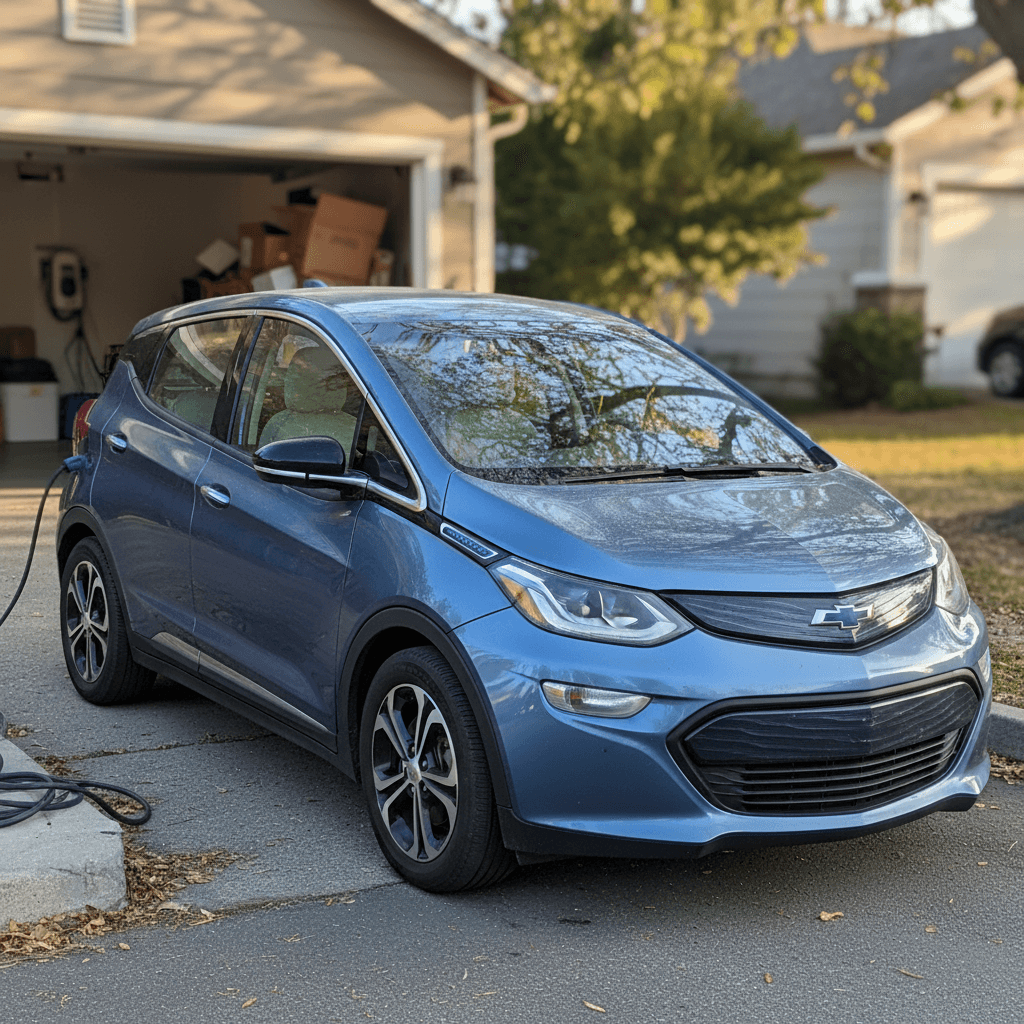
In the used-EV world, the 2020 Chevrolet Bolt EV is a little like a discounted airline business-class seat: not the latest hardware, a few quirks you need to understand, but if you’re the right traveler, it’s an outrageous amount of value. With 259 miles of EPA-rated range, hatchback practicality, and deeply depressed used prices, the 2020 Bolt EV deserves a serious look, especially if you mostly charge at home and only road-trip occasionally.
Snapshot: 2020 Bolt EV in 2026
Why the 2020 Bolt EV is such an interesting used buy
2020 Bolt EV used: big pros, clear cons
Understanding the tradeoffs is the key to getting a great deal
Modern range, bargain pricing
The 2020 Bolt EV delivers 259 miles EPA-rated range from a ~66 kWh pack, still competitive with many new EVs. But used prices have dropped hard, often undercutting comparable hybrids and compact SUVs.
Excellent daily driver
As a commuter, it’s a star: predictable efficiency, easy one-pedal driving, and simple Level 2 home charging. If you rarely drive more than 150–180 miles in a day, you’ll almost never think about public charging.
Clear limitations on trips
The tradeoff: slow DC fast charging and a recall history you must verify. If your fantasy is effortless 600-mile days on CCS fast chargers, the Bolt is not your car.
Where Recharged fits in
Key specs: range, battery and efficiency
2020 Chevrolet Bolt EV: core numbers
2020 Bolt EV basic specs (LT & Premier)
The 2020 Bolt EV came in two trims; powertrain and battery are the same across both.
| Spec | 2020 Bolt EV |
|---|---|
| Battery | ~66 kWh lithium-ion |
| EPA range | 259 miles |
| Drive | Front-wheel drive |
| Motor output | 200 hp / 266 lb-ft |
| 0–60 mph | ~6.5 seconds (independent tests) |
| On-board AC charger | 7.2 kW (Level 2) |
| DC fast charging | Optional CCS, ~50–55 kW peak |
| Cargo volume | 16.9 cu ft (seats up), 56.6 cu ft (folded) |
All 2020 Bolt EVs share the same motor and battery; differences are mainly features and interior trim.
Real-world range: what you’ll actually see
The headline for the 2020 Chevrolet Bolt EV is its EPA-rated 259 miles of range, up from 238 miles in earlier years thanks to the larger battery. In normal mixed driving, suburban errands, some highway, climate control on, you can expect something close to that number if you drive reasonably. Many owners report 230–270 miles per charge depending on speed, weather, and how low they’re willing to run the pack.
- City-heavy driving at 30–45 mph can easily beat the rating, with 4.0–4.5 mi/kWh common.
- Pure highway at 70–75 mph will cut range; think more like 180–210 miles per charge.
- Cold winters in the northern U.S. can lop off 25–35% of displayed range if you blast the heat.
- The Bolt’s guess-o-meter (range estimate) becomes very honest after a few days of your driving pattern.
Cold weather reality check
Charging experience: great at home, slow on the road
Home and workplace charging
At home, the 2020 Bolt EV is in its element. With a 7.2 kW on-board charger, a standard 240V Level 2 station will add roughly 25–30 miles of range per hour. From near empty to full is about 9–10 hours, so overnight charging is simple: plug in when you get home, wake up full every morning.
If you’re stepping up from Level 1 (120V) to Level 2, Recharged can help you compare home charging options and understand installation basics before you buy.
Public DC fast charging
On the highway, the story changes. Even with the optional CCS DC fast-charge port, the 2020 Bolt EV is a slow charger by 2026 standards. In the best case, warm battery, low state of charge, it will briefly touch around 50–55 kW, then taper into the 30s once the pack crosses roughly 50%.
In practice, that means adding about 90–100 miles in 30–40 minutes, not the 150–200 miles you see on newer 800V cars. For occasional road trips, it’s acceptable. For weekly 400-mile runs, it’ll test your patience.
Check for DC fast-charge hardware
Battery recall: what it means for a 2020 used Bolt
You cannot talk about a used Chevy Bolt EV without talking about the high-voltage battery recall. In 2021, GM expanded its recall to cover all 2017–2022 Bolt EVs and EUVs due to a risk of rare but serious battery fires. Many 2020 cars have since received brand-new replacement packs, while others only had interim software limits applied.
Battery recall outcomes you’ll see on a 2020 Bolt EV
Which bucket your used car falls into matters a lot for value and peace of mind
1. Full battery replacement
Best case. GM replaced all battery modules with revised units. These cars often show near-new range and may be more desirable long-term. Range may even exceed the original 259-mile EPA rating in mild weather.
2. Software-limited pack
Some cars received software that capped usable capacity (typically around 80–90%) until parts were available. The cap may have been lifted by now, but you should verify. A permanently limited car has less usable range.
3. Incomplete recall status
Occasionally you’ll find a car that hasn’t yet had final recall work. That’s a red flag unless you’re certain the work can still be performed and have it scheduled. Until fixed, you may face charge limits and parking/charging guidance from GM.
How Recharged de-risks the recall
Driving experience: quick, efficient, a bit noisy
The 2020 Bolt EV is not a sports car, but in the stoplight Olympics it embarrasses plenty of them. With 200 horsepower and 266 lb-ft of torque driving the front wheels, it lunges away from lights like a Labrador after a tennis ball. 0–60 mph in the mid-6-second range feels plenty lively in a small hatchback, and one-pedal driving in "L" mode quickly becomes second nature.
- Steering is light but accurate; the car feels nimble in city traffic.
- The ride skews firm, especially on rough pavement, partly due to the short wheelbase and relatively simple rear suspension.
- Cabin noise is where the Bolt shows its budget roots: you’ll hear more road and wind noise than in newer EVs from Hyundai, Kia, or Tesla.
- Brakes are strong and easy to modulate; regen is aggressive enough that many drivers rarely touch the friction brakes around town.
City car personality, highway manners
Interior, space, tech and comfort
The Bolt’s interior is honest economy-car fare dressed up with a big screen and some interesting textures. Materials are hard-wearing rather than plush. Ergonomics are mostly straightforward, though the busy dashboard design and button-heavy center stack clearly predate the iPad-minimalist era.
Living with the 2020 Bolt EV
Practicality is a strong suit; comfort depends on your expectations
Space and usability
The tall roof and upright seating make the Bolt feel bigger inside than it looks. Adults fit fine front and rear, though three across in back is optimistic. The hatchback cargo area swallows strollers, grocery runs, and weekend luggage with ease, especially with the split rear seats folded.
Tech and driver aids
You get a 10.2-inch central touchscreen, digital instrument cluster, Apple CarPlay/Android Auto, and available safety tech like lane-keep assist, forward collision warning, and blind-spot monitoring. What you don’t get is adaptive cruise control or modern hands-free systems that showed up on later EVs.
Seat comfort is hit-or-miss
Reliability, running costs and depreciation
Set the recall aside for a second and the 2020 Bolt EV has a solid reputation for day-to-day reliability. The simple single-speed drivetrain, lack of engine oil and transmission fluid, and modest power output mean there’s just not much to go catastrophically wrong. Most ownership complaints are about comfort and charging speed, not failures.
Ownership economics: where the 2020 Bolt shines
This is where the car earns its keep as a used buy
Energy costs
With efficiency around 3.5–4.0 mi/kWh, a full charge uses roughly 60–65 kWh. At $0.15/kWh residential rates, that’s about $9–10 for 230–250 miles. Even with higher rates, it undercuts gasoline dramatically.
Maintenance
Routine maintenance is light: tire rotations, cabin air filter, brake fluid every few years, and occasional coolant checks. Thanks to strong regen, brake pads often last well beyond 100,000 miles.
Depreciation opportunity
The Bolt’s combination of early recall news and modest DC fast charging speed has pushed used prices far below original MSRP. That’s bad for first owners, great for you. A clean 2020 can cost less than many comparable gas hatchbacks.
Recharged and total cost of ownership
Ready to find your next EV?
Browse VehiclesWhat to check before buying a used 2020 Bolt
Pre-purchase checklist for a used 2020 Bolt EV
1. Confirm full recall completion
Use the VIN with a Chevrolet dealer or official recall tool to verify that <strong>all battery recall campaigns</strong> are complete. Ask explicitly whether the car received a full pack replacement or only a software update.
2. Inspect battery health and range
On a fully charged car, note the displayed range and recent efficiency (mi/kWh). If the estimate is dramatically below expectations in mild weather, dig deeper. A Recharged Score battery diagnostic goes further by measuring usable capacity directly.
3. Verify DC fast-charging hardware
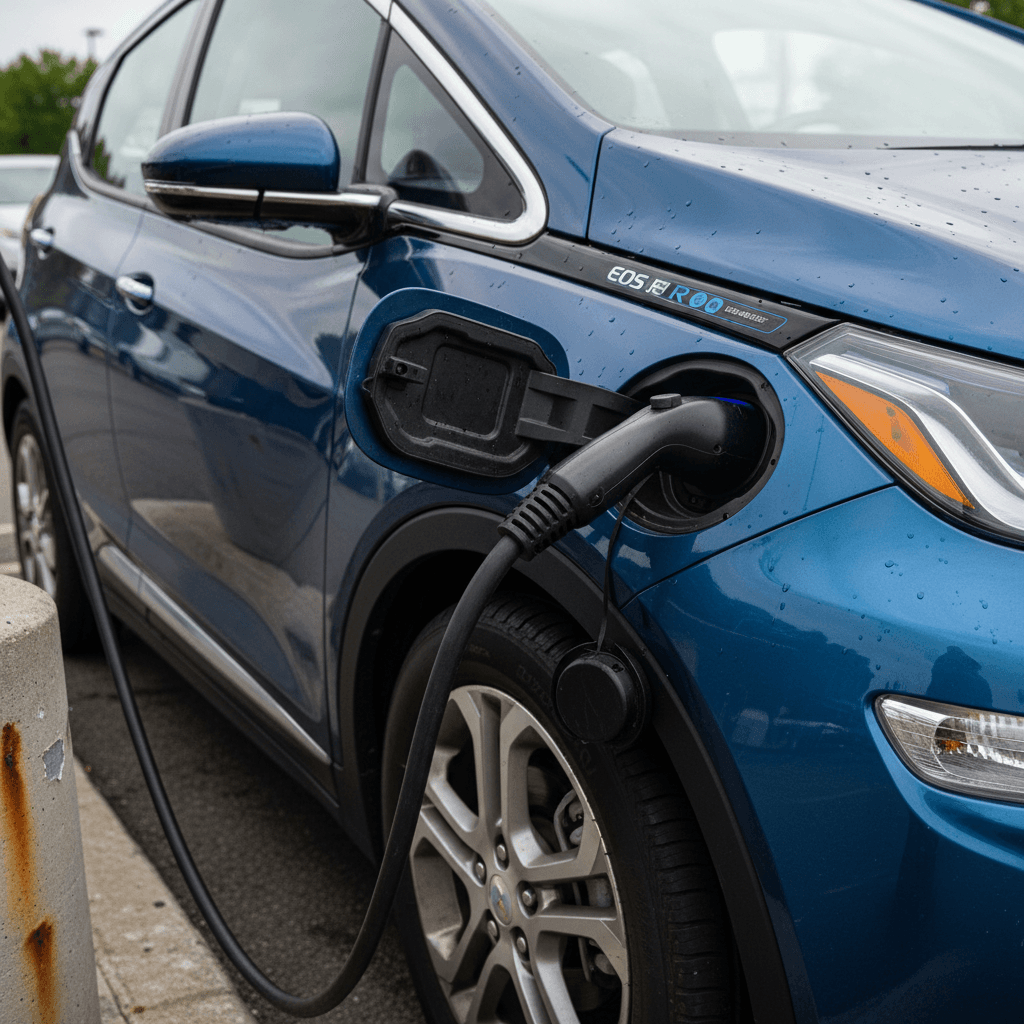
Open the charge door. A small AC-only J1772 inlet means <strong>no DC fast charging</strong>. A larger combined port with extra pins at the bottom is the CCS fast-charge version. If you plan any road trips, you want the latter.
4. Test a Level 2 or DC fast charge
If possible, plug into a known-good Level 2 or DC fast charger and watch the rate. Wildly low numbers (single-digit kW on Level 2, teens on DCFC with a low battery) may indicate issues with the car or recent software limits not yet lifted.
5. Look for uneven tire wear
The Bolt’s torque can be hard on front tires, and alignment issues sometimes show up as inner-edge wear. Uneven wear is a bargaining chip and a hint to budget for new tires and an alignment.
6. Live-test the seats and highway manners
Take at least a 20–30 minute mixed test drive. Pay attention to seat comfort, noise levels at 70 mph, and steering feel. These subjective impressions will matter more to you day-to-day than any spec sheet.
Who the 2020 Bolt EV is (and isn’t) for
Great choice if…
- You drive under ~150 miles most days and can charge at home or work.
- You want a small, practical hatchback with big range for the size.
- You care more about efficiency and value than about soft-touch dashboards.
- You’re comfortable living with slower DC fast charging on the handful of long trips you take each year.
Probably not your car if…
- You routinely drive 300–500 miles in a day and rely on fast charging to make time.
- You expect luxury-car quiet and cushy seats.
- You want the latest driver-assistance tech like adaptive cruise or lane-centering.
- You’re not willing to spend time understanding the battery recall history.
The used 2020 Bolt EV is the rational commuter’s EV, unfashionable in places, yes, but clever, cheap to run, and still astonishingly capable if you play to its strengths.
FAQ: 2020 Chevy Bolt EV as a used car
Frequently asked questions about the 2020 Bolt EV (used)
Viewed from 2026, the 2020 Chevrolet Bolt EV is not a headline act anymore, it’s the clever character actor who quietly steals scenes. Its styling is familiar, its tech is a half-step behind, and its fast charging is plainly outgunned. But as an honest, efficient, surprisingly roomy electric hatchback that now sells for very approachable money, it makes a compelling case. If you understand the battery recall story, verify the hardware, and accept its limitations on long-haul road trips, a well-sorted 2020 Bolt EV can be one of the smartest used-EV buys on the market. And with tools like the Recharged Score Report and EV-specialist guidance, you can step into one with eyes open, and battery data in hand.