If you Google “2020 Chevrolet Bolt EV problems and fixes”, you’ll quickly discover two competing narratives. On one side, owners who absolutely love their little electric hatchback. On the other, headlines about battery recalls, “propulsion power reduced” warnings, and Consumer Reports telling shoppers to steer clear. The truth, as usual, is in the messy middle, and that’s exactly where this guide lives.
Big picture on 2020 Bolt reliability
Overview: Should you worry about a 2020 Bolt EV?
Let’s set expectations. Compared with most gas cars, the 2020 Bolt EV has far fewer moving parts and very little to break: no transmission, no timing belt, no oil changes. But it does ride on the same LG‑supplied battery tech that triggered the famous Bolt fire recall spanning 2017–2022 model years, and later data put the Bolt among the used EVs to approach with caution because of battery‑related complaints.
2020 Bolt EV: problem snapshot
The good news: by 2026, most 2020 Bolts have either had their packs inspected and software‑limited, or have already received a replacement battery under recall. The bad news: intermittent faults, slow or inconsistent fast charging, and conservative software limits can turn an otherwise great EV into a bit of an anxiety machine, especially if you don’t know what to look for when buying used.
Where Recharged fits in
Ready to find your next EV?
Browse VehiclesQuick specs: what makes the 2020 Bolt different
Key 2020 Bolt EV specs
- Battery: ~66 kWh usable, liquid‑cooled
- Range: 259 miles EPA
- Charging: 7.2 kW AC, up to ~55 kW DC fast
- Drive: Single front motor, 200 hp
- Safety tech: Optional Driver Confidence packages
What changed vs 2017–2019
- More efficient battery chemistry and improved DC fast‑charging curve in cold weather.
- Same LG Chem battery architecture that later fell under the fire recall program.
- Software‑based battery monitoring more aggressive after recall updates.
In other words: a better long‑range road‑trip car than early Bolts, but still living in the same recall neighborhood.
Problem 1: Battery recall and fire risk
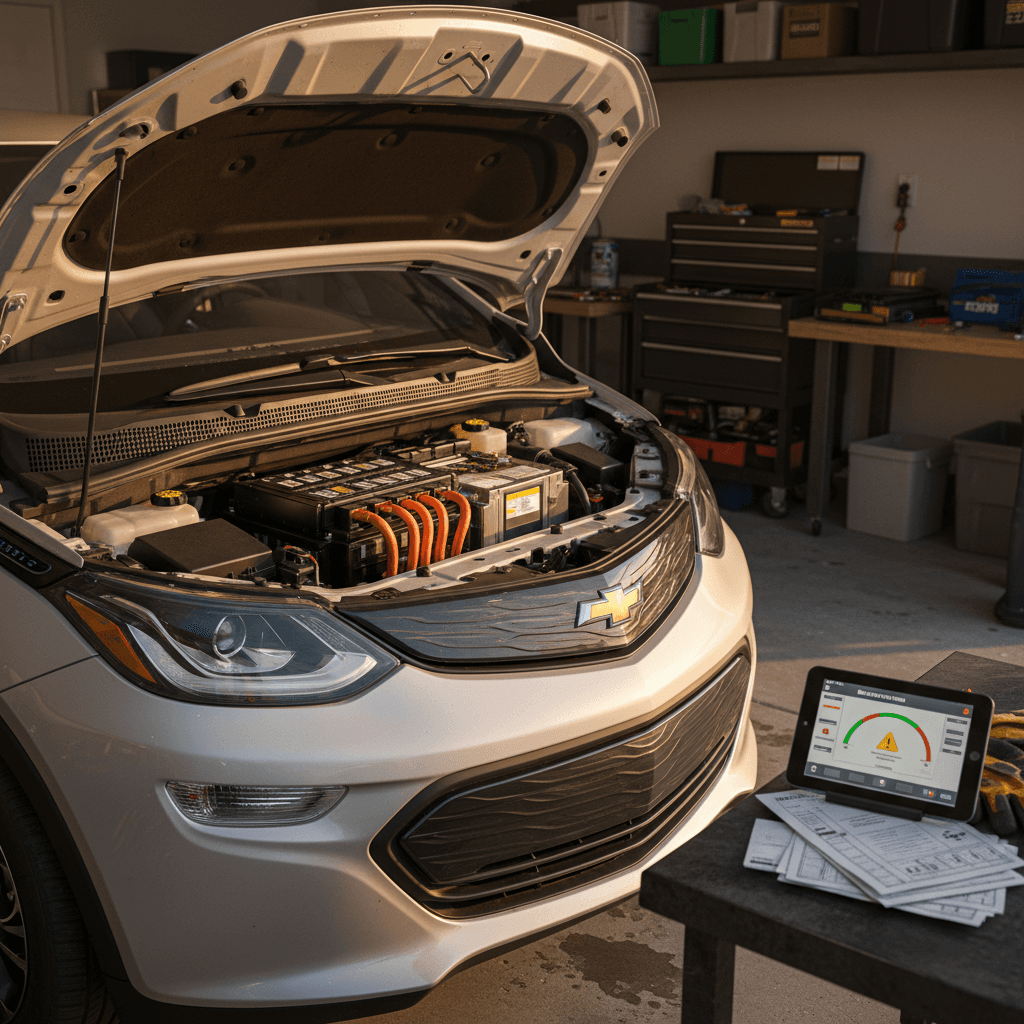
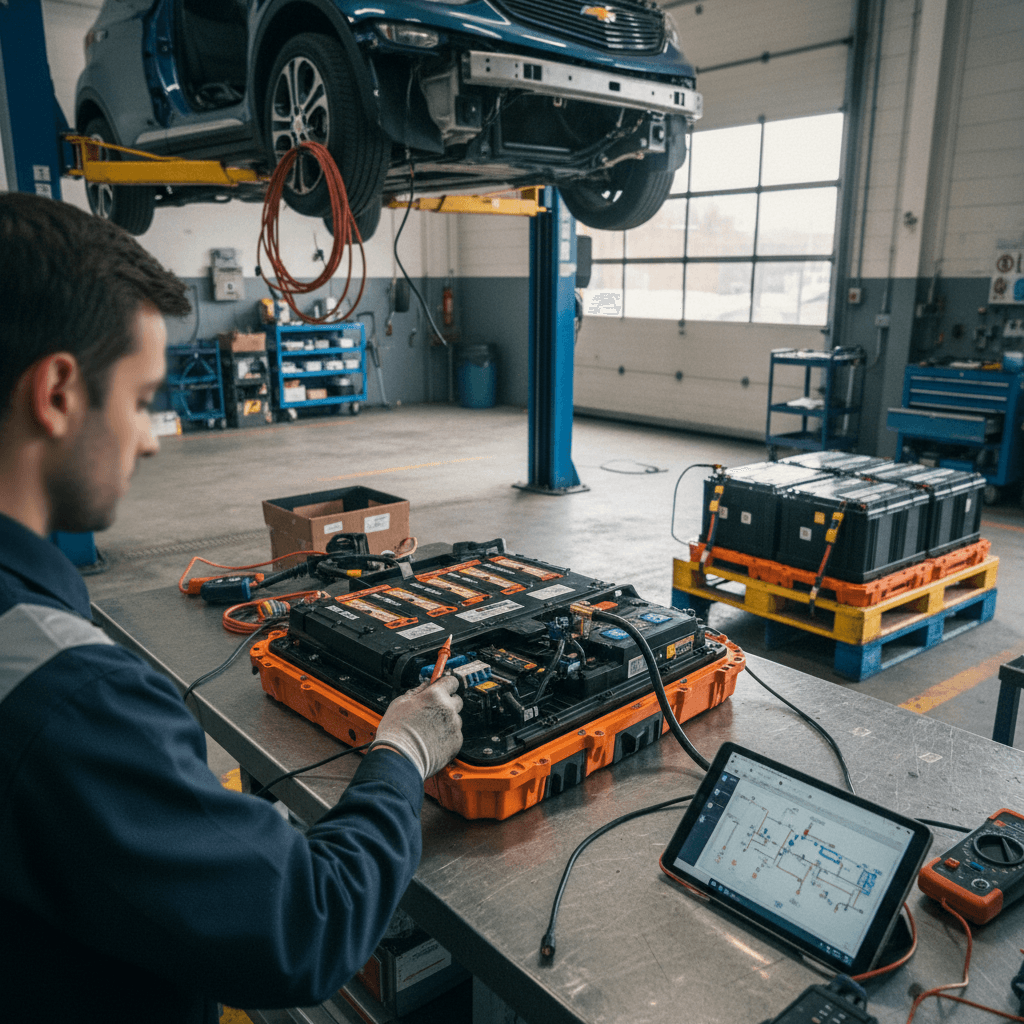
The story you’ve probably heard: a small but headline‑grabbing number of Chevy Bolts experienced battery fires when parked or charging at high state of charge. Investigations pointed to manufacturing defects in certain LG battery cells, anode tab tears and folded separators, that could cause internal shorts. GM responded with a sweeping recall covering all 2017–2022 Bolt EV and EUV models, including the 2020.
- Early interim fixes temporarily limited usable capacity and maximum charge to reduce fire risk.
- Later campaigns added more sophisticated diagnostic software to continuously scan for abnormal cell behavior.
- Some cars received full battery pack replacements with updated hardware; others kept their original pack but run stricter software limits.
Do not skip the recall status check
Symptoms and risks of an unresolved or failing pack
- Car refuses to charge past a certain percentage (often ~80–90%) even on Level 2.
- Sudden loss of displayed range after a recall software update without a corresponding driving pattern change.
- Error messages like “Service high voltage charging system” or repeated “Propulsion power reduced” with a check‑engine light.
- History of the car being a buyback or lemon‑law vehicle for battery issues.
To be absolutely clear: statistically, the fire risk after recall remedies is extremely low. The more practical concern for a used‑car shopper is whether you’re inheriting a pack that’s been repeatedly flagged, partially derated, or is waiting on a replacement that might sideline the car for weeks.
Quick used‑car check
Fixes and what GM actually does
How the battery recall is usually resolved
Not every 2020 Bolt gets the same treatment
1. Software‑only update
Dealers flash updated battery monitoring software. The car may still have its original pack but with smarter fault detection and, sometimes, a small usable‑capacity change.
2. Full pack replacement
If diagnostics detect abnormal cells, GM authorizes a new pack. Many owners consider this the jackpot: a fresh battery and a new or extended warranty clock.
3. Repeated faults
A minority of owners report multiple “fixed” episodes leading to another replacement or ongoing reduced‑propulsion events. This is where documentation and a strong warranty are essential.
Problem 2: “Propulsion power reduced” warnings
If the battery recall was the Bolt’s headline scandal, the supporting character is the “Propulsion power is reduced” message. Owners describe it appearing while charging, cruising on the highway, or starting the car, sometimes accompanied by a check‑engine light and an A/C shutdown, sometimes not.
Two very different meanings of the same message
Normal, temperature‑related power reduction
The Bolt will intentionally limit power when the battery is very cold or very hot. In freezing weather, you might see reduced acceleration for the first miles, especially if you start a DC fast charge with a cold pack. This generally clears once the battery warms up and doesn’t trigger a persistent warning light.
- Shows “propulsion power reduced” without a “service vehicle soon” message.
- Occurs at low or very high battery temperatures, often after a cold soak.
- Goes away after some driving or after the pack temperature normalizes.
Fault‑related power reduction
The more worrisome version pairs the message with a check‑engine light or a car that won’t charge above ~30–40%. Technical bulletins describe scenarios where certain diagnostic trouble codes (like P0BBD) cause the BMS to lock the pack into a low‑state‑of‑charge safe mode until a dealer evaluates it. Some owners end up with module or full pack replacements; others get repeated software reflashes and weeks of waiting for parts.
- “Propulsion power reduced” plus a check‑engine or “service vehicle soon” light.
- Car refuses to DC fast charge or stops charging early on Level 2.
- A/C disabled while the error is present (to reduce load on the HV system).
- Multiple occurrences in one year despite dealer visits.
When to stop driving and call a dealer
Typical fixes for repeated reduced‑propulsion events
Common dealer fixes for reduced propulsion
What dealers usually do when you complain about power loss
| Scenario | Likely Dealer Action | What It Means For You |
|---|---|---|
| Single event in extreme cold, no codes stored | No repair; explain behavior | Normal protection. Note conditions; consider preconditioning in winter. |
| Message + MIL, limited to ~30% charge | Reprogram HPCM2/BMS software; clear codes | First step; may resolve transient conditions, keep an eye on recurrence. |
| Repeated warnings after software updates | Battery module or full pack replacement under warranty | Car may be out of service for weeks; you should receive a loaner. |
| Out of basic warranty, no recall coverage | Diagnostic fee, possible owner‑paid repairs | Get a second opinion; in some cases goodwill assistance is possible. |
Actual repair paths vary by diagnostic code, but these are the greatest hits.
Problem 3: DC fast‑charging quirks and slow speeds
On paper, the 2020 Bolt EV improved on early models with a smoother DC fast‑charging curve, especially in colder weather. In the real world, charging performance is a cocktail of station behavior, battery temperature, recall software, and state of charge. The result: some owners report easy 50–55 kW sessions, others see their cars bog down in the 20–30 kW range or taper early.
- The Bolt’s pack is relatively small by modern standards, so it can hit higher SOC quickly and start tapering sooner.
- There’s no user‑controlled battery preconditioning for fast charging, if you drive gently to a charger with a cold pack, it will likely charge slowly.
- Post‑recall software may be more conservative in how aggressively the pack accepts power, especially at higher SOC.
How to get decent DCFC speeds in a 2020 Bolt
Fixes if your 2020 Bolt charges abnormally slowly
Troubleshooting a slow‑charging 2020 Bolt
1. Compare multiple stations
Try at least two different DC fast‑charging networks. If only one location is slow, the problem may be the station, not the car.
2. Check ambient and pack temperature
In very cold weather, expect slower rates. Use cabin preconditioning and some spirited driving before plugging in.
3. Verify software and recall status
Ask a Chevy dealer to confirm your car has the latest <strong>BMS and HPCM2 software</strong> and all battery campaigns closed.
4. Look for related error messages
If slow charging comes with warnings like “unable to charge” or reduced range, you may be in the early stages of a battery fault.
5. Use a Level 2 baseline
At home or at a Level 2 public charger, a healthy Bolt should draw about 7.2 kW. Significantly less could point to an onboard charger, wiring, or EVSE issue.
Problem 4: Range loss and winter performance
On a warm day at moderate speeds, a 2020 Bolt can comfortably exceed its 259‑mile EPA rating. Introduce a Michigan winter, 75 mph freeway runs, and a cabin full of heater‑loving humans, and you can cut that number by a third, or even half. Owners sometimes mistake this normal seasonal swing for permanent degradation.
Normal winter behavior
- Range estimator drops sharply when temps fall below freezing.
- Heater and defroster can use several kW continuously.
- Battery holds less usable energy when cold and warms slowly if you only drive short distances.
Signs of true battery degradation
- Notable range loss in mild weather compared with EPA numbers and other owners.
- Big drops in range immediately after recall software updates that don’t improve with warmer temps.
- Service history of battery faults, reduced‑propulsion events, or capacity testing by dealers.
Simple winter fixes
Problem 5: Charging hardware and EVSE issues
Not every “Bolt charging problem” is actually the Bolt. Many reported issues trace back to flaky public chargers, under‑sized home wiring, or tired portable charge cords. That said, the 2020 Bolt has a few charging‑hardware weak spots worth understanding.
- Occasional failures of the onboard charger or charge‑port locking mechanism.
- Wear and tear or overheating at the J1772 inlet when used daily with loose or poor‑quality plugs.
- Portable Level 1 cord failures mistaken for vehicle faults.
Common charging‑hardware complaints and fixes
What goes wrong, and what usually solves it
| Symptom | Likely Cause | Best Fix |
|---|---|---|
| Car stops charging on Level 1 overnight | Weak or overheated household outlet; failing portable cord | Install a dedicated 120V circuit or upgrade to Level 2; replace the EVSE. |
| Clicks or grinding when plugging in | Debris or wear in the charge port latch | Clean port, inspect latch; dealer can replace latch assembly if needed. |
| Won’t start charging at some public Level 2s | Station handshake or network error | Try another pedestal or network; update car software; report to network. |
| Random DCFC session drops | Station error or overheating cable | Move to another stall or network; log which brands give consistent trouble. |
Start with the cheap stuff, cords and outlets, before blaming the car.
Don’t DIY your 240‑volt setup
Other notable 2020 Bolt irritations
Beyond the battery‑and‑charging drama, the 2020 Bolt’s complaints list reads like a reasonably normal compact car, with a few EV‑flavored quirks.
- Firm, sometimes jittery ride on broken pavement thanks to short wheelbase and low‑rolling‑resistance tires.
- Road and wind noise that feel more obvious because there’s no engine masking it.
- Occasional infotainment freezes or Bluetooth glitches that require a reboot.
- Seat comfort complaints from taller or broader drivers, especially on long trips.
Good news: not much expensive mechanical drama
How to inspect a used 2020 Bolt EV (step‑by‑step)
If you’re shopping used, you don’t need a PhD in high‑voltage systems, you just need a method. Here’s how to separate the keepers from the future‑lawsuit exhibits.
10‑step checklist for a used 2020 Bolt EV
1. Run the VIN for recalls
Use GM’s recall lookup and ask for printouts. You want all battery campaigns marked complete, with notes on any pack replacements.
2. Ask specifically about battery history
Has the car ever shown “propulsion power reduced,” refused to charge fully, or been in for high‑voltage battery service? Get paperwork, not just promises.
3. Check battery warranty balance
Confirm the in‑service date and remaining years/miles on the 8‑year/100,000‑mile battery warranty (or longer in some states).
4. Inspect the charge port
Look for melted plastic, discoloration, or badly worn contacts around the J1772 and CCS pins. Plug and unplug a few times to feel for smooth engagement.
5. Test Level 2 charging
If possible, plug into a 240‑volt station and confirm the car pulls close to 7 kW and charges without interruptions or warnings.
6. Test DC fast charging
On a pre‑purchase test, arrive at ~30% SOC and use a CCS fast charger. You’re looking for ~40–55 kW initially and a smooth session without error messages.
7. Evaluate real‑world range
Reset a trip meter, drive at mixed speeds, and compare energy use (mi/kWh) and projected range with the EPA number. Huge discrepancies deserve questions.
8. Listen and feel on rough roads
The Bolt rides firmly, but you shouldn’t hear clunks, grinding, or humming from the front drive unit. Any such noises warrant inspection.
9. Scan infotainment and safety features
Test CarPlay/Android Auto, cameras, lane‑keep alerts, and adaptive cruise (if equipped). Glitches aren’t usually catastrophic but can be expensive out of warranty.
10. Get an expert EV inspection
Consider a specialist, like the team behind <strong>Recharged Score</strong>, who can pull battery health data and run EV‑specific diagnostics that a generic shop might miss.
Warranty coverage: what’s still protected?
A 2020 Bolt EV sold new in, say, mid‑2020 is now roughly six years old. That means the 3‑year/36,000‑mile bumper‑to‑bumper warranty has likely expired, but the 8‑year/100,000‑mile high‑voltage battery and electric‑drive warranty should still be in force in most states, with even longer coverage in some CARB regions.
- High‑voltage battery pack and internal modules.
- Drive motor and reduction gearset.
- Battery management system and related control modules.
- Some high‑voltage wiring and contactors.
Replaced pack? You may be better off
So…should you buy a used 2020 Bolt EV?
Here’s the uncomfortable but honest answer: the 2020 Bolt EV is both one of the smartest used‑EV buys on the market and a car you should never buy blind. Its battery recall history and occasional reduced‑propulsion drama demand more homework than a typical compact hatchback, but they also depress prices to the point where you can get 250‑plus miles of electric range for economy‑car money.
Reasons to say yes
- Excellent efficiency and still‑competitive range for the price.
- Simple, proven electric drivetrain with low routine maintenance costs.
- Many cars now riding on fresh replacement battery packs with extended warranty.
- Compact footprint with surprisingly roomy interior and upright seating.
Reasons to be cautious
- History of battery recalls, software campaigns, and owner complaints.
- Potential for reduced‑propulsion events and charging quirks on poorly maintained cars.
- Ride and noise levels that feel more economy‑car than premium EV.
- Spotty dealer EV expertise in some regions.
How Recharged de‑risks a 2020 Bolt
If you’re willing to do your due diligence, or let a specialist do it for you, the 2020 Chevy Bolt EV can be a fantastically rational way to go electric: cheap to run, easy to park, surprisingly quick. Ignore the battery story, however, and you’re gambling on the most expensive part of the vehicle. In this car more than most, knowledge isn’t just power; it’s range, reliability, and peace of mind.