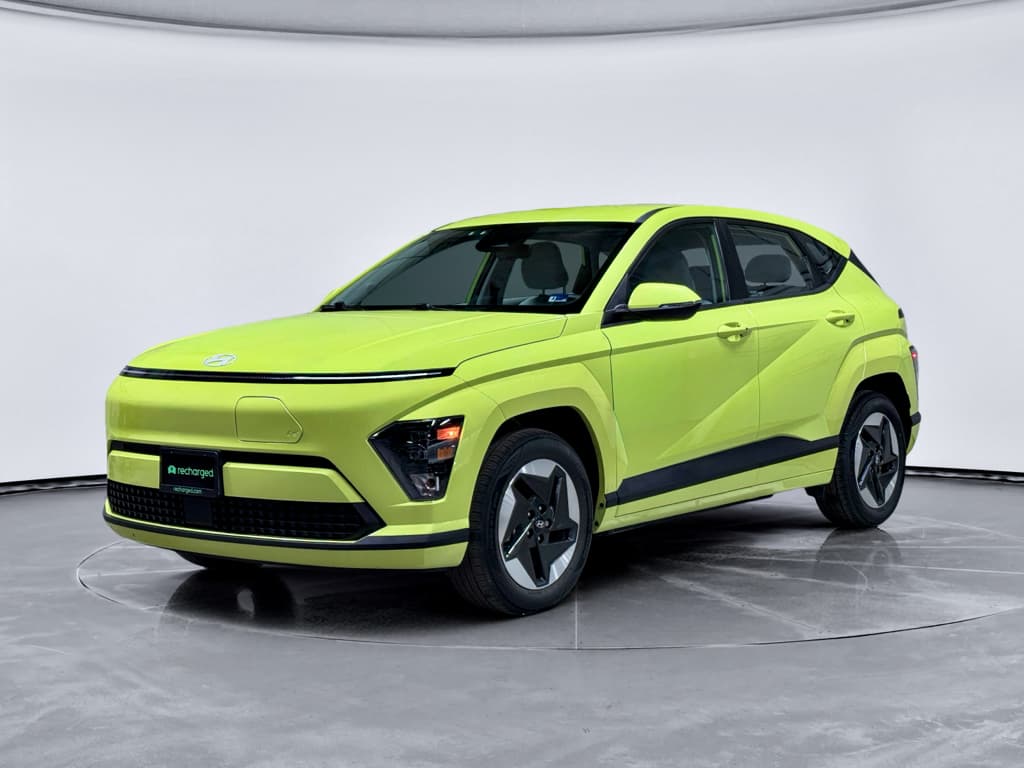
If you’re shopping for a used 2019 Hyundai Kona Electric, you’ve probably already heard about battery recalls, 12‑volt failures, and weird gearbox noises. The 2019 model is genuinely efficient and fun to drive, but it also concentrates most of the Kona Electric’s known trouble spots. This guide walks through the most common 2019 Hyundai Kona Electric problems, how serious they really are, and what you should check before you buy.
Why 2019 Matters
Overview: Should You Worry About 2019 Kona Electric Problems?
The 2019 Kona Electric helped prove that a relatively affordable EV could deliver real‑world range and efficiency that challenged more expensive brands. At the same time, first‑generation hardware plus aggressive global scaling meant Hyundai discovered several issues in the field rather than in the lab. The big one was a fire‑risk–related high‑voltage battery recall, but there are also patterns around 12V batteries, reduction gear noise, charging port components, and HVAC components.
Why the 2019 Kona Electric is still attractive
- Excellent efficiency and range from its ~64 kWh pack.
- 10‑year/100,000‑mile battery warranty in the U.S. gives long‑term coverage.
- Compact footprint but practical hatchback packaging.
- Depreciation has made 2019s relatively affordable versus newer EVs.
Where problems tend to show up
- Battery recall history and, in some cases, full pack replacement delays.
- Premature 12V battery failures and occasional parasitic drain.
- Drivetrain noises from the reducer/motor assembly.
- Charging‑port locks, doors, and DC fast‑charge quirks.
Most of these are manageable if you know what to look for and verify recall and warranty status before you sign.
Quick Takeaways on 2019 Kona Electric Reliability
2019 Kona Electric Problem Snapshot
- The most serious 2019 Hyundai Kona Electric problem is the high‑voltage battery recall for potential fire risk, which in many cases leads to full pack replacement.
- Outside the recall, owners commonly report 12V battery failures, especially after 3–4 years, and occasional parasitic drain issues.
- Some 2019 cars develop gear reducer or motor bearing noise, sometimes requiring expensive hardware replacement.
- Charging‑port lock failures, charge‑door issues, and DC fast‑charging quirks show up disproportionately on 2018–2019 builds.
- Hyundai’s long EV warranty, typically 10 years/100,000 miles on the traction battery and hybrid system components in the U.S., means many 2019s are still covered today.
- A careful pre‑purchase inspection plus verified recall completion can turn a “scary” early‑build EV into a solid value play.
High-Voltage Battery Recall & Fire Risk
The question most shoppers ask first is: “Is this the Kona that had battery fire issues?” For 2019 models, the answer is yes, this is the generation affected by a major high‑voltage battery safety recall tied to manufacturing defects in LG Chem cells.
The Battery Recall in Plain English
- Early recall campaigns focused on a Battery Management System (BMS) software update plus charging limits, but later investigations led regulators and Hyundai to require full pack replacement on many affected cars.
- The defect was linked to batteries from specific LG Chem factories and production windows. That’s why recall eligibility is VIN‑specific, not blanket by model year.
- Owners sometimes faced months‑long waits for replacement packs, and a minority pursued buybacks rather than waiting.
- A replaced pack, installed under recall, can actually make a used 2019 Kona Electric more attractive, provided documentation is complete.
Used-Buyer Action Item
Real-World Battery Health & Degradation
Separate from the recall, you’ll see plenty of forum posts from 2019 Kona Electric owners asking whether their batteries are degrading. It’s important to distinguish between the car’s guess‑o‑meter range estimate and actual usable capacity.
- Many reported “range loss” cases are actually the car’s estimator adjusting to colder weather, higher highway speeds, or new tires rather than true degradation.
- There have been isolated cases where a failing cell caused rapid, real range loss, those usually get flagged by the BMS and trigger trouble codes or recall‑related replacement.
- Hyundai’s U.S. EV battery warranty typically guarantees the pack won’t fall below about 70% of original capacity within 10 years/100,000 miles for both current and subsequent owners.
- Some owners report no noticeable degradation even past 50,000 km, especially when they routinely charge to 80–90% rather than 100% and avoid leaving the pack at 0–10% for long periods.
How to Check Battery Health Before You Buy
12V Battery Problems and Dead-Car Scenarios
Like most modern EVs, the Kona Electric uses a conventional 12‑volt battery to run accessories and boot the high‑voltage system. On 2019 models, the 12V battery is a relatively small, often overlooked component that can still leave you stranded if it fails.
- A common pattern is 12V battery failure around 3–4 years of age, sometimes sooner in extreme climates or when the car sits for long periods.
- Owners describe situations where the car appears totally dead, no dash, no start, until they jump the 12V battery, even though the high‑voltage pack is charged.
- Some right‑hand‑drive 2019 builds reportedly had a mis‑positioned rubber bung in the trunk that let water into the spare‑well area, damaging nearly new 12V batteries.
- Software updates in later years aimed to improve 12V charging logic, and many owners find that simply replacing the factory battery with a higher‑quality unit solves chronic issues.
12V vs. High-Voltage Battery
Smart 12V Checks for a Used 2019 Kona Electric
1. Ask if the 12V battery has been replaced
A 2019 Kona Electric still on its <strong>original 12V battery</strong> in 2026 is on borrowed time. A documented replacement in the last 1–3 years is a plus.
2. Look for warning history
Ask the seller if they’ve seen “Low 12V battery” warnings, needed frequent jump starts, or had no‑start incidents after parking overnight.
3. Inspect for water intrusion
If you’re viewing a right‑hand‑drive import, lift the trunk floor and check for moisture or corrosion that could indicate historic water ingress around the 12V area.
4. Budget for proactive replacement
Even if the 12V battery passes a load test, many experienced EV owners treat a fresh unit as cheap insurance on any used purchase.
Drivetrain Noise, Gear Reducer & Motor Issues
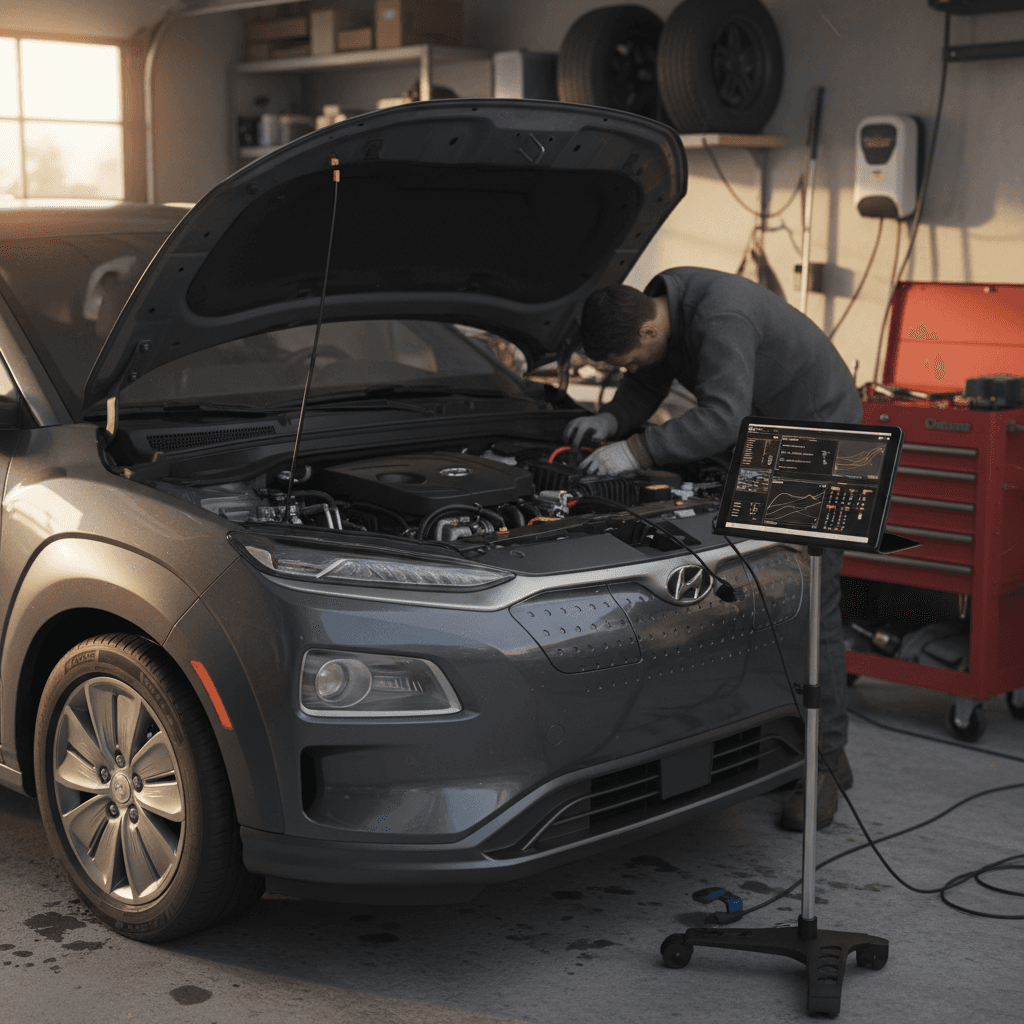
Several 2019 Kona Electric owners report whining, ticking, or growling noises from the front of the car that change with road speed. Often this is traced to the gear reducer (the single‑speed reduction gearbox between the motor and driveshafts) or, less commonly, to motor bearings themselves.
- A Hyundai technical service bulletin (TSB) covers gear reducer and motor bearing noise on some early Kona EVs, and in some cases dealers replaced the reducer, motor, or both.
- Owners describe sounds like a “wheel of fortune” clicking, or a constant whine/growl that gets louder with speed even when coasting.
- In‑warranty fixes can be generous, with Hyundai covering parts and sometimes sharing labor with the dealer as goodwill, but out‑of‑warranty replacements are expensive.
- Because most 2019 U.S. cars are still within the 10‑year/100,000‑mile EV system warranty window, a noisy but otherwise healthy drivetrain may still be fixable at low or no cost to the current owner.
Test-Drive Tip
Charging Port, Door Latch, and DC Fast-Charge Issues
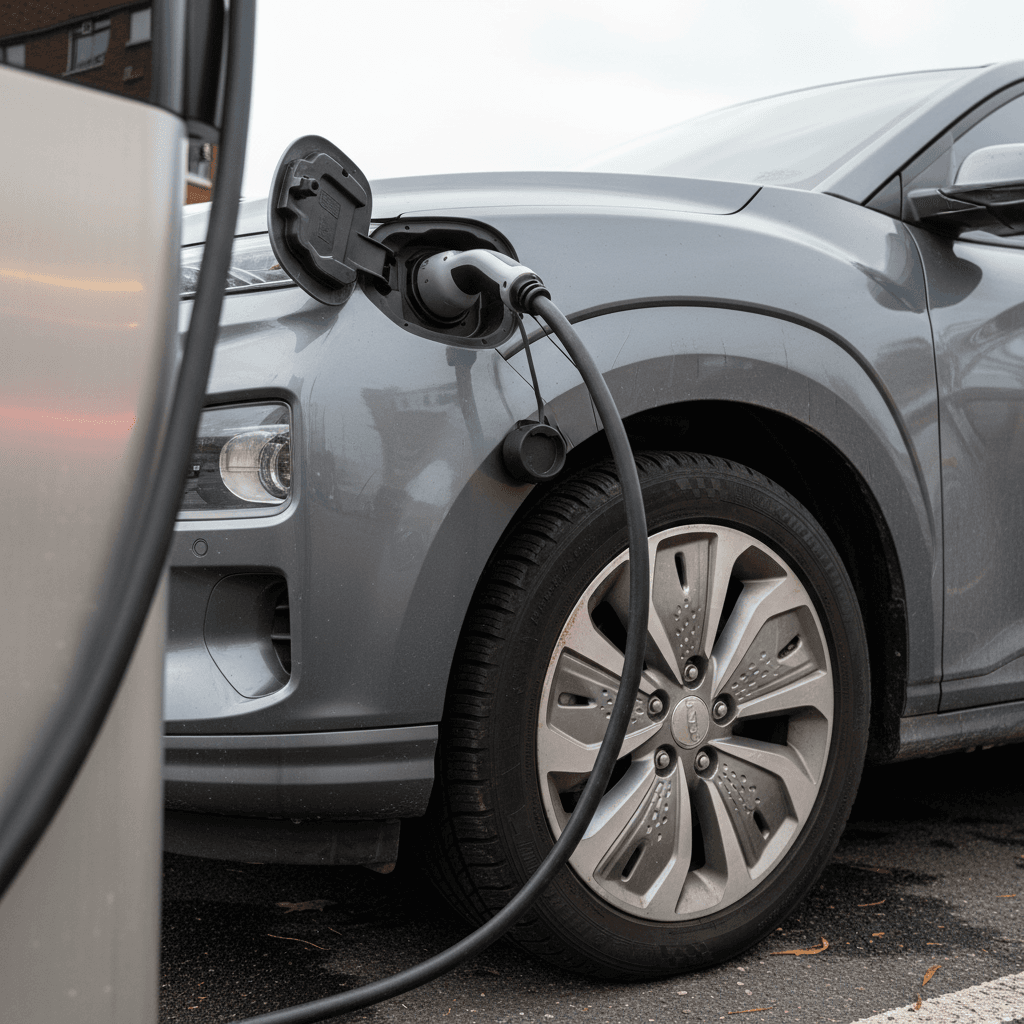
Charging hardware is another recurring theme on early Kona Electrics. Most issues are more annoying than dangerous, but they can impact day‑to‑day usability, especially if you rely on public charging.
- Owners of 2018–2019 cars report charge‑port plug lock failures, where the car either won’t release the connector or won’t lock it properly.
- The charge‑port door itself can become difficult to open or close smoothly; Hyundai issued a TSB to update parts and address binding or misalignment.
- Some cars showed mixed‑color charging‑port indicator lights, sometimes linked to moisture ingress into the port area.
- A subset of owners describe DC fast‑charging problems, sessions that won’t start or terminate early, which Hyundai has tried to address via BMS and charging‑logic software updates.
What to Do During an Inspection
HVAC Failures and Other Notable 2019 Kona Electric Issues
Beyond batteries and drivetrains, a handful of other issues show up frequently enough with 2019 Hyundai Kona Electric owners that they’re worth having on your radar.
- Some owners report HVAC compressor or A/C failures, sometimes with repeated leak hunts and replacement of multiple components before the system stabilizes.
- A few vehicles experience repeated “Check Electric Vehicle System” warnings, often tied to traction‑battery faults that eventually lead to pack replacement under warranty.
- As with many compact crossovers, expect normal wear‑and‑tear items, tires, suspension bushings, and brake components, to need attention around the 60,000–90,000‑mile mark, depending on use.
- Software updates over the car’s life have improved some of these edge‑case behaviors, but you’ll want to verify that a used 2019 has had all campaigns and recommended updates applied.
Don’t Ignore the Software
Warranty Coverage on a 2019 Kona Electric
One of the 2019 Hyundai Kona Electric’s biggest saving graces in the used market is Hyundai’s aggressive EV warranty, especially in the U.S. That coverage can dramatically change the risk profile of known issues like battery recall replacements and drivetrain repairs.
Typical U.S. Warranty Coverage on a 2019 Kona Electric
Exact coverage can vary by market and original sale conditions, so always verify with Hyundai for a specific VIN. This table reflects common U.S. terms.
| Component | Typical Coverage (U.S.) | Key Notes |
|---|---|---|
| High-voltage battery | 10 years / 100,000 miles | Covers defects and capacity falling below ~70% of original during warranty period. |
| Hybrid/EV system components | 10 years / 100,000 miles | Includes major drive electronics and, in many cases, the traction motor and reduction gear. |
| Basic bumper-to-bumper | 5 years / 60,000 miles | Covers most non‑wear components; likely expired on calendar time for 2019s. |
| Corrosion perforation | 7 years / unlimited miles | Surface rust generally excluded; focuses on perforation from corrosion. |
| Roadside assistance | 5 years / unlimited miles | Often expired on 2019s unless extended coverage was purchased. |
Strong battery and EV system coverage is a key reason 2019 Kona Electrics remain compelling used buys when recalls and campaigns are fully addressed.
Why Warranty Status Is a Deal-Maker
Used 2019 Kona Electric Buyer Checklist
If you’re considering a 2019 Hyundai Kona Electric, you don’t need to memorize every technical service bulletin. You just need a structured way to separate the solid cars from the headaches. Use this checklist as your starting point.
Pre-Purchase Checklist for a 2019 Hyundai Kona Electric
1. Confirm high-voltage battery recall status
Ask the seller for Hyundai service records. Verify whether the car had a <strong>software‑only recall</strong>, a <strong>full pack replacement</strong>, or is still outstanding. If recall work is incomplete, factor in both safety and potential downtime.
2. Pull a battery health report
Have a Hyundai dealer or EV‑savvy shop pull the <strong>State of Health (SOH)</strong> from the BMS. Avoid cars with unexplained capacity loss or fault codes, even if range still seems okay today.
3. Inspect the 12V system
Check the age and condition of the 12V battery, ask about dead‑car events, and look for moisture or corrosion near the 12V location. Budget proactively for a replacement if it’s more than a few years old.
4. Listen for drivetrain noise
On a long test drive, listen carefully for <strong>whines, growls, or ticks</strong> that rise with speed. Ask a technician to evaluate any unusual noise, it could indicate reducer or motor bearing wear that should be addressed under EV system warranty.
5. Test all charging scenarios
Verify that the <strong>charge‑port door</strong> operates smoothly, the inlet locks/unlocks reliably, and that the car charges normally on Level 2. If possible, perform at least one DC fast‑charge session to confirm no error messages or early cut‑offs.
6. Check HVAC performance
Run the A/C and heat in multiple modes. Uneven cooling, strange noises, or repeated A/C repairs on the history report may hint at compressor or leak issues that deserve a closer look.
7. Verify remaining warranty
Call Hyundai with the VIN to confirm <strong>warranty start date</strong> and remaining coverage on the battery and EV system. This matters more than the odometer alone on a 7‑year‑old EV.
8. Get a specialist inspection
Whenever possible, have a <strong>third‑party EV specialist</strong> or a dealer technician inspect the car. A scan for stored trouble codes plus a road test by someone who knows this platform is money well spent.
How Recharged Helps With Used Kona Electric Purchases
Because the 2019 Kona Electric combines excellent efficiency with a complicated recall history, it’s exactly the kind of EV where transparency matters. That’s where Recharged comes in.
Why Consider a 2019 Kona Electric Through Recharged
We’re built around used EVs, so we focus on the details that matter, especially on recall‑heavy models.
Verified Battery Health
Recall & History Transparency
EV-Specialist Support & Delivery
Ready to find your next EV?
Browse VehiclesThe 2019 Hyundai Kona Electric isn’t a “set it and forget it” appliance, especially given its recall history, but it also isn’t a car to write off. If you confirm that recalls have been handled properly, battery health is strong, and drivetrain and charging systems behave as they should, a 2019 Kona Electric can deliver years of efficient, low‑cost electric miles. Whether you buy through Recharged or elsewhere, bring a healthy dose of skepticism, a structured inspection process, and a clear picture of the warranty still in play, and you can turn a once‑controversial early EV into a smart used buy.