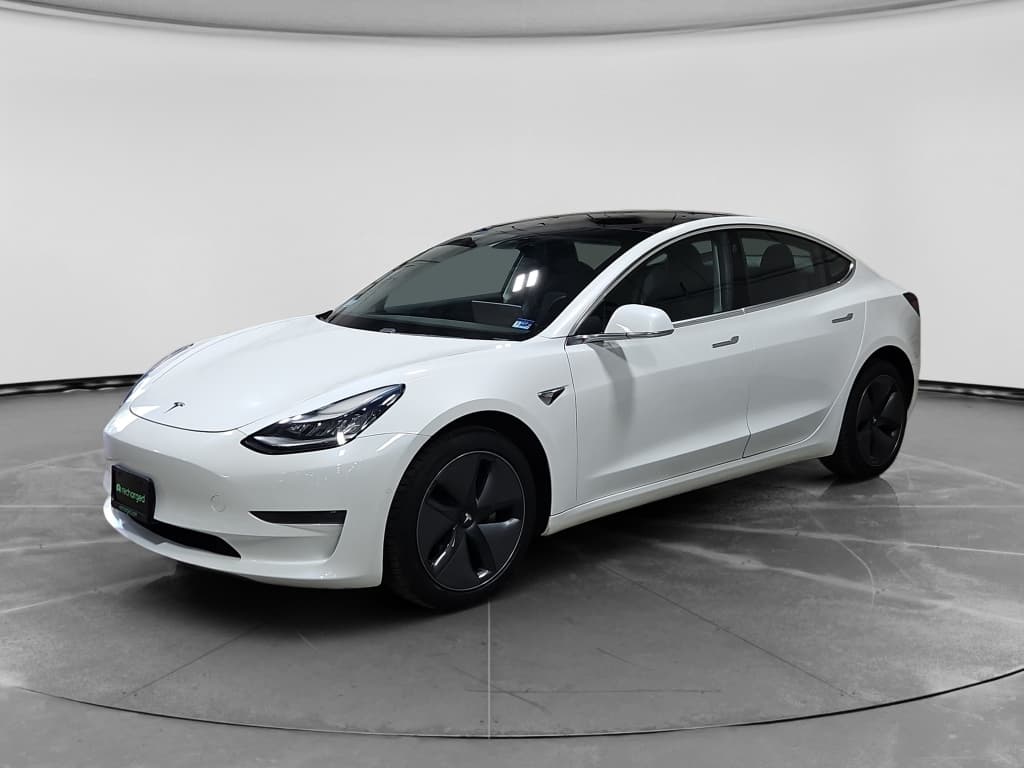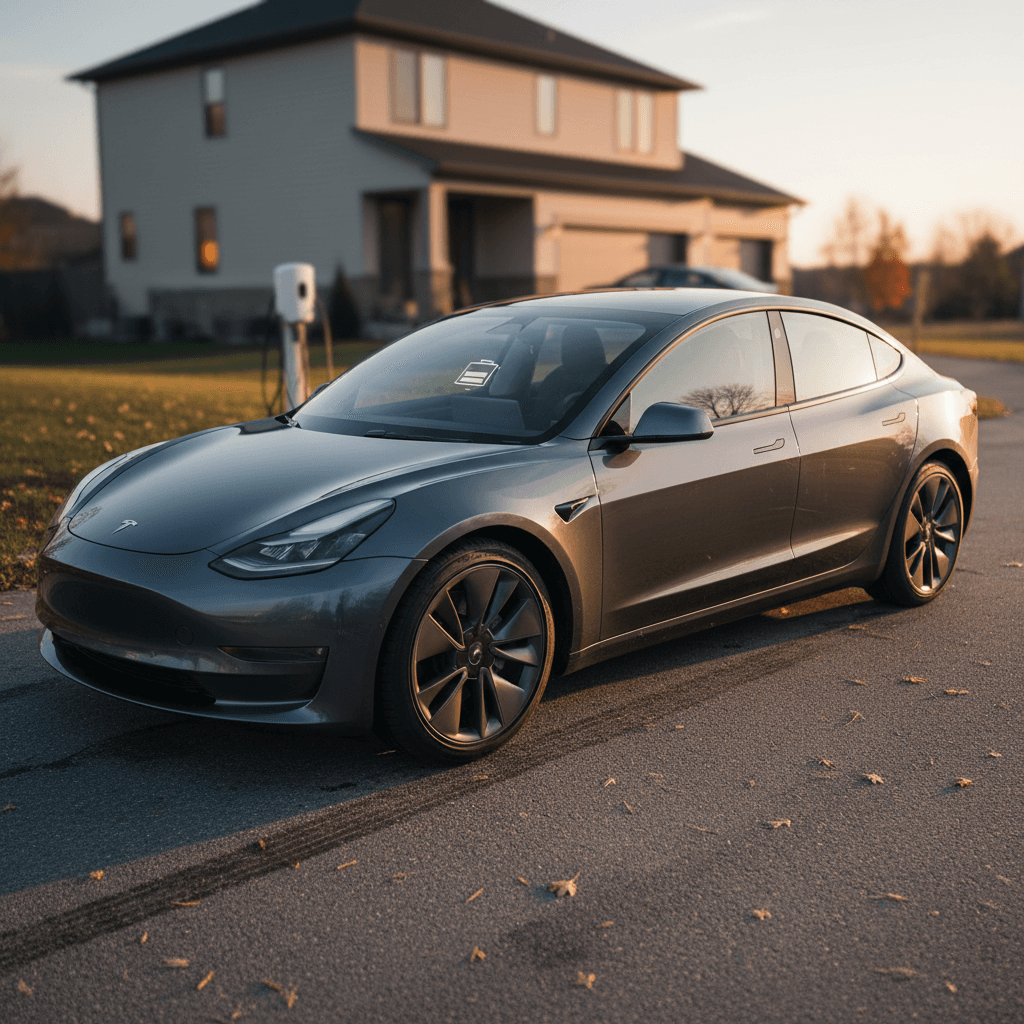
The 2018 Tesla Model 3 is the original disruptor that made electric sedans feel less like a science project and more like the future. If you’re shopping used, a 2018 Model 3 can be a screaming deal, or an expensive science experiment, depending on how smart you are about battery health, software, and build quirks. This review looks at the 2018 Tesla Model 3 in 2026: how it drives now, how the battery has aged, what breaks, and what you should demand before you buy.
2018 Model 3 at a glance
Why the 2018 Model 3 Still Matters in 2026
Eight years on, the 2018 Tesla Model 3 is no longer the hot new thing, but it’s arguably become something more interesting: the **used EV benchmark**. It’s one of the few electric cars that has been on the road long enough, in big enough numbers, for us to see how the batteries age, how the hardware holds up, how owners really live with it. The car has also been a rolling software experiment; over‑the‑air updates have steadily improved features, efficiency, and the user interface, so a clean 2018 Model 3 doesn’t feel like an old car, it feels like an early build of the current one.
2018 Model 3 Fast Facts
2018 Tesla Model 3 Key Specs at a Glance
2018 Tesla Model 3 Trim & Spec Overview
The 2018 Model 3 launched with a limited lineup focused on Long Range performance and efficiency. Exact availability by month varies, but this is what you’ll see most often on the used market.
| Trim | Drivetrain | EPA Range (new) | 0–60 mph (approx.) | Battery pack | Notable features |
|---|---|---|---|---|---|
| Long Range RWD | Rear‑wheel drive | ~310 mi | 5.1 s | ~75 kWh | Glass roof, premium audio, larger pack, strong highway efficiency |
| Long Range AWD (Dual Motor) | All‑wheel drive | ~310 mi | 4.4 s | ~75 kWh | Quicker acceleration, better traction, same rated range |
| Performance (late 2018) | All‑wheel drive | ~310 mi | 3.3 s | ~75 kWh | Track‑ready acceleration, bigger brakes, 20" wheels on P3D+ |
Always confirm exact trim and options from the car’s VIN and in‑car menus before you buy.
Don’t obsess over the original window sticker
Driving Experience: Quiet, Quick, and a Little Firm
Acceleration & power delivery
The 2018 Model 3 is not merely "quick for an EV"; it’s quick, period. The Long Range RWD model has the sort of easy, linear pull that makes merges and two‑lane passes feel almost unfair. Dual Motor cars add that familiar EV party trick: shove‑you‑back acceleration from a stop, with sub‑5‑second 0–60 mph runs and effortless highway passing.
Because **all the torque is available instantly**, you tend to drive the car at 6/10ths and still out‑drag traffic. There’s no gear hunting, no downshifts, just point, prod, go. It’s addictive and, for some drivers, a license‑threatening experience.
Ride, noise, and handling
On 18‑inch wheels and higher‑profile tires, the 2018 Model 3 rides on the firm side of comfortable, European sport sedan firm. Sharp expansion joints and broken city pavement come through more clearly than in a cushy crossover, but the car never feels fragile.
Steering is light but accurate, with a reassuring sense of **stability at highway speeds**. The battery pack keeps the weight low, so the car changes direction with a flat, almost clinical efficiency. It’s less "playful" than a rear‑drive BMW 3‑Series, but it’s every bit as capable on a fast back road.
Wheel size matters
Interior & Tech: Minimalist, Screen-First, Still Modern
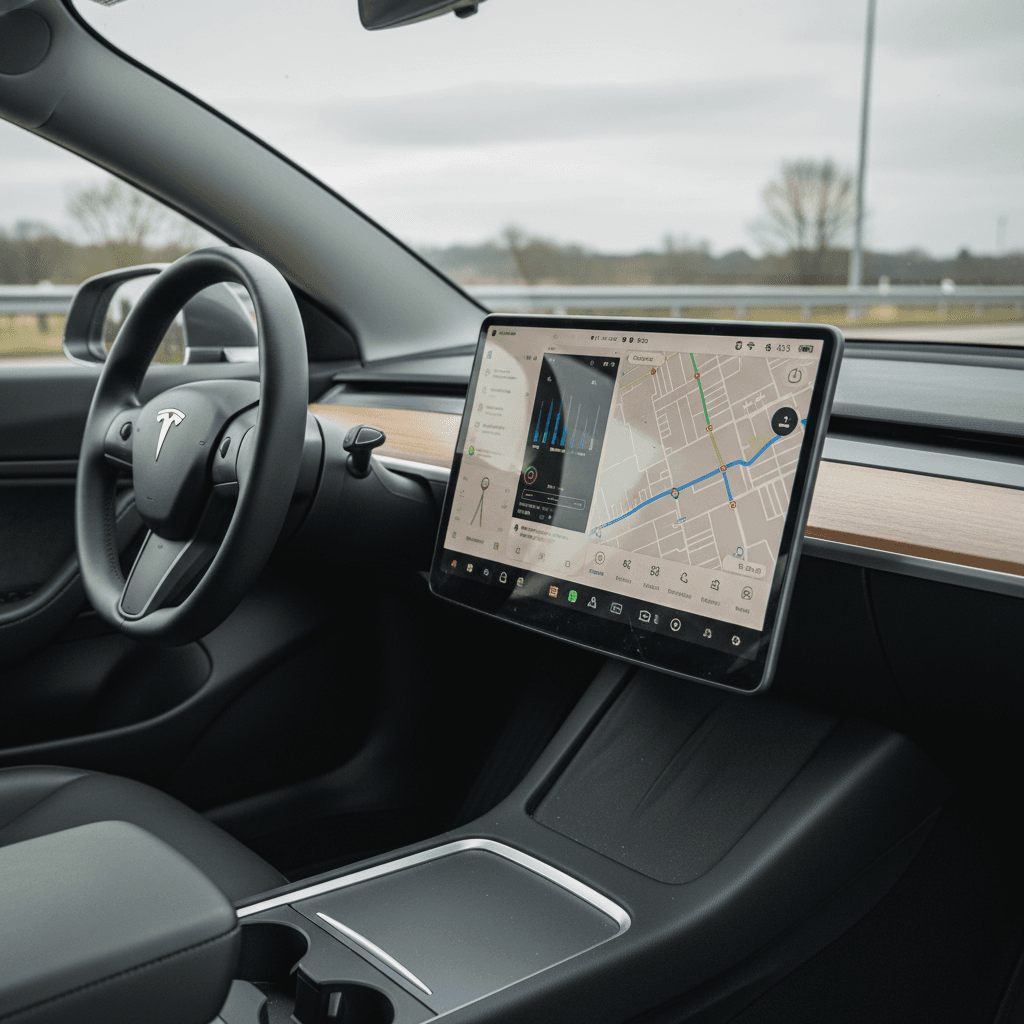
Open the door of a 2018 Tesla Model 3 today and it still feels like a concept car that escaped an auto show booth. A clean dash, single horizontal vent, and a **15‑inch central touchscreen** that runs the entire show: speed, navigation, climate, wipers, glove box latch, everything pre‑digital cars handled with knobs and stalks.
2018 Model 3 Interior Highs & Lows
What still feels fresh, and what gives away its age
Screen + Software
The UI has been updated repeatedly via over‑the‑air software, so a clean 2018 can run much of the same interface as newer cars. Maps, routing, streaming, and trip planning remain standouts.
Seats & Space
Front seats are comfortable for long stints, with good lateral support. Rear space is adequate for adults, but headroom and toe room feel closer to a compact than a big family sedan.
Noise & Materials
Cabin quiet is good but not vault‑like; wind and tire noise are more evident than in later facelifted cars. Materials are largely solid, but some early cars show minor trim rattles or panel creaks over time.
Software is the secret sauce
Battery, Range & Degradation: What 8 Years Looks Like
The big question with any 2018 Tesla Model 3 review is simple: **how is the battery holding up?** When new, Long Range cars were EPA‑rated around 310 miles. After 6–8 years and 60–80k miles, many owners report remaining range in the mid‑80s to low‑90s percent of original capacity, so something like 260–285 miles displayed at a full charge on a Long Range pack.
- Real‑world owner reports of 2018 Dual Motor cars around 69,000 miles often show ~86% battery health (roughly 266 miles vs. 310 when new).
- Degradation tends to be front‑loaded: you lose a chunk of range in the first few years, then the curve flattens out.
- Fast‑charging a lot, living in very hot climates, or consistently charging to 100% can accelerate wear, while moderate charging habits and garage parking usually help.
Range is more than one number
What to Expect from a 2018 Model 3’s Range Today
Approximate expectations for a well‑cared‑for Long Range pack
City & Suburban Driving
Frequent stops and slower speeds let regenerative braking shine. Expect real‑world range to land close to the car’s estimate if you’re gentle.
Highway Road Trips
At 70–75 mph in cold or very hot weather, effective range can be 25–35% lower than the screen suggests. Plan charging stops with a margin.
Quick Battery Health Checklist for a 2018 Model 3
1. Check max rated range at 100%
Ask the seller for a photo of the car at 100% charge showing **rated miles**. Compare that to the original 310‑mile figure for Long Range trims to get a ballpark degradation estimate.
2. Review charging habits
Look for cars that were typically charged to 70–90% for daily use, with 100% reserved mainly for road trips. Constant fast‑charging or sitting at 100% isn’t ideal for long‑term health.
3. Ask about climate and parking
Cars that live their lives in **extreme heat** or sit baking in the sun with no shade tend to be harder on batteries. Garage‑kept and temperate‑climate cars are your friends.
4. Use a professional health report
A proper diagnostic, like the <strong>Recharged Score battery health test</strong>, goes beyond the dashboard guess and measures pack capacity and charging behavior directly.
Reliability & Common Issues on a 2018 Model 3
Mechanically, the 2018 Model 3 has fewer moving parts than a gas sedan, no oil changes, no timing chains, no exhaust. But it is not a zero‑maintenance device. After nearly a decade in the real world, a few pattern issues have emerged, especially on earlier builds with higher mileage.
Common 2018 Model 3 Issues to Watch For
Not every car will have these problems, but they come up often enough in owner reports and service histories that they’re worth checking.
| Area | Typical Symptoms | What to Ask or Inspect |
|---|---|---|
| Front suspension (control arms/links) | Clunking or creaking over low‑speed bumps; knocking when turning into driveways | Any suspension work done? Listen for noises on a test drive and review invoices for control arm or link replacement. |
| Door handles & latches | Handle not presenting smoothly, door not closing cleanly, window indexing oddly | Check every door from inside and outside. Watch the frameless windows move up and down as you open/close. |
| Interior rattles/trim | Buzzing from dash, pillars, or rear shelf on rough pavement | Drive on a bumpy road with the radio low. Early build quality varied; some cars are solid, others need trim tweaks. |
| MCU/screen quirks | Frozen screen, slow responses, occasional reboots | A quick reboot cures most glitches, but frequent resets may point to deeper issues that should show up in service logs. |
| HVAC & cabin filter | Weak airflow, odors, noisy fan | Ask when the cabin filters were last changed and whether the HVAC system has been serviced or disinfected. |
Use this list as a conversation starter with the seller or inspector, not a guarantee that something is wrong.
Always check recall & service history
Ownership Costs: Where the Model 3 Saves You Money
One of the most appealing parts of a 2018 Tesla Model 3 isn’t on the spec sheet; it’s on your monthly budget. Without oil changes, spark plugs, multi‑speed transmissions, or a complex exhaust system, there’s simply **less to service**. Over the first decade, typical annual maintenance costs for a Model 3 often sit in the low hundreds of dollars, not the high hundreds.
Where the 2018 Model 3 Saves, And Where It Doesn’t
Understanding total cost of ownership on an older Tesla
Fuel vs. electricity
At average U.S. residential rates, many owners see energy costs around 4–6 cents per mile. That’s often half, or less, of a comparable gas sedan, especially if you can charge off‑peak.
Routine maintenance
Expect costs for tires, cabin filters, brake fluid, and wiper blades. Some long‑term data suggests annual maintenance and repair costs climbing from under $200 in early years to the $400s by year 10 as wear items accumulate.
Big‑ticket risks
Suspension repairs, a failed drive unit, or out‑of‑warranty high‑voltage battery work can be expensive. The odds increase with high mileage, so inspection and a **verified battery report** are critical when buying used.
Why used can be the sweet spot
2018 Model 3 vs. Newer Model 3s
Where the 2018 still competes
- Performance: A 2018 Dual Motor still feels genuinely fast. You’re not giving up much straight‑line shove to newer trims.
- Software & UI: Thanks to OTA updates, the interface, navigation, and many features feel broadly modern.
- Charging network: Access to Tesla’s Supercharger network remains a huge advantage for road trips.
Where newer cars pull ahead
- Refinement & noise: Later Model 3s benefit from incremental improvements to insulation and build quality.
- Safety & driver assist: Hardware and software for driver assistance have evolved, and newer cars may get longer support.
- Warranty coverage: A 2023 or 2024 car may still have more comprehensive bumper‑to‑bumper coverage left than a 2018.
Depreciation vs. technology curve
What to Check Before You Buy a 2018 Model 3
Pre‑Purchase Checklist for a 2018 Tesla Model 3
1. Battery health & range proof
Obtain recent photos of the car at 90–100% charge showing **rated miles**, and pair that with a professional battery health report. Don’t guess from anecdotes, get data.
2. Suspension and tire condition
On the test drive, listen for clunks over low‑speed bumps and inspect the tires for uneven wear. Budget for a full set if tread is low; these cars are hard on cheap rubber.
3. Panel gaps, leaks, and rattles
Early Teslas had variable build quality. Check doors, trunk, and glass for proper sealing, water stains, or wind noise. Small alignment issues are cosmetic; water leaks are not.
4. Charging history & equipment
Confirm that the car comes with its mobile connector and any adapters the seller used. Ask where it was usually charged (home vs. DC fast) and how often it saw 100%.
5. Software, Autopilot, and FSD status
In the vehicle’s menus, confirm what driver‑assist and Full Self‑Driving features are actually enabled. These are software licenses tied to the car and can meaningfully affect value.
6. Service records & recalls
Ask for a printout or screenshots of service history. Look for documented suspension work, MCU fixes, and recall completion. A paper trail is worth real money on a used EV.
How Recharged Evaluates a 2018 Model 3
A used EV is only as good as its battery and the honesty of its history. That’s why every 2018 Tesla Model 3 that goes through Recharged receives a **Recharged Score Report**, our comprehensive, transparent look at how that individual car has aged.
What’s in a Recharged Score for a 2018 Model 3
Beyond a quick test drive and a guess at range
Battery health diagnostics
We run specialized diagnostics on the high‑voltage battery to measure usable capacity, charging behavior, and pack balance, far deeper than the number on the dash.
Mechanical & cosmetic inspection
Suspension, brakes, tires, glass, seals, interior trim, the usual used‑car suspects, plus EV‑specific checks like charge port function and cooling system.
Pricing & support
We benchmark each 2018 Model 3 against market data, mileage, and battery health to ensure fair market pricing, offer financing options, trade‑in or consignment, and nationwide delivery with EV‑savvy support along the way.
Ready to find your next EV?
Browse VehiclesTry before you commit
2018 Tesla Model 3 FAQ
Frequently Asked Questions About the 2018 Tesla Model 3
Bottom Line: Who Should Buy a 2018 Model 3?
The 2018 Tesla Model 3 is no longer the avant‑garde EV on the cul‑de‑sac; it’s the **used‑car reality check** for the whole segment. The good news is that reality favors it: the car still drives like a modern sports sedan, the software has matured, and typical battery degradation has been manageable for most owners. The bad news is that a handful of early‑build quirks and the occasional big‑ticket repair lurk beneath the clean minimalist interior.
If you’re the kind of driver who values quick, quiet acceleration, low running costs, and a tech‑forward cockpit more than the absolute latest facelift, a **well‑vetted 2018 Model 3** is one of the smartest ways into EV ownership. Just don’t treat them as interchangeable appliances. Demand proof of battery health, insist on a clear service history, and, ideally, lean on an expert third party to separate the heroes from the has‑beens. That’s exactly what Recharged was built for: turning the used‑EV wild west into a transparent, data‑driven buying experience.