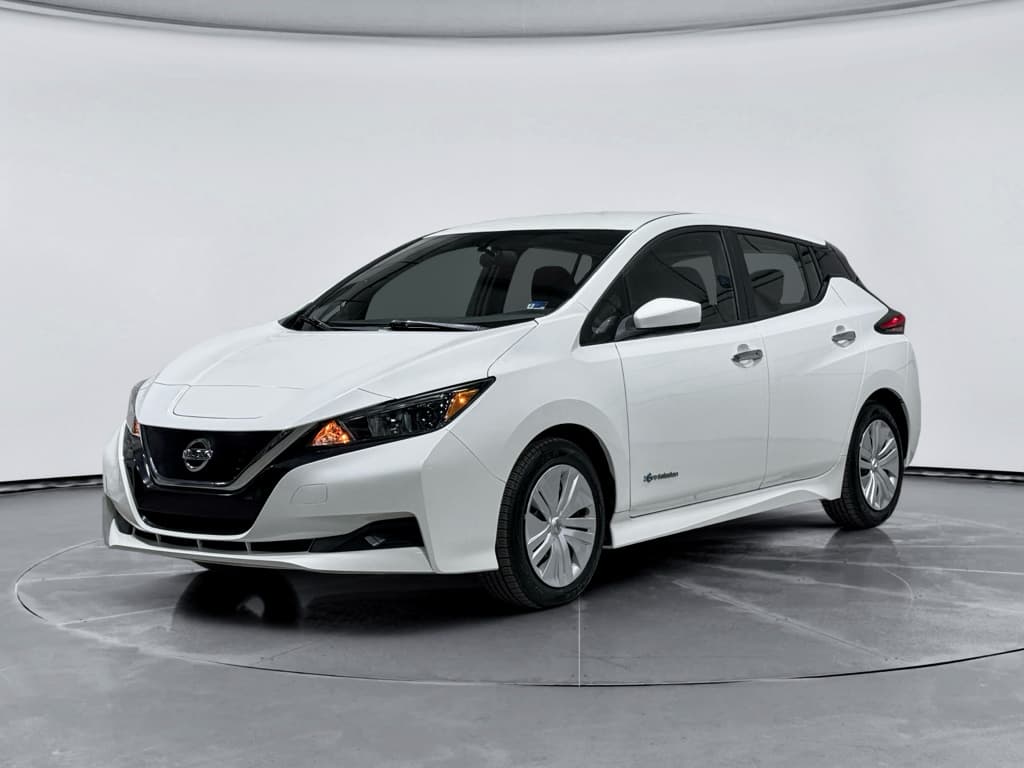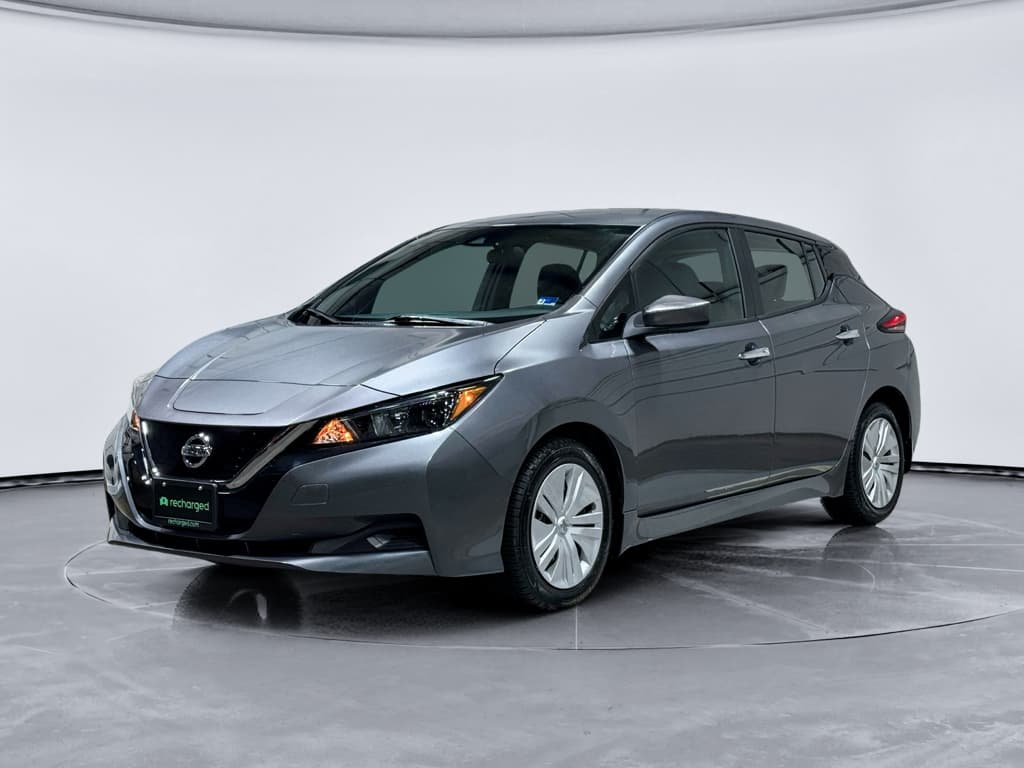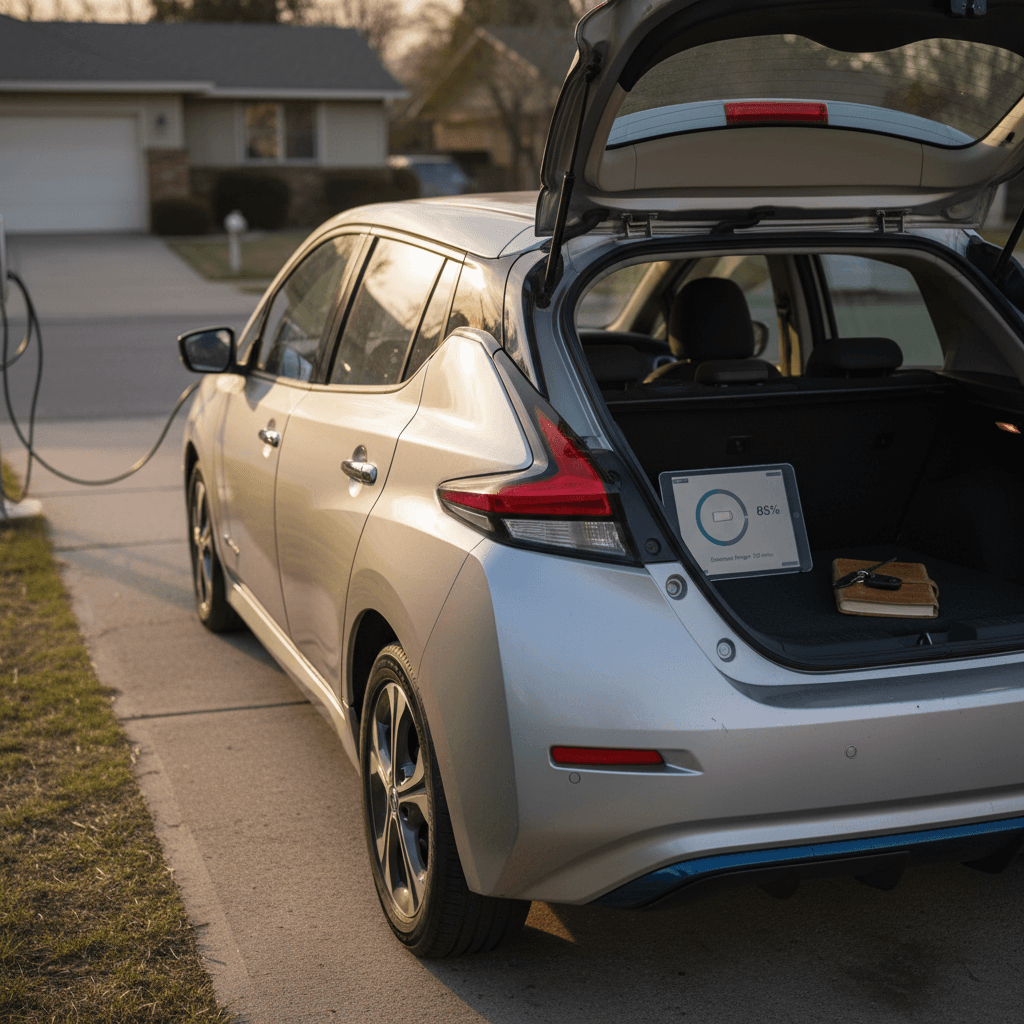
Search for a “2018 Nissan Leaf range test” and you’ll see one number over and over: 151 miles. That’s the official EPA rating for the 40 kWh 2018 Leaf. It’s a useful benchmark, but if you’re buying one used in 2026, it’s also misleading. Real-world range depends on how you drive, your climate, and how the battery has aged over the last eight years.
Quick snapshot
2018 Nissan Leaf range basics: EPA vs reality
2018 Nissan Leaf 40 kWh: key range numbers
The 151‑mile EPA rating for the 2018 Leaf comes from controlled lab tests on a brand‑new car at moderate temperatures and relatively gentle speeds. In the real world, you’ll almost never see that exact number, and by 2026, every 2018 Leaf has eight years of wear on its battery.
- New in 2018, many owners saw roughly 130–160 miles in mixed driving when driven gently.
- At 65–70 mph highway speeds, range typically dropped into the 110–130 mile ballpark when new.
- Today, with typical battery wear, you should think in terms of usable miles for your specific commute, not the original window sticker.
What really affects 2018 Leaf range
Main drivers of real-world Leaf range
Same 2018 Leaf, very different outcomes depending on how and where it’s used.
Speed & driving style
Temperature & climate
Battery health (SOH)
No active battery cooling
City vs highway range test scenarios
To make “2018 Nissan Leaf range test” results meaningful, you have to define the test. Here’s what you can realistically expect from a healthy 2018 Leaf in 2026 under three common scenarios, assuming a battery that’s lost about 15–20% of its original capacity (a reasonable average for an eight‑year‑old pack).
Illustrative 2018 Leaf range scenarios (used in 2026)
Approximate real‑world ranges for a typical 2018 Leaf with moderate degradation. Your results will vary with battery health, terrain, wind, and tire choice.
| Scenario | Conditions | Estimated Efficiency | Estimated Usable Range |
|---|---|---|---|
| Urban / suburban | Stop‑and‑go, speeds under 45 mph, mild weather ~70°F | 4.0–4.5 mi/kWh | 110–130 miles |
| Mixed commute | Blend of city plus 55–65 mph freeway, mild weather | 3.3–3.8 mi/kWh | 90–115 miles |
| Fast highway run | 65–75 mph sustained, mild weather, light AC | 2.8–3.3 mi/kWh | 75–95 miles |
All distances are estimates from full to about 5–10% state of charge, not guarantees.
How to translate mi/kWh into range
Cold-weather range tests: how bad is winter?
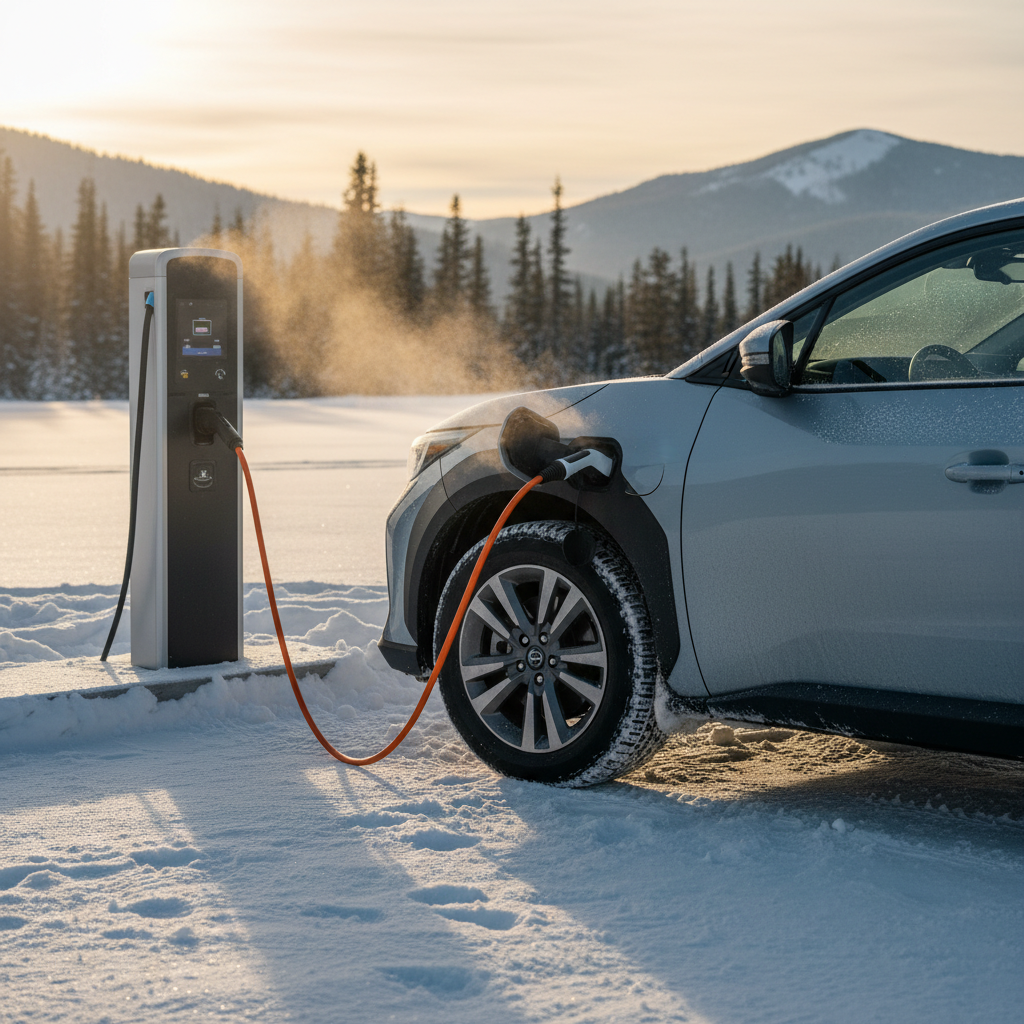
Cold weather is where Leaf owners most often feel burned by range estimates. The car has a resistive cabin heater, essentially a giant hair dryer, that can draw several kilowatts, and cold chemistry lowers available power and energy. Real‑world reports from 2018–2025 show broadly consistent patterns.
Typical winter hit in a mild climate
In places with cool but not brutal winters (say 25–45°F / −4 to 7°C), owners commonly report efficiency dropping from around 4.0 mi/kWh in mild weather to 3.0–3.5 mi/kWh in the cold, especially with heater use.
On a moderately degraded pack, that might mean going from ~120–130 miles per charge down to 90–105 miles in winter mixed driving.
Cold snaps and highway driving
On the highway in freezing conditions, your range can fall dramatically. At 70 mph in sub‑freezing weather with heat on, it’s not unusual to see the 2018 Leaf’s realistic range fall into the 70–85 mile band on a used pack.
If your one‑way winter commute is 45–50 miles of highway and you can’t charge at work, you’re operating with very little buffer.
Plan for the worst day, not the average
Battery degradation on 2018 Leafs in 2026
For a 2018 Leaf, the most important input to any range test in 2026 is how much battery capacity the car has left. Unlike newer EVs with active cooling, Leafs are more sensitive to climate and charging habits, but real‑world data from owner forums and aggregated studies paints a relatively consistent picture.
- Typical 2018–2020 Leafs with 40 kWh packs show about 1.5–2.5% capacity loss per year in moderate climates and with mixed fast‑charging use.
- That implies roughly 80–90% “State of Health” (SOH) after eight years for a reasonably treated car, and significantly lower SOH for cars that lived in extreme heat or fast‑charged daily.
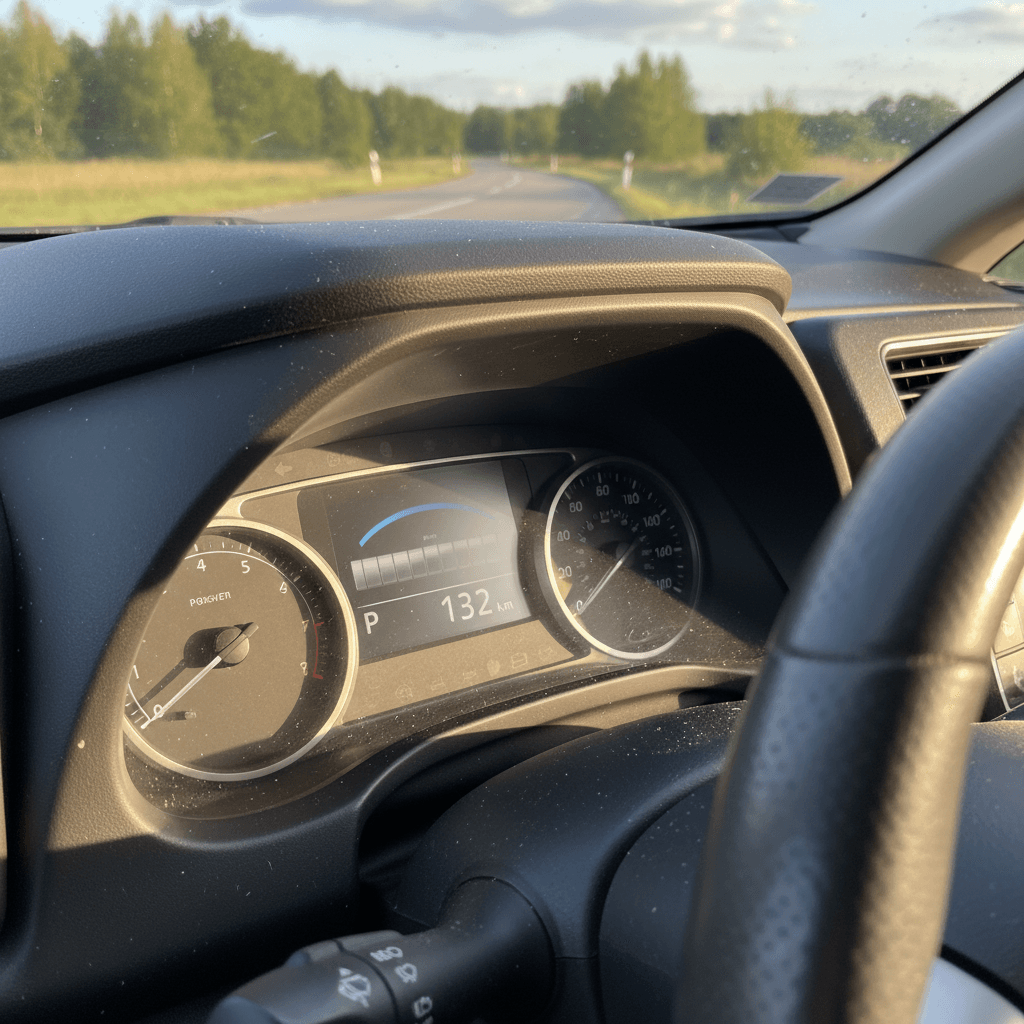
- Each bar lost on the Leaf’s 12‑bar dash display represents a chunk of capacity; dropping from 12 to 10 bars, for example, means a substantial hit in range vs new.
What SOH means for range
You should think of an older Leaf’s range the same way you think of a used phone’s battery: the model name tells you what it did when new, but the real story is how the pack has aged in the hands of previous owners.
How to run your own 2018 Leaf range test
If you’re test‑driving, or already own, a 2018 Leaf, you don’t need lab gear to do a meaningful range test. You just need a simple plan, some repetition, and ideally a Bluetooth OBD dongle and the Leaf Spy app. Here’s a practical approach.
Step-by-step DIY 2018 Leaf range test
1. Check battery health first
Before you worry about miles, look at the battery. Use <strong>Leaf Spy</strong> with an OBD2 dongle to read State of Health (SOH) and kWh remaining. At minimum, confirm how many capacity bars the dash shows, 12 is best, 10–11 is common, fewer than 10 is a red flag for long‑range use.
2. Start from a known charge level
Charge the car to a specific starting point, ideally <strong>100%</strong> for a one‑time test, or a repeatable level like 80%. Note the starting percentage, odometer, and the on‑screen range estimate, but don’t obsess over the number yet.
3. Pick a repeatable route
Use a loop or out‑and‑back route that matches your typical use: city, mixed, or highway. Aim for at least <strong>30–50 miles</strong> of driving so small variations average out. Avoid big elevation changes on your first test if possible.
4. Drive at a set speed
For a highway test, lock in 65 mph on cruise where safe; for mixed driving, aim for your usual flow with no hypermiling games. Use normal climate settings. The goal is to capture <strong>your real life</strong>, not a best‑case fantasy.
5. Record mi/kWh and SOC drop
At the end of the route, note distance driven, battery percentage used, and the dashboard <strong>mi/kWh</strong> value. If you have Leaf Spy, also note kWh drawn. These numbers are far more useful than the Leaf’s projected range alone.
6. Translate results into usable range
Take your measured efficiency (mi/kWh) and multiply by estimated usable kWh from the pack. If your test shows 3.4 mi/kWh and Leaf Spy says ~32 kWh usable, you’re looking at roughly <strong>110 miles</strong> from full to near‑empty in similar conditions.
Repeat in different conditions
Is a used 2018 Leaf enough for your commute?
Once you’ve grounded your expectations with a realistic 2018 Nissan Leaf range test, the next question is simple: does it work for your daily use with a buffer? Let’s walk through a few common scenarios for a 2018 Leaf in 2026.
Realistic 2018 Leaf use cases in 2026
Where the car still shines, and where it starts to feel compromised.
Short city commute (ideal)
Medium mixed commute
Long highway commute / road‑trip duty
Why older Leafs can be a smart buy
How Recharged evaluates 2018 Leaf battery health
With a 2018 Leaf, the difference between a great deal and an expensive mistake is almost entirely about battery health and honest range expectations. That’s exactly the gap Recharged is designed to close.
Recharged Score: under-the-skin visibility
Every Leaf sold through Recharged includes a Recharged Score Report that goes beyond a quick test drive or a guess‑o‑meter photo. Our process includes:
- Verified battery State of Health and estimated usable kWh
- Charging history patterns where available (fast‑charge vs home‑charge heavy)
- Diagnostic scans for error codes and thermal events
- Range expectations tailored to realistic daily use, not just lab numbers
Guided shopping and ownership support
If you’re not sure whether a 2018 Leaf fits your life, Recharged’s EV specialists can help you model your actual commute, weather, and charging options.
We combine battery data, your route, and seasonal assumptions to answer the real question: “Will this specific car comfortably do what I need, with room for the bad days?”
And if you decide you need more range, we’ll help you compare other used EVs that better match your use case.
FAQ: 2018 Nissan Leaf range and testing
Frequently asked questions about 2018 Leaf range
Bottom line: who the 2018 Leaf still works for
The headline number from any 2018 Nissan Leaf range test is less important than the context behind it. For short‑to‑medium daily driving in mild climates, a healthy 2018 Leaf remains a quietly excellent tool: inexpensive to buy, cheap to run, and pleasant to drive. For long, fast commutes and winter‑heavy, highway‑dominant use, its limited and aging battery is a real constraint, not a footnote.
If you approach the car the way you’d evaluate any aging asset, by understanding how much useful capacity it has left and how you’ll actually use it, the 2018 Leaf can be either a terrific bargain or the wrong tool for the job. At Recharged, our goal is to make that distinction crystal‑clear upfront with transparent battery data, realistic range expectations, and expert guidance so you can buy the right EV for the way you really live.