If you own or are eyeing a used 2017 Chevy Volt, you’ve probably wondered about 2017 Chevy Volt battery replacement cost. The car itself is famously efficient and practical, but its large lithium‑ion battery pack is the single most expensive component. Understanding what replacement really costs, how often it’s needed, and the alternatives can help you decide whether to repair, keep, or move on to a newer used EV.
Quick answer
Why 2017 Chevy Volt battery cost matters now
The 2017 Volt sits in a sweet spot: new enough to have modern safety tech and decent range, old enough that many are now out of their original high‑voltage battery warranty. That’s exactly when owners start asking, “What happens if the big battery fails?” And if you’re shopping used, the battery’s health can make the difference between a great buy and an expensive mistake.
Top reasons 2017 Volt owners worry about the battery
A pricey component on a car that’s now nearly a decade old
High replacement cost
Vehicles aging out of warranty
Used values & resale
Think like a future buyer
Typical 2017 Chevy Volt battery replacement cost
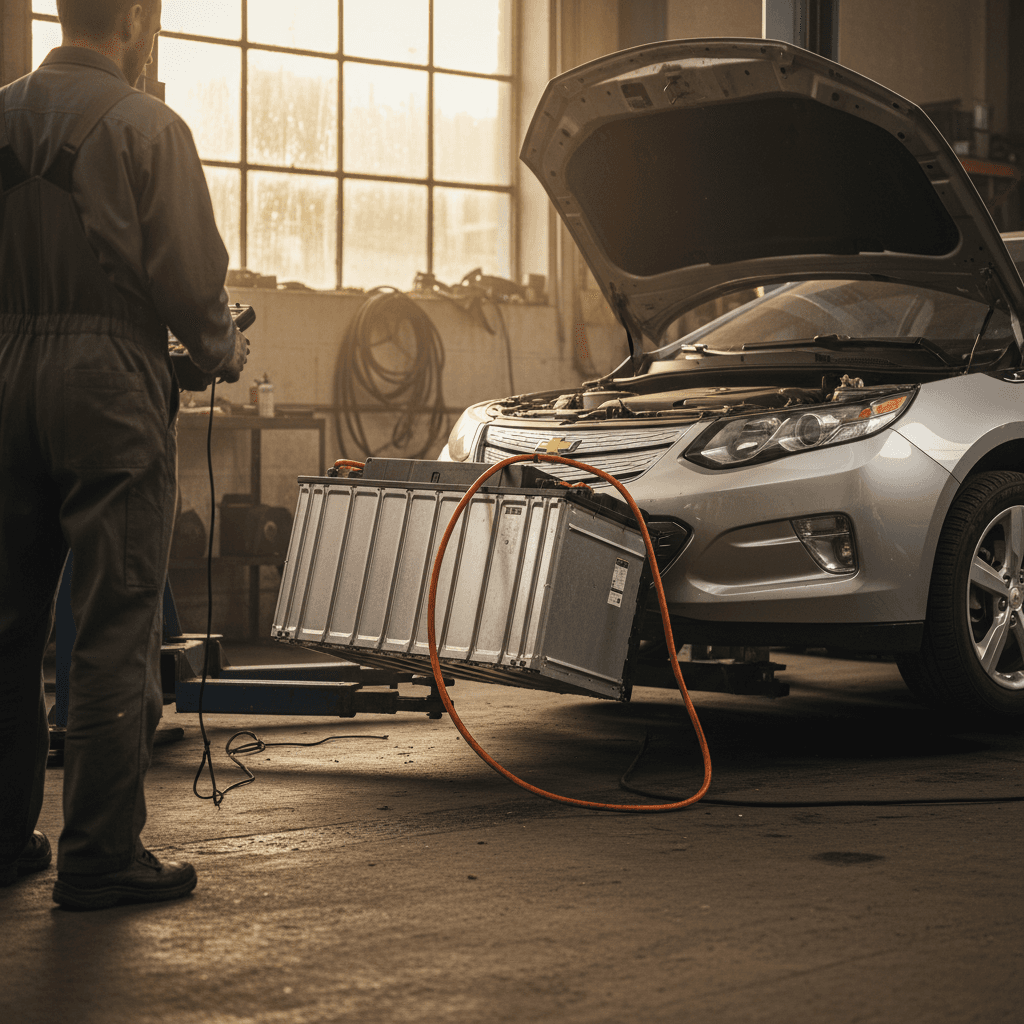
Let’s get to the number you’re here for. When people talk about 2017 Chevy Volt battery replacement cost, they usually mean the high‑voltage traction battery pack, the one that powers the electric drive, not the small 12‑volt battery that runs accessories.
Real‑world 2017 Volt battery replacement cost (U.S.)
Those numbers reflect dealership retail pricing: new or remanufactured OEM packs, plus labor and required safety procedures. Independent EV specialty shops may be able to do module‑level repairs or pack swaps using good used batteries for less, but availability varies a lot by region.
Don’t confuse 12‑volt and high‑voltage batteries
What drives the price up or down?
1. Parts: new vs. used vs. reman
The biggest swing factor is whether you’re buying a brand‑new OEM pack, a GM remanufactured unit, or a used pack from a donor Volt. New OEM is usually the most expensive but comes with the best warranty. Used or salvaged packs can cut the bill dramatically but come with more unknowns.
2. Labor & shop type
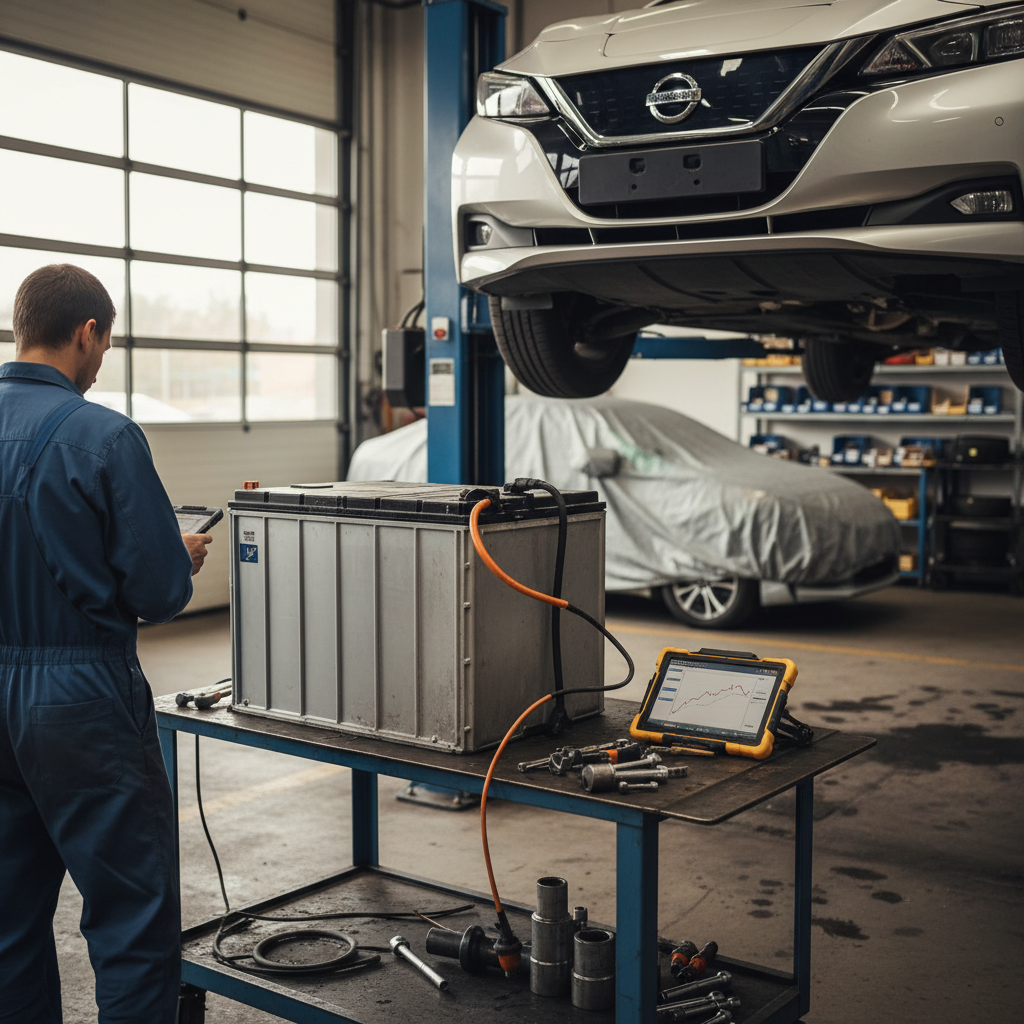
High‑voltage work isn’t like swapping an alternator. Dealership labor rates, special tooling, and technician training all add cost. A specialist independent EV shop may charge less per hour, but they’re still doing several hours of careful work and safety checks.
- Region & labor rate: Big‑city dealers with high shop rates will charge more than small‑town stores or independents.
- Pack availability: If a pack is back‑ordered or discontinued, a used unit from a recycler may be your only option, sometimes cheaper, sometimes not.
- Scope of work: In some cases, only a few modules or the battery’s contactors need replacement, not the entire pack.
- Diagnostics time: Complex intermittent issues (like random shutdowns) may require several hours of diagnosis before anyone even orders parts.
Ask for a line‑item estimate
Repair vs. replace: which makes more sense?
A lot of Volt owners discover they don’t need a full battery replacement at all. The pack is made up of smaller modules plus electronics and safety hardware. Often, a failure traces back to a bad module, a faulty sensor, or a high‑voltage contactor, not the entire battery.
Full replacement vs. targeted repair
Pros and cons for a 2017 Chevy Volt owner
Targeted repair
- Pros: Much lower cost; keeps your original pack; often fixes isolated faults (like bad modules or contactors).
- Cons: Doesn’t reset battery age; may uncover other weak modules later.
Full pack replacement
- Pros: Essentially gives the car a new heart; may include a fresh warranty on the replacement pack.
- Cons: Expensive; the rest of the car is still nearly a decade old; may not raise resale value enough to justify the cost.
When a partial fix is enough
How long does a 2017 Volt battery usually last?
The good news: the Volt’s pack was engineered to be conservative. Chevy only lets you use a slice of its total capacity, which helps its longevity. Many first‑generation Volts have gone well past 150,000 miles without major battery issues, and the second‑generation cars like the 2017 model tend to age similarly or better when maintained and charged reasonably.
2017 Volt battery life: what owners commonly see
Real‑world observations for well‑maintained 2017 Volts
| Vehicle age / mileage | Typical electric range vs. new | What it means |
|---|---|---|
| 3–5 years / 40k–70k miles | Near original | Most drivers report very similar EV range to when the car was new. |
| 6–8 years / 70k–120k miles | Slight drop | Some loss of range, but still very usable for daily commuting. |
| 8–10+ years / 100k–150k+ miles | Moderate drop | Range reduction more noticeable; battery health depends heavily on climate and charging habits. |
These are typical experiences, not guarantees, individual cars and climates vary.
Heat is the silent killer
Warranty coverage, recalls, and goodwill help
Depending on where the car was first sold and titled, your 2017 Volt may have come with different high‑voltage battery warranty terms. Many U.S. cars received an 8‑year/100,000‑mile warranty on the hybrid/EV components; vehicles sold in certain emissions states received extended coverage on specific components.
Checklist: before you pay out of pocket
1. Decode the in‑service date
Warranty starts when the car was first sold, not the model year. A 2017 Volt first sold in mid‑2018 might have battery coverage into 2026. A Chevrolet dealer can look this up by VIN.
2. Confirm mileage coverage
Verify the mileage limit on hybrid/EV components for your specific car and state. You may have coverage even if the basic bumper‑to‑bumper warranty has expired.
3. Ask about service campaigns & recalls
Occasionally, automakers extend coverage or issue service campaigns for specific battery‑related issues. Ask the dealer to run your VIN for open campaigns.
4. Request goodwill consideration
If you’re just outside warranty and dealing with a major battery failure, politely ask Chevrolet and the dealer about goodwill assistance. They may cover part of the parts or labor cost.
Keep your paperwork
Run the numbers: fix the Volt or replace the car?
When a repair quote comes back at $10,000 or more on a car worth roughly the same amount, you’re no longer just fixing a car, you’re making a portfolio decision. Do you sink money into the 2017 Volt you know, or move your dollars into a newer used EV or plug‑in with more range and a fresher warranty?
Scenario A: Repair and keep driving
- You like the car, and it fits your life.
- The rest of the vehicle (engine, transmission, suspension) is in great shape.
- You plan to keep it at least 3–5 more years.
If a targeted repair costs $2,000–$4,000 and gets you several more years, the math can be easy: that’s often cheaper than higher monthly payments on a replacement vehicle.
Scenario B: Move to a newer used EV
- The quote is close to or above the car’s market value.
- You want more electric range or modern safety features.
- You’re uncomfortable owning an older PHEV with a brand‑new but expensive pack.
In this case, it can make sense to put that money toward a newer EV or plug‑in hybrid. A used Bolt EV, Hyundai Ioniq Electric, or Tesla Model 3 can offer more range and often lower running costs.
Where Recharged fits in
How to check Volt battery health before you buy used

If you’re shopping for a 2017 Volt, you want to avoid inheriting someone else’s battery problem. A shiny paint job and quiet test drive don’t tell the whole story, battery health is where the real value lives.
Smart steps before you buy a used 2017 Volt
1. Scan for diagnostic trouble codes (DTCs)
Have a shop with EV experience scan the Volt’s hybrid/EV systems. Hidden high‑voltage or module‑balance codes are red flags, even if the dash is clear.
2. Compare indicated vs. real‑world range
A full overnight charge followed by mixed driving will show you whether the car’s EV range matches what the display promised. Big gaps can suggest degradation or a battery problem.
3. Check service history
Look for records of battery‑related repairs, software updates, and coolant system service. A well‑documented car is almost always the safer bet.
4. Get an independent EV inspection
If you’re not near a Chevrolet dealer you trust, seek out an independent shop that regularly works on plug‑in hybrids. They can spot issues a general mechanic might miss.
5. Consider a Recharged Score report
When you shop through Recharged, every vehicle includes a <strong>Recharged Score</strong> with verified battery diagnostics and fair‑market pricing, so you’re not buying blind.
Ways to save money on 2017 Volt battery work
Practical ways to reduce your repair bill
Before you sign off on a five‑figure battery job, run through these options
Get a second opinion
Ask about reman or used packs
Explore financing or selling
Don’t DIY high‑voltage repairs
2017 Chevy Volt battery replacement cost: FAQ
Frequently asked questions
Bottom line: Should you fix the battery or move on?
A 2017 Chevy Volt with a healthy battery is still a terrific commuter: quiet, efficient, and able to cover most daily miles on electricity alone. But once you’re staring at a serious high‑voltage issue, the 2017 Chevy Volt battery replacement cost forces you to think like an investor, not just a driver. For some owners, a targeted repair that costs a few thousand dollars is the right call. For others, a five‑figure quote is the nudge to step into a newer used EV with more range and warranty runway.
Whichever camp you’re in, don’t guess. Get a precise diagnosis, understand your warranty status, compare repair quotes to your car’s current value, and look at what your money could buy in today’s used EV market. If you decide it’s time to move on, Recharged can help you sell or trade your Volt and get into a used EV with verified battery health, transparent pricing, and EV‑savvy guidance from start to finish.