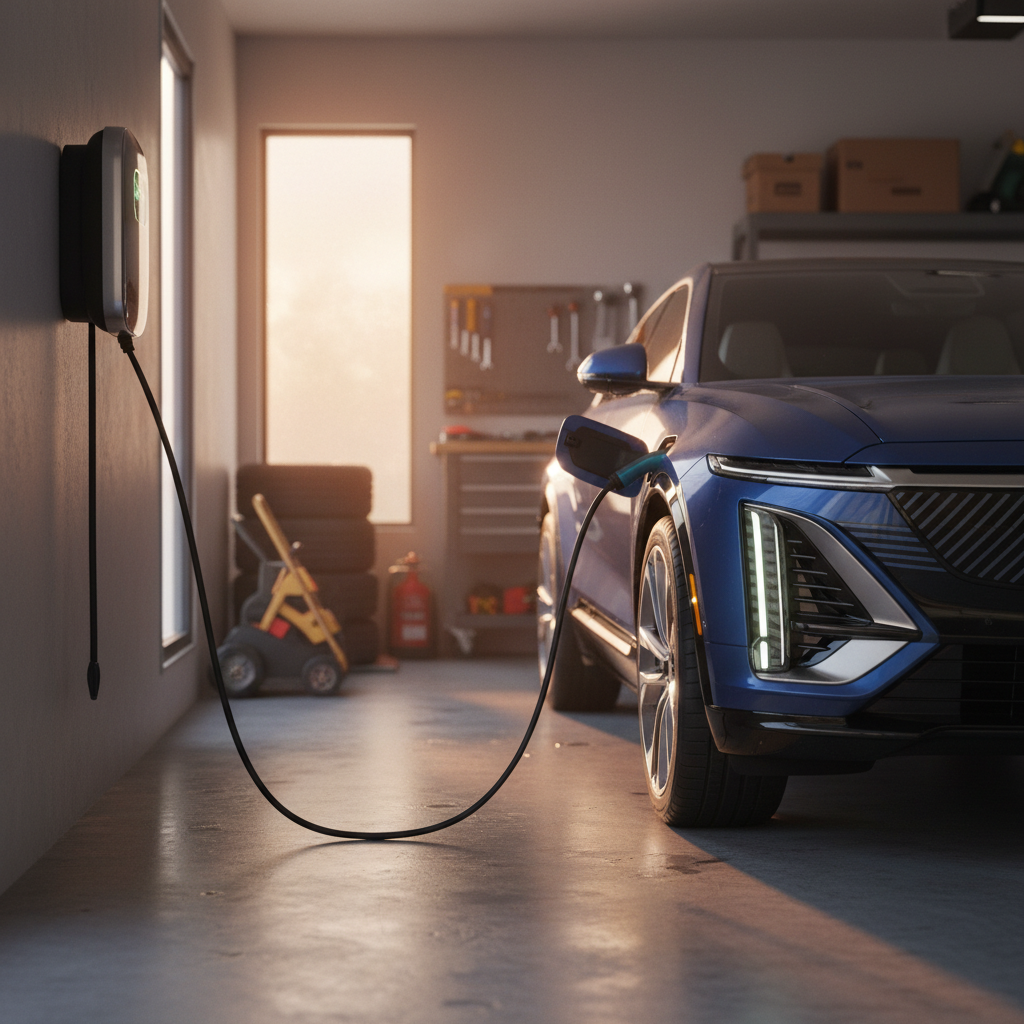
If your car won’t start, odds are the culprit isn’t the big high-voltage pack (in an EV) or the engine itself, it’s the humble 12 volt battery. A good 12 volt battery charger can turn a ruined morning into a minor inconvenience, whether you drive a gasoline car, a hybrid, or a full battery-electric vehicle.
EVs still rely on a 12V battery
Why 12 volt battery chargers still matter, especially with EVs
For decades, a dead 12V battery was mainly a frustration for owners of gasoline cars. Today, it can sideline high-tech vehicles that cost as much as a house. That’s why the humble 12 volt battery charger has become just as important as a tire inflator or jumper cables in your home garage.
What a 12V charger does for you
Three everyday benefits, whether you drive ICE or EV
Prevents inconvenient no-starts
Short trips, sitting for weeks, or cold weather can leave even a new 12V battery weak. A charger keeps it topped up so the car is ready when you are.
Protects expensive electronics
Low voltage can cause glitchy electronics, warning lights, or even module damage. A smart charger maintains the battery at healthy voltage levels.
Keeps EVs responsive
In an EV, the 12V battery “wakes up” contactors that connect the high-voltage pack. If it’s dead, you can’t even unlock or shift the car, regardless of main battery state-of-charge.
If you’re shopping for a used EV, it’s worth asking how old the 12V battery is and whether it’s been replaced. At Recharged, every vehicle gets a Recharged Score Report that highlights battery health and ownership costs, so you’re not guessing about the condition of the 12V system or the main pack.
How a 12 volt battery charger actually works
A 12V charger is essentially a small power supply that takes household AC power and turns it into the controlled DC current your battery needs. Modern chargers are “smart”, they monitor voltage and adjust current automatically. Older, “dumb” chargers simply push power in whether the battery needs it or not.
Common charging stages
- Bulk charge: The charger delivers its rated current (say 10 amps) to quickly bring a low battery up to about 80%.
- Absorption: Current tapers down as voltage is held steady to top the battery off without overcooking it.
- Float/maintenance: The charger maintains a safe holding voltage so the battery stays fully charged for weeks or months.
What this means for you
- Smart, multi-stage chargers reduce the risk of overcharging.
- They’re more forgiving if you leave the charger connected overnight or long term.
- They help batteries last longer, which saves you money, especially with AGM or deep-cycle types.
Voltage is a health indicator
Types of 12 volt battery chargers
Not all 12V chargers are created equal. Before you click “Buy Now,” it pays to understand the main categories, because the wrong charger can shorten battery life or simply not work well with your vehicle’s battery chemistry.
Common 12 volt battery charger types
How different 12V charger styles fit real-world use cases.
| Type | Typical Amps | Best For | Pros | Cons |
|---|---|---|---|---|
| Smart multi-stage charger | 5–15 A | Most drivers, EV owners, occasional maintenance | Automatic, safe, works with many battery types | Costs more than basic chargers |
| Trickle/maintenance charger | 0.5–2 A | Seasonal vehicles, long-term storage | Great for long-term connection, very gentle | Too slow for reviving a deeply discharged battery |
| Manual/old-style charger | 6–40 A | Quick boosts on older cars | Inexpensive, simple | Easy to overcharge, usually not recommended for AGM |
| Jump starter with built-in charger | Varies | Emergency starts for gas cars | Portable, can boost without outlet nearby | Not a substitute for proper charging or diagnosis |
Match the charger type to how you actually use your vehicle, not just the lowest price.
Beware of ultra-cheap “dumb” chargers
Matching a 12V battery charger to your vehicle
Before you buy a 12 volt battery charger, take a minute to match it to your vehicle. A charger that works perfectly for a small hatchback might be underpowered, or poorly suited, for a large SUV or an EV with an AGM 12V battery.
Checklist: choose the right 12V charger
1. Confirm your battery type
Check your owner’s manual or battery label for terms like <strong>flooded</strong>, <strong>AGM</strong>, <strong>gel</strong>, or <strong>lithium</strong>. Your charger must explicitly support the chemistry you have.
2. Consider battery capacity
Look for the amp-hour (Ah) rating, common car batteries fall in the 45–80Ah range. As a rough rule, a 10A charger is a good fit for a typical passenger car battery; larger truck batteries may benefit from 15A or higher.
3. Think about how you drive
If you do lots of short trips or the vehicle sits for weeks, a smart charger with a <strong>maintenance/float mode</strong> is ideal. Daily highway use? You might only need a charger for the occasional oops moment.
4. Check EV-specific considerations
Many EVs use AGM 12V batteries and have tight under-hood packaging. Make sure charger clamps fit easily and that the unit has an AGM mode if required.
5. Decide between permanent vs. occasional use
Some chargers include quick-connect pigtails you can leave attached to the battery for easy access. If you’ll be charging often, this is a convenience worth having.
Used EV buyers: ask about the 12V
Key features to look for in a 12 volt battery charger
Once you’ve narrowed down the type and size, the difference between a frustrating charger and one you’ll actually use comes down to features and ergonomics. Here are the ones that matter most in the real world.
Essential 12V charger features
Focus on these instead of chasing marketing buzzwords
Automatic shutoff & modes
Look for clearly labeled modes, “AGM,” “motorcycle,” “car/SUV”, and automatic switching from bulk to float charge. This prevents overcharging and makes the charger nearly foolproof.
Amperage that fits your needs
Higher amps charge faster but create more heat. For home use, 6–10A is a sweet spot. Extremely high amp boosters are usually overkill for everyday drivers.
Safety protections
Modern chargers should have reverse-polarity protection, spark suppression, and temperature monitoring. These protect both you and the car’s electronics.
Battery type selection
If you have an AGM or deep-cycle battery, or might in the future, choose a charger with dedicated modes for those types. That way you’re not locked into a single chemistry.
Clear status display
A basic bar graph or numeric display of voltage and state-of-charge makes it easier to tell whether your battery is recovering or truly failing.
Cable length & portability
Longer cables and compact housings make it easier to reach batteries in tight EV frunks or SUVs. A handle and cord storage are small details you’ll appreciate over time.
How to use a 12 volt battery charger step by step
Using a 12V charger isn’t difficult, but sequence matters. Follow these steps every time and you’ll reduce risk while giving your battery its best chance at a full recovery.
Step-by-step: charging a 12V battery safely
1. Read both manuals
Skim your vehicle owner’s manual and the charger’s instructions. Some cars, especially EVs and luxury models, specify exact connection points for safety.
2. Park safely and power down
Park on a flat surface, set the parking brake, and turn everything off. Remove the key or fob from the vehicle. On EVs, make sure the car is fully shut down.
3. Identify correct terminals or posts
Locate the battery or designated jump terminals. In many EVs and some ICE cars, you’ll connect to remote posts under the hood instead of the battery itself.
4. Connect the charger (positive first)
Attach the red clamp to the positive (+) terminal or post, then the black clamp to the negative (–) terminal or a specified ground point on the chassis.
5. Select the right mode
Set the charger to the appropriate battery type and amperage. For a severely discharged battery, start with a lower current setting if available.
6. Plug in and monitor
Plug the charger into a grounded outlet. Let it run until the indicator shows a full charge or float mode. Periodically check for excess heat or unusual smells.
7. Power off and disconnect
Unplug the charger from the wall, then remove the black clamp first and the red clamp second. Double-check that cables are clear of moving parts before driving.
When to try starting the car
Safety tips and common mistakes to avoid
Any time you’re dealing with electricity and batteries, it pays to be cautious. Modern 12V chargers are designed to be user-friendly, but there are still a few mistakes that can cost you a battery, or worse.
- Charging in a space with poor ventilation, lead-acid batteries can vent gas when charging.
- Connecting clamps backward, good chargers will warn you, but always double-check polarity.
- Charging a visibly damaged, frozen, or leaking battery, replace it instead.
- Leaving an old, non-smart charger connected for days at a time.
- Routing the cord where it can be pinched by the hood or run over by a tire.
Stop immediately if you notice these signs
EV owners, 12 volt batteries, and how Recharged helps
If you drive an EV, you might assume that the big traction battery is the only one that matters. In reality, a weak 12V battery can trigger a cascade of error messages, prevent the car from shifting into gear, or even lock it in place. A 12 volt battery charger won’t fix every issue, but it’s a powerful troubleshooting tool.
How a 12V charger helps EV owners
- Lets you rule out a simple low-voltage problem before assuming an expensive main-pack issue.
- Can bring a lightly discharged 12V battery back to life after the car has been parked for weeks.
- Helps stabilize voltage during software updates or long diagnostic sessions.
Where Recharged fits in
- Every vehicle sold by Recharged includes a Recharged Score Report with verified battery health, so you know where you stand from day one.
- EV-specialist advisors can talk you through 12V symptoms versus high-voltage problems when you’re shopping or troubleshooting.
- Financing, trade-in, and nationwide delivery make it easy to step into an EV that’s been evaluated for both main pack and 12V systems.
Ask about 12V history when buying used
Frequently asked questions about 12 volt battery chargers
12V battery charger FAQ
Bottom line: choosing the right 12 volt battery charger
A good 12 volt battery charger is inexpensive insurance against some very annoying breakdowns, and it’s one of the few tools that serves you equally well whether you drive an older sedan or a state-of-the-art EV. Match the charger to your battery type, choose a smart model with safety protections, and follow a simple connection routine every time.
If you’re stepping into a used EV, understanding both the main pack and the 12V system gives you real peace of mind. That’s exactly what the Recharged Score Report is designed to do, pair verified battery health with transparent pricing and EV-specialist guidance. Combine that kind of insight with a quality 12V charger in your garage, and you’ll be ready for confident, low-stress electric ownership.