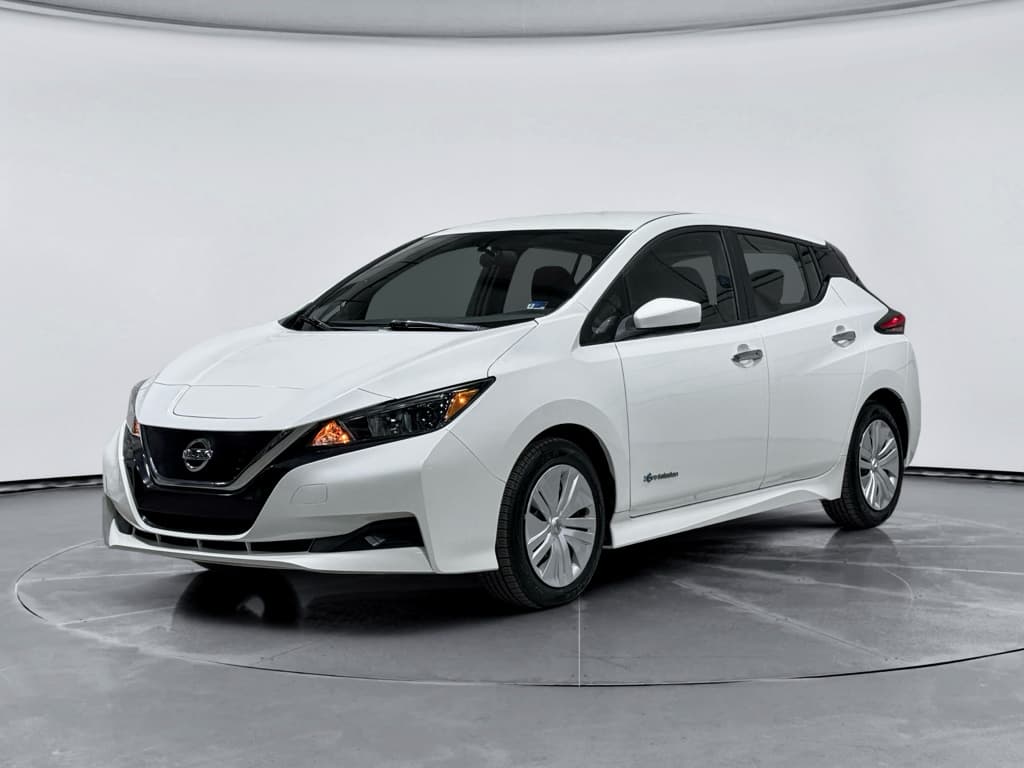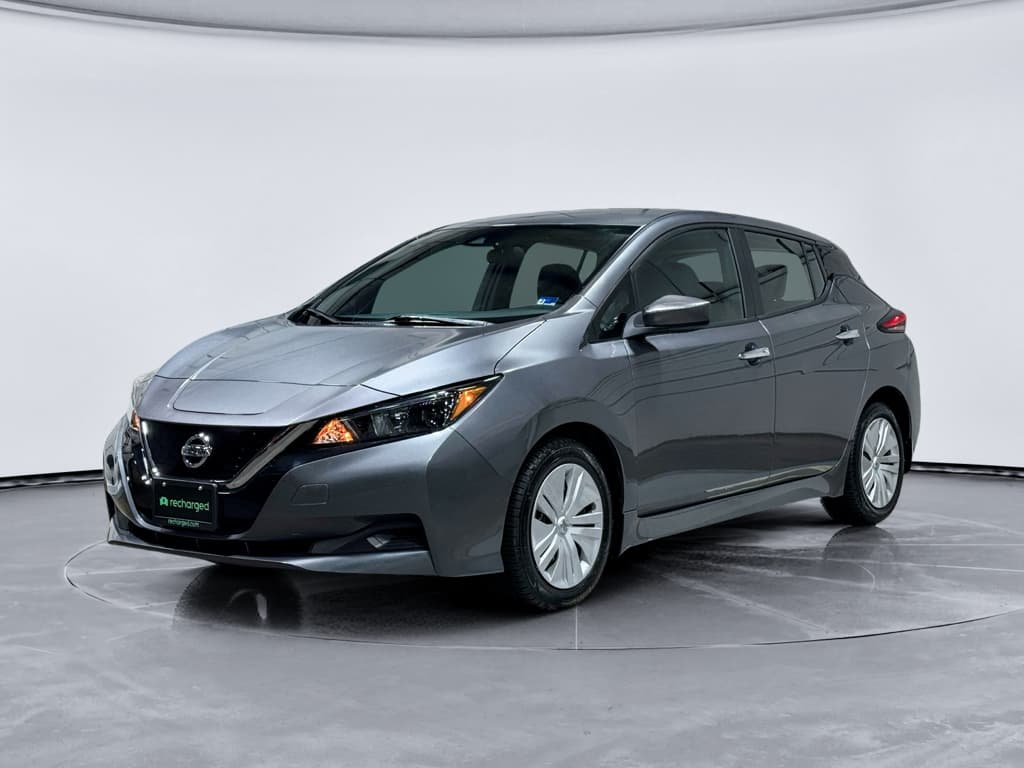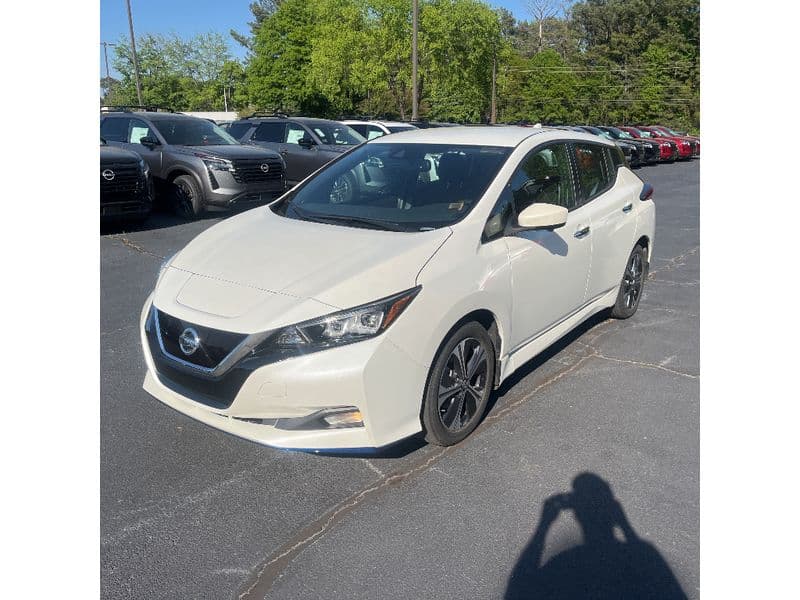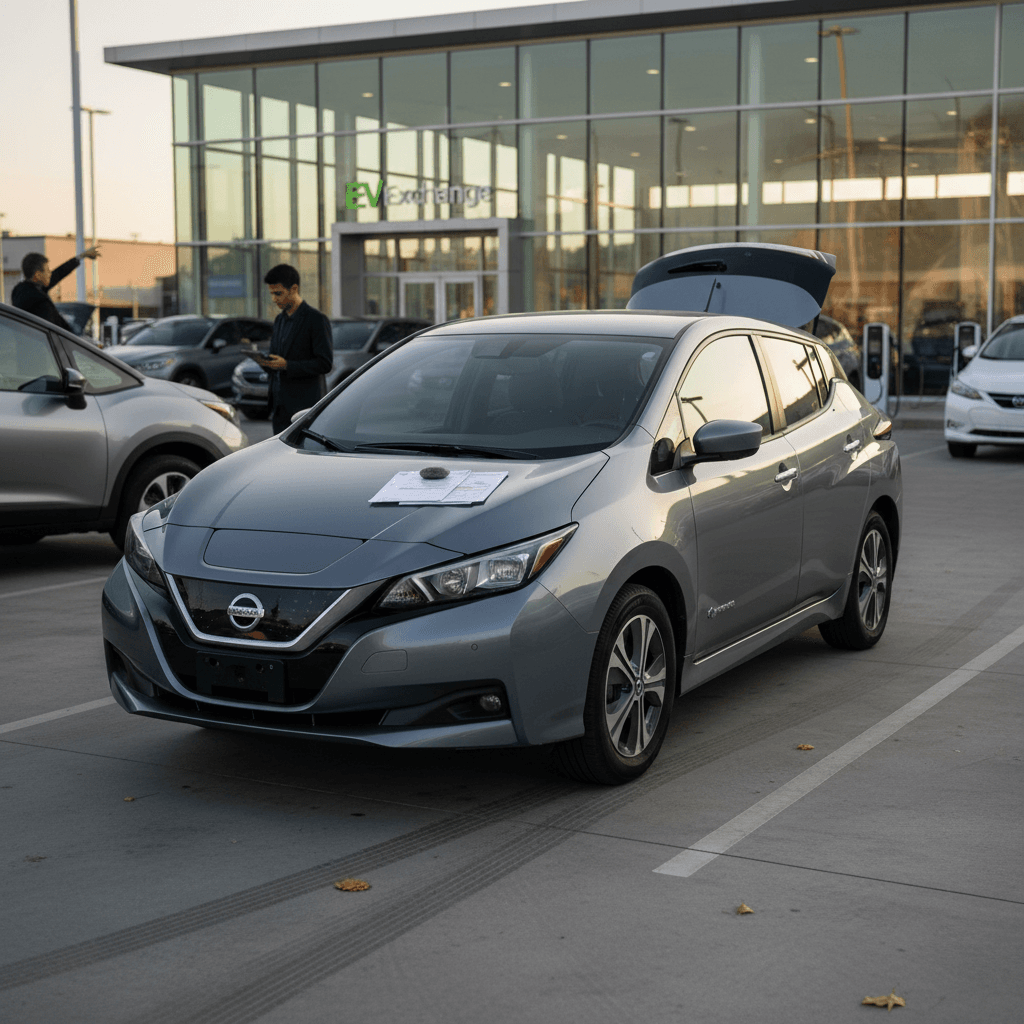
You don’t have to spend long on Leaf forums to discover a hard truth: Nissan Leaf depreciation is brutal. Five-year-old Leafs often lose well over half of their original value, and newer, longer‑range EVs keep pushing prices down. So if you’re asking yourself, “Where should I sell my used Nissan Leaf?” you’re already doing something smart, shopping the venue, not just the price.
Quick answer
Why Nissan Leaf resale feels different from other cars
On paper, the Leaf should be a used‑car darling: compact, cheap to run, and simple to maintain. In the real world, it lands near the top of the EV depreciation charts, with typical five‑year value drops in the ballpark of 60–65% from MSRP. That’s steeper than most gas compacts, and steeper than newer long‑range EVs from Tesla or Hyundai.
- Battery degradation fear: Shoppers are rightly obsessed with remaining range, and older Leafs didn’t age gracefully if they lived on hot pavement or fast chargers.
- Limited range vs new EVs: A 2018 Leaf that started life around 150 miles of range looks anemic next to a 300‑mile crossover on the same lot.
- CHAdeMO fast charging: The Leaf’s fast‑charge standard is effectively a sunset technology in North America, which makes long‑distance use harder and hurts demand.
- Tax credits and discounts on new Leafs: Big incentives on new or nearly new Leafs can pull used prices down even further.
Don’t take low offers personally
Step 1: Set realistic expectations on Leaf value
Nissan Leaf resale snapshot (2026 U.S. market)
Before you obsess over where to list your Leaf, get grounded on what it’s probably worth. The exact number depends on year, mileage, trim, and condition, but for many owners the real dividing line is battery health. Two 2018 Leafs with the same mileage can be thousands of dollars apart if one has 11 capacity bars and the other is flirting with the warranty threshold.
Use EV‑specific tools, not just generic guides
Step 2: Choose where to sell your used Nissan Leaf
You have the same broad choices as any used‑car owner, but each one behaves differently with a Leaf. Think of them along two axes: price and pain. The more work you’re willing to do, the closer you get to top dollar.
Four main ways to sell a used Nissan Leaf
Price vs. hassle, at a glance
1. Dealer trade‑in
Fastest, lowest price.
Rolls everything into your next purchase; dealers often treat Leafs as risky inventory, so offers can sting.
2. Instant‑offer sites
Quick quotes online.
CarMax, Carvana and similar sites favor speed. Great if you want the car gone this week, less great for squeezing every dollar out of it.
3. Private‑party sale
Best potential price.
You do the photos, listing, test drives, and paperwork, but EV‑savvy buyers will often pay more than a dealer.
4. EV‑focused buyers
Middle ground.
Specialists like Recharged actually read the Leaf’s battery data and price accordingly, often beating generic trade‑in offers without the chaos of DIY selling.
Best places to sell a used Nissan Leaf, compared
Where to sell a used Nissan Leaf: pros and cons
Use this table as a reality check before you accept the first offer you see.
| Where to sell | Typical price vs. private party | Speed to sell | Who it’s best for | Biggest catch |
|---|---|---|---|---|
| Franchised Nissan dealer trade‑in | –15% to –30% | Same day | Buying another Nissan and want one‑stop paperwork | May undervalue EVs and battery health; limited appetite for older Leafs |
| Non‑Nissan dealer trade‑in | –20% to –35% | Same day | You’re already buying a car there and convenience beats price | Many won’t retail older Leafs at all; they’ll wholesale them cheaply |
| CarMax / Carvana / similar | –15% to –30% | 1–7 days | Need it gone quickly without private‑sale headaches | Algorithms often assume worst‑case depreciation and range; offers can be harsh on short‑range Leafs |
| Private sale (Marketplace, Craigslist, etc.) | Baseline (100%) | 1–6 weeks | You’re willing to handle listings, messages, and test drives | More time and effort; you must screen buyers and know your paperwork |
| EV‑focused marketplace (e.g., Recharged) | –5% to –15% vs strong private sale | A few days to a couple of weeks | You want EV‑savvy pricing and a guided process | Availability depends on region; may be pickier about condition or title issues |
“Ease” assumes you have clear title and the car is drivable.
Dealer trade‑ins and instant offers
If your priority is speed, trading the Leaf to a dealer or taking an instant offer is the automotive equivalent of ripping off the band‑aid. You drop the keys, sign a few forms, and the car becomes someone else’s problem. That convenience is not free.
Because Leafs depreciate faster than most cars and carry battery‑health risk, many dealers and national buyers treat them as distressed assets. They’ll often bake in the cost of auction fees and worst‑case reconditioning right into your offer.
Private sale and EV‑focused buyers
On the other side of the spectrum, a thoughtful private sale lets you tell the full story of your Leaf, how it’s been charged, where it lives, and what the actual battery capacity is today. Buyers who understand that story are willing to pay more.
An EV‑specialist like Recharged sits in the middle: they pull detailed battery data, benchmark your Leaf against live market transactions, and give you a transparent offer without you having to meet strangers in parking lots.
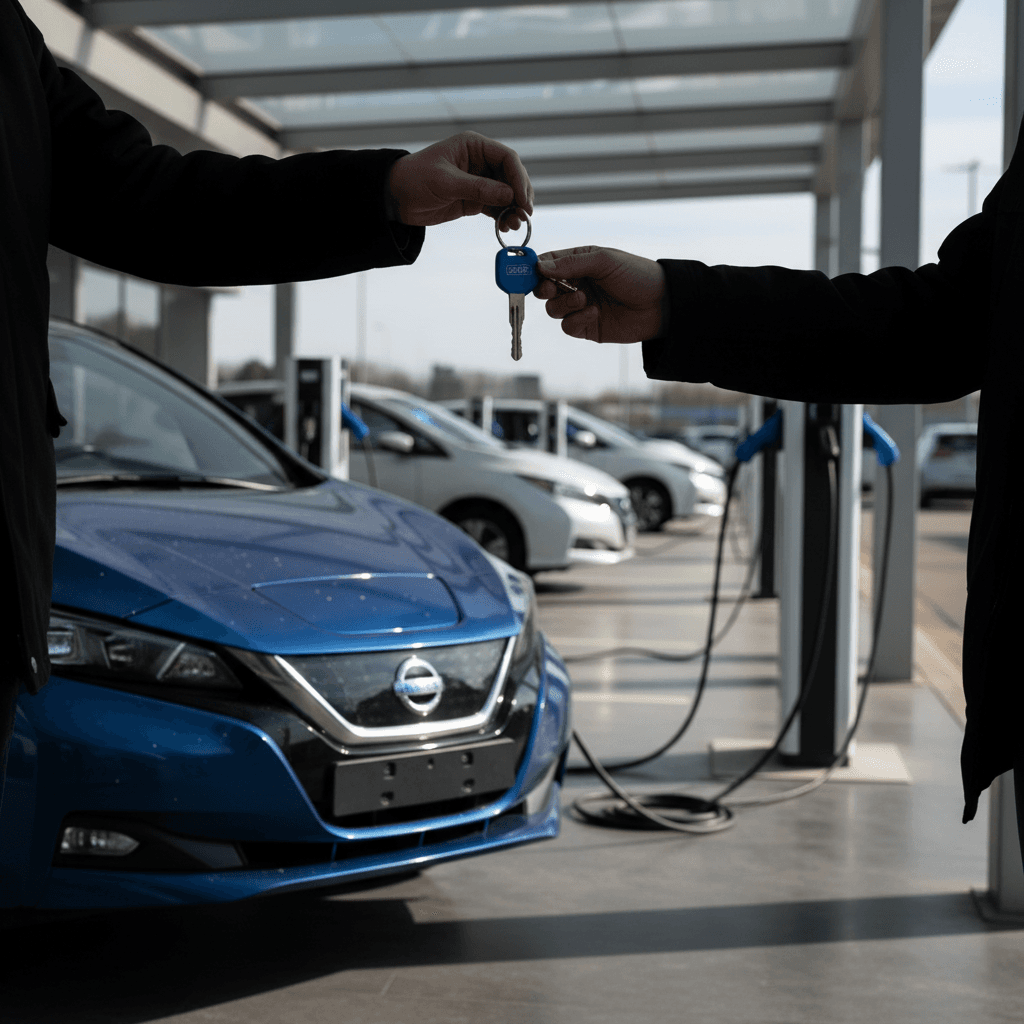
How to get the most money for your Leaf, whichever route you choose
Four big levers that move Leaf pricing
Hit these before you accept any offer
1. Prove the battery’s health
Nothing spooks a buyer like guessing at real‑world range. If you can, use an OBD‑II dongle and Leaf‑specific app to pull a State of Health (SOH) reading, or get a professional battery assessment like the Recharged Score.
Showing a recent report that says, for example, “90% SOH, 11 bars” will immediately separate your car from a sea of mystery Leafs.
2. Fix visible flaws, not everything
Buyers forgive age; they don’t forgive neglect. Focus on inexpensive, high‑impact fixes:
- Professional interior detail
- Replace missing aero covers or wipers
- Repair obvious curb rash on wheels if cheap
Skip big money items that don’t raise value much, like refinishing every small door ding.
3. Bring your paperwork
Have these ready before you list or appraise:
- Title (or payoff amount from lender)
- Service history and any battery warranty work
- Original charger, manuals, both keys
The more complete the package, the easier it is for a buyer, or a site like Recharged, to pay the high end of the range.
4. Tell the charging and usage story
Explain how the car was used:
- Daily mileage and whether it slept in a garage
- Rough share of home vs. DC fast charging
- Any long‑trip abuse or fleet use
A pampered commuter Leaf with predictable usage patterns is worth more than a mystery airport shuttle.
Where Recharged fits in
Ready to find your next EV?
Browse VehiclesPrep checklist before you list or trade in
Pre‑sale checklist for your Nissan Leaf
1. Check battery bars and SOH
Turn the car on and photograph the battery capacity bars on the dash. If you can, use an app or service to pull a recent State of Health reading; save screenshots for your listing or buyer.
2. Clear warning lights
If the dash looks like a Christmas tree, fix what you realistically can. A fresh 12‑volt battery or basic maintenance can clear nuisance warnings that scare off buyers or trigger low appraisals.
3. Clean, declutter, and deodorize
Remove personal items, vacuum thoroughly, wipe down surfaces, and neutralize any odors. EV shoppers tend to be detail‑oriented; a clean cabin signals a cared‑for battery and driveline.
4. Photograph like a pro
Shoot the car in good daylight from all corners, plus close‑ups of the interior, tires, wheels, and charging port. Include clear shots of the instrument cluster showing mileage and battery bars.
5. Gather documents and accessories
Collect the title or lien release, service records, both keys, the portable EVSE (Level 1 charger), and any wall‑box or adapters you’re including. Missing items give buyers leverage to haggle down.
6. Decide your floor price
Based on valuations and local listings, write down the lowest price you’ll realistically accept before you start getting offers. It’s much easier to negotiate calmly when you know your walk‑away number.
Watch out for these Leaf‑specific deal killers
When a specialized EV buyer makes more sense than DIY
There are Leafs you proudly park at the curb with a For Sale sign, and there are Leafs you quietly wish would disappear. If your car lands in any of these categories, an EV‑specialist may be worth seeking out instead of trying to charm the broader used‑car market:
- The car lives in a hot‑weather state and you’re worried about how the pack looks to a savvy buyer.
- It has mild to moderate degradation (e.g., 8–9 bars) that’s still usable but tough to explain in a 30‑second test drive.
- It’s an older, CHAdeMO‑only Leaf in an area with limited fast‑charging; local buyers may see it as “obsolete.”
- You don’t have time or appetite for dozens of marketplace messages and lowball texts.
Because Recharged focuses on used EVs, including the Leaf, we treat battery health as the main character, not a footnote. Our Recharged Score battery report gives buyers hard, verified data, which lets us often pay more than a generic buyer who’s assuming worst‑case. We can help you trade in, get an instant offer, or consign your Leaf, and even arrange nationwide pickup and delivery so you’re not limited to the handful of local shoppers who know what a CHAdeMO plug is.
Frequently asked questions about selling a used Nissan Leaf
Nissan Leaf selling FAQ
Bottom line: Where should you sell your Leaf?
If your goal is to absolutely maximize every last dollar, a patient, well‑documented private sale to an EV‑savvy buyer will usually top the charts. If your goal is to make the Leaf someone else’s problem by the weekend, a dealer trade‑in or instant‑offer site will happily oblige, at a cost.
For many owners, the sweet spot is an EV‑focused marketplace that actually understands battery data, local charging realities, and the oddball economics of high‑depreciation EVs. That’s exactly the hole Recharged was built to fill. We combine a Recharged Score battery health report, fair market pricing, flexible selling options (instant offer, trade‑in, or consignment), and nationwide delivery and support to make selling your used Nissan Leaf feel less like an endurance sport and more like handing off the keys with confidence.